



A Short Guide to Galatina, Pulgia | The Home of Paticciotto
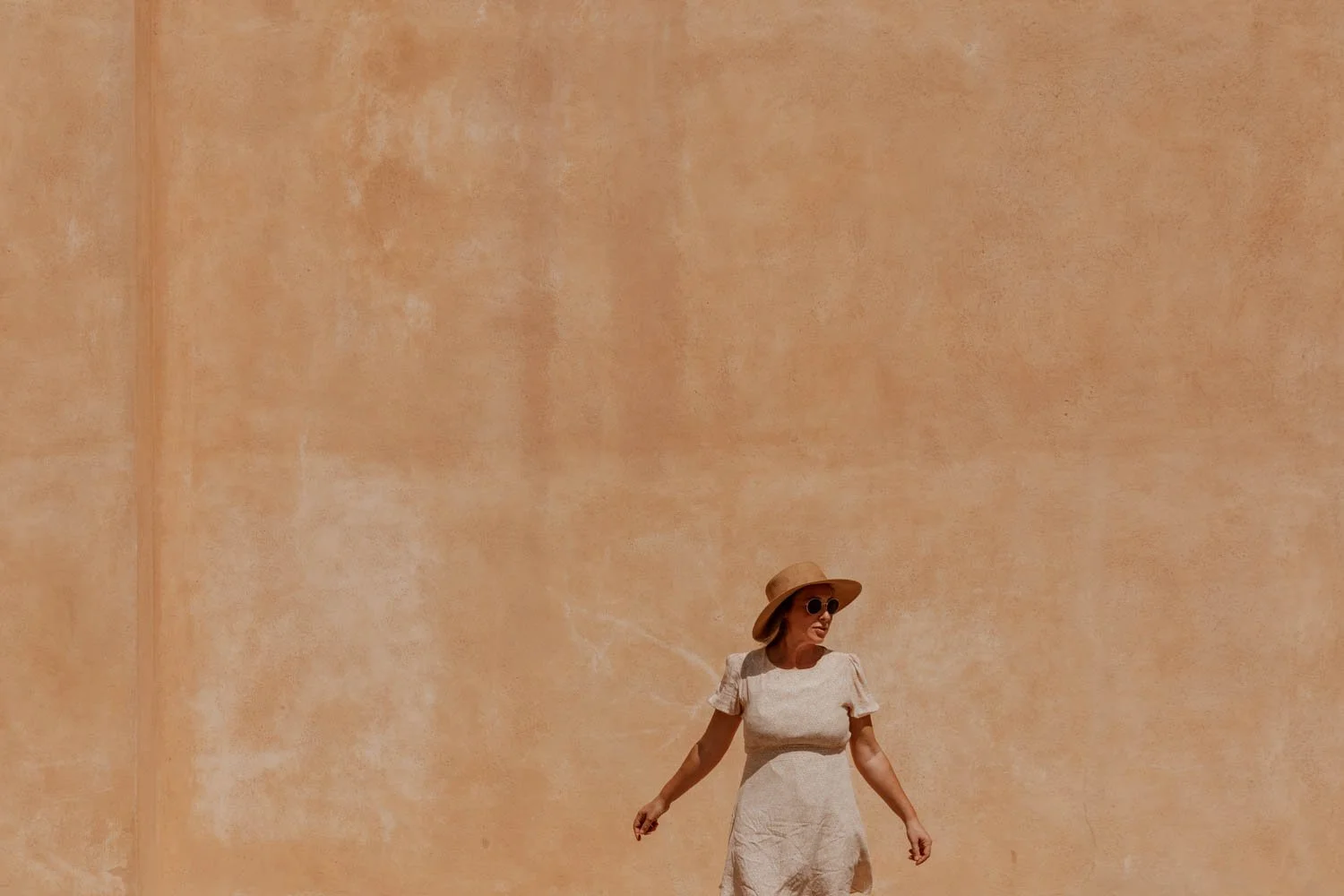
We arrived chasing a pastry.
Across Salento - the southernmost part of Puglia - small ovals of shortcrust filled with lemon-spiked crema occupy the glass cases of bars and bakeries. Called pasticciotti, the best-known account for their creation begins at Pasticceria Ascalone in Galatina, twenty minutes south of Lecce.
Appetite has little respect for the hierarchy of famous places. So on our third visit to Puglia, we were drawn inland from Salento’s beaches for the pleasure of tasting a single thing done well.
Once the espresso was finished and the last streak of custard wiped from the paper napkin, it would have been easy to return to the coast, but we felt this pretty little town with a curious past was more than worth a few more hours’ wandering.
In this short guide to Galatina, you’ll find the best things to do, our recommendations for where to eat and stay, and of course, exactly where to find those famous pasticciotti.
The Galatina Essentials
See / The extraordinary interior of the Basilica di Santa Caterina d’Alessandria
Explore / The palazzi, communal corti, and surviving gateways of the historic centre
Eat / A warm pasticciotto at Pasticceria Andrea Ascalone
Visit / The Chapel of Saint Paul, closely bound to Galatina’s history of tarantism
Allow / At least half a day; the old town is compact, but deserves more than a pastry stop
Stay / Palazzo Garibaldi for a central base or Li Pappi Antico Casale for gardens, parking, and a pool
The Best Things to Do in Galatina
Three or four hours is plenty for a Galatina visit, largely because almost everything sits within the same small pocket of streets, making it an ideal stop if you’re on a road trip in Puglia.
Visit the Basilica di Santa Caterina d’Alessandria |
Santa Caterina is Galatina’s essential sight.
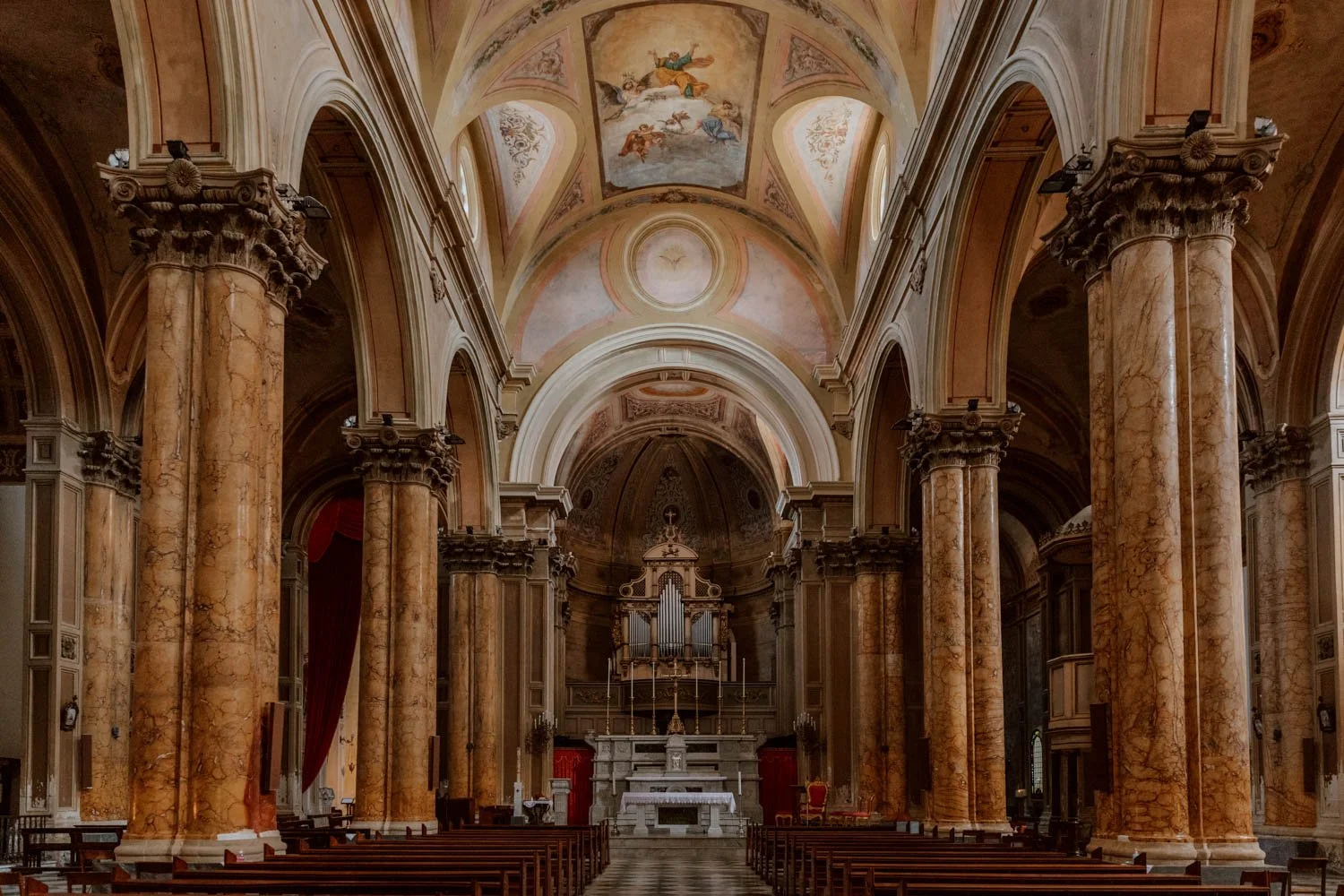
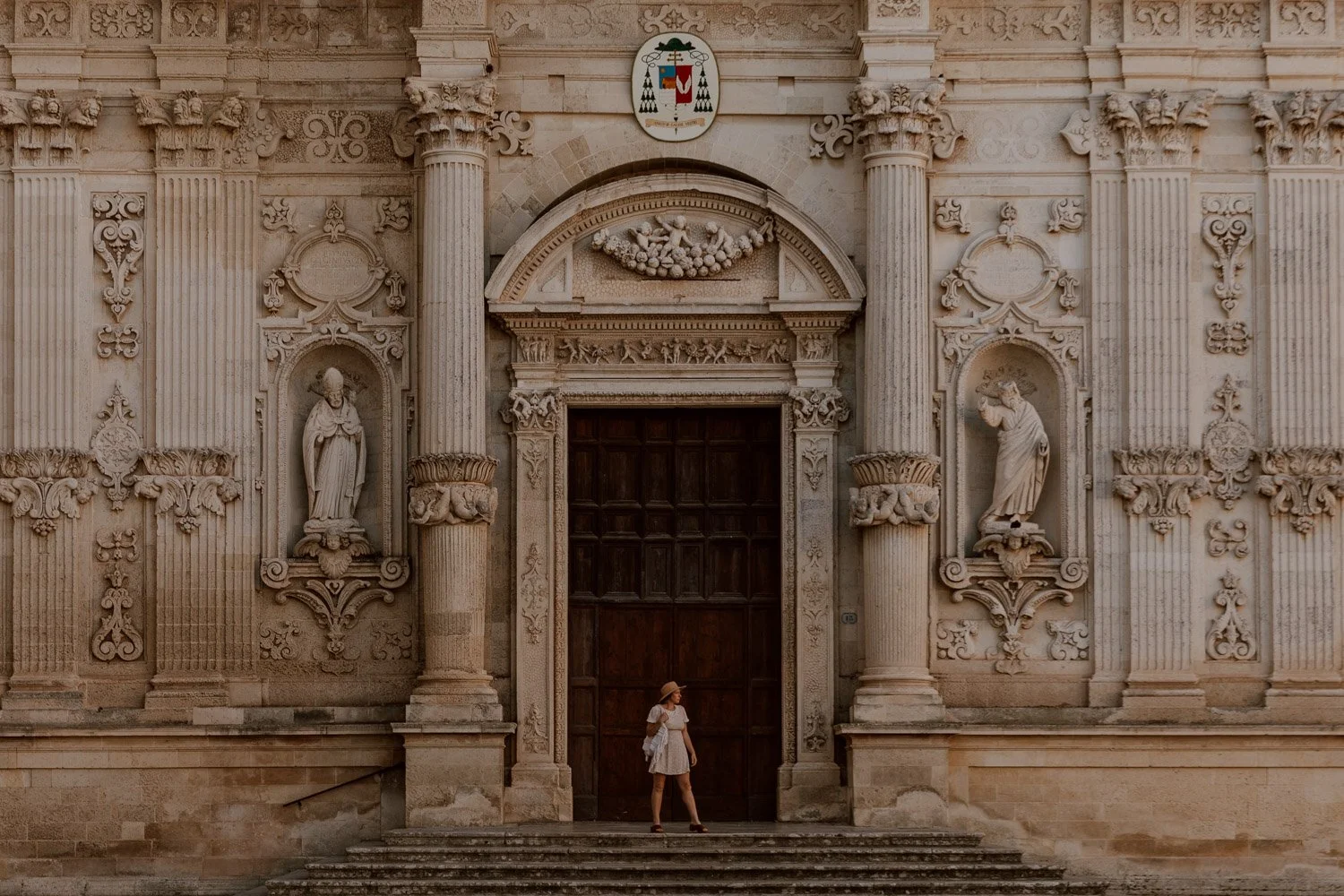
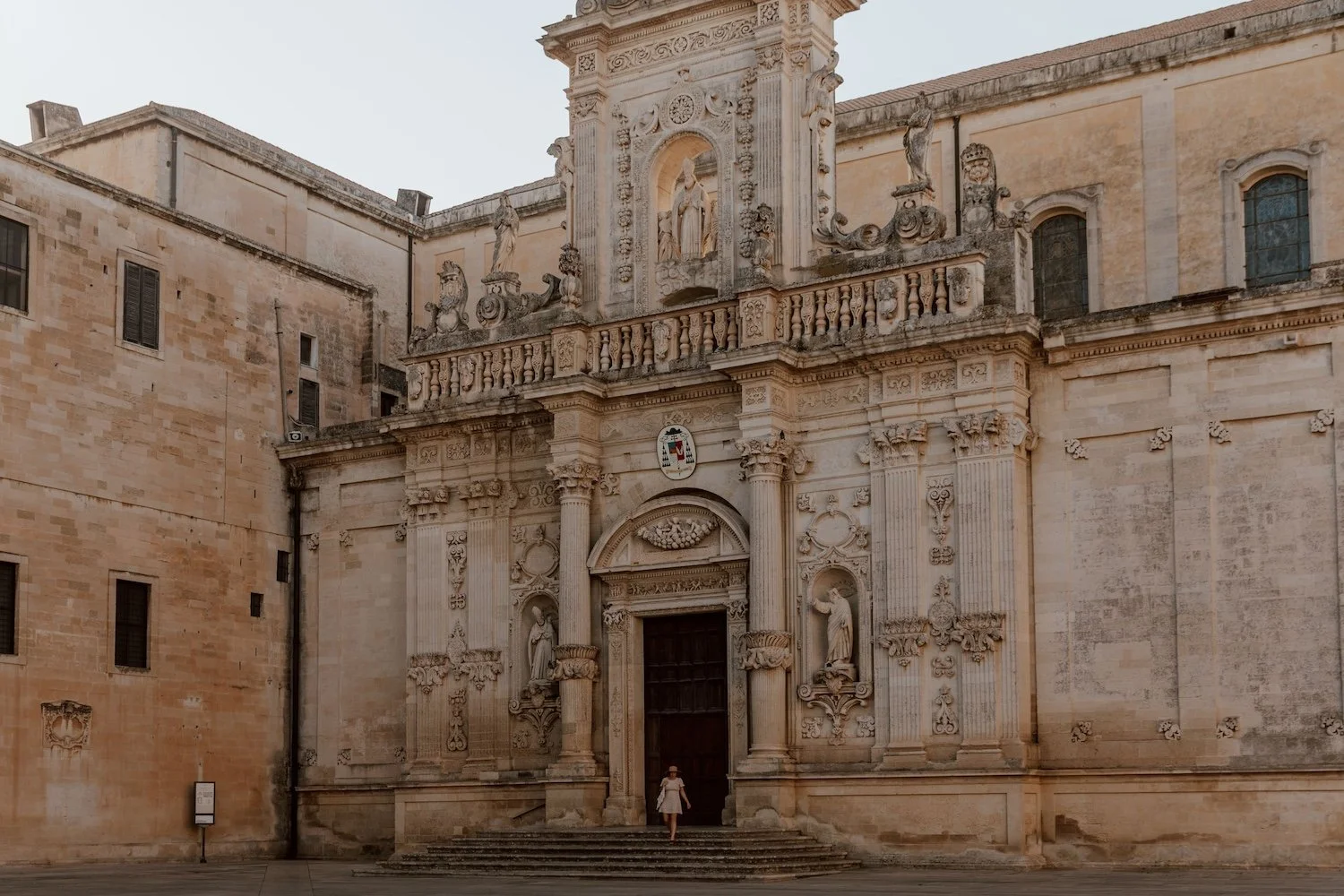
Built in the late 14th century for Raimondello Orsini del Balzo, the basilica presents a relatively restrained Romanesque-Gothic façade to Piazza Raimondello Orsini. Inside however, biblical scenes spread across five naves, climbing the walls, arches, and vaults until almost no surface remains untouched.
This enormous ongoing series of projects was commissioned by Raimondello’s widow, Maria d’Enghien, in the early 15th century.
Genesis, the life of Christ, Saint Catherine and the Apocalypse unfold in dense succession, painted by artists working in several Italian traditions, and at a scale that has earned Santa Caterina its frequently repeated nickname, the ‘Assisi of the South’.
It’s startling to encounter such an interior in a small Salentine town.
Allow at least half an hour inside and look into the adjoining Franciscan cloister if it’s open. Current published hours are 8.30am to 12.30pm and 4pm to 7.45pm from Monday to Friday, with evening closing at 7.15pm on weekends. Services take precedence and, as ever, dress and act appropriately.
You can find Basilica di Santa Caterina d’Alessandria on Via Raimondello Orsini (here on google maps).
Walk the Historic Centre, Courtyards and Gates |
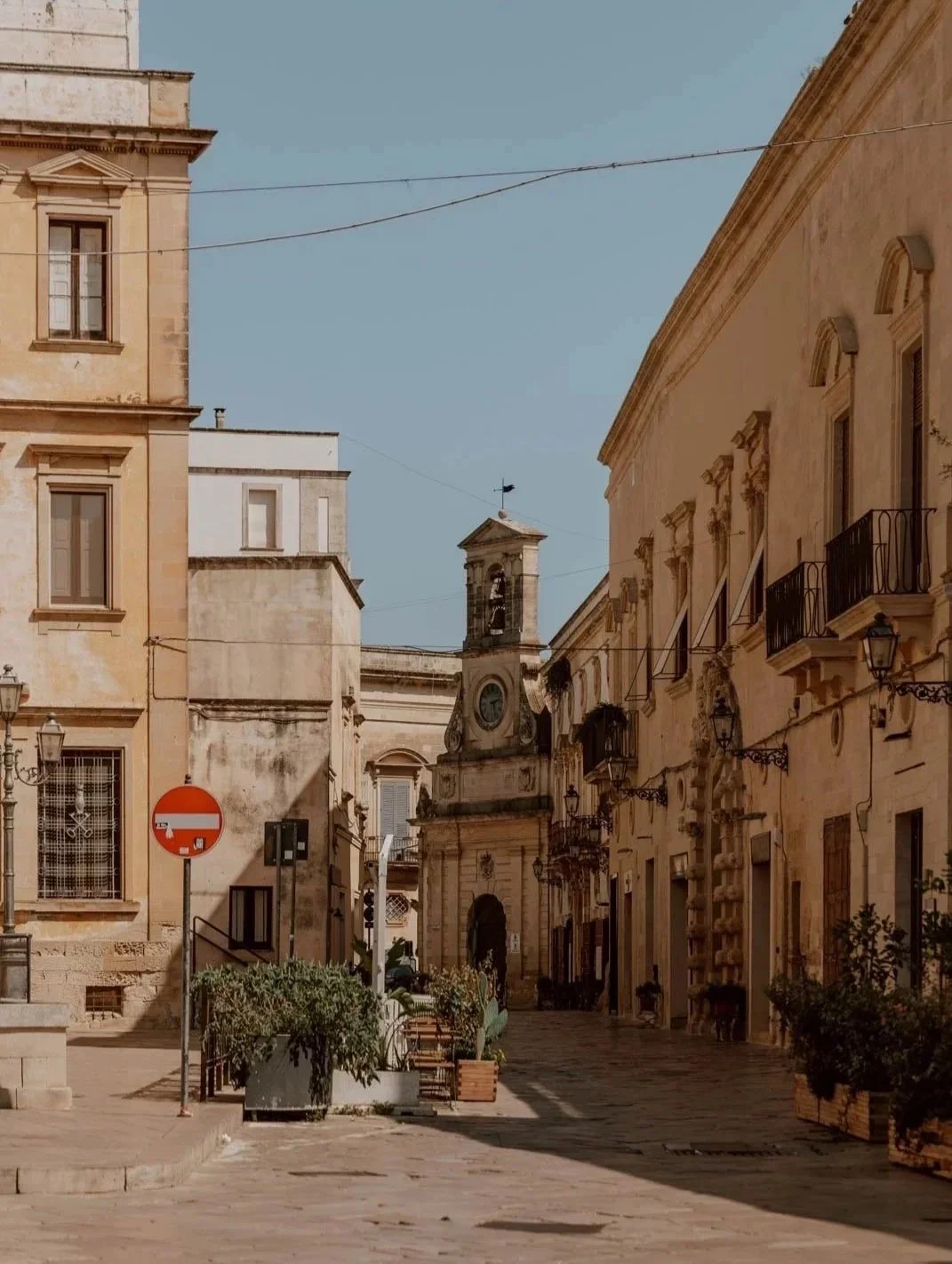
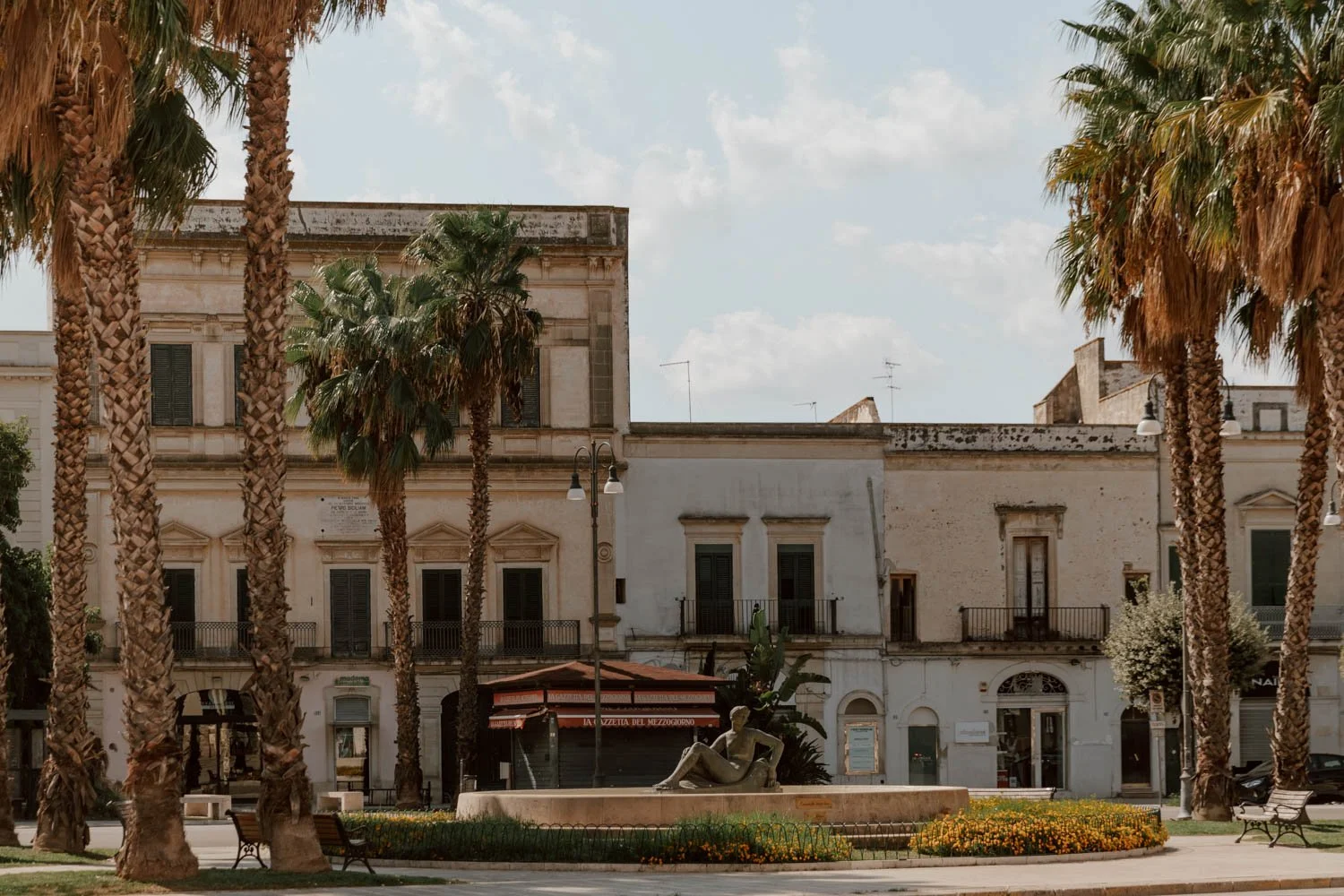
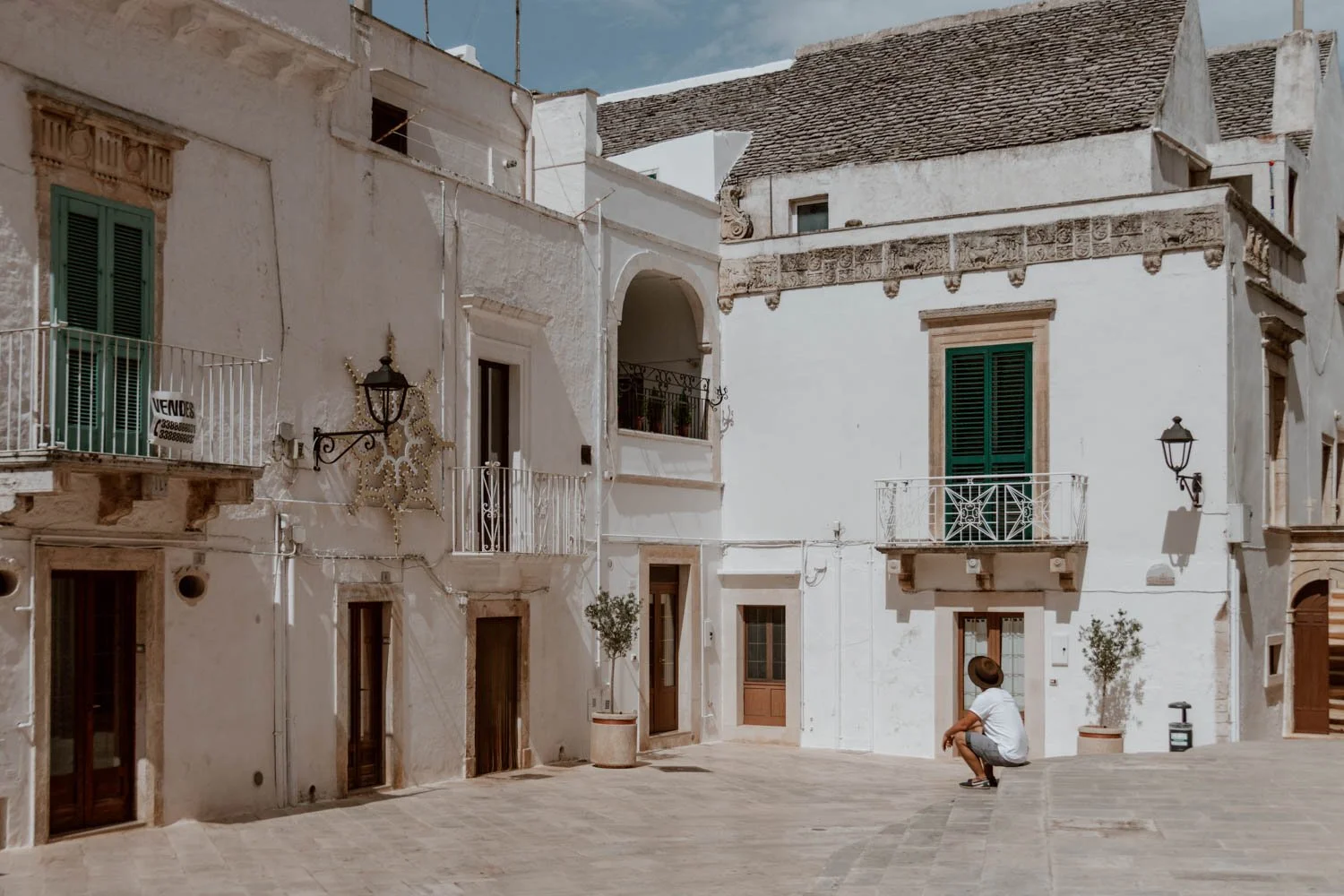
From Santa Caterina, take Via Vittorio Emanuele II towards Piazza San Pietro, then allow yourself to drift into the smaller streets on either side.
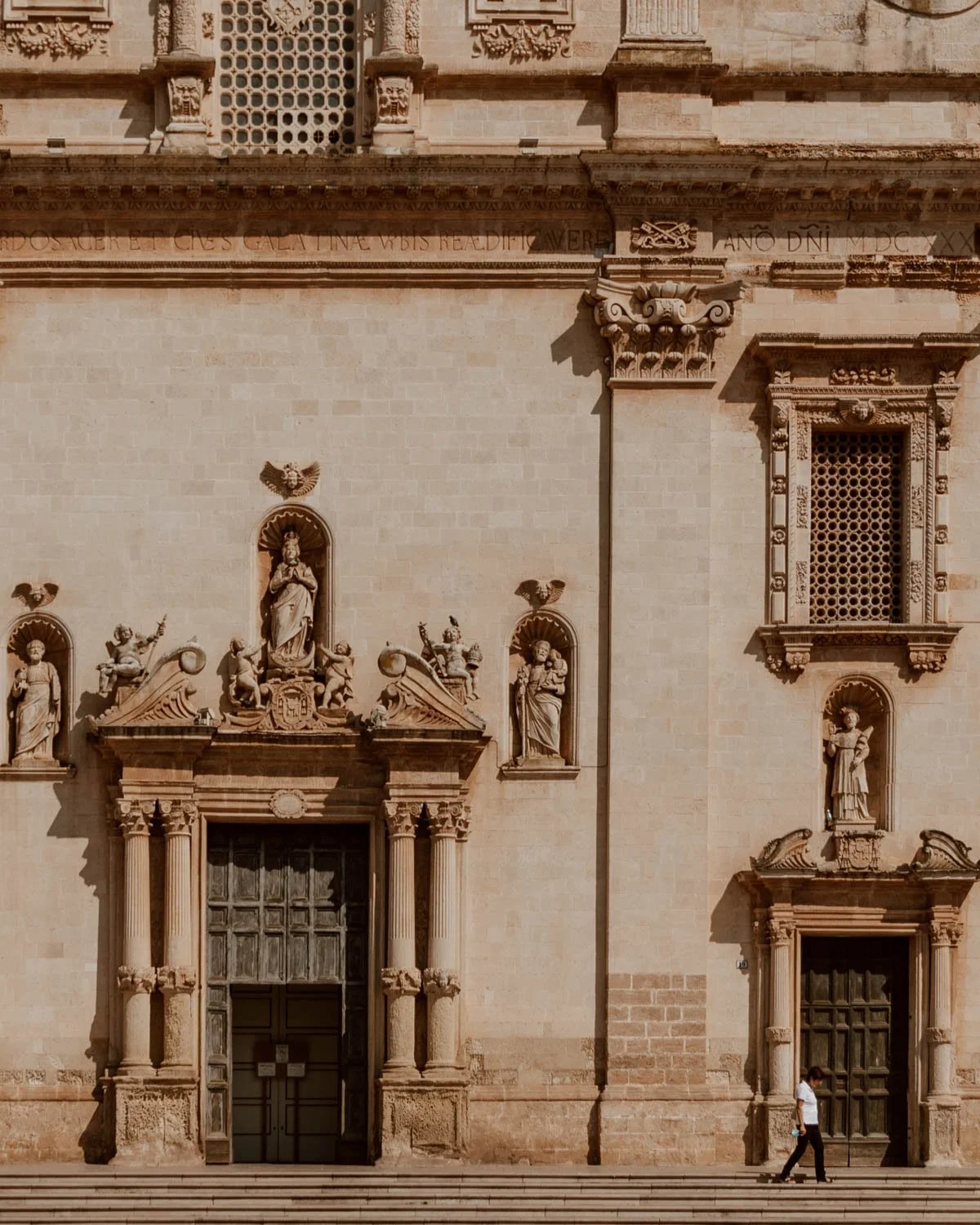
The route passes the carved doorway of Palazzo Sanlorenzo-Bardoscia before arriving at the baroque Chiesa Madre (maps). In the surrounding lanes, look for the projecting balcony of Palazzo Scrimieri and the internal loggia of Palazzo del Concerto, named after the municipal band which once rehearsed upstairs.
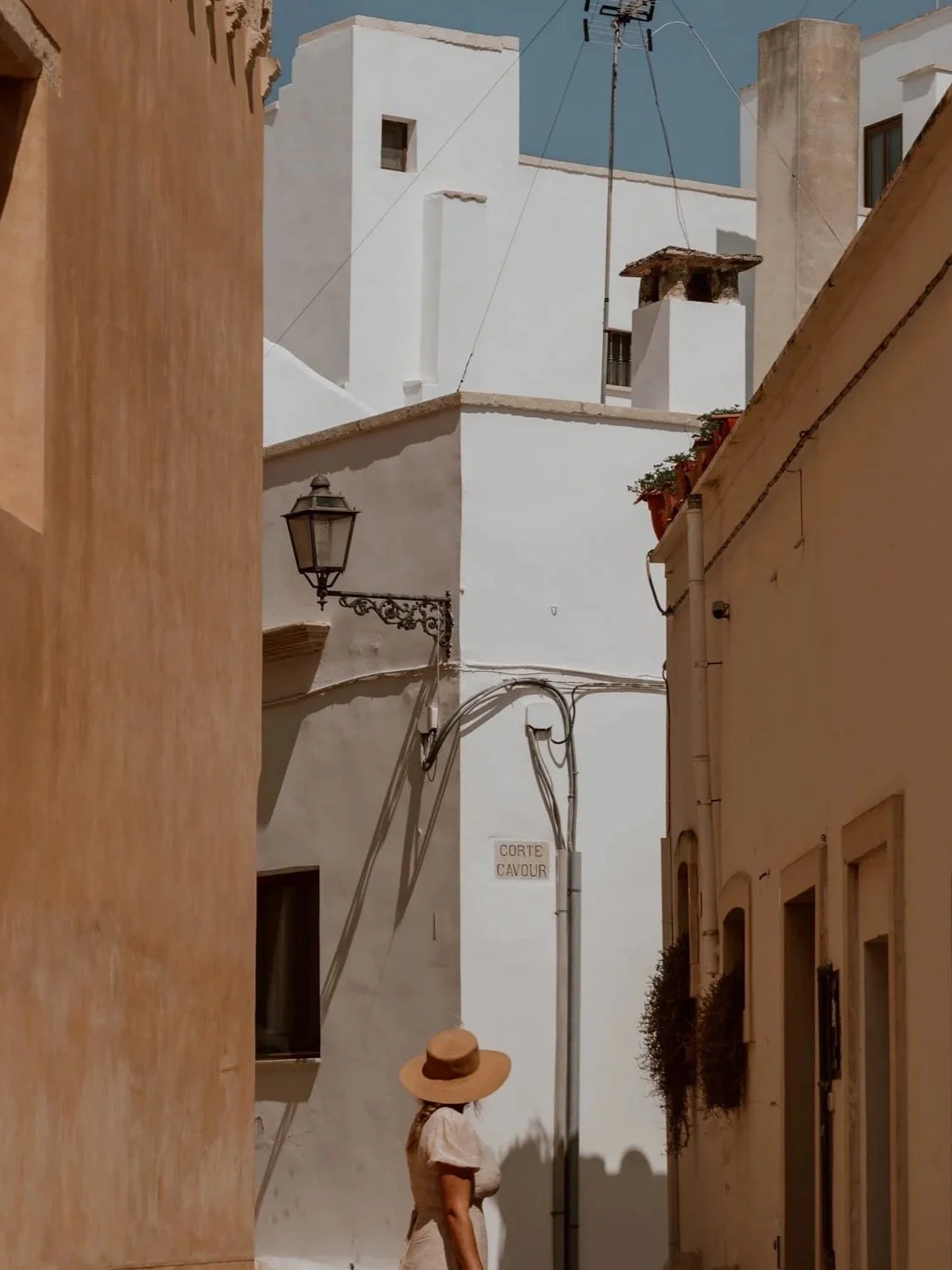
Among the palazzi you’ll find Galatina’s corti: shared residential courtyards where several households drew water, worked and lived around the same enclosed space. Corte San Lorenzo, entered through a broad double arch on Via Cavour, is among the easiest to recognise but most remain private, with only the occasional open gate offering a look inside.
Walk far enough from Piazza San Pietro and, sooner or later, you will pass beneath one of Galatina’s old gates which now stand largely detached from the mile-long wall that enclosed the town by the 16th century. Porta Luce marked the approach from Gallipoli, while Porta San Pietro and the plainer Porta Cappuccini guarded two of the other entrances; all three are later reconstructions, rebuilt between 1780 and 1803.
Eat a Pasticciotto at Pasticceria Andrea Ascalone
Even if sweet pastries do nothing for you, step inside.
The wooden shopfront, black-and-white tiled floor, deep red walls, chandeliers, old brass scales, and marble-topped counter appear to have slipped through the decades largely undisturbed. It is tiny, rather grand, and so perfectly from another time that it would be worth a look even if the glass cases were empty.
We were, admittedly, there for what was inside them.
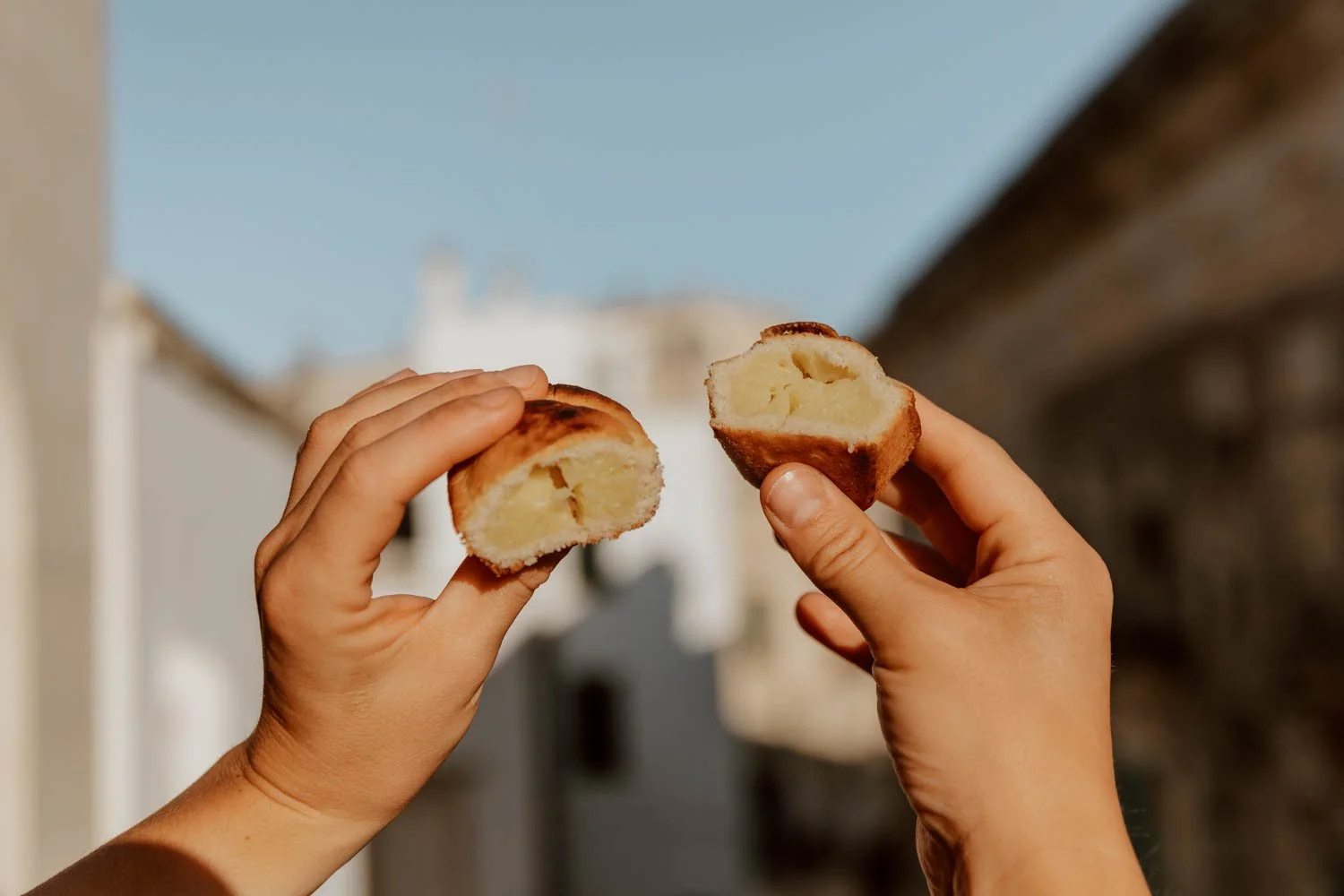
The story repeated across Salento dates the first pasticciotto back to 1745, when pastry chef Nicola Ascalone used leftover dough and crema to make a small pastry when he didn’t have enough for a full one. This honey-coloured delicacy proved to be very popular, and thus 300 years later people are still seeking out his fortunate mistake.
Order the classic crema version and eat it immediately, while the shortcrust is still warm and the custard soft enough to escape if you are careless. There are other fillings, but we would stick to the original on a first visit (but by all means have as many as you can).
Morning gives you the best chance of finding them warm from the oven but whichever day you choose you’ll have to time it wisely: at the time of our visit, the shop closed on Mondays, opened morning and late afternoon from Tuesday to Saturday, and traded only in the morning on Sunday; check shortly before travelling as hours can change.
You can find Pasticceria Andrea Ascalone on Via Vittorio Emanuele II 17 (maps).
Find the Chapel of Saint Paul |
Behind a modest doorway on Corso Garibaldi, the Cappella di San Paolo occupies a single, unadorned room within Palazzo Tondi. For centuries, this was where people from across Salento came seeking a cure for tarantism, an affliction blamed on the bite of a tarantula.
Many of those affected were women, known as tarantate, and their symptoms ranged from apathy and exhaustion to distress and convulsions. Musicians were called to the home and played different melodies until the woman began to dance, sometimes continuing for hours, or even days, until she collapsed from exhaustion; the movement and sweat were believed to expel the poison.
The journey to Galatina marked the final stage of the ritual. Each year, around the Feast of Saints Peter and Paul on 29th June, the tarantate came to the chapel to seek the help of Saint Paul, protector of those bitten by venomous creatures, and drink from its well. According to local legend, the saint had blessed the water while passing through Galatina, giving it the power to heal poisonous bites.
Find it on Corso Garibaldi (maps).
Museo Civico Pietro Cavoti |
Housed in a former Dominican convent, Galatina’s civic museum contains drawings by the 19th-century artist and scholar Pietro Cavoti, whose careful records preserve churches, palazzi, and artworks which have since been altered or lost.
Further rooms cover local painting, Galatina-born sculptor Gaetano Martine, and the visual documentation of tarantism. If you’ve only got a few hours in Galatina, we would spend them elsewhere; those particularly interested in the town’s art and social history should allow around an hour though. Check the museum website for current opening times.
Find it at Piazza Dante Alighieri 51 (maps)
Visit During the Feast of Saints Peter and Paul |
Galatina’s principal annual celebration takes place from 28th to 30th June, when the streets around Piazza San Pietro fill with light-filled processions, brass bands and late-night ronde of traditional music and dance.
The programme also includes a public re-enactment of the tarantism ritual near the Chapel of Saint Paul. This should be understood as contemporary commemoration rather than the continuation of the therapeutic practice studied by de Martino, but it remains the time of year when Galatina’s religious, musical and folkloric traditions are most visibly brought together. Check the current festival programme before visiting.
Where to Eat in Galatina
Pastry aside, Galatina has several good reasons to remain for lunch or dinner.
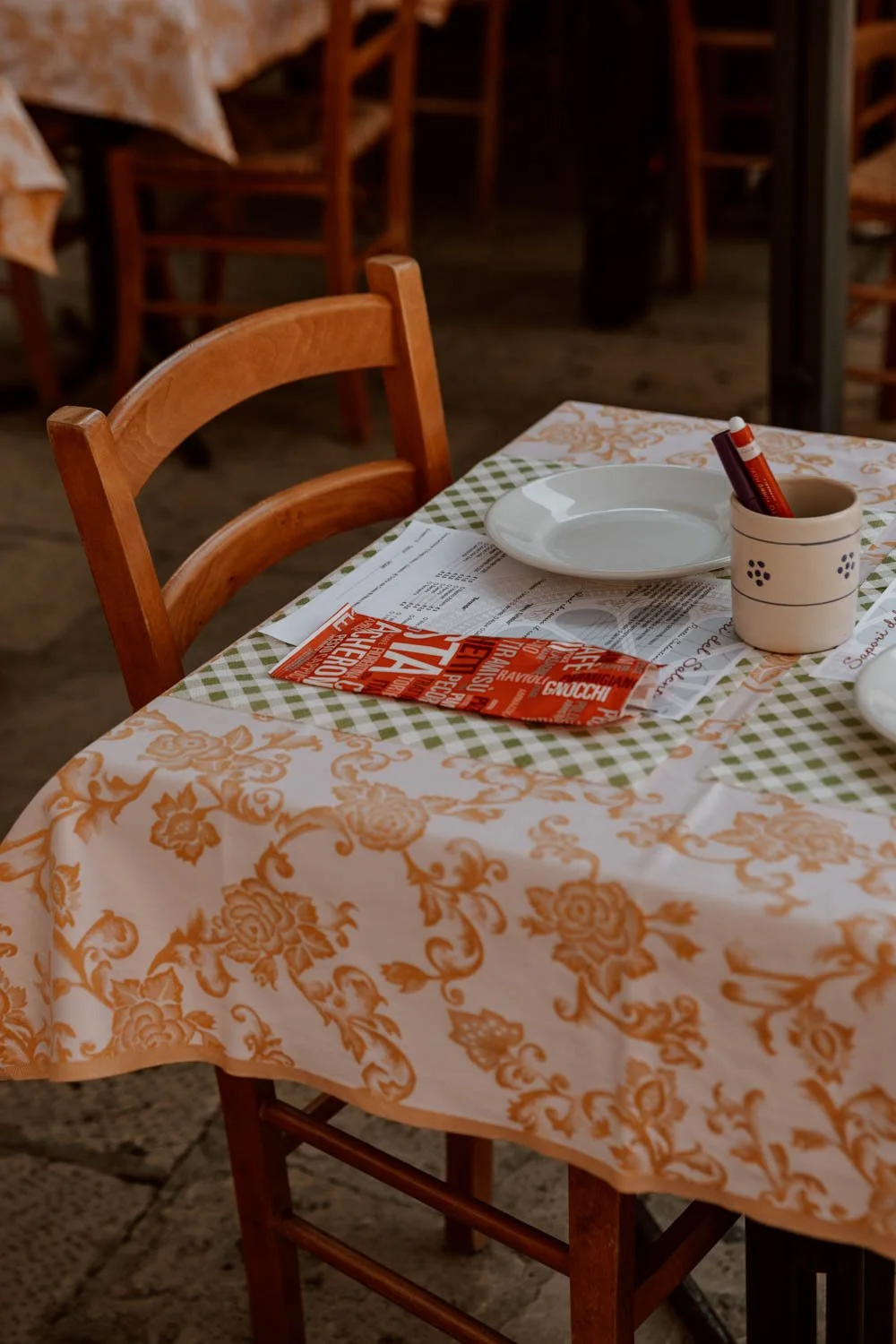
Nonna Lilia / For a traditional Salentine lunch, this informal trattoria stays close to the region’s cucina povera: pittule, vegetable antipasti, handmade pasta and generous plates intended for sharing. It sits outside the old town but remains walkable from the centre. Order the antipasti with restraint unless you are considerably hungrier than you think / maps
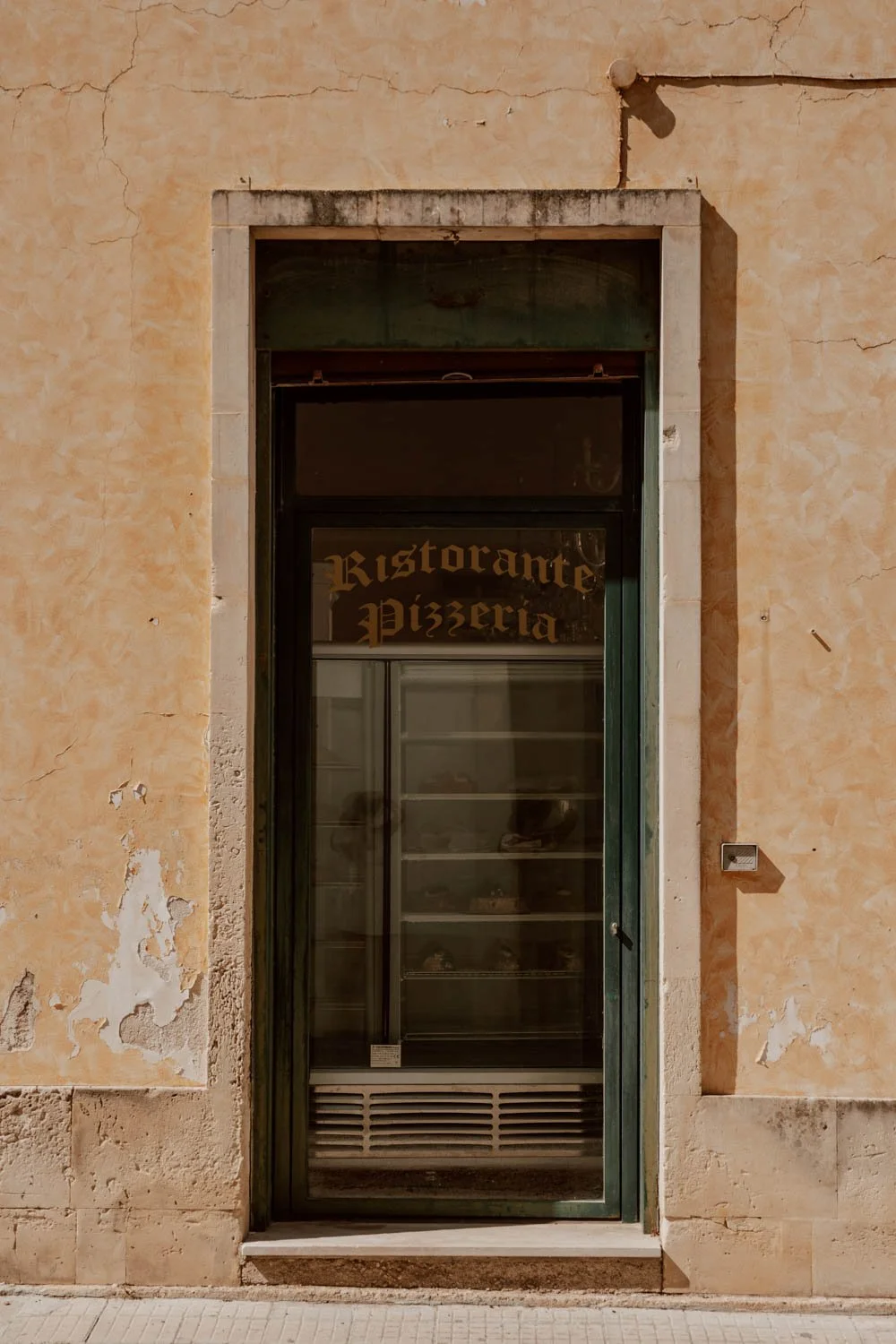
Corte del Fuoco / For a longer lunch or dinner in the historic centre, this restaurant occupies old rooms and a small outdoor court beside Santa Caterina. The menu includes tria e ceci, pasta with fresh anchovies, octopus ragù, the catch of the day and several vegetarian choices. At the time of writing, it opens for lunch and dinner from Tuesday to Sunday / maps
Staglio Panificati / For a quick lunch, cross the street from Ascalone to this contemporary bakery for bread, focaccia, freselle, taralli and whichever savoury slices look best that day. Stock up here if you are continuing to the beach / maps
Where to Stay in Galatina
Whilst Galatina can easily be seen in a day, those visiting Puglia on a second or third trip may enjoy basing themselves in a smaller, typically southern Puglian town that doesn’t see much tourism.
For a short visit, we suggest staying in or close to the historic centre, where almost everything is within walking distance. The countryside brings gardens, pools and considerably more space, but also makes a car essential. Galatina can also serve as a quieter inland base for exploring Salento, although we would not choose it for a beach-led trip unless you’re prepared to drive every day.
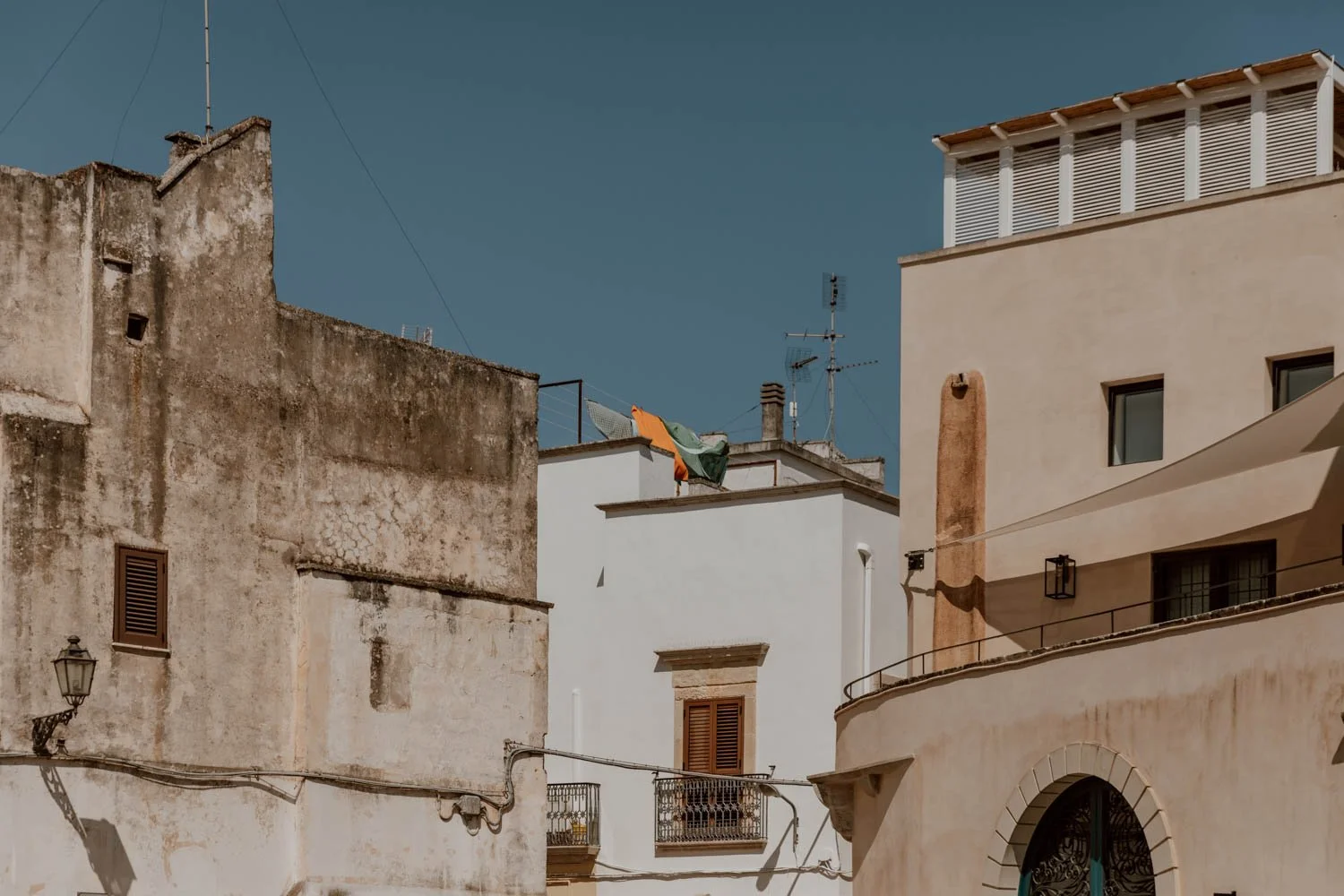
Palazzo Garibaldi | Occupying a late-19th-century palazzo beside Piazza San Pietro, these five spacious suites are located less than 100 metres from the Chapel of Saint Paul and Santa Caterina. The bedrooms pair clean-lined Italian furniture with subtler references to Puglian design, while the communal lounge retains its original Liberty-style ceiling frescoes. There is also a large terrace above the old town.
Palazzo Andriani | Live out your Italian fantasy in this gorgeous two-bedroom, carefully restored 16th-century palazzo. Contemporary design throughout, it’s high ceilings, large windows and white walls fill the rooms with light. There are also lots of outdoor spaces including a rooftop terrace with wonderful views. We don’t often mention bathrooms when recommending places, but those here are truly outstanding!
Li Pappi Antico Casale | Just beyond the old town, this small guesthouse combines a seasonal pool and leafy garden with free private parking - an uncommon combination within walking distance of central Galatina. Rooms mix inherited family antiques with more contemporary pieces, giving them greater personality than their relatively modest prices might suggest.
La Naca della Taranta | Built in the late 19th century by a family of master builders and stonemasons, this B&B retains the star vaults, pale Lecce stone, and some of the tools once used to shape the building. The generously sized rooms are more homely than high-design, with several larger configurations suited to families; guests also have access to a garden, terrace and shared kitchen. A good affordable option.
How to Get to Galatina
By Car | Galatina is around 25 to 30 minutes from Lecce, 30 minutes from Gallipoli and 40 minutes from Otranto in ordinary traffic.
Do not follow navigation blindly into the historic centre, where a ZTL (limited traffic zone) restricts access to several streets and operating times change with the season. Instead, look for marked parking around the outer ring near Porta Luce, Porta San Pietro or Piazza Dante Alighieri, then continue on foot. We parked on the streets around there and paid using the EasyPark app.
During the Feast of Saints Peter and Paul, leave the car further out.
By Public Transport from Lecce | Direct Ferrovie del Sud Est trains take around 50 to 55 minutes, with Galatina station approximately 15 minutes on foot from Piazza San Pietro. Regional buses can be quicker on certain days, but neither service is frequent enough to travel without checking the return. Compare the available train and bus departures through the Trenitalia journey planner, particularly on Sundays and public holidays.
Brindisi is the nearest airport, roughly an hour away by car. Without one, travel into Lecce first and visit Galatina from there.




Our short guide to Galatina covers the sights you can’t miss - and where to find that world famous pasticiotto!