



A Guide to Gallipoli, Italy | An Old Town On An Island
Looking for things to do in Gallipoli, advice on where to stay and how to get there, or just trying to work out whether it's somewhere you'd like to visit on your Puglia road trip? Then our short guide to Gallipoli should have you covered!
Fully updated August 2026
The little shop was the sort of place we could easily have walked past.
With a beautiful old sign outside, the only person inside was the elderly bespectacled shopkeep; with her white hair scraped into a bun and wearing the sort of apron which all Italian women of a certain age seem to own, she beamed at us and commenced to converse in lovely sing-song Italian. The high shelves were stocked with the local produce for which Puglia is famed, and it had a wonderful sense of the local general store which people depend upon for decades before the rise of supermarket chains. We bought some wine, some olives, cheese and rosemary flavour taralli. We didn't understand much of what she said to us, but it was a small vignette which left us both pinching ourselves - the sort of moment and happenstance which we all travel for.
Gallipoli inspired that feeling more than once.
At the south-western edge of Puglia, its centro storico occupies a limestone island in the Ionian Sea, joined to the mainland by a low stone bridge. The castle guards the approach; beyond it, pale lanes twist between Baroque churches and weathered palazzi before returning, inevitably, to the water. Walk far enough in any direction and you reach the sea walls, the fishing harbour or Spiaggia della Purità, a crescent of sand tucked directly beneath the old town.
We had chosen Gallipoli largely for practical reasons. It was well placed for exploring some of the most beautiful beaches in southern Puglia, and three nights here fitted neatly into our road trip. Then the weather intervened. Strong winds swept in from the sea, beach plans were abandoned, and we found ourselves spending far more time within the old walls than expected.
It turned out to be one of the happiest accidents of the trip.
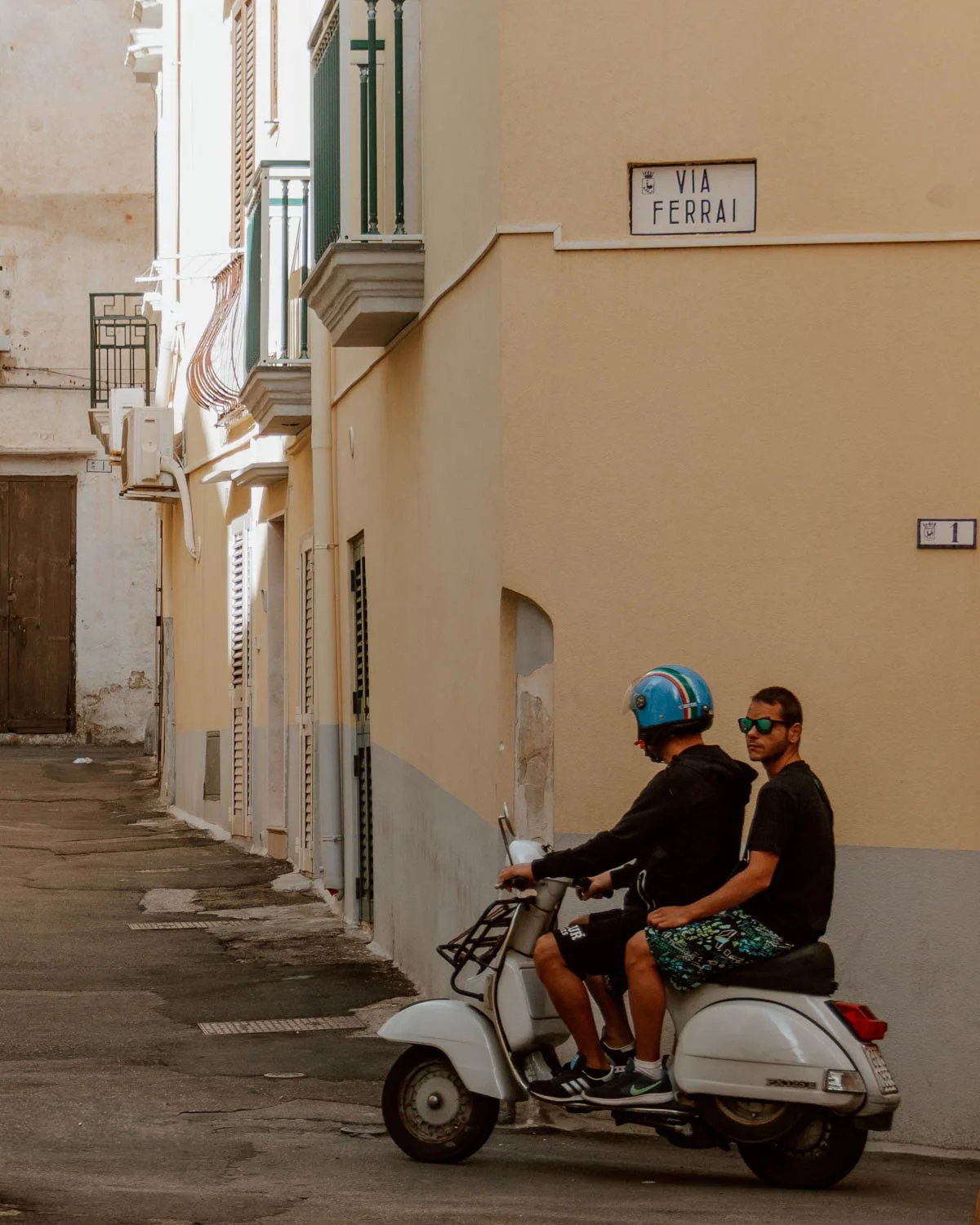
Instead of leaving each morning, we wandered without much purpose, bought groceries from that wonderful little shop, watched fishermen work beside the harbour and returned to the rooftop of our apartment as the sun dropped into the Ionian. There were moments when Gallipoli felt like the setting for an old Italian film - not because life here has stood still, but because the narrow streets, small daily encounters, and closeness of the sea briefly made it feel as though we’d wandered onto the set.
Gallipoli takes its name from the Greek Kallípolis: the beautiful city.
For us, it lived up to it.
The Gallipoli Essentials
Stay / One or two nights within the old town walls; our top picks are Palazzo Presta, Dimora delle Terrazze and Casa Coco
Walk / A complete circuit of the old town & sea walls independently or join an excellent group walking tour
Swim / At Spiaggia della Purità, directly beneath the centro storico
Beach / Head south to Punta della Suina or Punta Pizzo
Eat / Seafood at Da Clara or Osteria Briganti
Book / A three-hour boat trip to Sant’Andrea and Punta Pizzo, or see Gallipoli from the water on this sunset excursion
Visit / June or September for warm weather without the worst of the summer crowds
Drive / Gallipoli is a great base for a Puglia road trip; compare car hire on Auto Europe, but remember that you cannot drive or park within the old town
Should You Visit Gallipoli?
For us, emphatically yes - although not because Gallipoli contains one defining landmark or an especially long list of things to do.
The old town is small enough to cross in a matter of minutes. Its castle, churches, underground olive presses and city beach are all worthwhile, but none is the sole reason to travel here. Gallipoli’s appeal is cumulative: the approach across the bridge, fishing boats below the walls, glimpses of blue at the end of narrow streets, and the pleasure of watching the sun disappear into the Ionian Sea.
It is perfectly possible to visit Gallipoli as a day trip, and half a day is sufficient to see the principal sights. However, we think this undersells it. The town is at its least appealing during the hottest, busiest hours, when day visitors fill the lanes and the midday sun washes the colour from the old stone. Stay overnight and there is time to see the harbour in the morning, return to the walls for sunset, eat properly and experience the centro storico as somewhere people still live rather than simply somewhere to pass through.
As mentioned above, we spent three nights in Gallipoli and, despite the weather removing almost every beach day from our plans, it never felt excessive. For most Puglia road trips, one or two nights will be enough; allow longer if you also want to explore the beaches stretching south towards Punta della Suina and Punta Pizzo.
The principal caveat is high summer.
Though Gallipoli isn’t one everyone’s radar, it’s also not an undiscovered fishing town and anyone arriving with that expectation in July or August may be disappointed. During the busiest weeks, particularly around Ferragosto, accommodation prices rise, parking becomes difficult and the coastline fills with holidaymakers. Baia Verde, south of the town, is one of Salento’s best-known centres for beach clubs and nightlife, drawing a much younger, party-focused crowd than the photographs of Gallipoli’s old streets might suggest.
Some travellers will love that version of the town; others should avoid it entirely. For warm weather and a better chance of experiencing both the beaches and the old town at their best, June and September offer a far happier balance.
Gallipoli is therefore not somewhere we would describe as quiet, unknown, or essential to every Puglia itinerary. It is, however, one of the region’s most distinctive coastal bases - and if the thought of sleeping within the walls of an old island town appeals, it is absolutely worth making room for.

The Best Things to Do in Gallipoli
Almost everything worth seeing in Gallipoli lies within the centro storico, and the old town is compact enough to explore entirely on foot. You could walk from the bridge to its furthest edge in little more than ten minutes; seeing it properly takes considerably longer.
A loose circuit works well to appreciate the unique layout. Begin at the Fontana Greca and harbour, cross the bridge beside the castle, follow Via Antonietta De Pace through the centre, then return around the sea walls via Spiaggia della Purità. Allow at least three or four hours, longer if you plan to visit an underground olive press, stop for lunch or swim.
Cross the Bridge Into the Old Town
The approach to Gallipoli Vecchia is part of the experience.
Before crossing, pause beside the Fontana Greca (maps), an elaborate stone fountain standing between the modern town and the harbour. It’s frequently described as the oldest fountain in Italy, supposedly dating from the third century BC, but that claim is heavily disputed; historians have also placed its construction during the (considerably later) Renaissance.
Its precise age remains uncertain, although the weathered reliefs depicting figures from Greek mythology are worth a closer look.
From here, the 17th century bridge carries you across the water towards the old town. The castle rises immediately to the left, while fishing boats, market stalls and the harbour occupy the water below. It’s a short crossing, but one which establishes Gallipoli’s geography beautifully: the modern town behind, the fortified island ahead and the Ionian Sea visible on either side.
Walk the Old Town and Sea Walls
Via Antonietta De Pace forms the principal spine of the centro storico, passing the cathedral, shops and several of Gallipoli’s grander palazzi. However, the old town is at its loveliest once you leave this busier street behind.
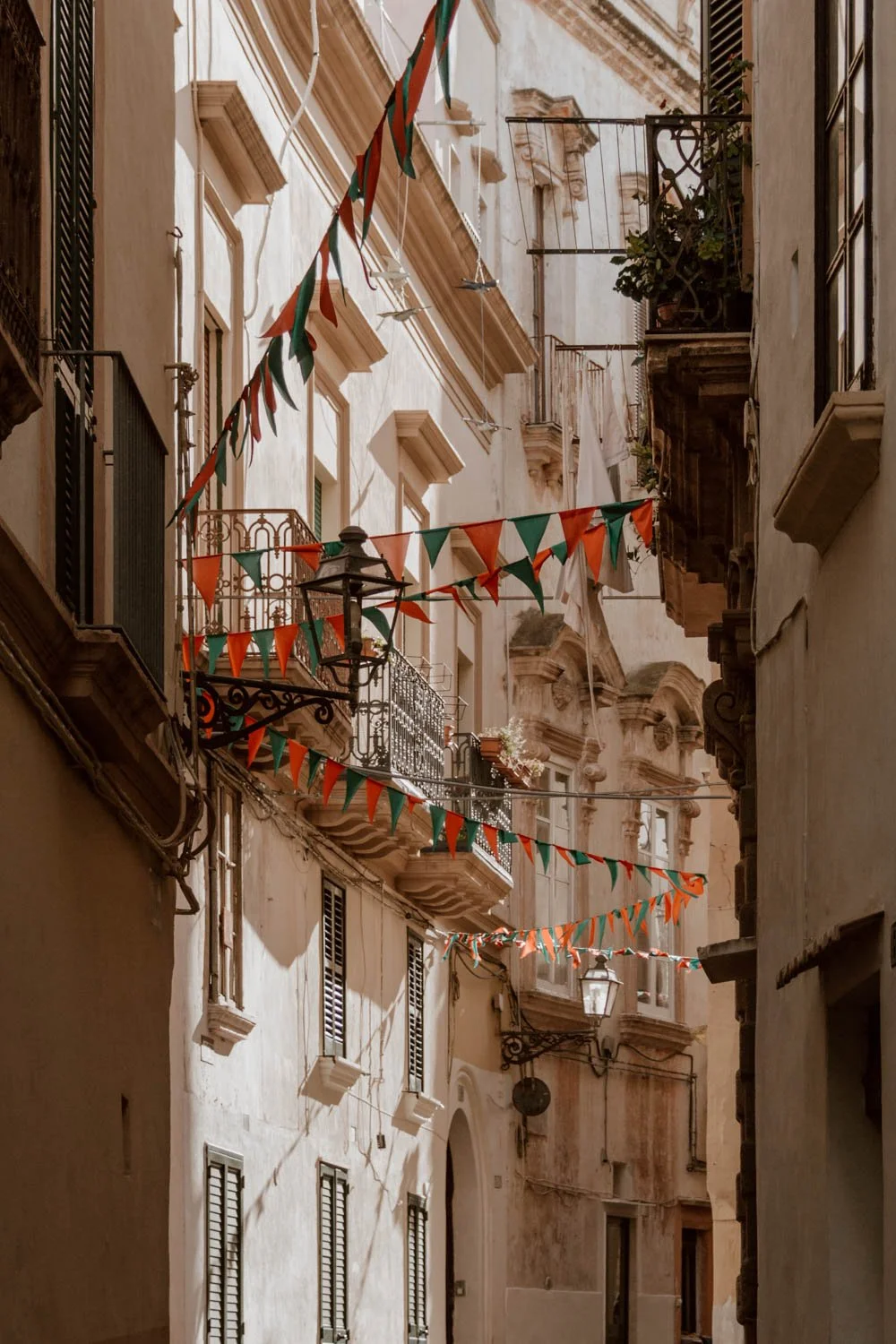
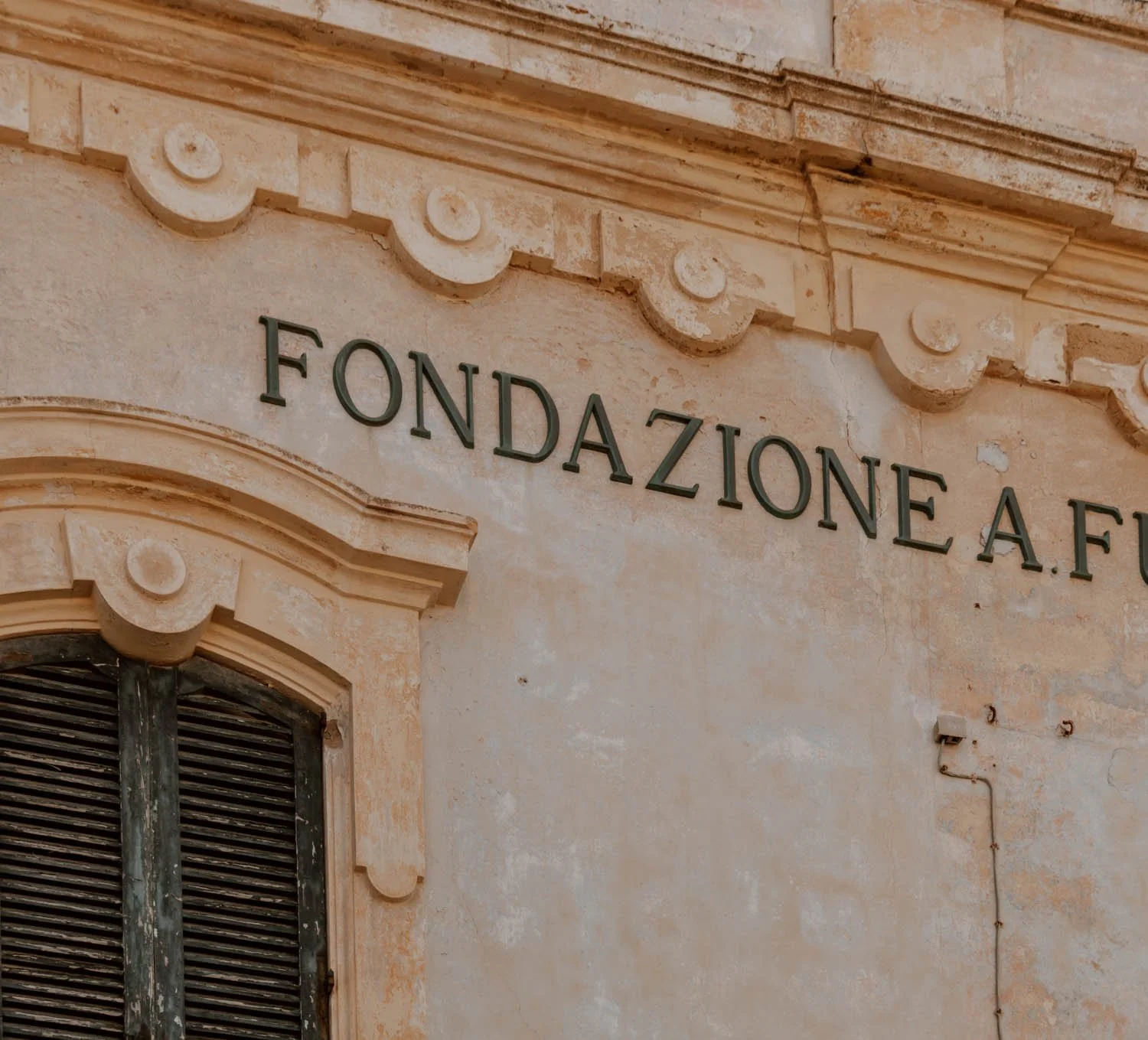
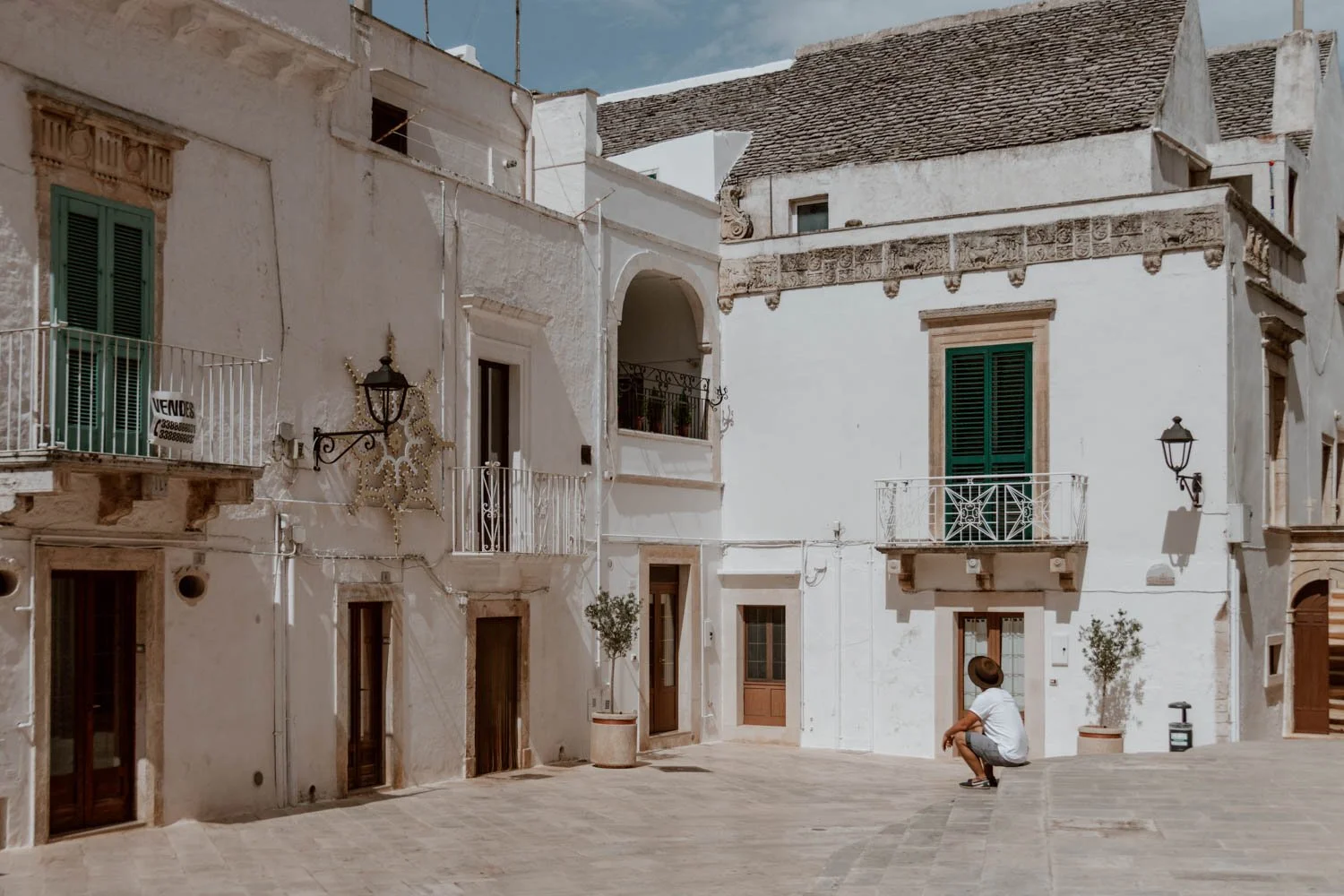
The lanes on either side narrow and curl around one another, occasionally opening onto a church, courtyard or sudden view of the sea. Laundry hangs above doorways, faded façades sit alongside freshly restored apartments, and the scent of lunch escapes from kitchens hidden behind heavy wooden doors. This is where our little grocery shop was found, although we could never confidently retrace the route to it.
Eventually, almost every street meets the road following the island’s outer walls. Walking the full perimeter is one of the simplest and most enjoyable things to do in Gallipoli, passing the harbour, bastions, churches and Spiaggia della Purità before returning to the castle. The circuit itself does not take long, but benches, viewpoints and the constantly changing angle across the water provide plenty of reasons to stop.
Book//To gain a deeper understanding of Gallipoli’s history, a guided walking tour could be a good option. You can either choose from this well-priced and popular two-hour group option, or alternatively this private walking tour may be worth looking into.
See Gallipoli Castle
The Castello Angioino-Aragonese (maps) dominates the entrance to the old town, occupying a position almost entirely surrounded by the sea.
Although a fortress has stood here in various forms for centuries, much of the structure visible today was shaped by Angevin and Aragonese reconstruction between the 13th and 16th centuries. Four substantial towers anchor the main castle, while the detached Rivellino was added to strengthen the harbour-facing defences.
The interior has previously hosted exhibitions and cultural events, with visitors able to walk through its vaulted rooms and onto sections overlooking the harbour. However, the castle is currently closed and no reopening date has been confirmed. Check the castle’s official page before your visit rather than relying upon older opening hours or ticket prices found elsewhere online.
Step Inside Gallipoli’s Churches
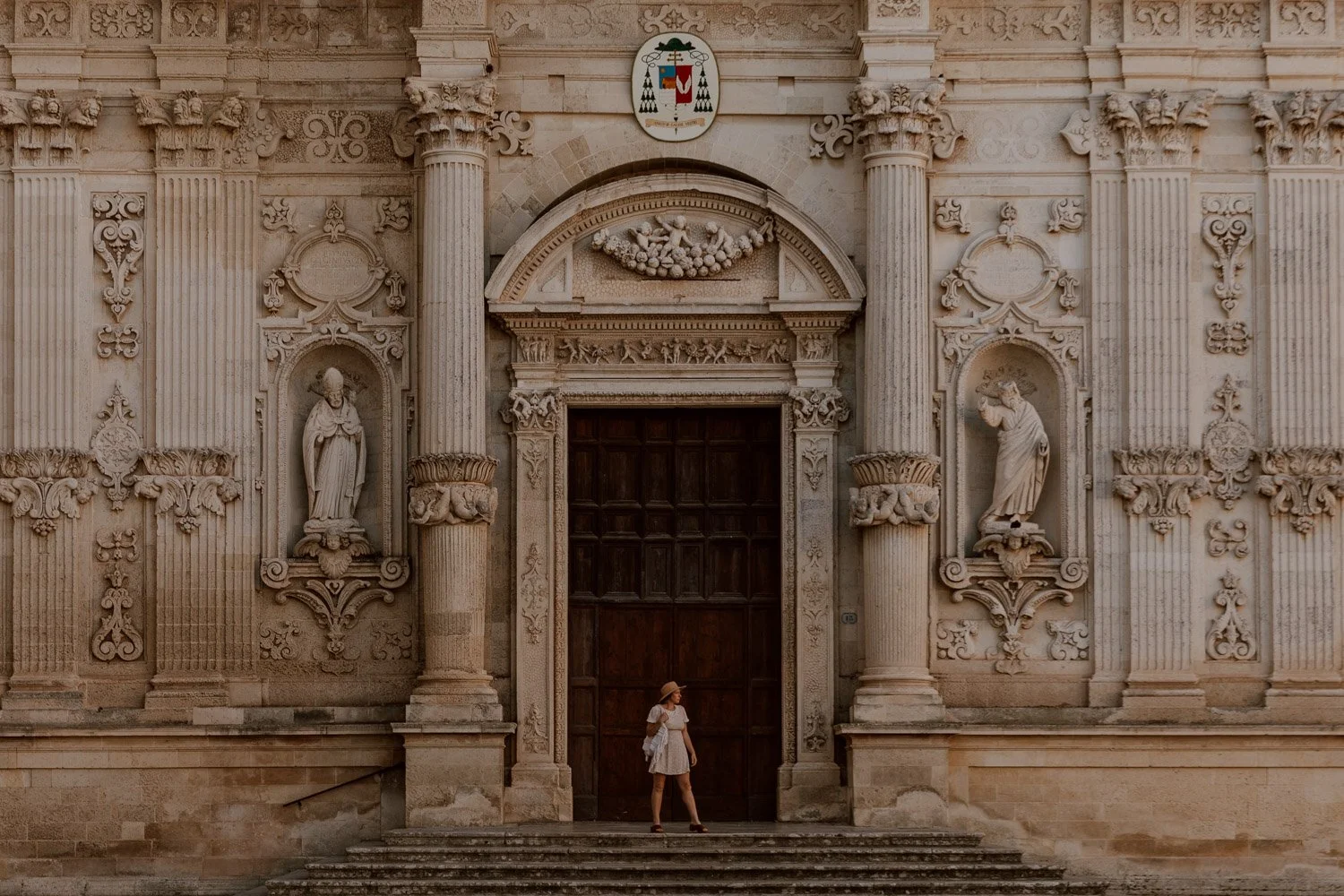
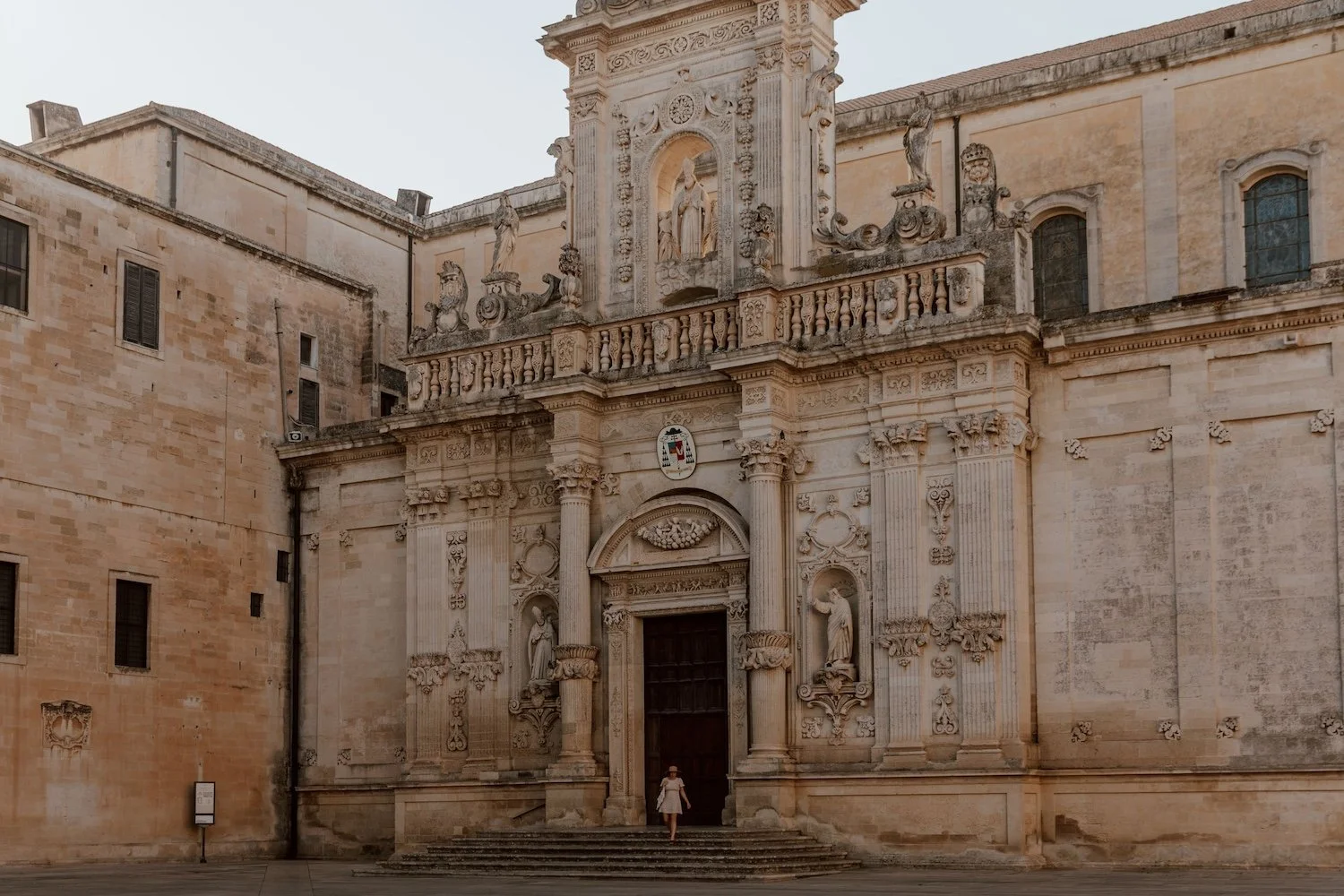
Gallipoli’s churches are surprisingly extravagant for such a small old town, their interiors reflecting the wealth once generated by the port and its olive-oil trade. The most important is the Basilica Concattedrale di Sant’Agata (maps), built in local golden carparo stone between 1629 and 1696. Its richly carved Baroque façade is squeezed into the narrow Via Duomo, making it almost impossible to stand far enough away to take everything in at once. Inside, large 17th-century canvases cover much of the walls and ceiling, creating a dark, densely decorated contrast to the brightness outside.
Entry is free, although visits should be avoided during Mass and other services.
Our other recommendation is the smaller Chiesa di Santa Maria della Purità (maps), overlooking the beach of the same name. Built in the 17th century for the confraternity of the bastasi - the porters and dockworkers of Gallipoli - its restrained façade gives little warning of the decoration within.
Gallipoli contains several more confraternity churches, including San Francesco d’Assisi, Santa Maria degli Angeli and the Santissimo Crocifisso. Their opening hours are often limited or tied to religious celebrations, so consider an open door a welcome invitation rather than attempting to build an itinerary around visiting every one.
As ever in Italy’s religious buildings (and elsewhere), dress modestly and act respectfully inside.
Go Underground at an Historic Olive Press
Fishing may provide Gallipoli’s most visible connection to the sea, but much of its former wealth came from something grown inland.
The town was once a major centre for olive oil production, and several frantoi ipogei - underground olive presses - still exist beneath historic buildings. Visiting one, such as the Frantoio Ipogeo di Palazzo Granafei (maps), gives a sense of how central olive oil was to Gallipoli’s economy, not just as food but as fuel for lamps across Europe.
Opening times vary quite considerably, but if you find it open, entry is €2 per person (including a 10-minute guided tour), whilst you can also do olive oil tastings.
Swim at Spiaggia della Purità
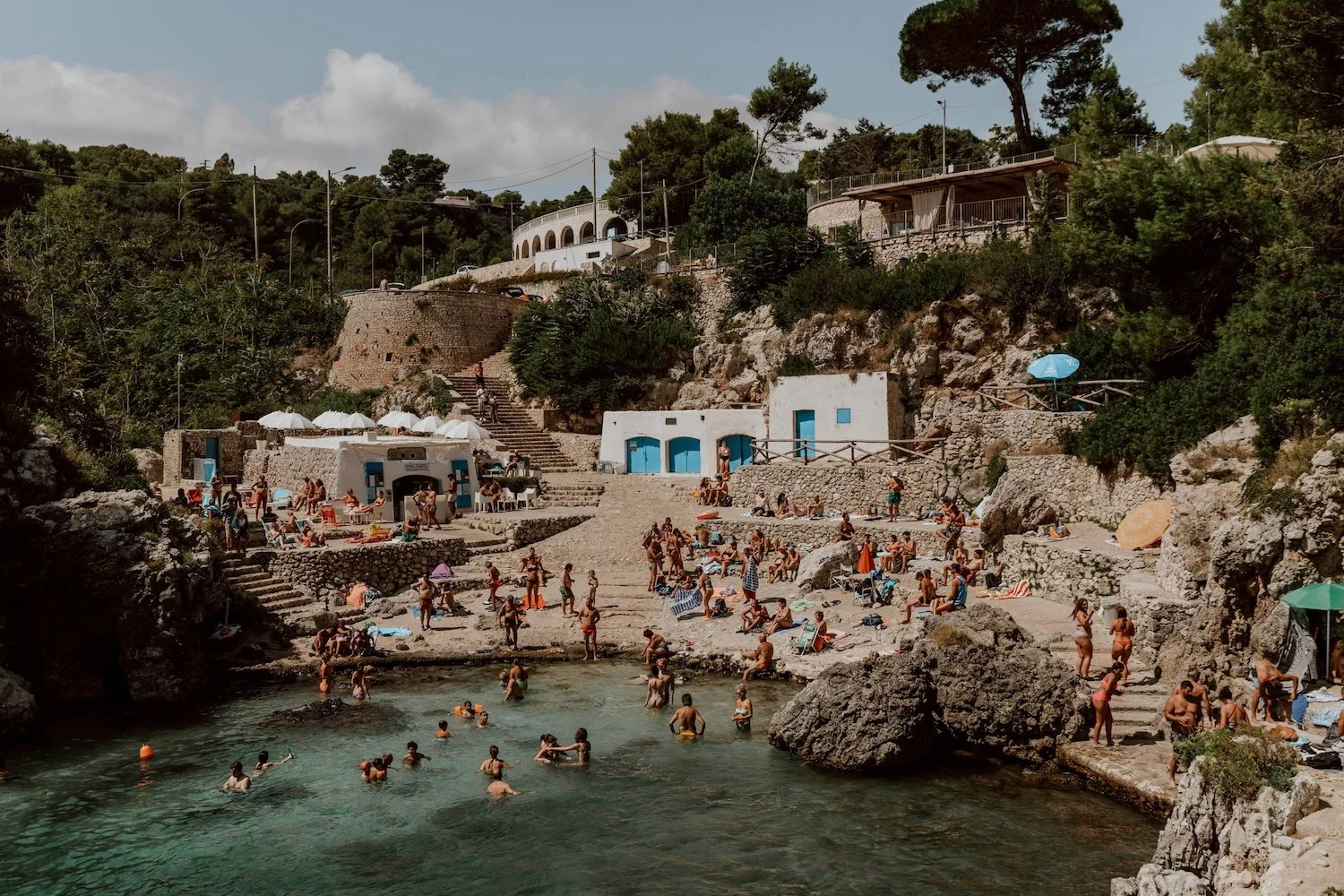
Tucked beneath the western walls, Spiaggia della Purità (maps) is Gallipoli’s wonderfully improbable city beach.
The small crescent of sand sits directly below the old town, with the dome of Santa Maria della Purità above and Isola di Sant’Andrea visible across the water. For anyone staying within the walls, it offers the rare pleasure of walking from bed to sea in a matter of minutes.
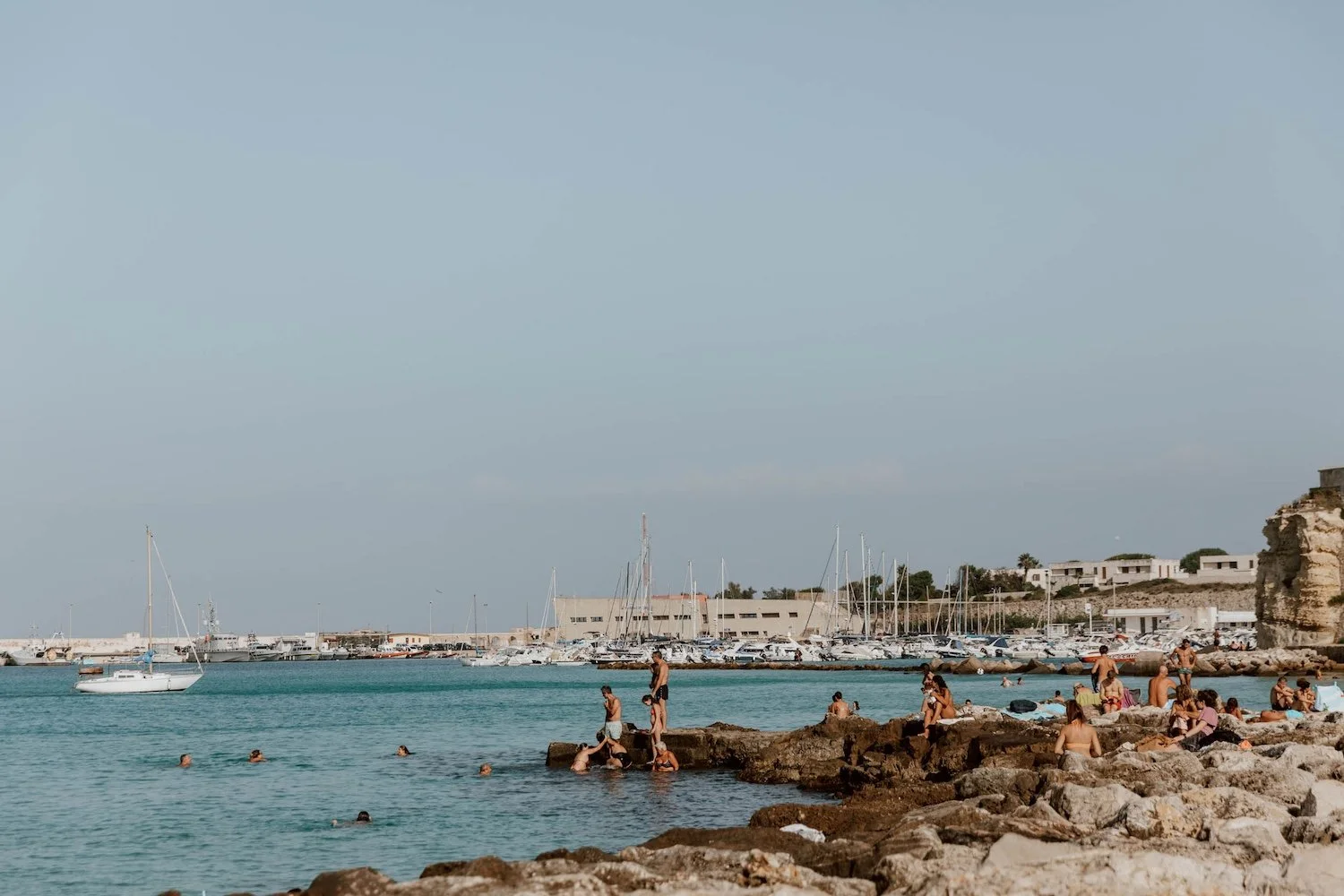
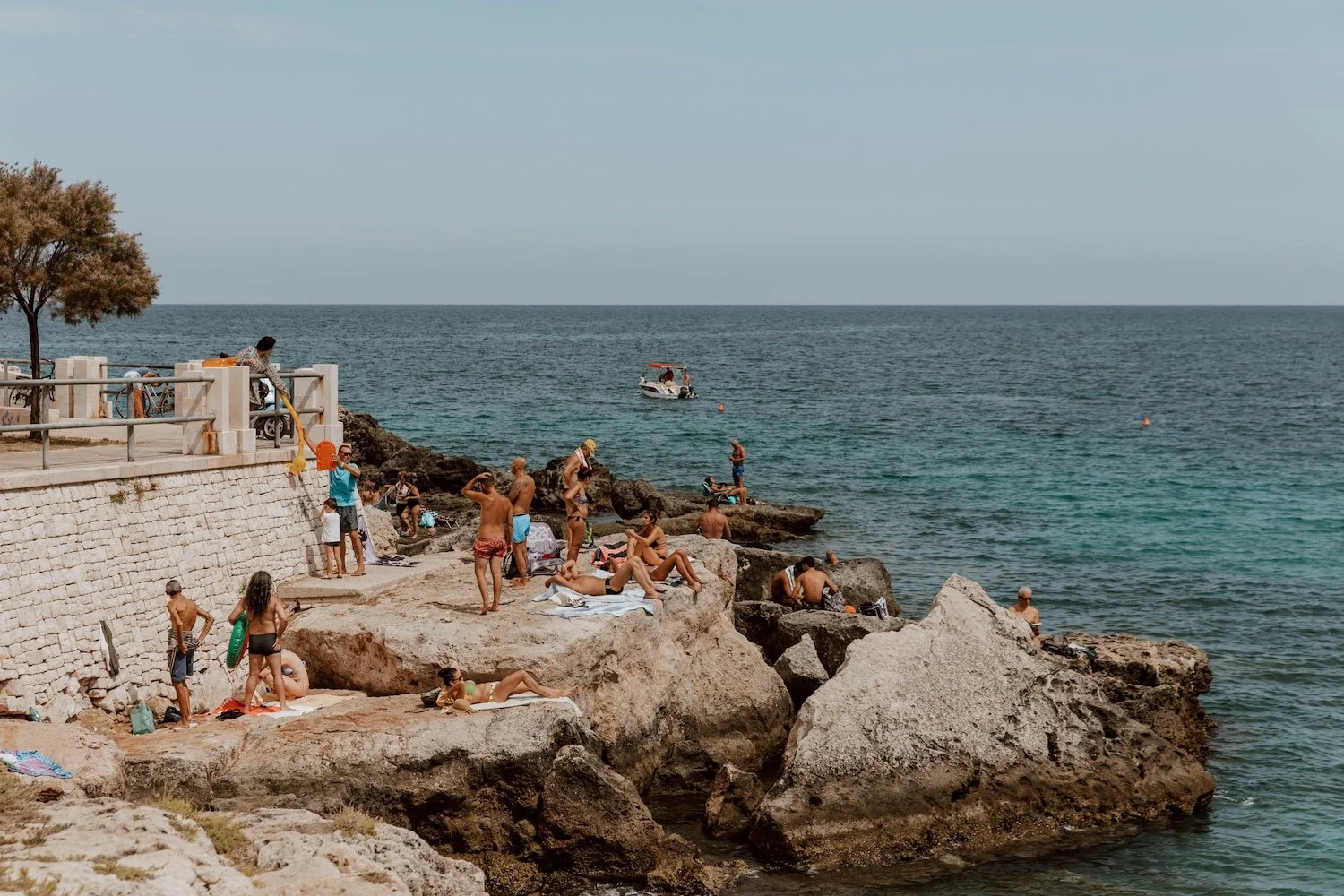
Purità is primarily a free public beach, without the rows of rentable sunbeds, umbrellas and showers found at the larger lidos south of town. Bring a towel and only what you need; space is limited and the sand fills quickly during July and August. When we visited, the wind was far too strong for a proper beach day, which is why our photographs show considerably more sea wall than sunbathing. Even in good weather, we would treat Purità as somewhere for a spontaneous swim or a few hours with a book rather than Gallipoli’s best option for an entire day beside the sea. We cover the larger beaches around town later in this guide.
Plan// The Best Beaches in Puglia
Visit the Harbour & Fish Market
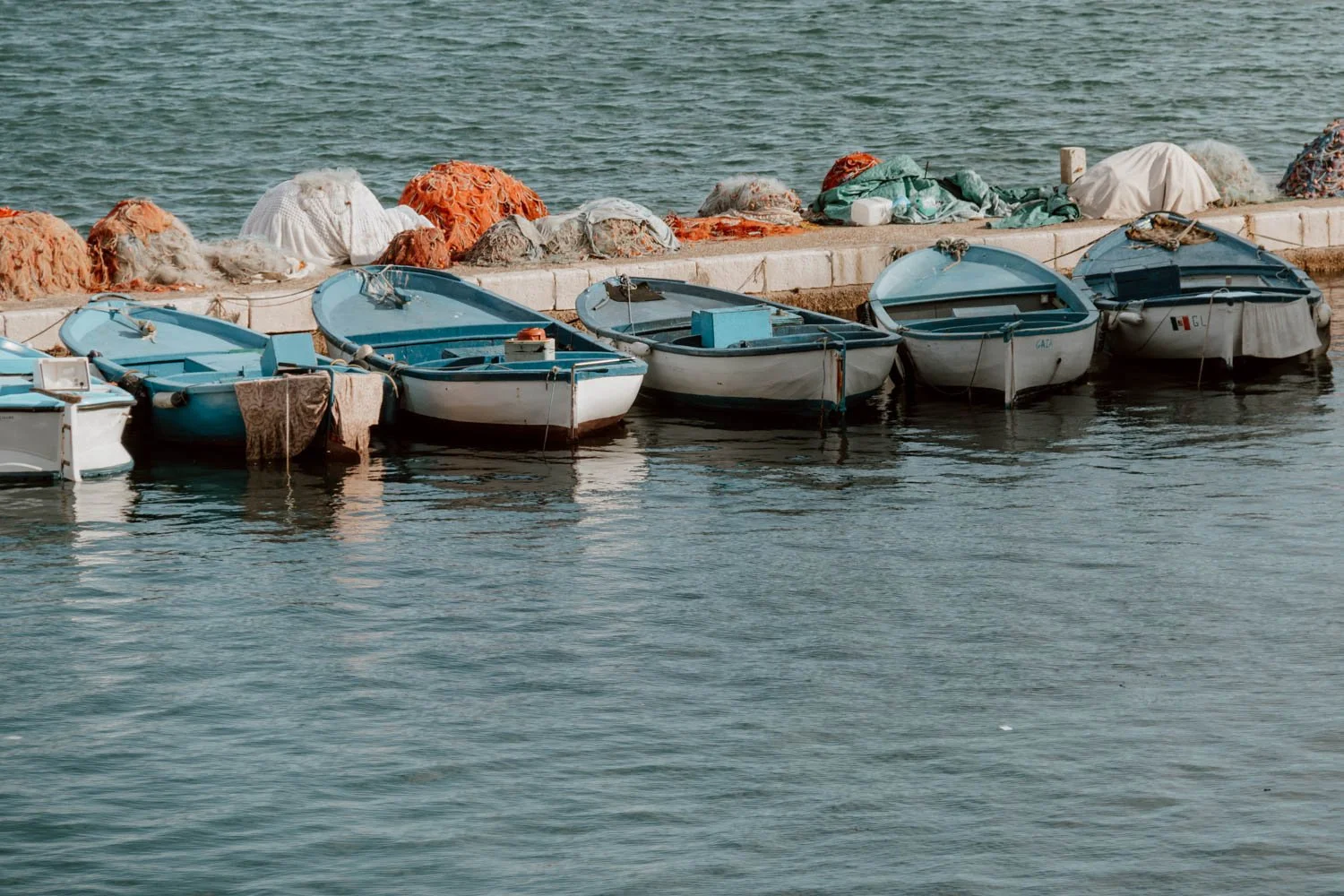
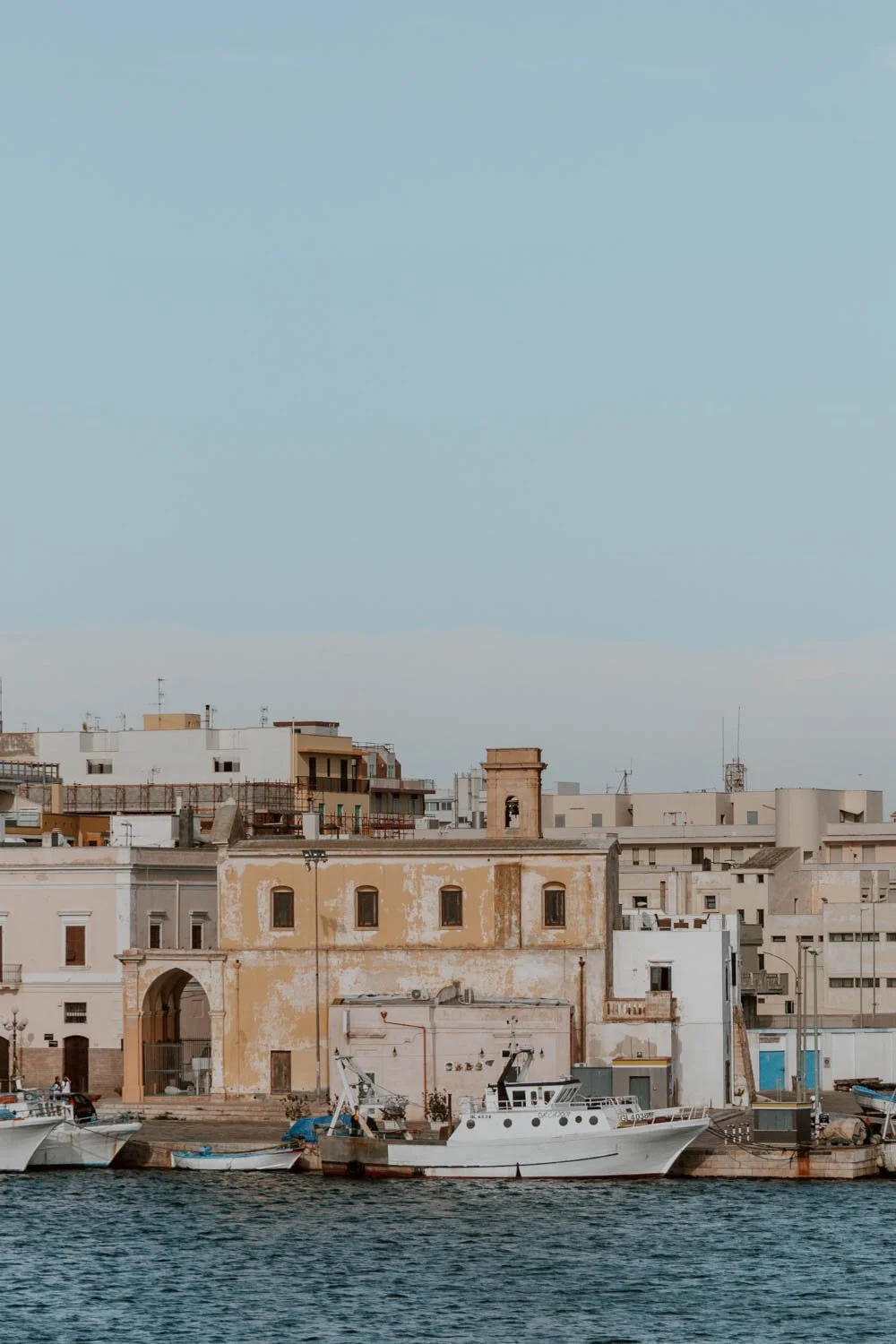
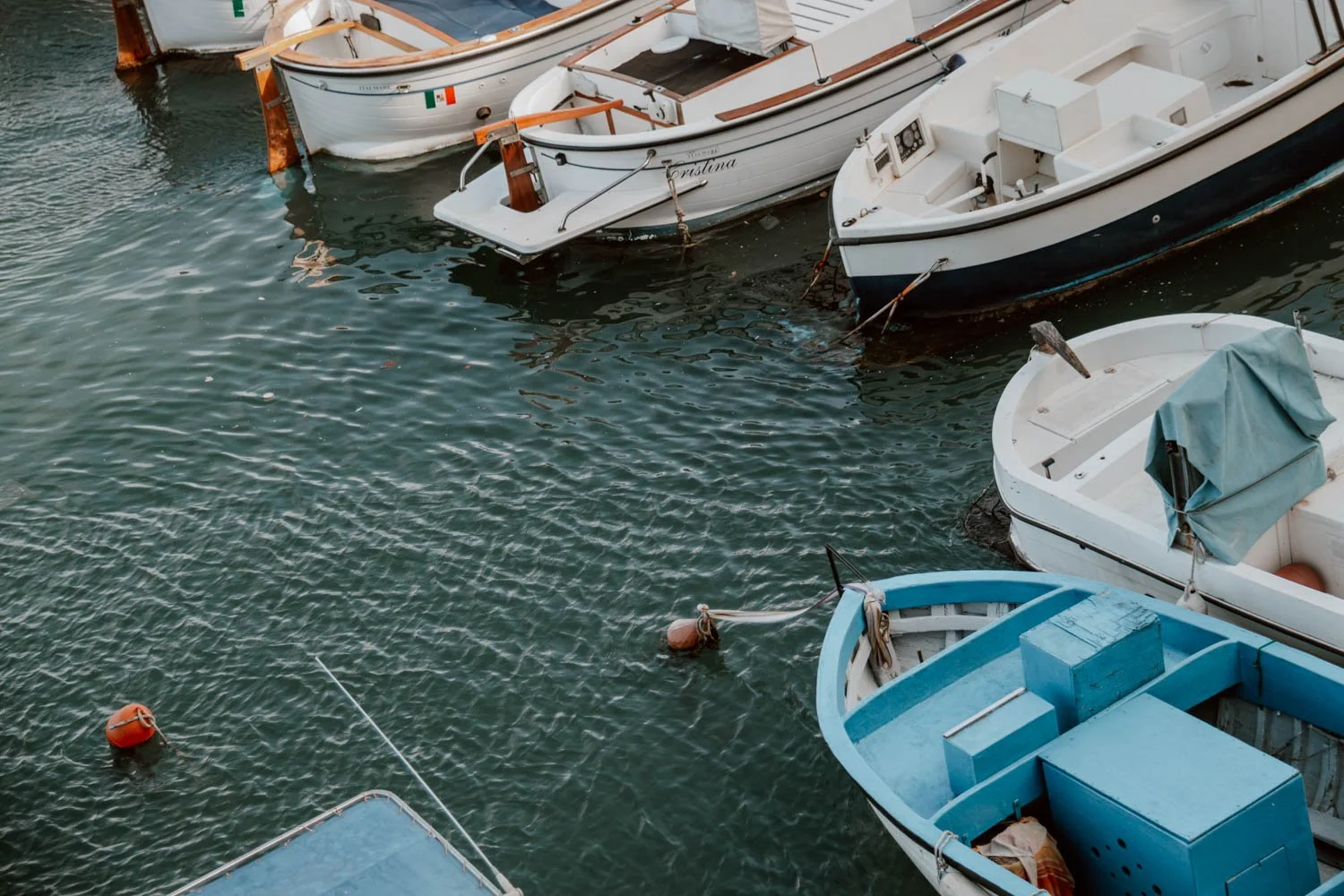
The harbour beside the bridge is not simply a decorative collection of colourful boats. Gallipoli retains an active fishing fleet, and this remains one of the best places to see the older working identity of the town alongside its modern tourism.
Walk down from the Fontana Greca towards the boats and the fish market area beneath the castle. The morning generally offers the best chance of seeing fishermen, nets and the day’s catch, although the scale and opening patterns of the market have varied in recent years.
Take a Boat Trip
From late spring through summer, small boats leave from near the harbour for short trips along the Ionian coast and it’s a pleasant way to see Gallipoli from a different angle. There are a few different itineraries to choose from, but they’ll all allow for swimming time, and often snorkelling equipment is included.
Trips depend heavily on conditions, so they don’t run every day, and departures tend to favour the afternoon or early evening in summer when the heat eases. Expect to pay somewhere in the region of €25-€40 depending upon the itinerary you choose - some head to Isola di Sant’Andrea, an uninhabited island with a 19th century lighthouse, while others focus on gorgeous swimming spots along the coast.
Tours are easily arranged in Gallipoli itself, but if you’d like to book something in advance this three-hour excursion to Isola di Sant’Andrea and Punta Pizzo has lots of excellent reviews - or you could opt for this super popular sunset option.
Watch the Sun Set into the Ionian
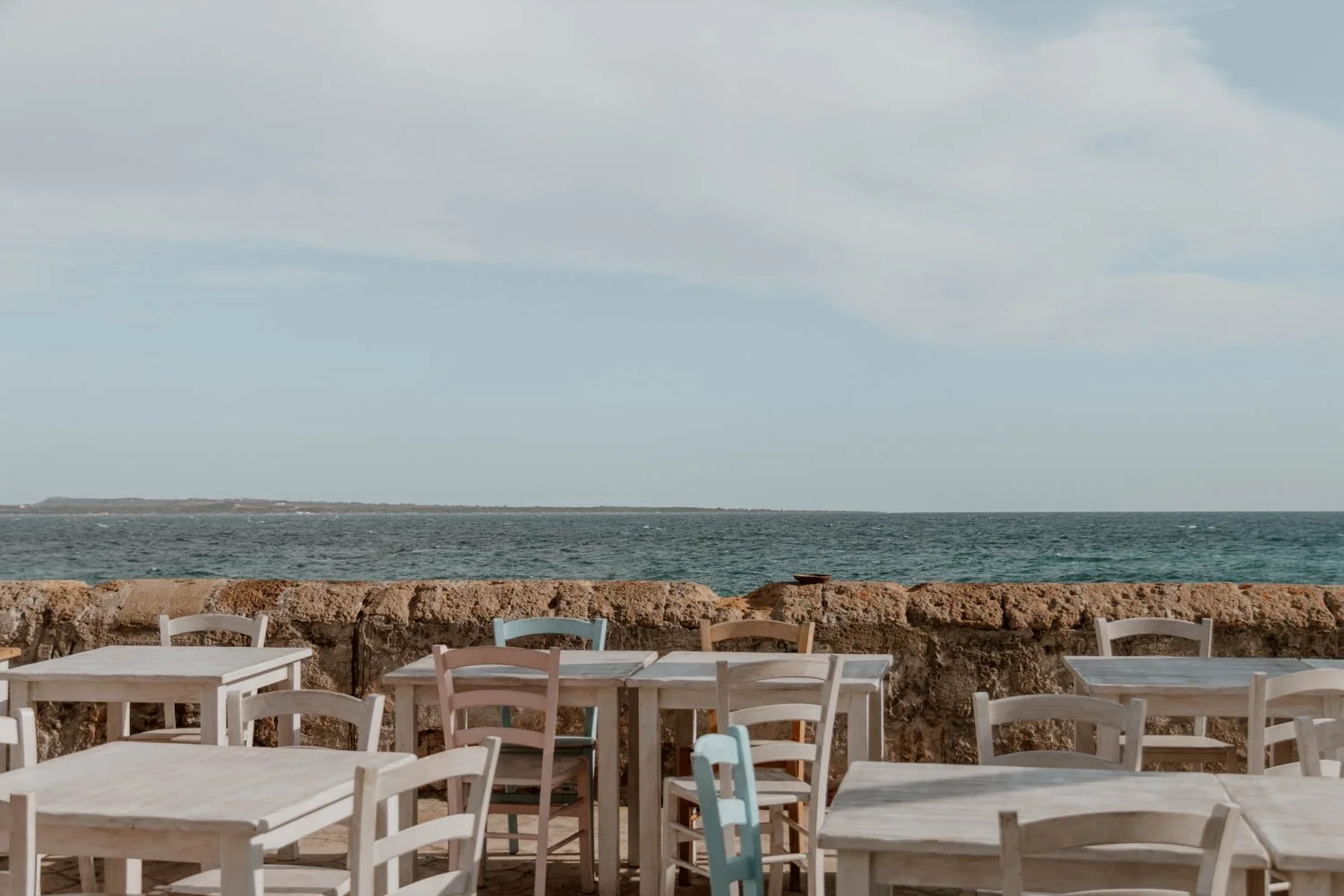
Speaking of sunset, they’re particularly gorgeous in Gallipoli and best enjoyed with a glass of local wine and olives. We were fortunate enough to have a rooftop with our Airbnb to make the most of it, but if you don’t Il Faro is generally considered to be the best spot for a sunset aperitivo (nearby Mivida looks a lot more aesthetic but the recent reviews are pretty crap).
Eat Well
Despite being a relatively small island there quite a few excellent places to eat in Gallipoli, with a strong focus on fresh seafood and seasonal ingredients, underscored by simple Puglian flavours.
Many are clustered around the central streets of the old town, so feel free to wander and grab a table anywhere that takes your fancy, but if you’re looking for local seafood and the freshest fish, consider making a reservation at Osteria Briganti, Da Clara, Ristorante La Vinaigrette, or La Puritate.
If you’re craving a decent pizza, head to La Corte. And for dessert? Finish with gelato from Fedele, then wander until you find somewhere to sit with a glass of wine as the sun drops into the sea.
The Best Beaches Around Gallipoli
Whilst our proper beach days were somewhat limited, between this and other trips to Puglia we have sampled many of the best stretches of coast near Gallipoli - and when conditions are kinder, the obvious direction of travel is south.
The most famous spot is Punta della Suina, a collection of little sandy coves and flat rocky ledges enclosed by pine forest, around 20 minutes from Gallipoli. The setting is beautiful, but the available space is considerably smaller than some photographs suggest and it becomes incredibly busy in July and August. There are organised beach areas alongside sections where you can lay down your own towel, with dedicated parking followed by a short walk through the trees.
A little further along the same protected coastline, Punta Pizzo offers more of the same mix of sand, rock and clear water, but across a less concentrated area. Lido Pizzo covers those who prefer a sunbed, umbrella and somewhere to order lunch; away from it, arrive prepared with water, shade and shoes suitable for the rocky sections.
Whichever you choose, get there early. Turning up at 11am on an August weekend with a car full of beach paraphernalia is unlikely to end well.
Closer to town, Baia Verde is a much more developed proposition. Its long stretch of pale sand and shallow turquoise water is backed by lidos, bars and beach clubs, making it popular with a younger crowd and those who prefer their beach days with music, lunch and several drinks. It looks gorgeous outside the busiest months, but July and August bring tightly packed sand and a far less peaceful version of the Salento coast.
A seasonal ZTL currently restricts traffic along the Baia Verde coast road until the end of August, so check the latest rules before driving there. The area has its own railway stop, which may prove considerably less irritating than attempting to park.
Lido San Giovanni, Rivabella and Lido Conchiglie are the alternatives to know rather than beaches we would suggest prioritising. They have sand, shallow water and plenty of facilities, and may suit families or anyone staying north of town, but Punta della Suina and Punta Pizzo are the names to look at first.
Lastly, pay attention to the wind; we learned this one the hard way. The beaches south of Gallipoli tend to fare better when the tramontana blows from the north, while the northern coast may be more comfortable during a scirocco. Check the sea that morning rather than stubbornly driving towards whichever beach you saved on Instagram six months earlier.
The previous version of this guide also included Pescoluse, or the heavily marketed ‘Maldives of Salento’. It is around 40 kilometres from Gallipoli and better visited as part of a separate day towards Santa Maria di Leuca - not somewhere we would drive to while Punta della Suina and Punta Pizzo are so much closer.
Read // Our Explainer on the The Art of The Italian Lido
Where to Stay in Gallipoli
For a short visit centred upon Gallipoli itself, we would always stay in the centro storico.
This places the beach, harbour, restaurants and sea walls within a few minutes’ walk, while also allowing you to experience the old town before the day visitors arrive and after they have left. The principal inconvenience is that the island is pedestrianised, so anyone arriving by car will need to park on the mainland and carry - or arrange the transfer of - their luggage.
Hotels
Palazzo Presta | If we could stay anywhere in Gallipoli, it would be this STUNNING hotel set within the walls a 17th-century palazzo, close to Purità beach that makes no attempt to disappear into neutral good taste. With antique furniture, patterned fabrics, decorative objects gathered from elsewhere, the look is eclectic and deliberately indulgent but balanced by the solidity of the historic building itself. A rooftop bar, restaurant and panoramic lounge areas add to its appeal, especially if you’re keen to linger in the old town after dark without committing to a night out elsewhere.
Palazzo Flora | One of the strongest additions to Gallipoli’s accommodation scene, set around a quiet courtyard garden with a small outdoor pool - still a rarity within the old town. Frescoes, patterned tiles, old timber and carefully chosen furniture give the ten rooms plenty of personality without tipping into the exuberance of Palazzo Presta.
I Bastioni San Domenico | Built against the sea walls on the quieter southern edge of the island, this boutique hotel is far more restrained. Rooms pair vaulted ceilings and old stone with simple contemporary furniture, while the sea-facing restaurant occupies one of the loveliest positions in the old town. Pay extra for a room with a full sea view.
Corte Moline | A characterful little B&B in a traditional white-stone house, with individually furnished rooms and breakfast served upon the shared rooftop terrace. One of the larger rooms also has a kitchenette, making it a good compromise between an apartment and a hotel.
Palazzo Salapolis | Five spacious, thoughtfully designed apartments in the heart of the old town, several with private terraces. These are a strong choice if you want the freedom to cook, more room than a standard hotel bedroom and somewhere pleasant to spend time between trips to the beach.
The exception to the rule // The five-star Palazzo del Corso sits immediately across the bridge, so the historic centre remains only a few minutes away, but taxis and luggage are much easier to manage. One of the most luxurious options in Gallipoli, this beautiful 5* hotel blends classic elegance with contemporary design, offering spacious rooms, a the most incredible rooftop pool area.
Apartments & Airbnbs
We stayed in an apartment within the old town, chosen largely for its private rooftop. It proved to be an excellent decision: we could buy wine and food from the little grocery shop around the corner, then take everything upstairs as the sun dropped into the Ionian.
If we returned, we would look for much the same again.
Gallipoli has hundreds of holiday rentals, but relatively few we’d confidently recommend on design, character and location. These are the ones we would shortlist.
Dimora delle Terrazze | Our favourite of the smaller properties. Set within an old palazzo, this one-bedroom apartment retains its coloured floors, tall arched ceilings and original doors, with local antiques and more contemporary pieces brought in around them. Both terraces overlook the rooftops and sea; the lower one also has a rather lovely outdoor shower. A handmade double daybed allows it to sleep four.
Casa Cardami 22 | A one-bedroom apartment directly above Spiaggia della Purità, with the sea framed by the living room doors and a private roof terrace for dinner, sunbathing and outdoor showers. The renovation is relatively restrained, allowing the old stone and remarkable position to do most of the work.
Casa Coco | The strongest all-round two-bedroom option. Its interiors are simple but considered; the real draw is the outdoor space. One terrace flows directly from the living room and has a tiled shower, shaded dining table and outdoor kitchen, while the upper terrace looks across to the sea and Spiaggia della Purità. It also has an excellent, long established review record.
Buccarelli Palace | This two-bedroom home occupies part of an old palazzo on a quiet street in Gallipoli’s historic centre. Star-vaulted ceilings provide the architectural interest, while the private rooftop terrace has its own outdoor kitchen. The second bedroom is a twin, making this a particularly good choice for a small family or friends who do not want to share a bed.
Stories and Frescoes | Easily the most romantic interiors on this list: original frescoes, patterned cement tiles, vaulted ceilings and a four-poster bed beneath the painted ceiling. There are two bedrooms and a private rooftop belvedere overlooking the old town and sea.
Palazzetto Indigo | For a family or group prepared to spend more, this 18th-century house is quite extraordinary. Original Puglian architecture is mixed with contemporary Italian furniture and art, while three terraces culminate in a rooftop with a 360-degree view across the old town, bay and Sant’Andrea lighthouse. It has four bedrooms, three bathrooms and a new summer kitchen, but is spread over several floors.
We stayed at this apartment in the old city with a wonderful rooftop - nothing fancy, but suited us perfectly.
How to Get to Gallipoli
Gallipoli is easiest to reach as part of a Puglia road trip, although public transport from Lecce is perfectly manageable - particularly during the summer months.
By Car
Brindisi is the closest airport, around 80 kilometres away, with the drive to Gallipoli taking approximately 70 minutes. From Bari Airport, it’s closer to 200 kilometres and a little over two hours.
We visited with a rental car and would still recommend doing the same if Gallipoli forms part of a longer trip through Puglia, or if you plan to spend time at Punta della Suina, Punta Pizzo and the beaches further south. As always, we compare prices and availability through Auto Europe and RentalCars before booking.
We save quite a lot of money by purchasing our deductible coverage with Insurance4CarHire.
The drive itself is uncomplicated; parking not so much.
Gallipoli’s old town is protected by a seasonal ZTL (limited traffic zone), monitored by cameras at the bridge beside Fontana Greca. In 2026, restrictions operate from 2nd April until 31st October, beginning at 11am each day and continuing until midnight (or 3am between June and September). Do not cross the bridge once the ZTL is active unless your accommodation has specifically arranged access for your registration number.
Most visitors leave their car in the large parking areas around the port - we used this one - and walk across the bridge. The closest spaces are paid blue bays and prices change with the season, so check the signs rather than relying upon old rates found online. If you are staying within the old town, ask your hotel or apartment host about luggage drop-off and their recommended parking before arrival.
You can check the latest restrictions on the official Gallipoli ZTL page.
Read More // More on ZTls, plus our hard-earned road trip and driving advice for Puglia in this post.
By Train From Lecce
Gallipoli is connected to Lecce by the Ferrovie del Sud Est’s Line 5. Several direct trains run each weekday, with current journeys taking between 1 hour 20 minutes and 1 hour 40 minutes. Sunday and public-holiday services are considerably less frequent, so check your return journey before setting off.
Tickets and live schedules are available through Trenitalia website. Search for Lecce to Gallipoli, rather than one of the smaller suburban stops carrying the Gallipoli name.
The main station is in the modern town, around 15 minutes on foot from the bridge and approximately 20 - 25 minutes from accommodation deeper within the centro storico.
By Bus From Lecce
During summer, the seasonal Salento in Bus network is often quicker than the train. Line 108 runs between Lecce and Gallipoli from mid-June until mid-September, taking around 40 - 45 minutes from Lecce railway station to the stop at Parcheggio Cimitero.
Services are most frequent during July and August, with a reduced timetable at the beginning and end of the season. Tickets can be bought online through COTRAP; as the route and operating dates are published afresh each year, always check the current timetable rather than relying upon an older screenshot.
From Brindisi Airport Without a Car
There is no year-round direct public transport connection between Brindisi Airport and Gallipoli. Instead, take the airport shuttle to Lecce (around 40 minutes) then continue by FSE train or, in summer, Salento in Bus.
Allow plenty of time between connections. Depending upon the wait in Lecce, the complete journey generally takes at least two and a half hours.
Reaching Gallipoli from Bari Airport without a car involves travelling into Bari, continuing by train to Lecce and changing again for Gallipoli. It can be done, but it is a long arrival day; if your flights and budget allow, Brindisi is the much better airport for southern Salento.




Our short guide to Galatina covers the sights you can’t miss - and where to find that world famous pasticiotto!