


Where to Stay in Puglia | The Best Towns, Bases & Places to Stay
Of all the questions we have been asked about Puglia by readers over the years, by far the most common is: ‘Where should I base myself?’
The difficulty is that the answer changes completely according to the trip.
Stay in Monopoli and you’ve got Polignano a Mare ten minutes away by train, excellent beaches on your doorstep, and much of the Valle d'Itria within easy reach by car. Choose Lecce and southern Salento opens up before you, but places like Ostuni drop off your sensible day-trip list. Book a remote masseria farmhouse and dinner will usually involve driving; stay inside a historic centre and parking, luggage, and restricted streets can become a headache. Opt against a road trip, and the shortlist changes again.
After three trips to the stunning southern Italian region - travelling both with and without a car - our answer to the question comes in as many shapes as the pasta on Puglia's menus: we’ve stayed inside centri storici, amongst olive groves, beside the sea, and in towns chosen as much for their position as their beauty.
What’s worked best has rarely involved changing accommodation every night or attempting to cover the entire region from one address. Instead, it's been choosing two or three considered bases that each open up a distinctly different part of the region or offer something worth slowing down for.
We've written this guide to help you find that right combination for your own trip.
For a week in Puglia, two bases will generally be enough. With ten days or a fortnight, three will allow you to include the Valle d’Itria, one of the coastal towns further south, and perhaps Bari or Lecce without spending half the holiday retracing the same roads. Travellers relying entirely on trains and buses will need to make different choices from those collecting a hire car, while anyone dreaming primarily of masserie, trulli, and long afternoons beside a pool should should let the countryside - not the towns - anchor at least one base.
This guide isn’t a directory of everywhere it’s possible to stay in Puglia. Rather, it’s our attempt to properly answer that original question: which towns and areas work best as bases, what you can realistically visit from each, whether you need a car, and what compromises come with choosing one over another.
Alongside our recommended bases (running north to south), we’ve included carefully selected hotels, guesthouses, and Airbnbs to suit your travel style, plus several exceptional properties worth building a whole itinerary around.
This is our long-awaited guide on where to stay in Puglia.
Where to Stay in Puglia At A Glance
Best all-round coastal base / Monopoli
Best base for the Valle d’Itria / Ostuni
Best countryside stay / A masseria or trullo between Ostuni, Cisternino, Locorotondo, and Martina Franca
Best city base in southern Puglia / Lecce
Best for the eastern Salento coast / Otranto
Best for the Ionian coast and sandy beaches / Gallipoli
Best for a seaside holiday / Santa Maria di Leuca
Best for a short break or car-free arrival / Bari
Best for an iconic overnight stay / Polignano a Mare
Best for sleeping in a trullo / Alberobello
How Many Bases Do You Need in Puglia?
For a long weekend or a trip of four nights, choose one part of Puglia and accept that much of the region will have to wait until another time. Monopoli and Ostuni work particularly well for central Puglia, while Lecce, Otranto, and Gallipoli each provide a very different introduction to the Salento area.
As mentioned, if staying for around a week, we would choose two bases and spend three or four nights in each. This provides enough time to explore beyond the place you’re staying without turning the holiday into a succession of check-outs, luggage reshuffles, and car journeys.
For ten days to two weeks, two or three bases work well. Monopoli followed by Lecce is perhaps the simplest first-time combination, while Ostuni and Otranto provide a particularly good split between the Valle d’Itria and the Adriatic coast. Those wanting more countryside and fewer towns could instead combine a masseria in the Valle d’Itria with several nights beside the sea in Santa Maria di Leuca.
Travel Tip // Think about combinations, rather than destinations. A well-balanced Puglia trip should involve several beautiful towns as well as time by the sea and in the countryside. Rather than focus solely on bases in the most popular places, a solid base and a series of day trips will give you a far better overall experience!
Our Puglia road trip itinerary covers one possible route in much more detail.
Where to Stay in Puglia Without a Car
Although hiring a car gives you far more freedom in Puglia, it isn’t essential - provided you choose your bases carefully and accept that some beaches, countryside properties, and smaller towns will be difficult to reach.
Train travel offers the most enjoyable and affordable alternative.
The main railway line along the Adriatic coast connects Bari and its airport with Polignano a Mare, Monopoli, Ostuni, Brindisi, and Lecce. Of those, Monopoli is our favourite car-free coastal base: the station is within walking distance of the historic centre, there are beaches close to town, and both Bari and Polignano can be reached easily by train.
Ostuni also has a station on this route, but it sits several kilometres below the old town, requiring a bus or taxi at either end of most days out. This doesn’t rule it out completely, but it makes the city considerably less convenient without your own transport.
Further south, the city of Lecce is the obvious choice. It’s easy to reach from both Bari and Brindisi (where the other main airport is found), has plenty to fill several days, and provides onward connections to towns including Otranto and Gallipoli. During summer, the seasonal Salento in Bus network also links Lecce with many of the peninsula’s coastal towns and beaches, although routes and operating dates are published afresh each year.
For a week without a car, we would divide the trip between Monopoli and Lecce. Bari also works well for a short break or a night at either end of the trip, while Polignano a Mare is perfectly manageable if staying beside its famous cliffs matters more than having the most practical base.
We would not choose a remote masseria, countryside trullo, or isolated villa without a vehicle. Santa Maria di Leuca, Torre dell’Orso, and the smaller coastal resorts are also much easier in summer than outside it, when seasonal transport disappears and services become considerably less frequent.
You can check current rail routes and departure times through Trenitalia, but always look closely at the complete journey rather than the apparent distance on a map: travelling between Puglia’s smaller towns can involve slow connections, replacement buses, or a return through a larger transport hub.
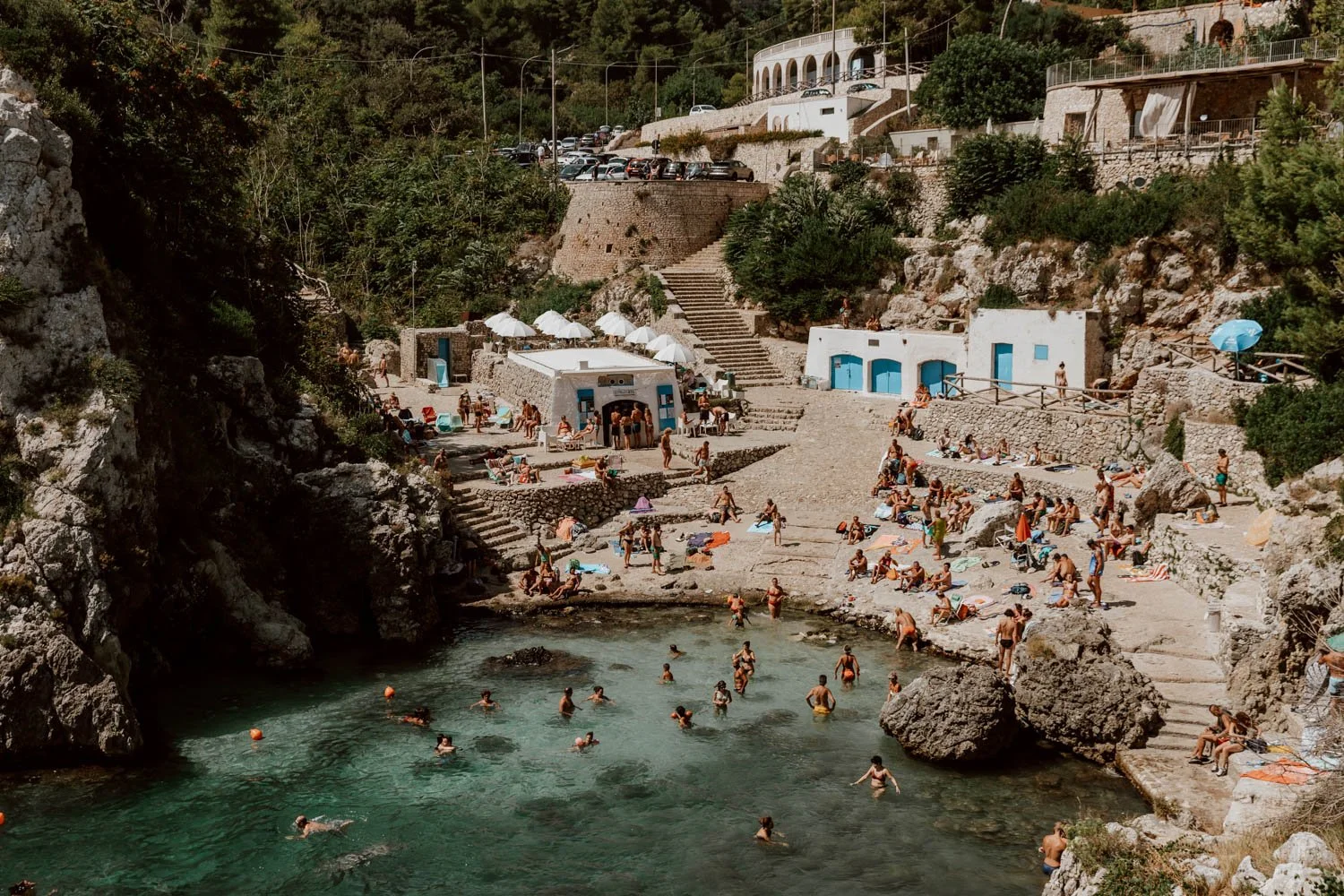
Bari |
Best for Transport Connections, Street Food, & Travelling Without a Car
Bari does not offer the immediate seduction of Puglia’s white towns.
It’s a busy regional capital and working Adriatic port, with traffic, apartment blocks, grand shopping streets, and a seafront used as much for the evening passeggiata as for admiring the view. And whilst Bari Vecchia now draws plenty of visitors, particularly to the Basilica di San Nicola, it remains a densely inhabited neighbourhood rather than an old town given over entirely to tourism.
The city is untidier, louder, and more complicated than the Puglia of your Instagram feed, and far more compelling than its reputation as somewhere to just collect a hire car.
Bari is ideal as a short city break, or as the first or final stop on a longer Puglia itinerary. The airport line terminates at Bari Centrale, making arrivals, departures, and onward travel simple, and regional trains mean day trips to Trani, Polignano a Mare, and Monopoli perfectly possible if time is short - however, importantly, we do not recommend using Bari as the base for a coastal holiday.
Trips built primarily around Puglia’s best beaches, rural masserie, or the smaller towns of the Valle d’Itria require a base further south.
Whilst Pane e Pomodoro is fine for a city swim, it’s not the coast most travellers have pictured, while a hire car offers little benefit within Bari, bringing traffic, parking costs, and ZTLs without unlocking much that can’t already be reached on foot (it may be easier to enjoy the city before picking one up or after dropping it off).
Choose Bari // If you want to include a proper southern Italian city alongside Puglia’s smaller towns, you’re travelling without a car, or you need a rewarding first or final stop with straightforward airport and railway connections. Late night arrivals into the city’s airport should spend the night here.
Think Twice // If beaches, countryside, and masserie are central to the trip you’ve pictured - a base further south will deliver more of what you want.
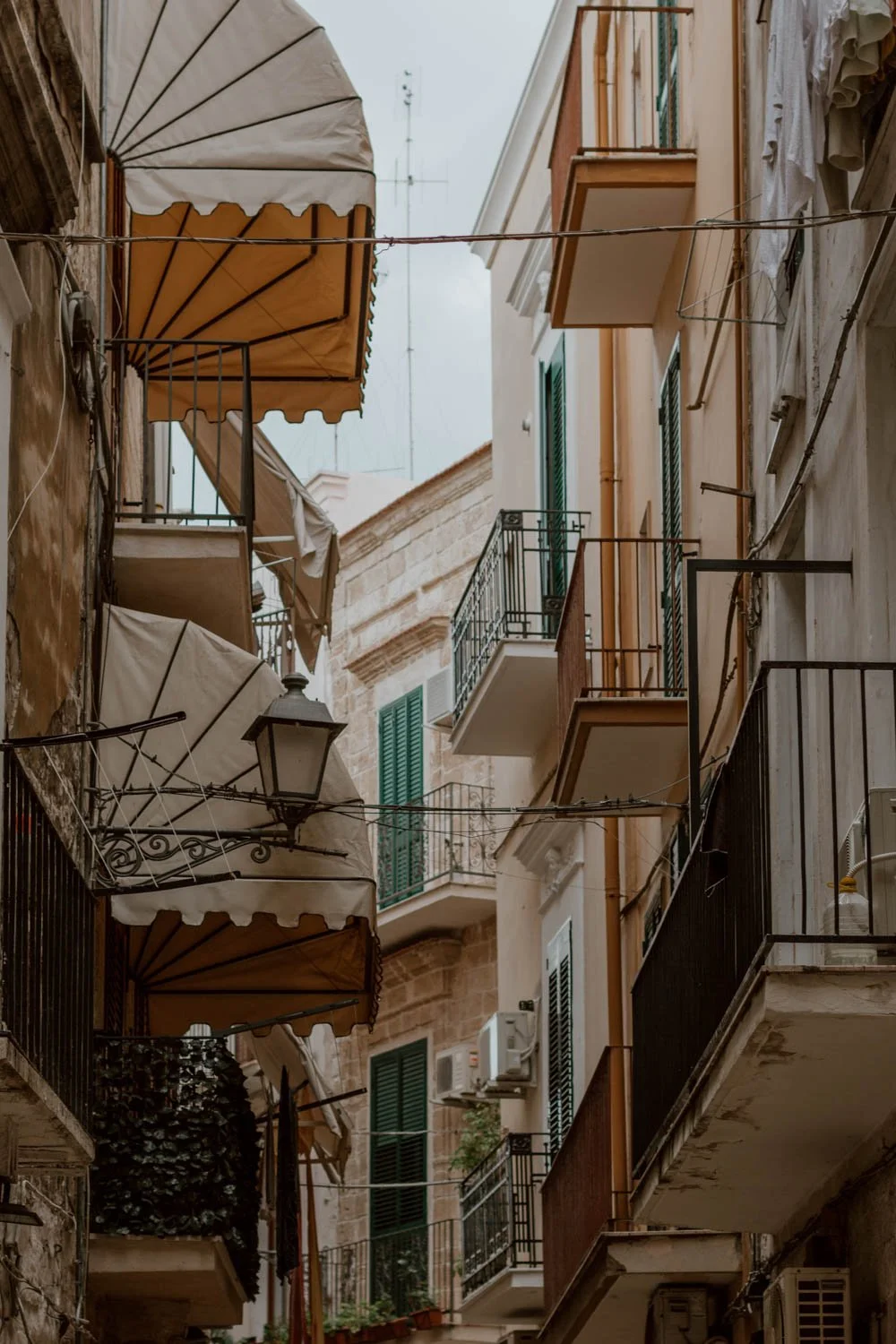

Accommodation in Bari
For a first visit, we suggest either Bari Vecchia (Old Bari) or the section of Murat between the old town and Bari Centrale.
The former is obviously the much more photogenic choice, and means the basilica, castle, old port, orrechiette-making old ladies, and evening atmosphere are immediately outside the door. It’s also more practical or short trips as you' won’t waste precious time walking to and from your accommodation. The trade-off is that many properties occupy small historic buildings reached through pedestrianised lanes, with steep stairs, no lift, and nowhere nearby to stop a car.
Across Corso Vittorio Emanuele, the streets around the northern end of Via Sparano and Teatro Petruzzelli offer easier arrivals, larger rooms, and quick access to both the old town and seafront. Bari Centrale remains within walking distance, but we would only stay immediately around the station if an early departure or late arrival made convenience the overriding concern.
Hotels & Guest Houses
B&B Murex | With just four rooms, this small guesthouse offers a wonderfully personal stay. The restoration is simple and warm, leaving old beams, exposed walls, and imperfect doorways to provide the character, breakfast is served on the rooftop terrace, looking across the muddle of roofs below, and the owners’ knowledge of the city receives almost as much praise as the property itself.
Al Pescatore B&B | Occupying a converted tower house opposite the Castello Svevo, with two rooms on each of its upper floors and a terrace overlooking the rooftops. The rooms are attractive and comfortable rather than design-led (some with balconies), but more than a thousand excellent reviews suggest the hospitality and overall experience are doing rather a lot right. The same family also runs one of Bari’s established seafood restaurants at street level,
Bra Hotel | One of the city’s more elevated stays, its ten rooms are dark, cocooning, and decidedly grown-up, combining designer furniture and marble bathrooms with fireplaces, sculptural lighting, and some unexpectedly theatrical touches. Upstairs, an all-white rooftop pool and restaurant look across the modern city; downstairs are a small spa and a second restaurant. The price places it firmly in special-occasion territory, but this is Bari’s most convincing full-luxury hotel.
VIS Urban Suites & Spa | Bold wallpaper, brass, patterned tiles, deep colours, and enormous statement lights give VIS a much more exuberant personality than most contemporary hotels. Its rooms and suites occupy an older city building outside Bari Vecchia, with some extending into substantial apartment-like spaces and others opening onto furnished terraces. The spa has been cut into the original stone cellars beneath the hotel, where a small pool, hammam, and sauna sit below vaulted ceilings.
Apartments & Airbnbs
Art View | Located inside Palazzo Ferreri, this is an excellent example of what happens when the owner of a beautiful old apartment resists the temptation to divide it into three smaller rentals. Its bedroom occupies only part of the large home, leaving space for a generous sitting room, separate dining area, artwork, carefully chosen furniture, and a handsome three-arched window framing the city outside. It’s expensive, but the proportions and architectural presence are far removed from those of a conventional one-bedroom rental.
Garitta Dodici | High above Bari Vecchia, two whitewashed terraces frame the tiled roof of Basilica di San Nicola and a strip of blue Adriatic. Inside, chalky walls, poured-resin floors, pale custom-made furniture, vintage cement tiles, and exposed timber create something far more considered than the average old-town rental. Three en-suite doubles sleep six across a private studio and adjoining duplex, making this striking little house particularly well suited to friends travelling together.
Casa Albicocca | Open the bedroom balcony, and Largo Albicocca is directly below. The apartment itself is compact, but its four-metre timber ceiling, tuff-stone wall, and tall balcony doors preserve enough of the building’s past to stop the renovation feeling generic.
Secret Garden | Exposed honey-coloured tufa gives this ground-floor loft its shape, while an orange sofa, retro fridge, pop-art prints, and leaf-patterned screen provide colour and fun. An open timber-and-steel staircase leads to the double bedroom; downstairs, doors open from the living area into a private garden with a wooden deck and barbecue - the feature that earns it a place in this selection.
Austak 2 | Behind the tall windows overlooking Piazza Mercantile, the renovation is unexpectedly assured: herringbone parquet, muted rose walls, a matte-black kitchen, and mid-century furniture sit comfortably alongside an antique wooden bed. Those windows open onto a narrow balcony facing Palazzo del Sedile, placing the apartment directly above the comings and goings of Bari Vecchia. There are two bedrooms and a sofa bed, although one has a small double and all guests share one bathroom.
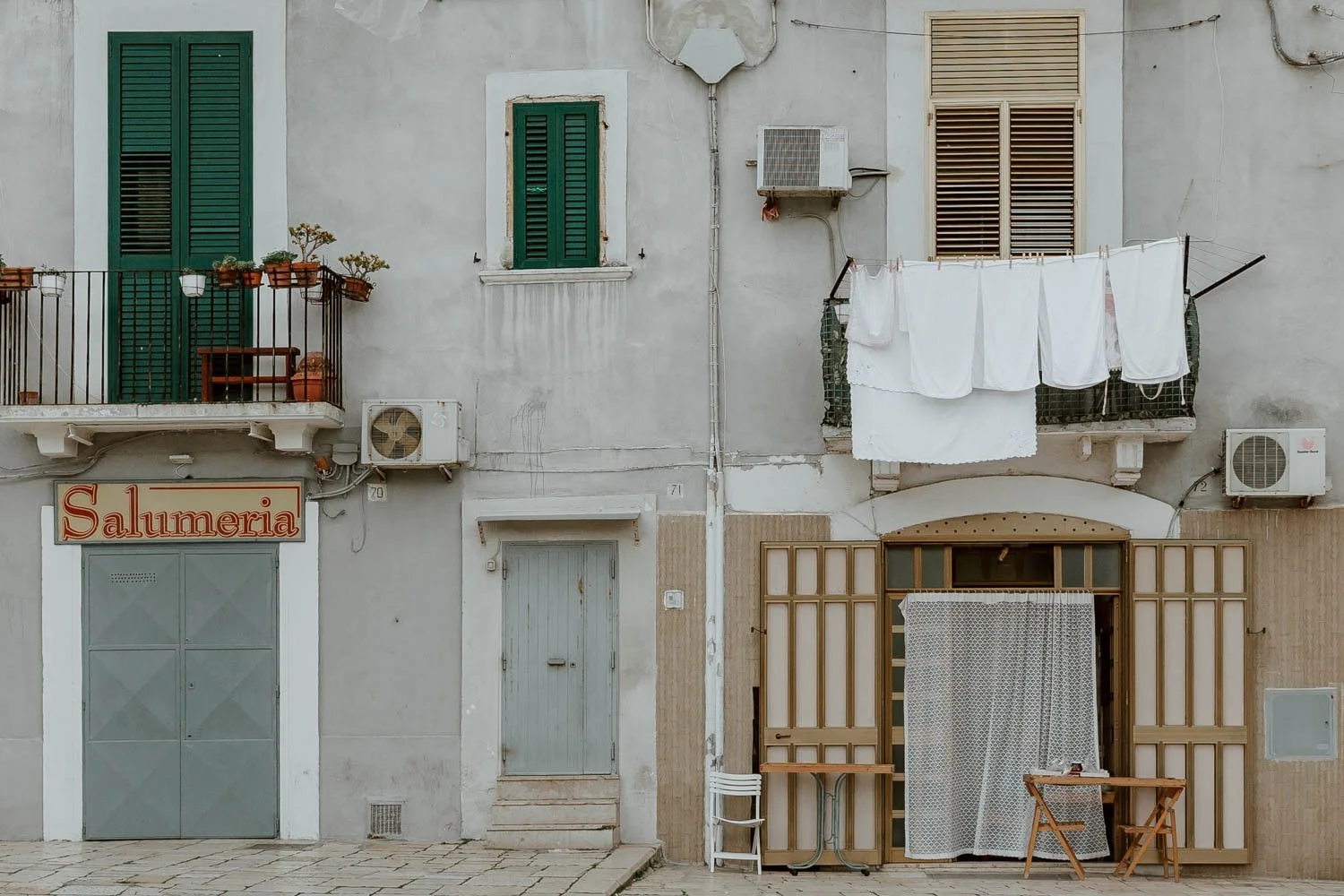
Polignano a Mare |
Best For Sea Views, Short Coastal Stays, & Travelling Without a Car
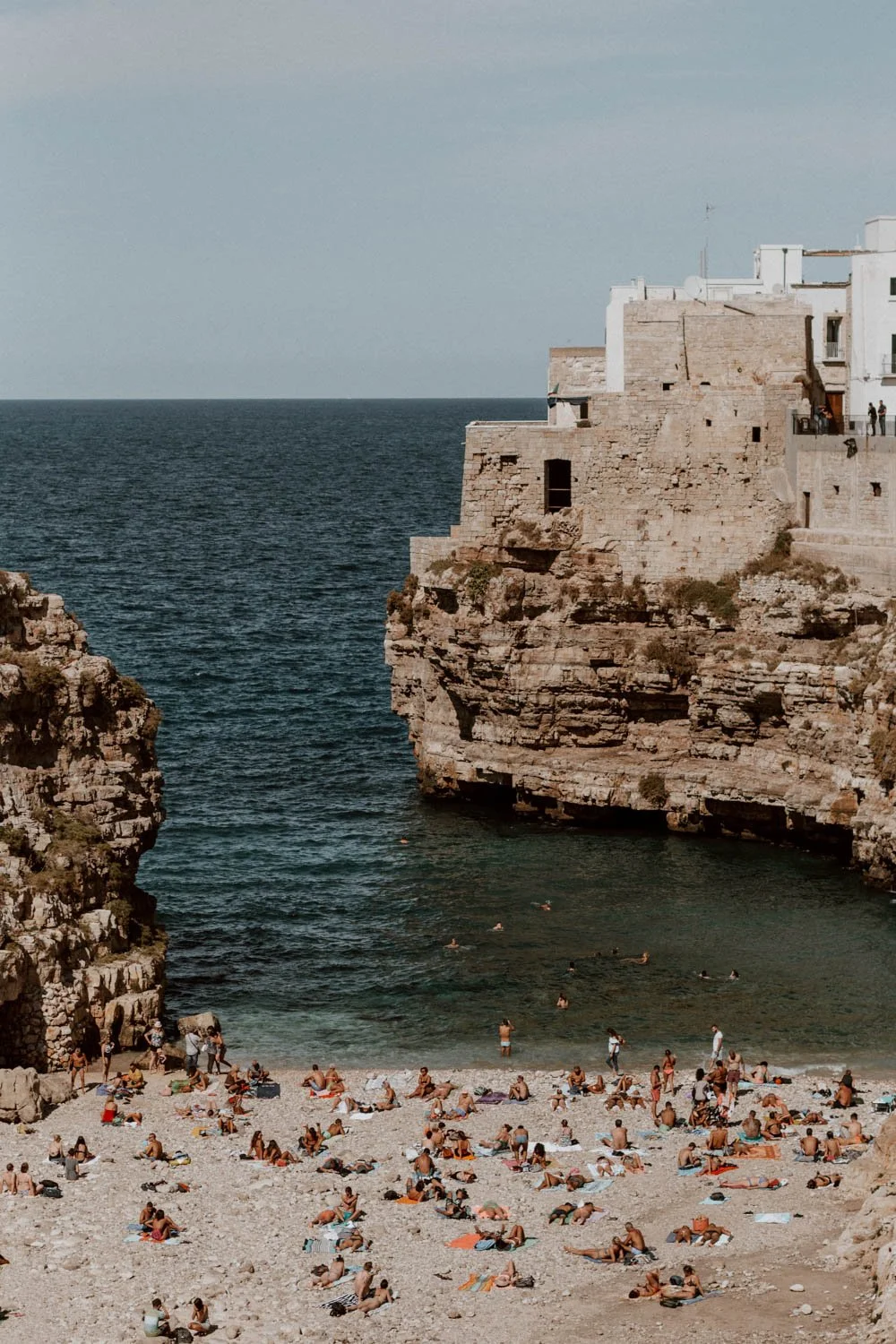
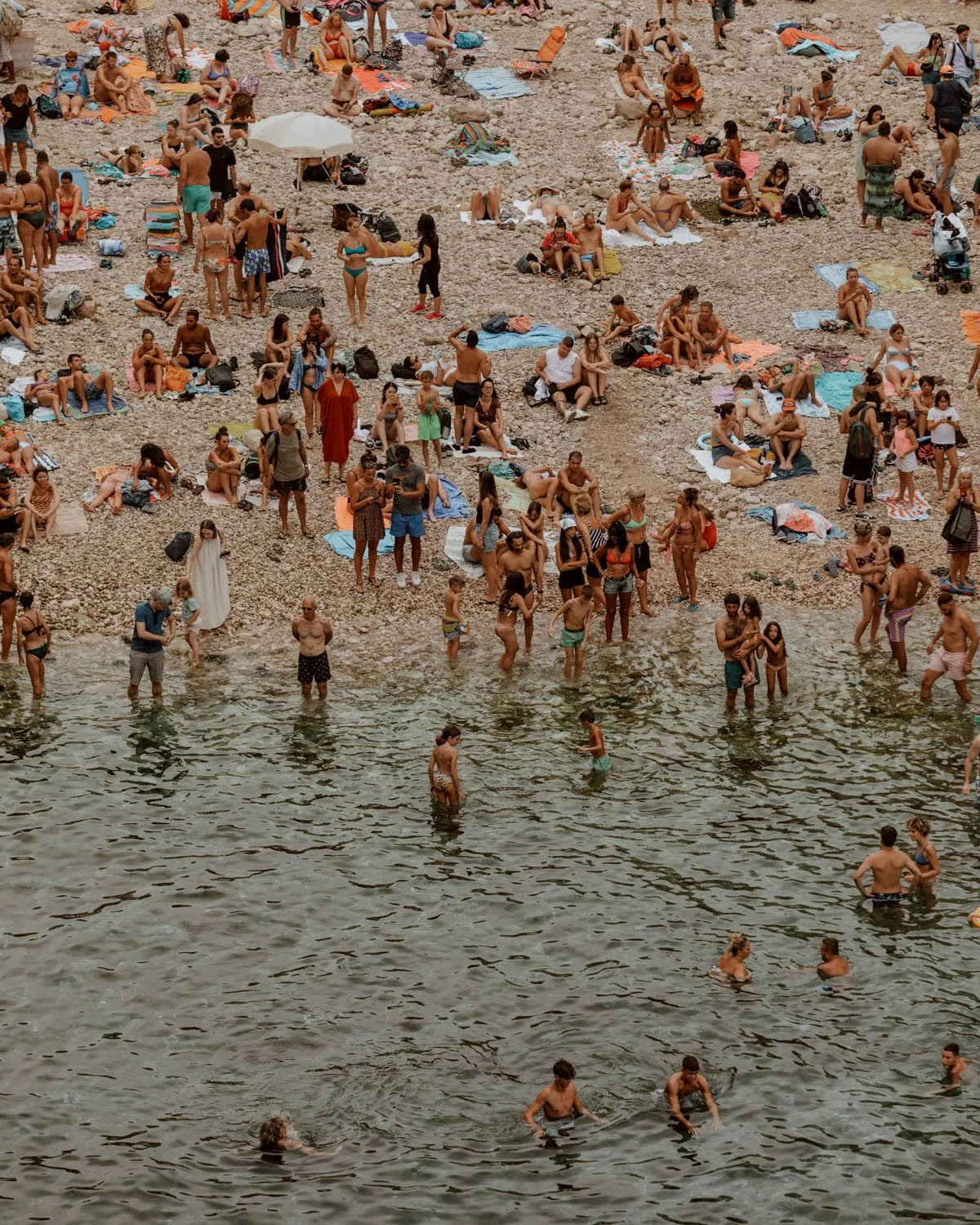
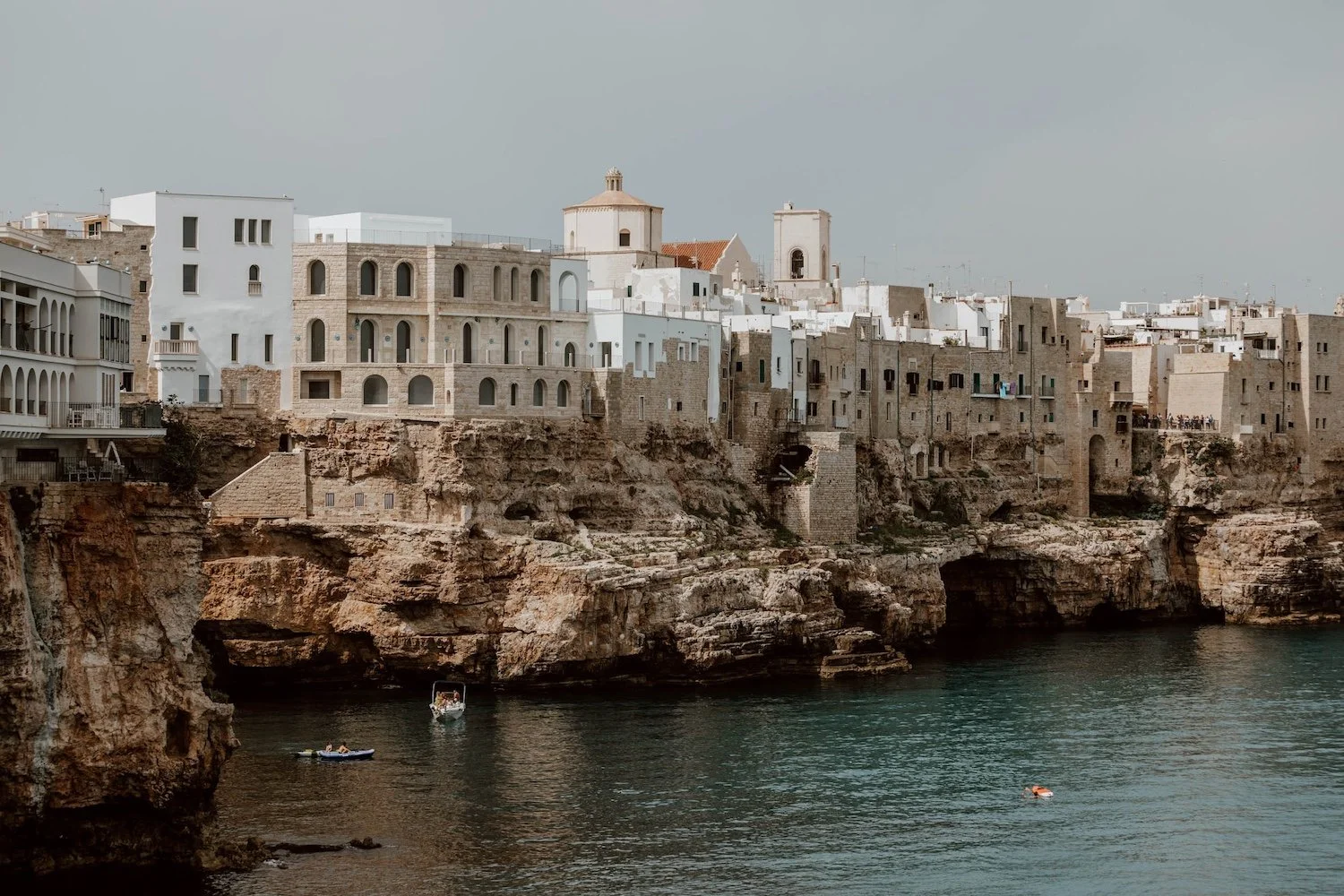
Polignano a Mare has one of the region’s great coastal settings. Its historic centre rises directly from limestone cliffs, with houses gathered along the edge and terraces opening unexpectedly above the Adriatic. Below the Bourbon bridge, Lama Monachile occupies a narrow cut in the rock: a small pebble cove that has become shorthand for the Puglian coast.
The difficulty is that everyone else has seen the photograph too.
By late morning in summer, the bridge, beach, and historic centre can be overwhelmed by people following much the same circuit. And whilst staying overnight does not reveal a secret Polignano - the town is far too popular for that - it does give you its better hours, with time to swim at Grottone or Cala Paguro, take a boat beneath the sea caves, linger over dinner, and return to the viewpoints before the pavements fill again. Two nights will be enough for most travellers; three allows for a slower day beside the water.
For those relying on public transport, you’ll be pleased to know that the famous Polignano is unusually easy to include in your plans! The railway station - with direct services to Bari and Monopoli - is a short walk from the centre, while almost everything that justifies staying here can be reached on foot. It does work best however as a self-contained coastal stop rather than a base for repeated excursions elsewhere.
Some downsides to staying here is that room rates reflect the town’s fame, particularly in summer, and Lama Monachile is magnificent from above, but its pebbles, small size, and crowds make it a difficult place to spend an entire beach day. Arriving by car introduces another compromise: the historic centre is protected by a ZTL (limited traffic zone), so parking must be found outside it and luggage may need to be carried some distance to your accommodation.
Choose Polignano a Mare // If you want a short stay in one of Puglia’s most famous and dramatic coastal settings, will be travelling by train, or care more about unrivalled sea views, swimming, and good dinners than long days on a sandy beach.
Think Twice // If value, peace in high summer, easy parking, or a practical base for a longer road trip are priorities. For some travellers, staying in Polignano will be non-negotiable, but nearby Monopoli will be the better choice for others.
Plan // Our Polignano a Mare Guide
Accommodation in Polignano a Mare
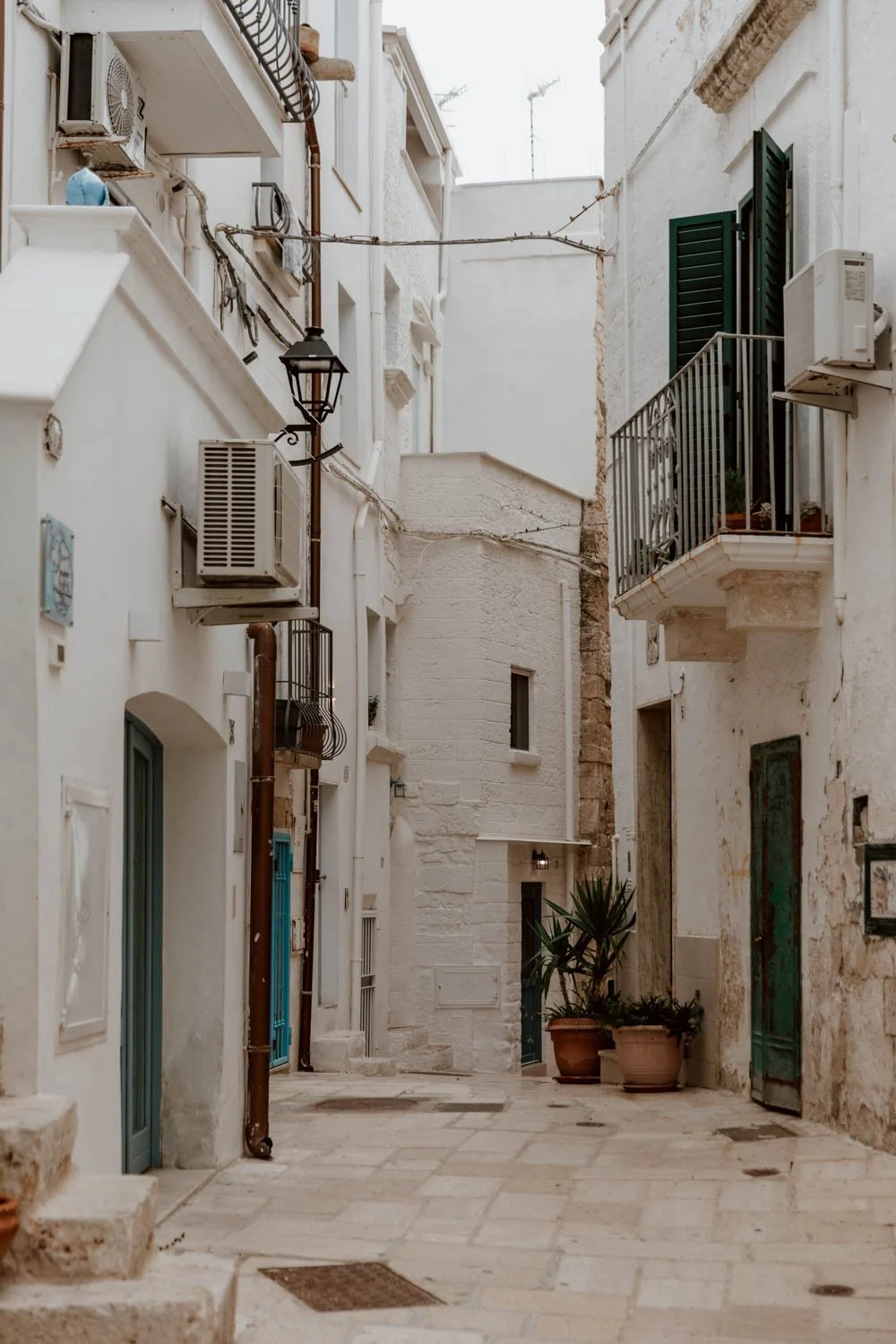
If Polignano itself is the draw, you should make the most of it by staying inside the historic centre or within a few streets of Porta Vecchia. Old-town properties can offer stone interiors, rooftop terraces, romance, and extraordinary views, but as mentioned vehicle access is impossible.
The central streets around Via Roma offer the best compromise, keeping Lama Monachile, the old town, and restaurants within a short walk while making arrivals less awkward. Travellers with a car should confirm exactly where they will park before booking and note that ‘parking nearby’ rarely means immediately outside the accommodation!
Hotels and Guest Houses
Aquamarea | Set directly above Lama Monachile, Aquamarea occupies a privileged position - and the rooms live up to the setting! Old stone and vaulted ceilings have been paired with soft colours, contemporary furniture, and just enough maritime influence, while breakfast on the terrace makes the most of the view before the crowds arrive below. This is our first choice for a special stay in the old town.
POSEA | One of the most popular places to stay in Polignano, whilst the decor doesn't necessarily warrant the price, the incredible views over Lama Monachile certainly do! Rooms are clean, comfortable, light and bright, and there’s a large rooftop terrace for guests to enjoy.
Palazzo Maringelli | Tucked into the centro storico, Palazzo Maringelli offers a calmer alternative to Polignano’s overtly sea-themed guest houses. Its old building has been renovated with restraint, bringing clean contemporary furniture into rooms that retain high ceilings, pale stone, and glimpses of their former life. There are no sweeping views of the sea, but the accommodation is spacious, beautifully maintained, and only a few minutes from the beach.
Marea B&B | The least extravagant option in this collection, but still a fabulous pick. This small, thoughtfully finished B&B with warm stone offers softly coloured rooms and breakfast delivered each morning. Its location keeps the old town and Lama Monachile close, while access to private parking solves one of Polignano’s most persistent practical problems.
Apartments and Airbnbs
Calumàre | This beautiful old-town house is perhaps our favourite rental in Polignano. It’s been fully modernised in a minimalistic, clean and stylish contemporary manner but retains the best of traditional Puglian design. Honestly, it’s just wonderful. A huge bonus is the beautiful terrace with views out over the historic centre.
Casa Mare | Where many Puglian rentals default to white-on-beige minimalism, Casa Mare has considerably more fun. Bold blue and ochre details, pale wood, graphic tiles, and playful furniture sit against the whitewashed backdrop, producing a home that feels cheerful without tipping into novelty. Its terrace adds somewhere to eat and drink outside, while the one-bedroom layout keeps it best suited to a couple.
Sogno Blu | Once a fisherman’s home, this charming little Airbnb may be on the small side, but its incredible views over Polignano’s most famous cove make it a popular choice for couples and those looking for a traditional space to call home during their time here.
Dimora di Mare | The private rooftop is the reason to book Dimora di Mare. Alongside sun loungers, dining space, and an outdoor sitting area, it has a small pool - an unusual extravagance in the tightly packed centre of Polignano. The interior of the property is a little on the small side but decorated to a high, modern standard throughout. Located in the historic centre.
Monopoli |
Best For All-Round Coastal Base, Beaches, & Longer Stays
We missed Monopoli on our first trip to Puglia, but have returned on every visit since. It really is one of our favourites and, of all the towns along this stretch of the Adriatic, the one we most readily recommend as a base. The old town and harbour are beautiful, but there is enough life beyond them that Monopoli (for now) still feels like a real place rather than somewhere revolving entirely around visitors.
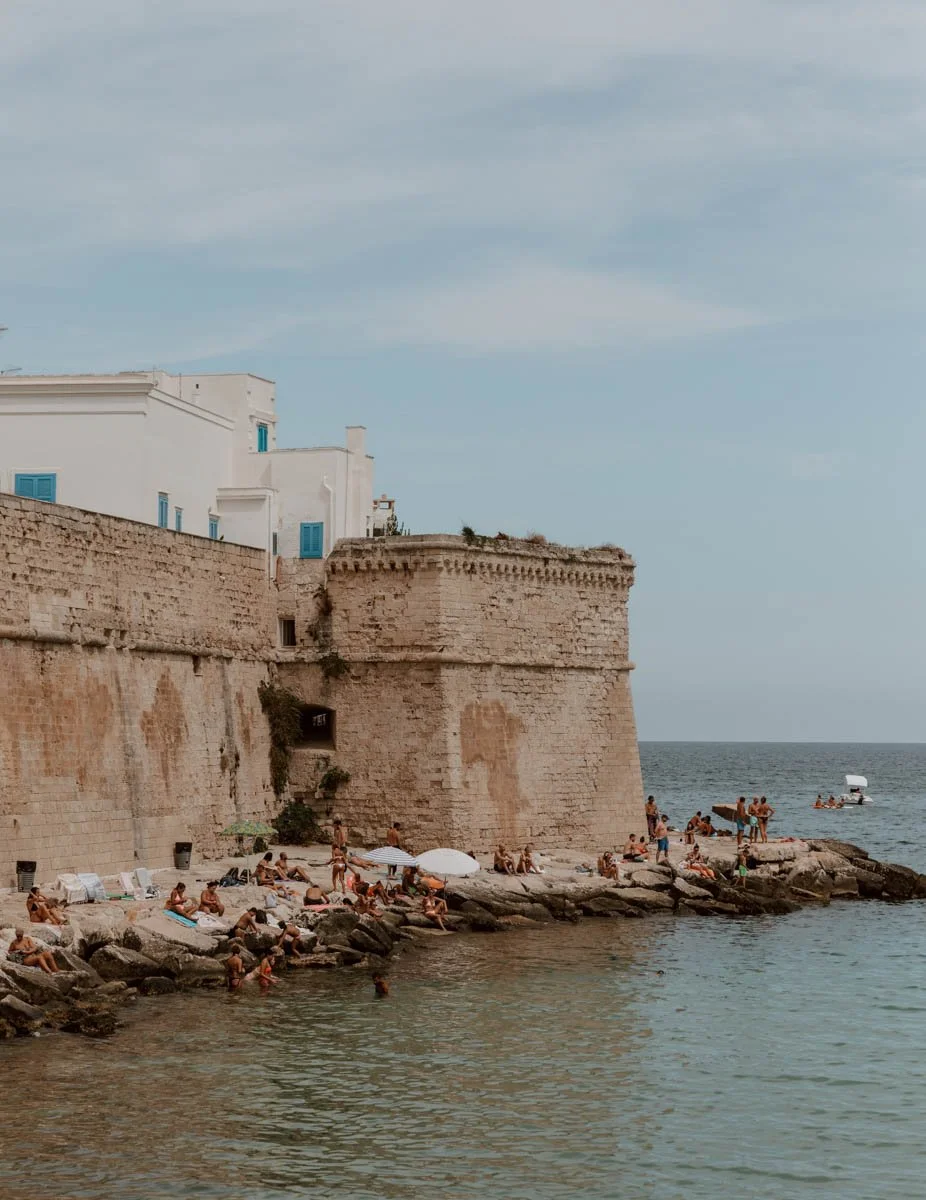
There’s also more to keep you here than its relatively small historic centre suggests. You can swim beneath the old walls at Cala Porta Vecchia, walk south to the beaches at Porto Bianco and Porto Rosso, take a boat along the coast, and return to a genuinely good choice of restaurants and bars. The point is not that Monopoli requires several full days of sightseeing, but that it remains an enjoyable place to return to after a day elsewhere.
Importantly, it’s also one of the better coastal bases for travellers without a car.
The station has direct connections along the Adriatic line, making Bari and Polignano a Mare particularly easy day trips, while the old town, harbour, restaurants, and several excellent beaches can all be reached on foot. A car considerably widens the possibilities, bringing Alberobello, Locorotondo, Cisternino, Ostuni, and the beaches south of town within straightforward day-trip distance.
Of course, as with all places, Monopoli is not without compromises, especially in the sumer months: the small town beaches fill quickly, parking becomes harder, and the historic centre falls within a ZTL. Monopoli is also too far north for repeated trips into southern Salento, and travellers primarily interested in the Valle d’Itria may prefer Ostuni or the countryside itself.
Yet, for a first Puglia trip combining the coast with several inland towns it is difficult to better.
Choose Monopoli // If you want a coastal base with beaches and coves, restaurants, railway connections, and enough going on to justify several nights. It works particularly well for a first visit and for travellers trying to combine a few car-free days within their wider road trip.
Think Twice // If your priority is southern Salento or you would rather spend your evenings somewhere quieter - the area in and around Monopoli is busy during July and August.
Plan // Our Monopoli Travel Guide
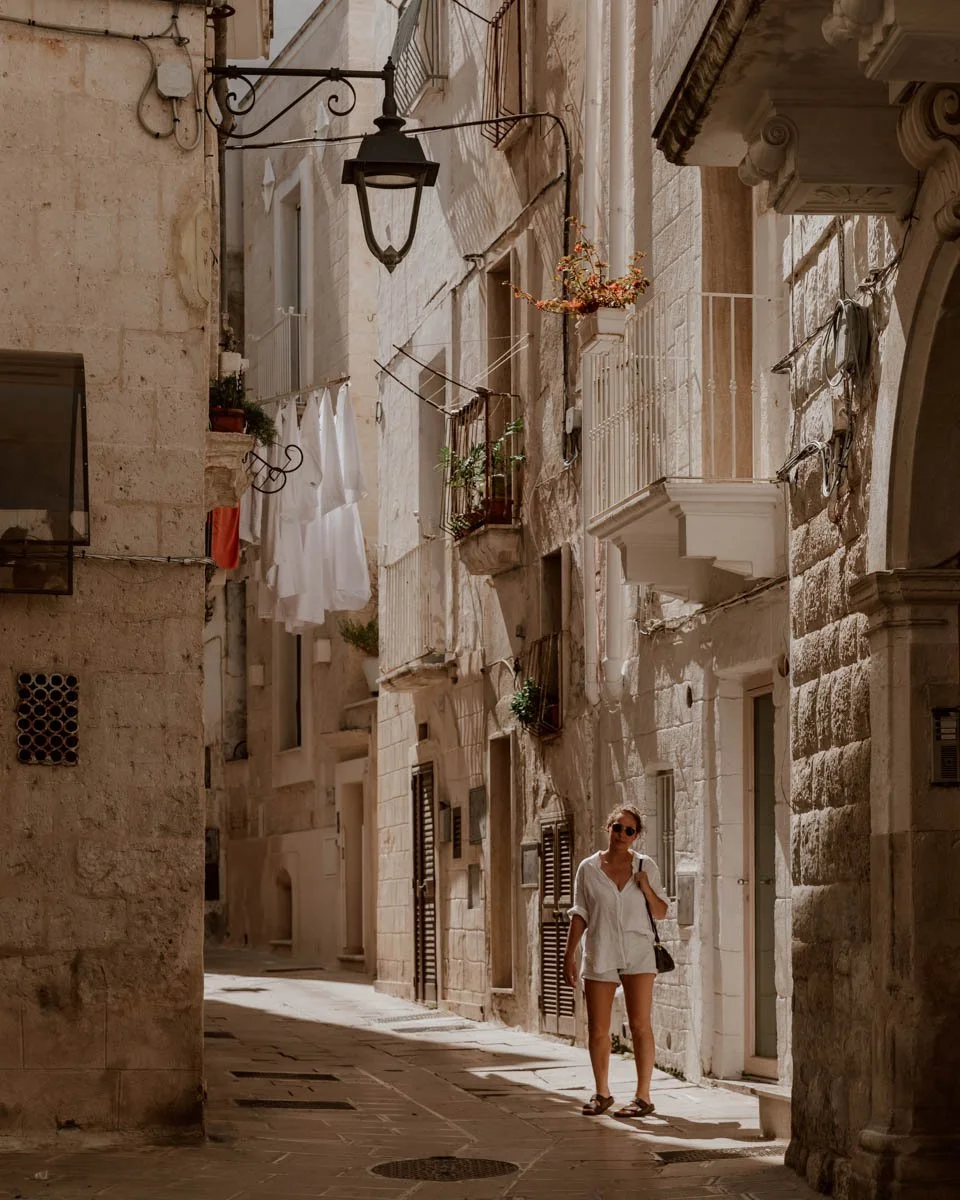
Accommodation in Monopoli
The historic centre is where we would recommend staying in Monopoli.
Properties around Porto Antico and Piazza Giuseppe Garibaldi put your right in the heart of it, close to lots of restaurants, bars, the harbour and Monopoli’s main tourist attractions. The lanes towards Castello Carlo V and Via delle Torri are a little quieter and keep the sea walls and Cala Porta Vecchia close (not a bad idea if you like an early morning swim).
Do be aware that much of the old town falls within the ZTL, so travellers arriving by car should expect to park outside it and carry their luggage to the accommodation. This shouldn’t be an issue for most people, nor a reason to avoid basing yourself here.
Hotels & Guesthouses
Hotel Don Ferrante | A former fortress built into Monopoli’s old sea walls, Don Ferrante is the town’s fanciest hotel. Definitely not a hotel to suit every budget, but if you’re looking to splurge on a truly luxurious stay, it’s very highly rated with all the facilities you’d expect from a 5* hotel.
B&B A C-Caste | This family-run B&B occupies a former fishermen’s house close to the cathedral and Porta Vecchia. Exposed stone, simple white rooms and contemporary touches give it plenty of character, although its extraordinary feedback is just as much about Riccardo’s hospitality and the generous breakfasts.
B&B Portorosso | Set south of the city walls, between Porto Bianco and Porto Rosso, this small B&B trades medieval lanes for a balcony-and-swimsuit sort of stay. Rooms are bright and modern, several look towards the sea, and Piazza Garibaldi is still only around ten minutes away on foot.
La Peschiera | Fifteen minutes south of town, this former fishing reserve has just thirteen rooms arranged between pools and the Adriatic. There is a private beach and a restaurant suspended above the water, but this is very much a substantial, stay-put splurge rather than somewhere for walking into Monopoli each evening. It does not accommodate children under ten.
Apartments & Airbnbs
Palazzo Manzoni | A stunning, beautifully restored three-storey traditional home full of original features.. The interiors are modern but elegant and the rooftop - with views over the historic centre - just wonderful.
Terrazza Ninetta | A playful one-bedroom apartment close to the water, with earthy colour, curved details, and a compact split-level layout. Most of your time will likely be spent on the large private terrace above the rooftops, which has ample space for eating, reading, and drying off after a swim.
Casa Creta | Occupying the upper floors of a 17th-century palazzo, this property pairs handmade terracotta, old stone, and two spacious bedrooms with a restrained contemporary finish. Its wide rooftop terrace looks across the cathedral, sea, and old-town roofs, with an outdoor kitchen encouraging long dinners upstairs. We absolutely adore this property!
Casa Taralli | One street back from the lungomare, this compact one-bedroom apartment sits inside a restored historic house. It’s made our list as, whilst it’s not huge, the design is right on point: a light and bright white and pink colour palette, barrel-vaulted arches and the perfect combination of modern facilities and antique pieces. One of the more affordable ways to stay somewhere characterful in the historic centre.
Find many more options in our complete guide to the best Airbnbs in Monopoli.
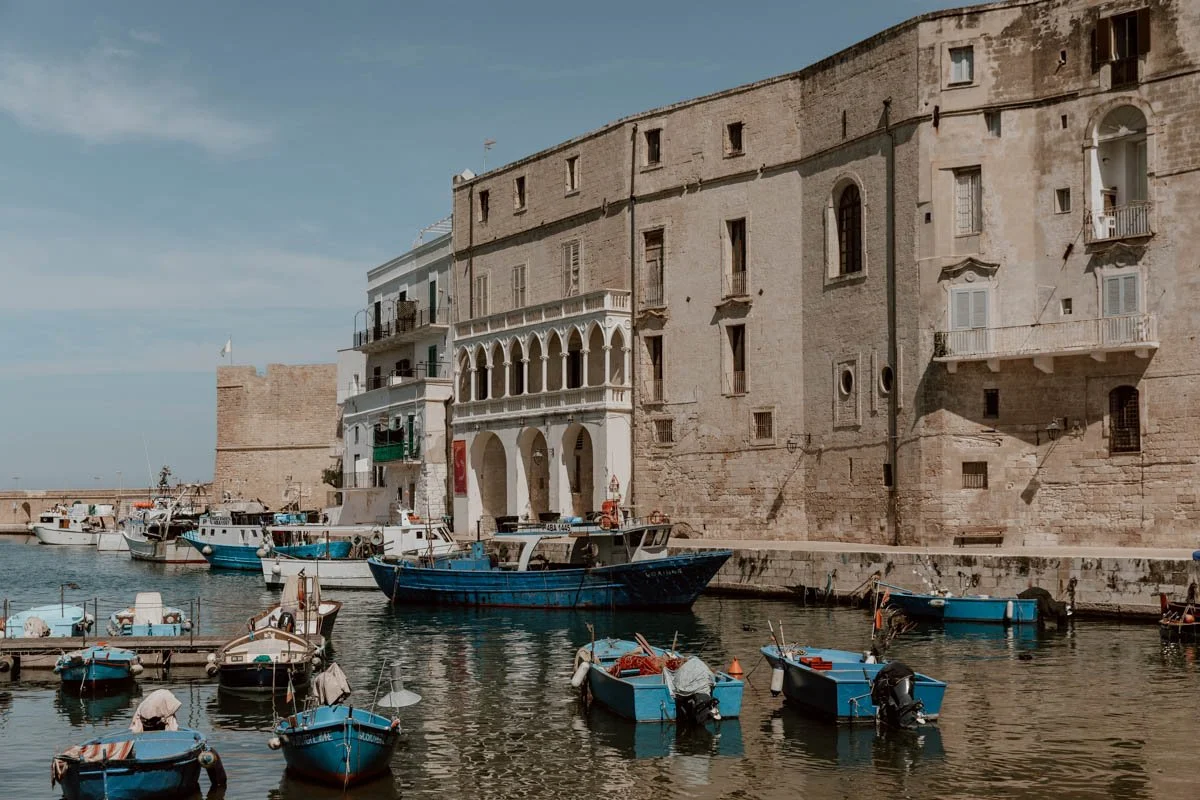
Ostuni |
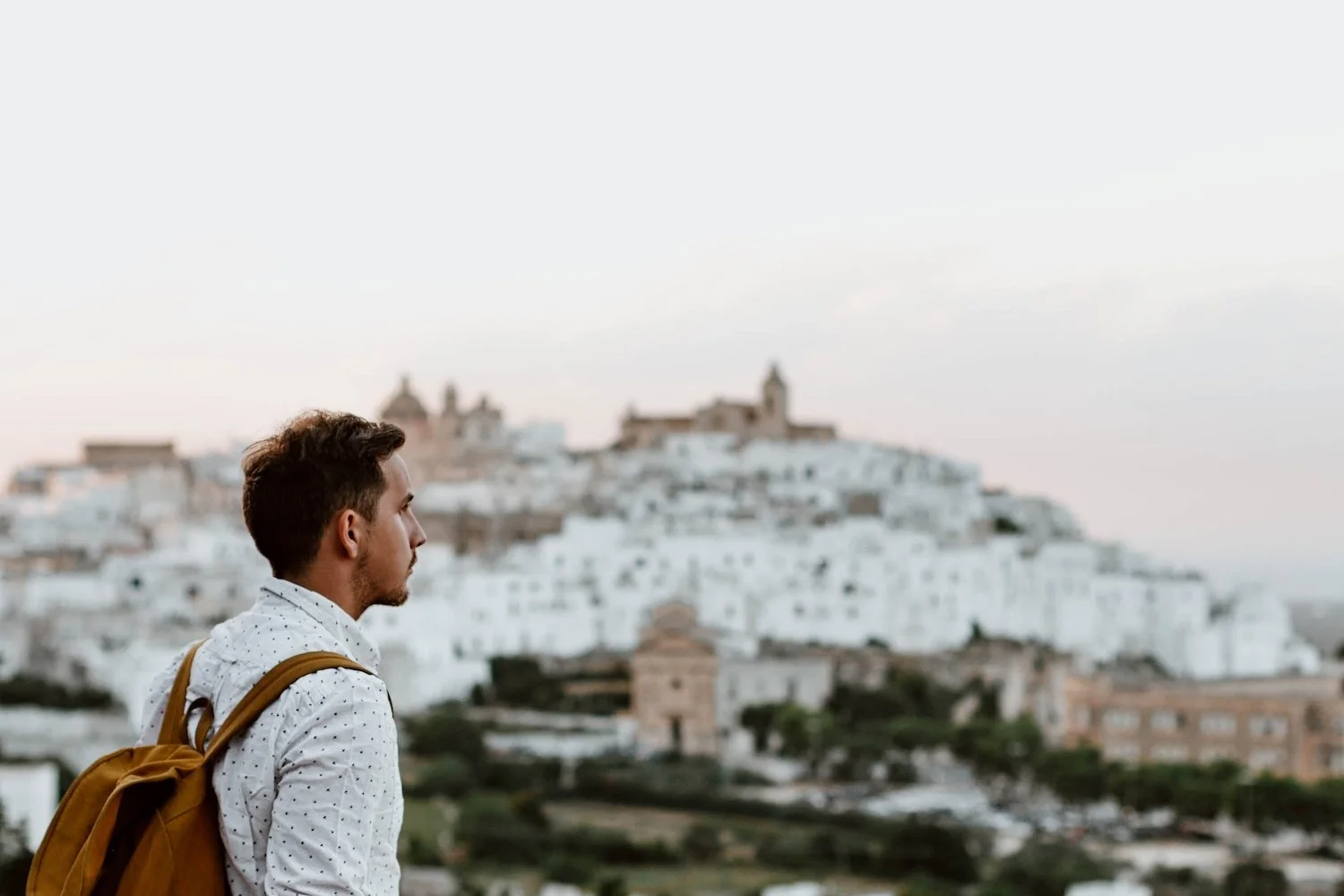
The Best Town Base for the Valle d’Itria
We have stayed in Ostuni on three separate occassions: inside the old town, immediately beyond its walls, and amongst the olive groves below the city.
The countryside provides a beautiful setting, but also requires a drive whenever you want dinner, a drink, or an evening wander. So, if you’re choosing Ostuni primarily because it works as a base, we would stay within walking distance of Piazza della Libertà.
Ostuni’s main sights can be covered in a day, but the town does not feel exhausted once that circuit is complete. During summer, Piazza della Libertà fills towards evening, restaurants and bars spill into the lanes below the cathedral, and the old town becomes much more enjoyable as the heat recedes. After a day elsewhere, there is still a reason to go out rather than simply return to your accommodation.
By car, Ostuni also places both the Valle d’Itria - an olive-grove region with several beautiful towns - and the Adriatic within reach.
Cisternino, Locorotondo, Martina Franca, and Alberobello can all be visited without turning the day into a long drive, while Pilone, Rosa Marina, Costa Merlata, and the smaller coves around Torre Pozzelle provide very different options along the coast. Few town bases in Puglia offer that choice while still allowing you to walk out for the evening, so it works particularly well for a first Puglia road trip.
All of this assumes you have a car though. Ostuni’s train station actually sits three kilometres below the town - around 35 minutes away on foot, with bus and taxis available - but the issue comes with trying to reach the villages, masserie, and beaches with public transport.
Choose Ostuni // If you want to divide your days between the Valle d’Itria and the coast, then return to a pretty town with enough restaurants and evening life for a longer stay. Easy on the eye, Ostuni is also makes for a really convenient base.
Think Twice // If you’ll be travelling entirely by public transport, want the beach outside your door, or care more about a pool and complete quiet than being able to walk to dinner. Ostuni has also increased in popularity since we first stayed there, so some may prefer a smaller, quieter base.
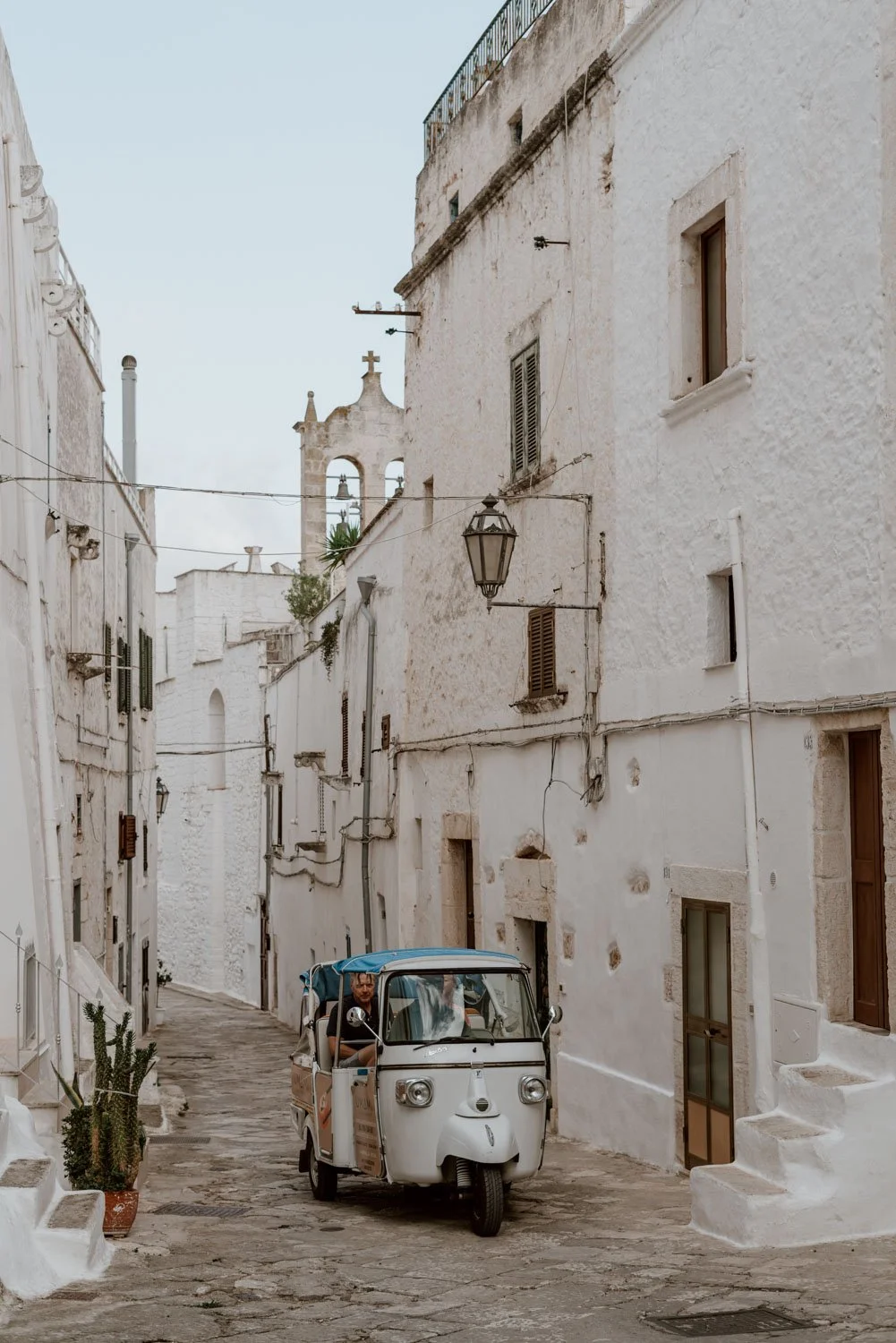
Accommodation in Ostuni
For a multi-night road-trip base, we would choose the historic streets immediately outside Ostuni’s walls. Piazza della Libertà and the old town remain only a few minutes away, but arrivals, parking, and luggage are easier from there. Staying within the walls is better suited to a shorter visit, or to a property whose terrace, view, or historic setting justifies the steps and lack of vehicle access. Check the map carefully before booking, as many properties described as being in Ostuni are actually several kilometres into the countryside; those can be wonderful stays, but they do not offer the experience of staying in the town.
Note that Ostuni has a large ZTL, so parking close to the old town becomes competitive in summer and room rates rise with demand.
Hotels and Guesthouses
Vista Ostuni | Ostuni’s grandest new arrival occupies a former convent and tobacco factory at the foot of the old town, with high-ceilinged rooms, mid-century furniture, gardens, a rooftop pool, and extraordinary views across the whitewashed citadel and olive plains. It is undeniably expensive, but Piazza della Libertà is only a couple of minutes away.
Paragon 700 Boutique Hotel & Spa | The only red palazzo in a city famous for being white, Paragon 700 is deliberately dramatic. Its 15 rooms combine reclaimed frescoes, antiques, contemporary art, and deeply coloured walls, while the garden hides a pool and the old water cistern now contains an underground spa.
La Sommità Relais & Chateaux | Close to the cathedral at the highest point of the old town, La Sommità occupies a quiet palazzo of whitewashed rooms, vaulted ceilings, and stone terraces. Its citrus garden and ambitious Cielo restaurant make this the more restrained of Ostuni’s luxury hotels.
Hotel La Terra | Built into a 13th-century property within Ostuni’s oldest quarter, La Terra retains stone arches, ceiling frescoes, tiled floors, and small balconies overlooking the rooftops. It offers the atmosphere and position of the more expensive old-town hotels without entering quite the same price bracket.
Palazzo Altavilla | Palazzo Altavilla combines the independence of an apartment with the shared spaces of a small hotel. The individually designed studios sit around a remarkably peaceful garden and swimming pool, despite being just beyond Piazza della Libertà.
Apartments and Airbnbs
A House in the Sky | Set over three floors, this 17th-century stone house is full of original features but has a clean, modern edge. The private rooftop terrace has uninterrupted views across Ostuni, the olive plains, and the Adriatic, although the steep stairs make it unsuitable for anyone with limited mobility.
Casa Palmira | This spacious one-bedroom apartment pairs high ceilings, solid stone floors, and a four-poster bed with a panoramic rooftop terrace. A second kitchen upstairs makes the terrace a genuine extension of the house rather than somewhere used only for a quick drink.
Terraces of Carole | The most luxurious in this list (and perhaps in Ostuni), this exclusive apartment is stunning. Spread over three levels, it offers the perfect combination of modern comfort and historical charm, with every detail thoughtfully designed using a neutral colour palette. A spiral staircase leads to the top floor, the highest terrace in the city, complete with a jacuzzi and a lounge area with sofas under a shaded patio.
Palazzo Bergamotti | Original tiled floors, stone vaults, antiques, and carefully chosen contemporary furniture give this one-bedroom home much of its character, but the private garden is what makes it unusual for central Ostuni. Free reserved parking behind the gates is an equally rare advantage. One of our absolute favourites!
Plan // more advice on parking, restaurants, beaches, and things to do, read our complete Ostuni travel guide.
The Puglia Wild Cards | Stays Worth Planning Around
Some places to stay are chosen for practical reasons; others are the reason for taking the detour in the first place.
The properties below fall firmly into the second category. They range from isolated masserie and vineyard hotels to outstanding private villas, but all offer something beyond a beautiful room and convenient location. Most require a car, several require a substantial budget, and a few may encourage you to abandon the itinerary entirely for a day beside the pool.
Masseria Amastuola Wine Resort | Designed by landscape architect Fernando Caruncho, the vineyards here rise and fall in great waves around islands of ancient olive trees, transforming the countryside surrounding this fortified farmhouse into something extraordinary. Inside the estate walls are a chapel, tower, stables, and rooms arranged around a vast stone courtyard. Wine tastings naturally form part of the experience.
Castle Elvira | With painted ceilings, geometric floors, contemporary art, chandeliers, turrets, and theatrical furniture, this property is not for those seeking restrained Puglian minimalism - which isn’t neessarily a bad thing! The castle sits within a 37-acre estate north of Lecce, with further suites inside an old lookout tower, converted masseria, and former gatekeeper’s cottage. Citrus groves, pools, rooftop baths, and outdoor dining spaces fill the grounds.
Masseria Trapanà | Nine suites, a frescoed chapel, an underground spa, and walled gardens wrapped around an old golden-stone farmhouse: this masseria is intimate, expensive, and very beautiful, with much of its character a result of strong original features. Heavy doors, vaulted rooms, fireplaces, citrus trees, and old stone remain central, with hammocks slung between trees and a pool hidden within the gardens.
Villa Pizzorusso | With six bedrooms divided between a vast masseria and smaller courtyard building, extensive private gardens, and a 25-metre swimming pool., this villa really allows a group to spread out. The former stables now contain the main living space, while elsewhere are mosaic floors, frescoed ceilings, deep stone arches, and fireplaces. Located in a remote position near Mesagne, surrounded by olive groves and farmland.
Palazzo Daniele | Almost severe at first glance, its vast rooms have been pared back to fragments of fresco, tall doors, contemporary art, and very little furniture, while rain showers hang from the ceilings above enormous stone basins. The palazzo sits on the main square of Gagliano del Capo, with a palm-filled garden, courtyard pool, and kitchen at its social centre. It is expensive, uncompromising, and unlike anywhere else in this guide.
Vinilia Wine Resort | This turreted former country residence sits outside Manduria, surrounded by vineyards and olive groves in Primitivo country. Its restoration avoids the usual rustic-masseria formula, combining high ceilings and patterned floors with original furniture from the 1950s and 1960s. There is also a pool, spa, and Michelin-starred restaurant, providing a compelling reason to stay for dinner rather than drive back towards the coast.
The Valle d’Itria Countryside |
For Masserie, Trulli, & Pool
For many travellers, the decision to stay in the Valle d’Itria countryside is led by accommodation rather than the location.
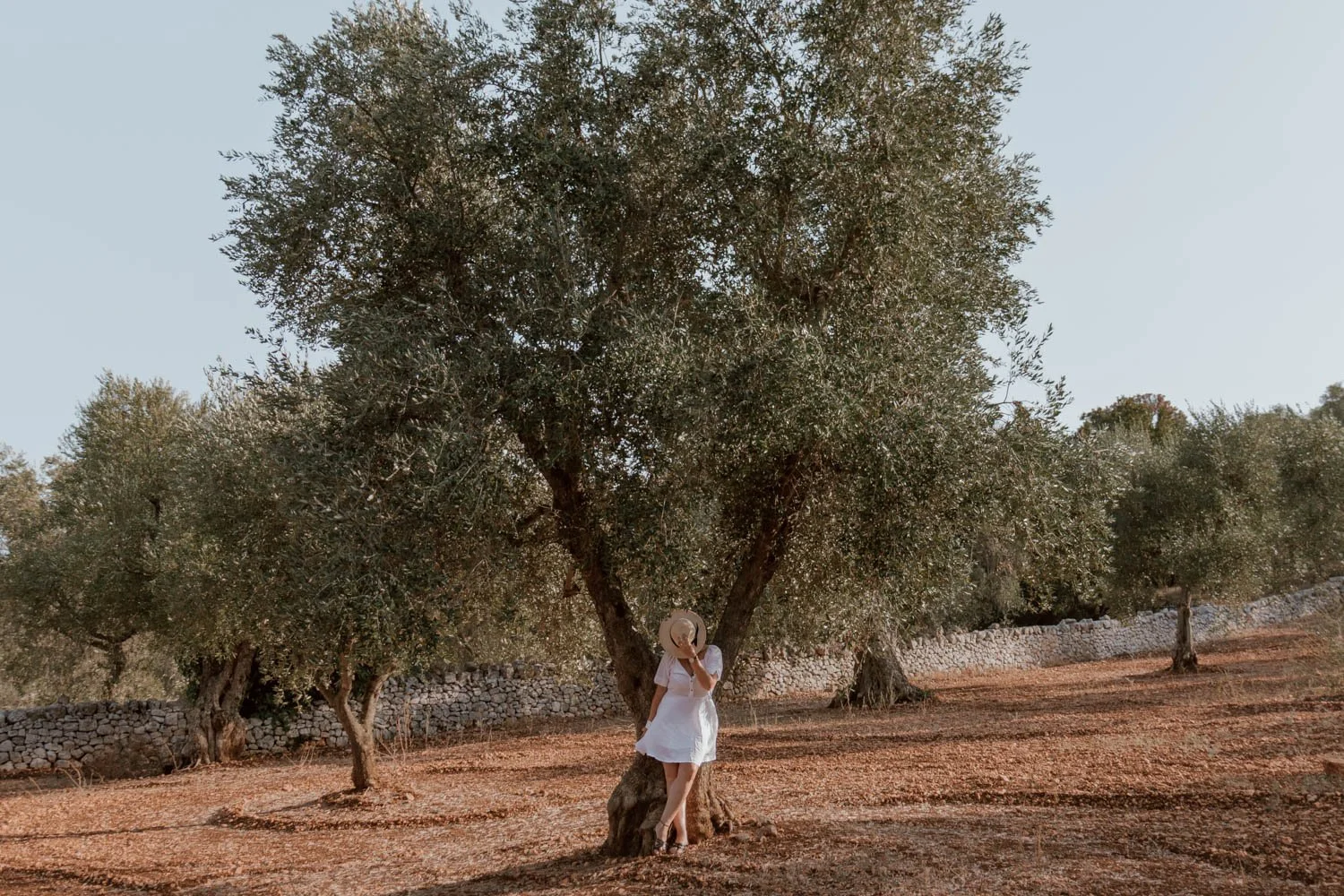
A restored trullo, old masseria, or private house with a pool offers something none of the surrounding towns can: the chance to spend part of the trip among the Puglian olive groves and dry-stone walls usually seen through the car window.
The area has no obvious centre. Cisternino, Locorotondo, Martina Franca, Alberobello, and Ostuni sit across and around it, with hundreds of rural properties in between. This makes the countryside a strong base for visiting several towns over three or four days, provided the accommodation is chosen with some care.
The most convenient area lies between Cisternino, Locorotondo, and Martina Franca, where each town can be reached without spending too much of the day in the car. Staying closer to Ostuni or Fasano works better if beaches are also part of the plan, although it places Alberobello and the northern valley a little further away.
A car is essential. Rural roads are narrow, journeys often take longer than the distance suggests, and walking somewhere for dinner is rarely an option. Some masserie have their own restaurants, but others serve food only on selected evenings, so it is worth checking before committing to an especially isolated address.
Choose the Valle d’Itria countryside // If staying in a trullo or masseria is part of the reason you’re visiting Puglia, you want a pool and relaxation, or you would rather drive between several towns on day trips than base yourself in one.
Think Twice // If you won’t have a car, want restaurants and evening drinks within walking distance, or have only a night or two in the area. In those circumstances, Ostuni, Monopoli, or one of the smaller valley towns will be considerably easier.
Where to Stay in the Valle d’Itria Countryside
There’s no single postcode to aim for.
The countryside between Cisternino, Locorotondo, and Martina Franca offers the best access to the inland towns, while the Ostuni and Fasano side is better for combining them with the coast.
Always check the exact map position, approach road, dinner arrangements, and whether the advertised pool is private, shared, seasonal, or saltwater.
Hotels & Guesthouses
Borgo Canonica | A small rural settlement of 42 trulli has been restored into 14 rooms and suites across six hectares outside Cisternino. The curved stone interiors remain central to the experience, while the pool, gardens, and restaurant provide the service of a proper hotel without diminishing the pleasure of sleeping beneath a conical roof.
Ottolire Resort | Ottolire occupies a collection of trulli, farm buildings, and cummerse in the countryside outside Locorotondo. The restoration introduces contemporary furniture without polishing away the old stone, and a pool, restaurant, and spa built inside its own trullo make this the strongest option for travellers wanting a more complete resort.
Masseria Cervarolo | Six kilometres outside Ostuni, this 16th-century masseria combines trulli, former stables, an 18th-century chapel, and gardens arranged around warm local stone. Rooms are individually furnished with antiques and handmade pieces, while the large pool occupies a natural hollow within the grounds.
Masseria Montenapoleone | More layered and eccentric than the pale, restrained farmhouses that dominate many Puglia roundups. Exposed stone is mixed with antiques, textiles, and repurposed agricultural objects, while vineyards, kitchen gardens, a pool, restaurant, and small spa spread across the estate near Pezze di Greco.
Masseria Moroseta | Designed by Andrew Trotter, Moroseta is a modern interpretation of a masseria rather than a restored historic building. Six rooms sit around a central courtyard within five hectares of olive trees, with private gardens or terraces, a long pool, and views towards Ostuni and the Adriatic; the seasonal kitchen is as carefully considered as the architecture. How we’d love to stay there!
Airbnbs & Self-Catering
The Trullo della Gallina | This one-bedroom trullo sits within a hectare of old olive trees between Ostuni and Cisternino. Ancient stone floors, rural furniture, a fireplace, two kitchens, and a remarkably large private saltwater pool make it particularly strong for couples who want complete privacy rather than the shared grounds of a trulli hotel.
Trullo Edera | A more modest and characterful alternative to the valley’s increasingly elaborate villas, this restored one-bedroom house sleeps up to four and has two terraces, old furniture, open countryside views, and access to a seasonal saltwater pool shared with two neighbouring properties.
Trulli Terra di Mezzo | This two-bedroom trullo outside Cisternino comes with two bathrooms, a private saltwater pool, and more than a hectare of garden. The bedrooms occupy the original cones, while outside are a vegetable garden, barbecue, bikes, and several places to sit beneath the old trees.
Ughetto | If we were heading back to Locorotondo, this is the place we’d book in a heartbeat! A traditional one-bed property in the heart of the old town, but with a stylish and contemporary makeover - it’s just gorgeous!
Alberovivo | This property works particularly well for a travel group comprised of couples: each double bedroom occupies its own part of the house or collection of trulli and has a private bathroom, with short paths through the olive grove connecting them. The architect-designed main house contains the shared kitchen and panoramic living space, while outside are an infinity pool, roof terrace, and shaded pergola with a long travertine table. Ostuni and Cisternino are both around 15 minutes away.
Villa Amurée | Not every exceptional rural stay in Puglia needs conical roofs and centuries-old stone. Villa Amurée is a long, low contemporary house surrounded by olive trees and wildflower-covered land, with wide glass doors connecting its interior to a pergola and heated pool. The three en-suite bedrooms sleep six, while white walls and clean lines are softened by linen curtains, honey-coloured marble, and vintage armchairs. Ostuni and the beaches of Torre Guaceto are within easy reach.
Lecce |
The Best City Base in Southern Puglia
It took three trips to Puglia for us to properly fall for Lecce.
We skipped it entirely on our first, squeezed it into a grey day trip on our second, and left wondering whether its reputation as the ‘Florence of the South’ had rather oversold things. Returning in summer changed that. Under a clear sky, the local limestone took on the warm, honeyed colour it’s famous for, and the city we had struggled to connect with finally came alive.
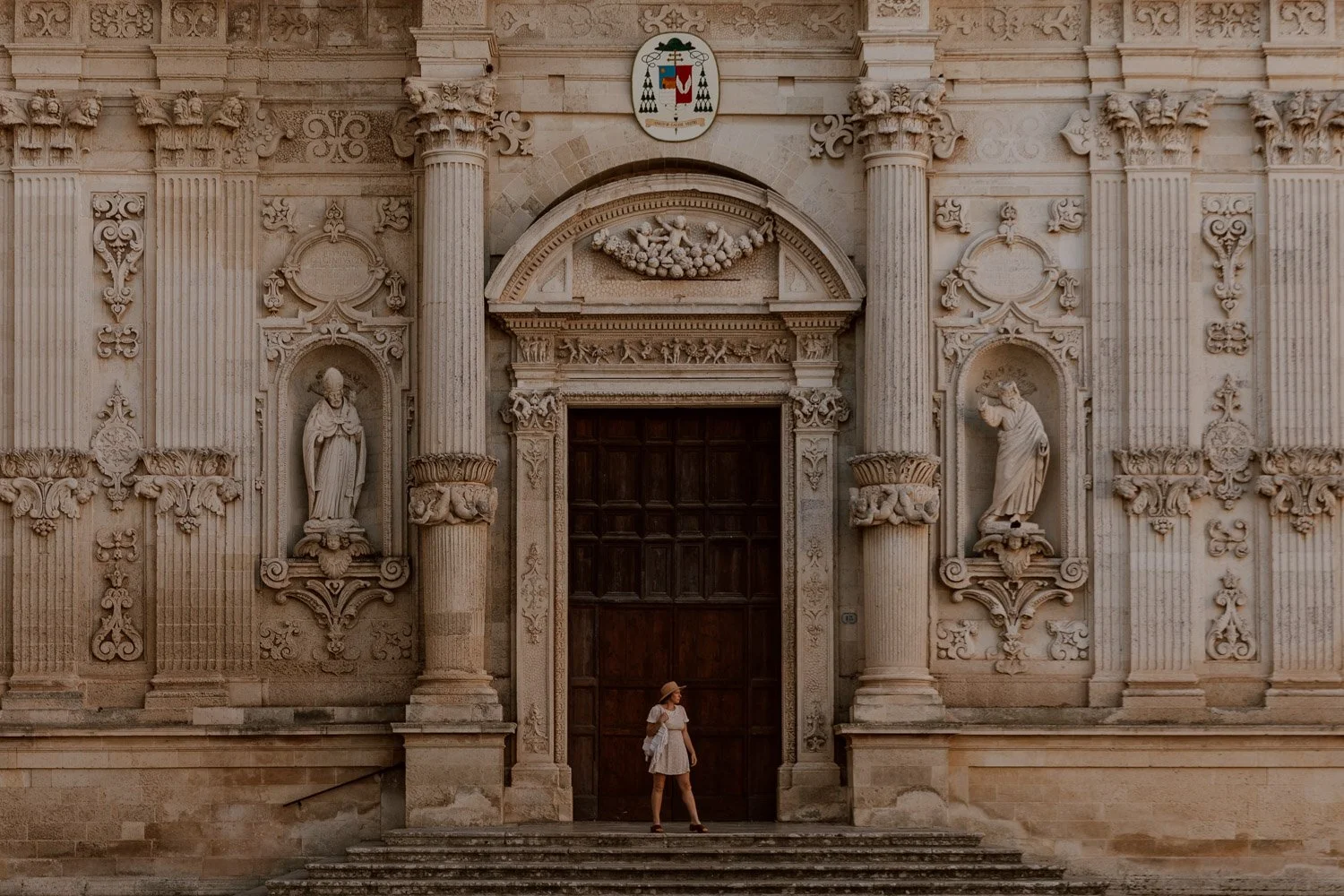
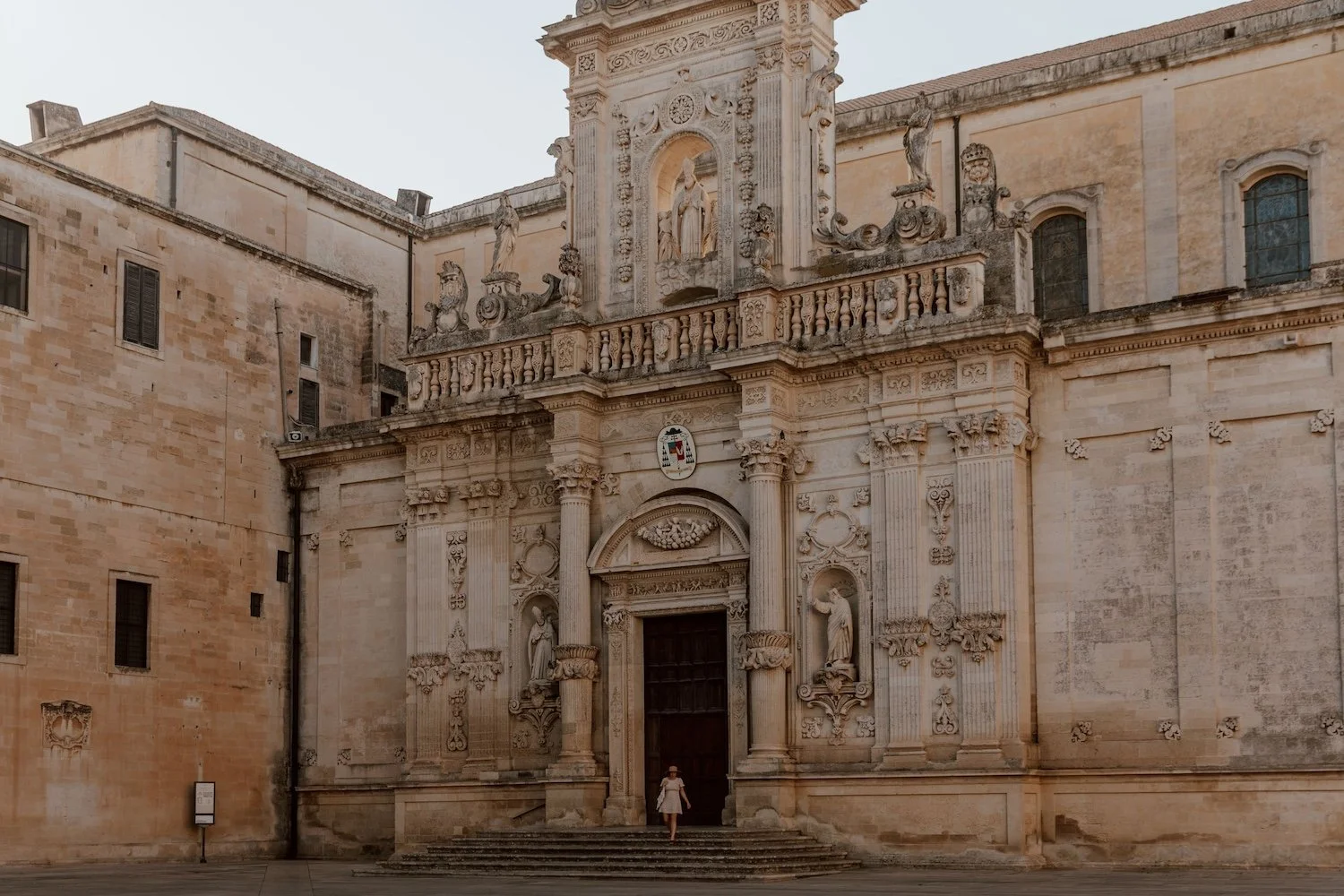
We had also made the mistake of trying to understand Lecce too quickly. This is not a city built around one defining sight, despite the extraordinary excess of Basilica di Santa Croce and the near-perfect enclosure of Piazza del Duomo. Roman ruins sit beneath its Baroque streets, churches appear where you have stopped expecting another church, and places such as Museo Faggiano reveal how much remains buried below otherwise ordinary buildings. Add pasticciotto for breakfast, cucina povera at Alle Due Corti, and an unusually good collection of wine and cocktail bars, and Lecce easily carries two or three days without leaving the city.
It’s also the southern Puglia base we would choose for a trip without a car. Lecce has a mainline railway station, a direct airport bus from Brindisi, and regional connections towards Gallipoli, Otranto, and several other towns across Salento. Those journeys are not always fast, but the alternatives are far broader than from the smaller coastal towns.
With a car, places like Galatina, Otranto, Gallipoli, Torre dell’Orso, and the beaches around the eastern coast can all be reached within roughly an hour.
What Lecce cannot provide is the sea. It’s an inland city, summer afternoons can be brutally hot, and road-trippers must accept that the car will remain parked outside the historic centre (often with a cost attached). Travellers picturing morning swims and evenings beside the harbour should choose Otranto or Gallipoli instead; Lecce belongs on an itinerary led by food, architecture, museums, and nights in a proper southern Italian city.
Choose Lecce // If you want the strongest cultural and food-led base in southern Puglia, are travelling without a car, or need somewhere with enough going on around your day trips. Lecce also boasts a number of incredible palazzo hotels if you prefer that sort of accommodation!
Think Twice // If walking to the beach and a ‘summer holiday’ base is important, you dislike cities in intense summer heat, or your trip is primarily about small coastal towns and long days beside the sea.
Accommodation in Lecce
We would stay within Lecce’s historic centre. The area enclosed by Porta Napoli, Porta Rudiae, and Porta San Biagio is compact enough that choosing between individual streets is less important than finding a property you genuinely like. Piazza Sant’Oronzo, Piazza del Duomo, Basilica di Santa Croce, the restaurants, and the bars will all remain within easy walking distance and the railway station is already close to the western edge of the old town, so train travellers gain little by staying beside the tracks.
For road-trippers, the solution is to separate the accommodation from the car. We left ours at Parkejoo on Viale Michele De Pietro, a secure underground car park just beyond the eastern side of the centre and only a few minutes from Santa Croce. Stay within the old streets and accept the walk, or choose one of the small number of good properties immediately outside the walls with parking.
Moving any farther from the centre simply to keep the car close by gives up too much of the reason for staying in Lecce.
Hotels & Guesthouses
Palazzo Bernardini Suites | The Bernardini family live in a stunning historical palazzo, filled with heirlooms, antiques and artwork, that they have chosen to open to the public with a number of gorgeous suites and rooms. Previous guests have the most wonderful things to say about their stay and their hosts; this is absolutely where we’ll try and stay the next time we’re in the city.
Palazzo Charlie | Another of our firm favourites, Palazzo Charlie is a 19th century town house that has been beautifully refurbished to embody understated elegance. Contemporary styling and vintage pieces are paired perfectly with traditional elements, a neutral palette, lots of light and clean lines. Other highlights include the rooftop terrace with panoramic views of Lecce, as well as the excellent breakfast.
Palazzo Lecce | Our pick of Lecce’s truly luxurious hotel offerings, this gorgeous palazzo was once the private residence of a noble family. Re-imagined by architect Pino Brescia, it offers an elegant mix of art and modernity across its six double rooms, alongside the indoor dining area, spa and rooftop pool and bar.
Palazzo Dei Dondoli | Located a short walk from the historical centre, this charming B&B located in a former palazzo is a great choice for those that love a little luxury on a more modest budget. The rooms are large, classically furnished, and it has wonderful communal areas (including a serene inner courtyard). Guests speak very highly of the helpfulness of the staff and the excellent breakfast.
Its location means there’s on-street parking nearby too, making it ideal for those on a Puglia road trip.
Airbnbs & Apartments
La Piccicca | This fabulous little one-bedroom apartment has excellent reviews. Recently renovated to a modern standard (whilst maintaining typical Leccese features), it’s tastefully furnished, filled with light, has a large bedroom, fully-equipped kitchen and cute little outdoor space - it even offers a two-person sauna! Definitely one to take a look at.
Cementine | Offering incredible views of Piazza Sant’Oronzo from the small balcony, there’s a reason this one-bedroom apartment is classed as a ‘rare find’. Stylish, contemporary design throughout it consists of a separate kitchen and bathroom, with a large bedroom / slash living room.
Casa Lupiae | Another one of our favourites, this two-bedroom apartment is situated in a historic building but has undergone extensive renovations and now offers a very contemporary aesthetic, with an industrial vibe throughout the main living areas (whilst maintaining the original fireplace, star vaults, and Lecce stone floors).
Casa di Amelie | Our final Airbnb pick, this one-bedroom apartment in a typical historic building (with beautiful star-shaped vaults and original floors in all rooms) has been recently renovated, perfectly blending contemporary and traditional tastes. The rooftop terrace is large, with both a dining and sunbathing area.
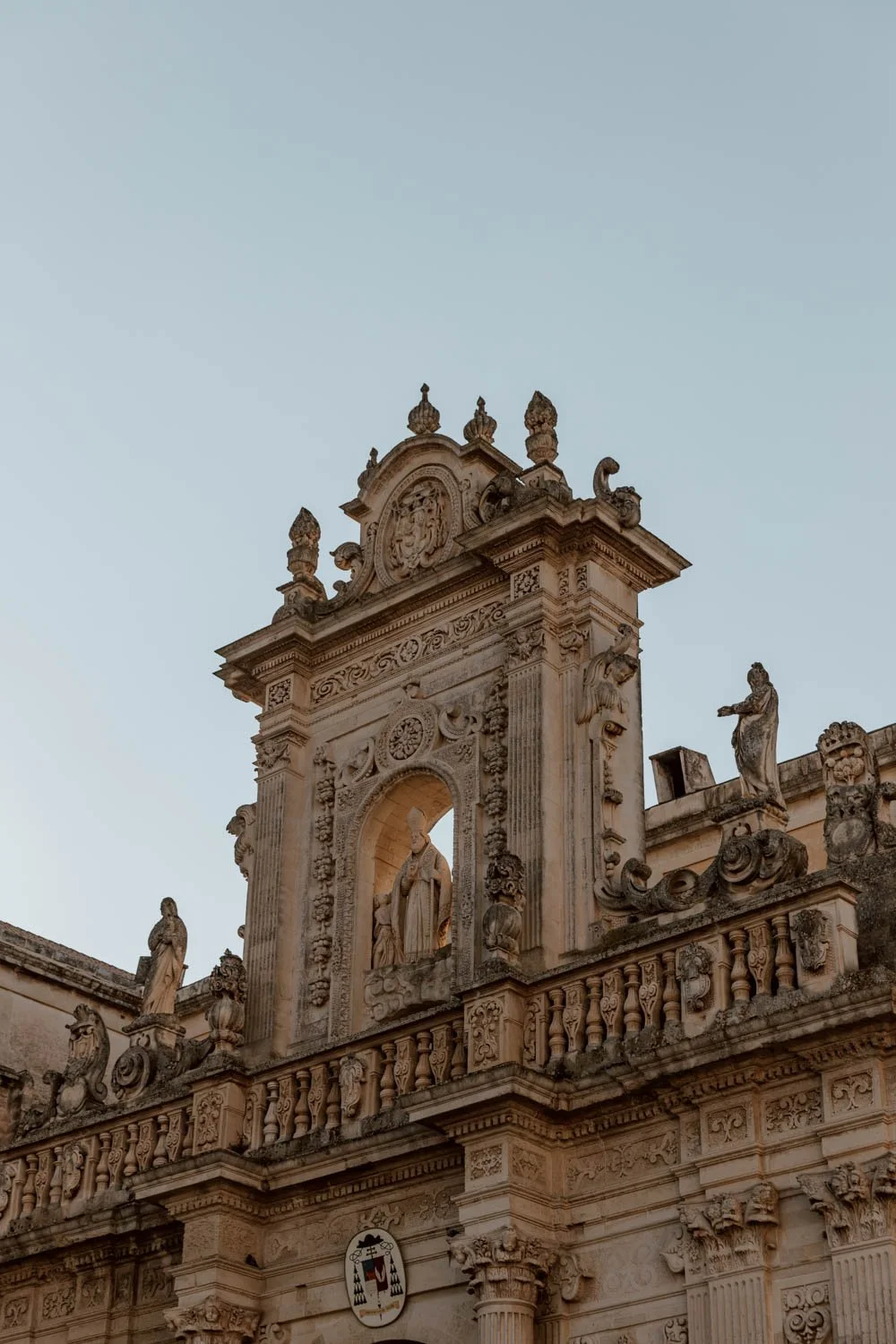
Otranto |
The Best Base for Salento’s Eastern Coast
When we returned to Otranto, one of the things Andrew was most looking forward to was afternoon swimming in town. Not the castle, the cathedral, or even the Byzantine frescoes we had come back to see - just several hours spent between the water and warm cement in the sun. That probably explains Otranto’s particular appeal better than any list of sights.
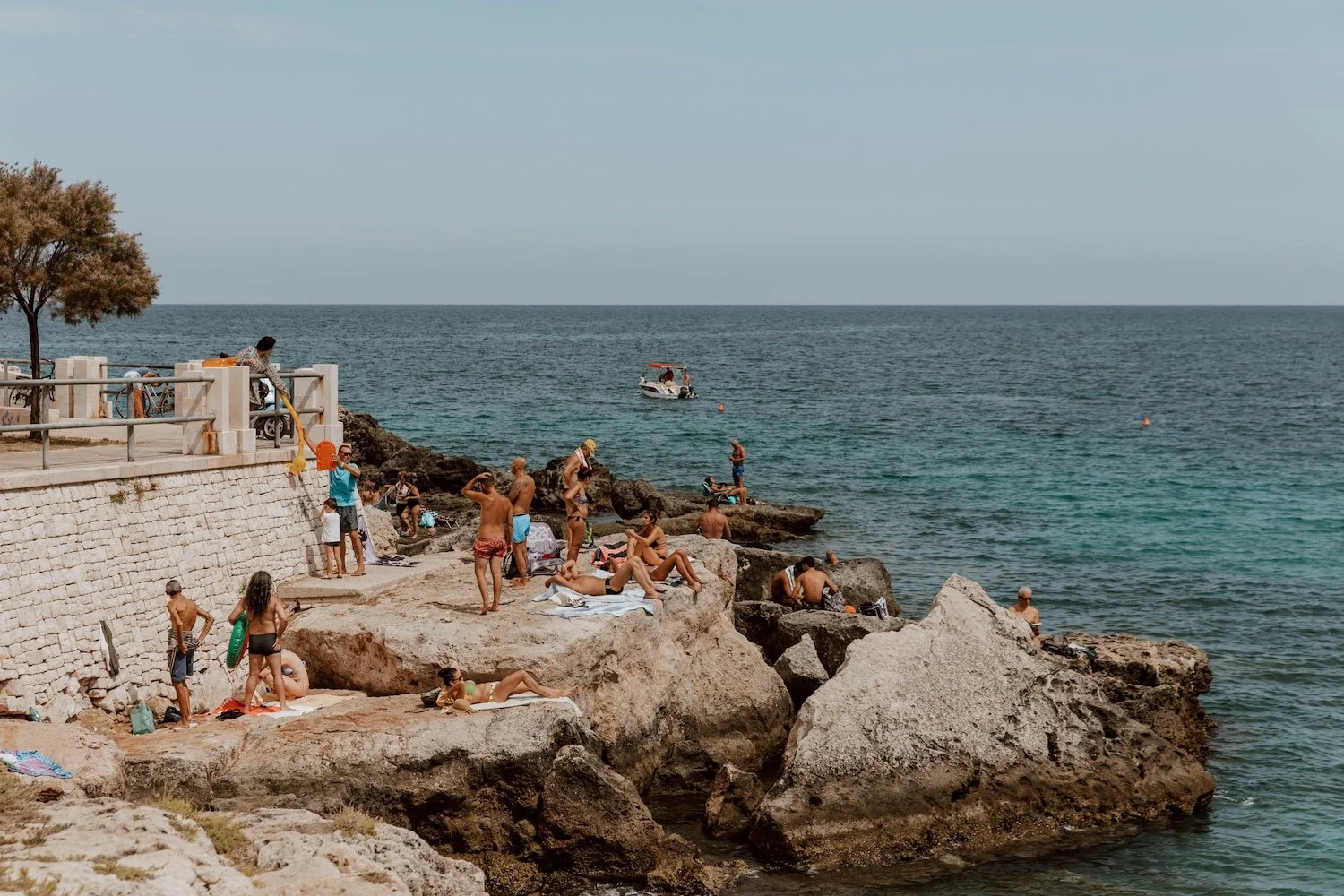
The fortified centro storico is small but exceptional, with heavy walls built in response to the Ottoman invasion, a cathedral whose floor is covered by Pantaleone’s strange and intricate medieval mosaic, and the tiny Chiesa di San Pietro hidden amongst its lanes. Yet the sea is not merely something viewed from the ramparts. Several crescents of sand, concrete platforms, and rocky swimming spots run around the bay, allowing you to spend the morning exploring the old town and the afternoon in clear, shallow water without driving anywhere.
A couple of days would cover Otranto itself; three or four allows it to become the starting point for the eastern Salento coast. Baia dei Turchi, Porto Badisco, Torre dell’Orso, and the limestone swimming spots around Sant’Andrea are all around half an hour by car, although each offers a quite different sort of day beside the sea.
Otranto can be reached by public transport, but the train from Lecce usually requires a change in Maglie, and the little station sits around 15 minutes from the old town. Once there, you can happily manage without a car and it would be a lovely place to include in your Puglia plans; what you cannot do easily is travel between the town and the surrounding coves and beaches.
July and August bring the least appealing version of Otranto. The narrow streets become uncomfortably busy around lunch and dinner, the little beaches fill quickly, and parking requires more patience than anyone wants to expend in summer heat. Travellers who care more about a long stretch of sand, rentable sunbeds, and straightforward beach days may prefer Torre dell’Orso.
Choose Otranto // If you want to divide several days between one of Puglia’s most distinctive fortified towns and the beaches, coves, and swimming spots of eastern Salento.
Think Twice // If you want to explore beyond Otranto but won’t have a car or want a conventional sandy-beach holiday base.
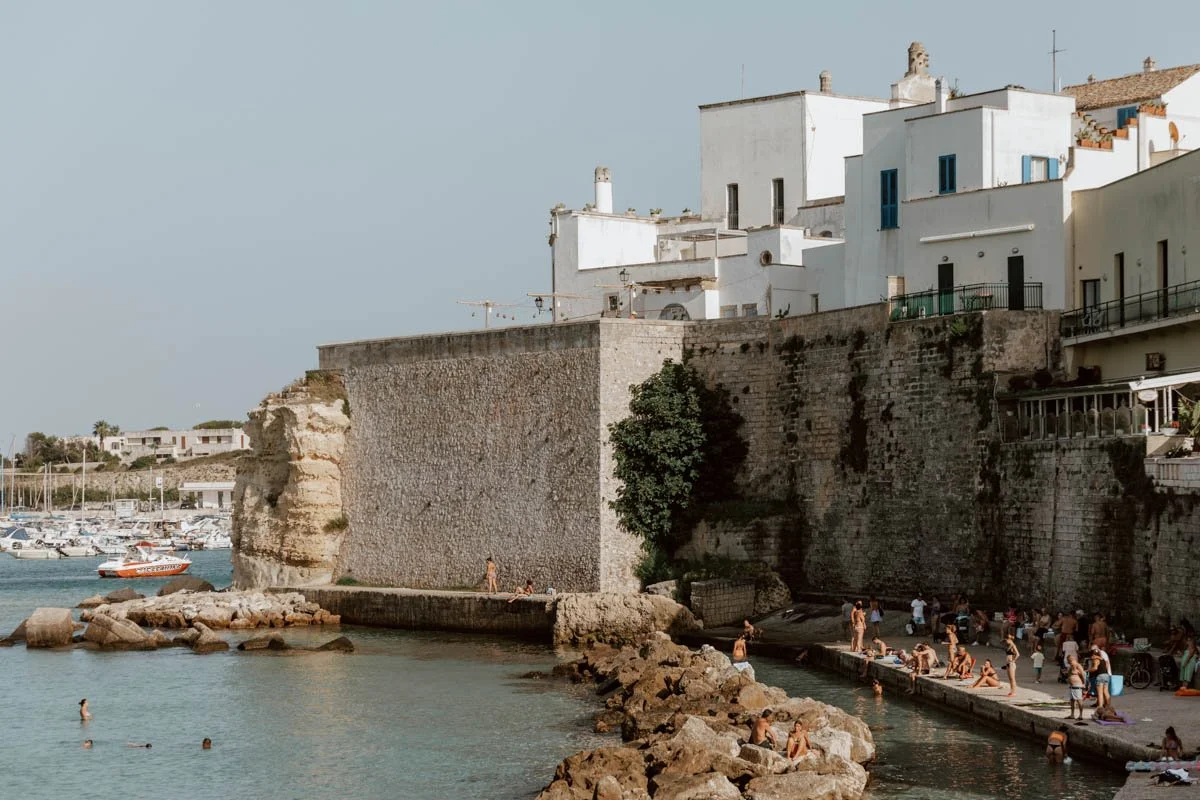
Accommodation in Otranto
We would stay inside the historic centre. Otranto’s old town is compact, but sleeping amongst the lanes between the cathedral, Chiesa di San Pietro, and the castle is quite different from staying in the modern streets behind the bay. The harbour, restaurants, walls, and several places to swim will all be within minutes of the front door; there is little reason to give that up for an accommodation close to the railway station.
Anyone arriving by car must therefore accept that the vehicle and accommodation will be separated. The centro storico is covered by a ZTL, so you will generally need to park outside the walls and walk in with your luggage; some hosts provide a permit or recommend a particular car park, so ask before arrival. The streets around the castle and Via delle Torri are the sensible compromise if easier access is important, remaining right beside the old town rather than shifting the stay into modern Otranto simply for parking convenience.
Hotels & Guesthouses
Palazzo De Mori | Once owned by Michele Leondari, one of the 800 martyrs murdered following the Ottoman invasion, this historic palace has been beautifully restored whilst maintaining its period features. The rooms are light, bright and airy with gorgeous white linens, tiled floors and antique furniture. One real highlight is the stunning view of Otranto’s harbour from its private terrace.
Corte Di Nettuno | A super popular option is the pink-walled and nautical themed Corte Di Nettuno. The decor isn’t quite our cup of tea but it’s a super popular, highly-rated mid-range option in the heart of Otranto.
Dimora San Giuseppe Hotel & SPA | Offering simple but stylish and contemporary rooms, this hotel is located in the historic centre, within the walls of sensitively restored 16th century farmhouse. It’s just 300m from the sea and offers surprisingly affordable rooms for its 4* status.
B&B Ophelia and Hotel Albània | If you’re looking for a budget-friendly option we can recommend B&B Ophelia and Hotel Albània. Both are located at the edge of the historic centre, offer simple clean and comfortable rooms and have excellent reviews.
Baglioni Masseria Muzza Resort & Spa | If you don’t mind being a little outside of the city, consider staying in Baglioni Masseria Muzza, an absolutely stunning luxury masseria that allows you to enjoy the surrounding countryside whilst also being just a short drive to many of the area’s most popular attractions.
Airbnbs & Apartments
Cottage Donna Pina | This super popular little cottage in the heart of the old town (but hidden away in a quiet street) is small but perfectly set up for a couple. Excellently priced and benefits from a little patio garden.
Il Balconcino di Otranto | The beautiful two-bedroom apartment is one of our favourites! Relatively modern throughout, it’s beautifully furnished with lots of unique art and nautical objet d’art, alongside select pieces of vintage furniture. The location is excellent, in the heart of the centro storico, with an enchanting view of the Byzantine church of San Pietro from the cute little balcony.
Le Nicchie | This one-bedroom cottage sits in a traffic-free courtyard around 300 metres from the castle and historic centre. It is a practical choice for two, with a kitchen, free street parking nearby, and consistently excellent reviews.
La Piccinna | A small studio in a restored Salento house within the historic centre, with a kitchenette, shared roof terrace, and - unusually for this location - reserved parking included. It is best suited to a couple who want to keep the car close without giving up the ability to walk everywhere.
Plan // The Best Things To Do in Otranto
Santa Maria di Leuca |
The Best Seaside Base at Puglia’s Southern Tip
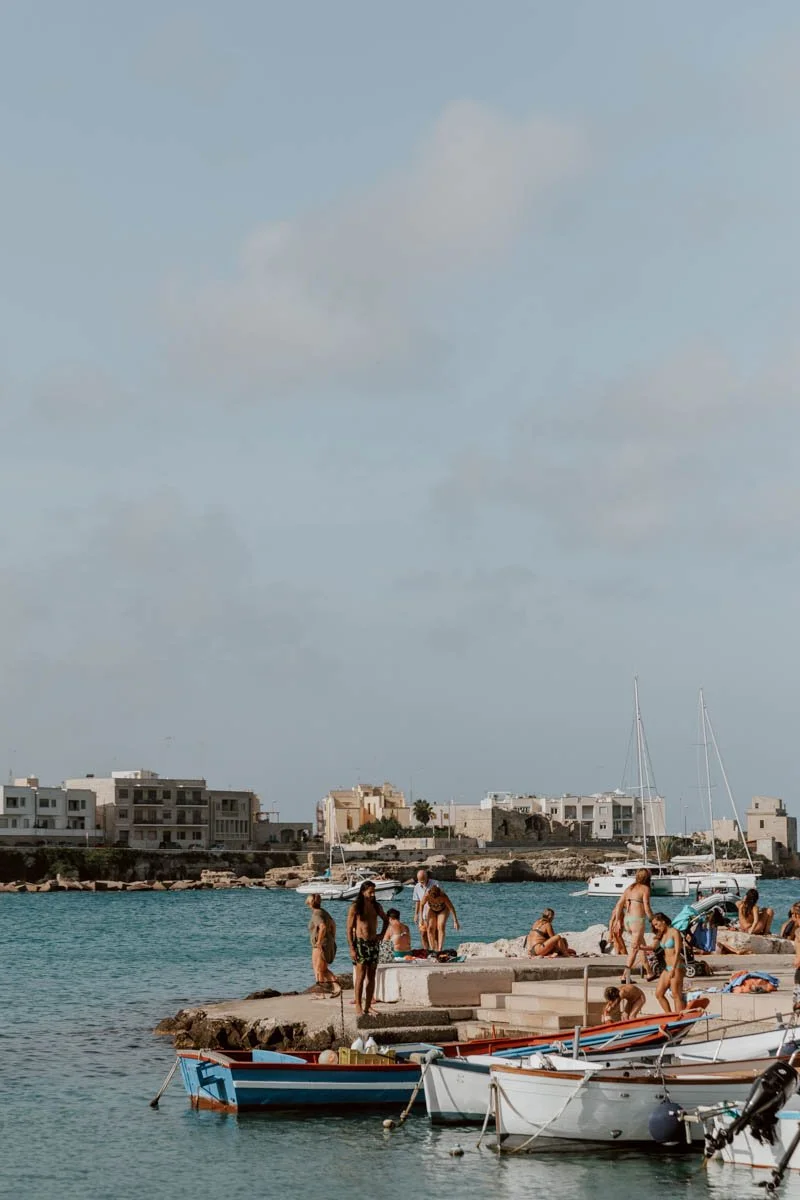
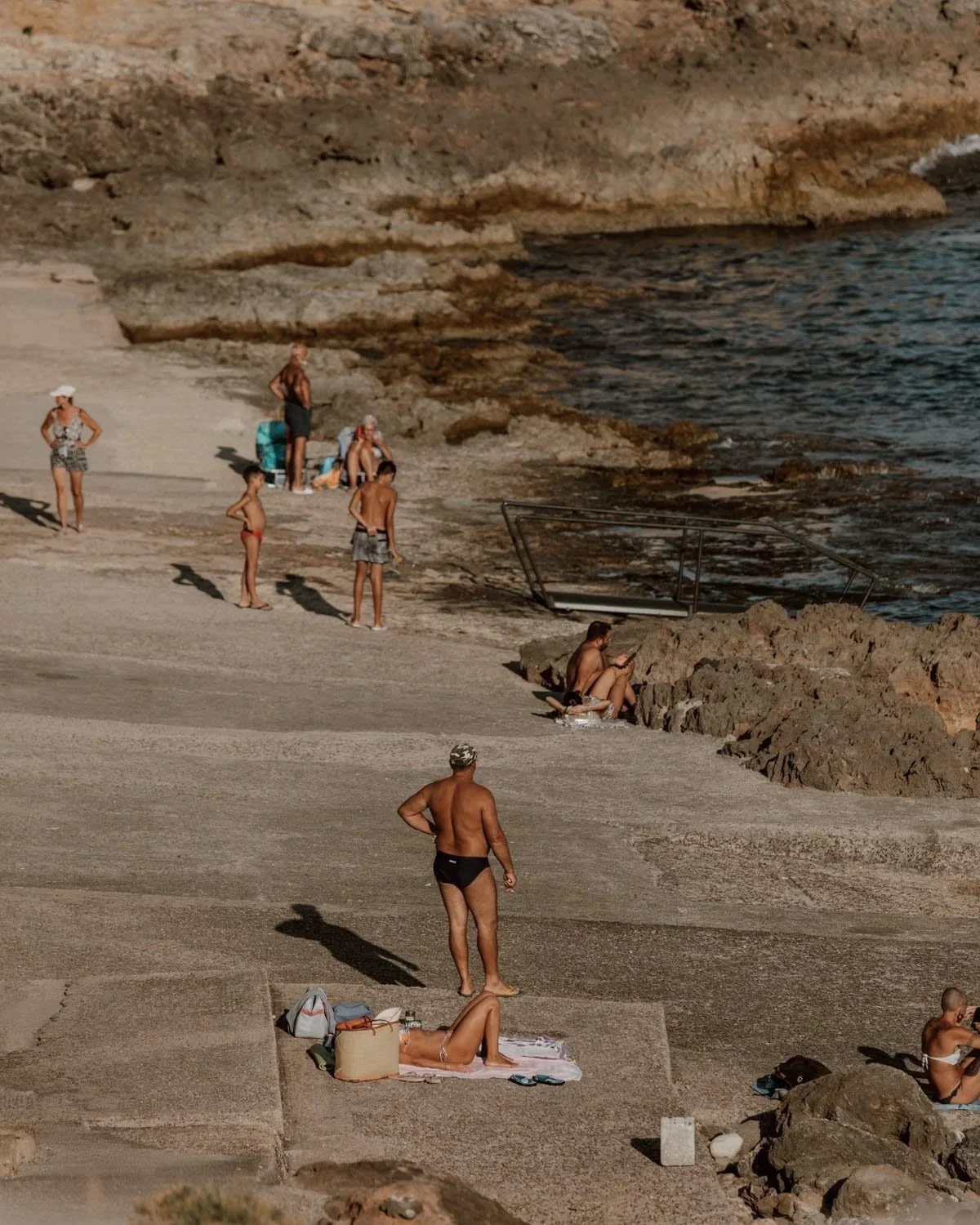
A lungomare lined with villas built for Puglia’s early holidaymakers, and lidos extending on wooden platforms over the rocky shore, Santa Maria di Leuca is a seaside resort rather than a historic town with a beach attached, and should be chosen on those terms.
We first stopped here during an earlier road trip and later returned to stay; given a few days rather than a few hours, its old-fashioned summer appeal was much easier to appreciate.
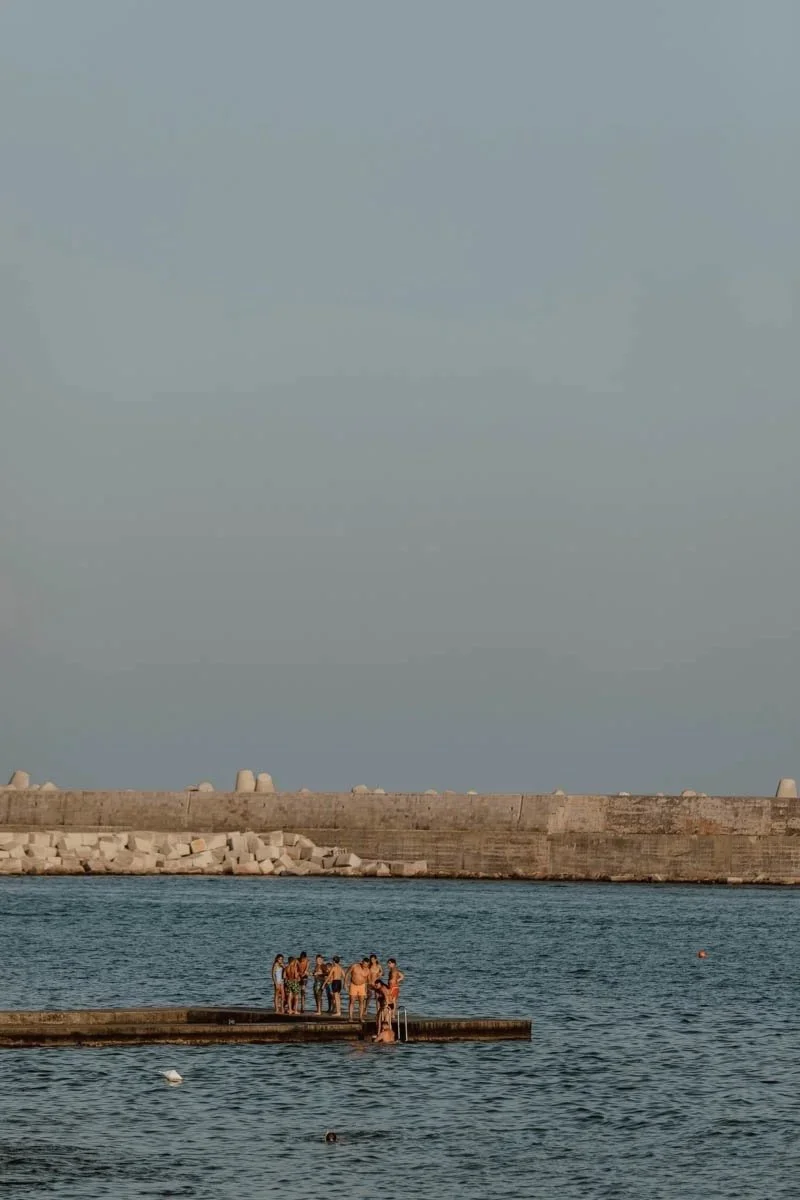
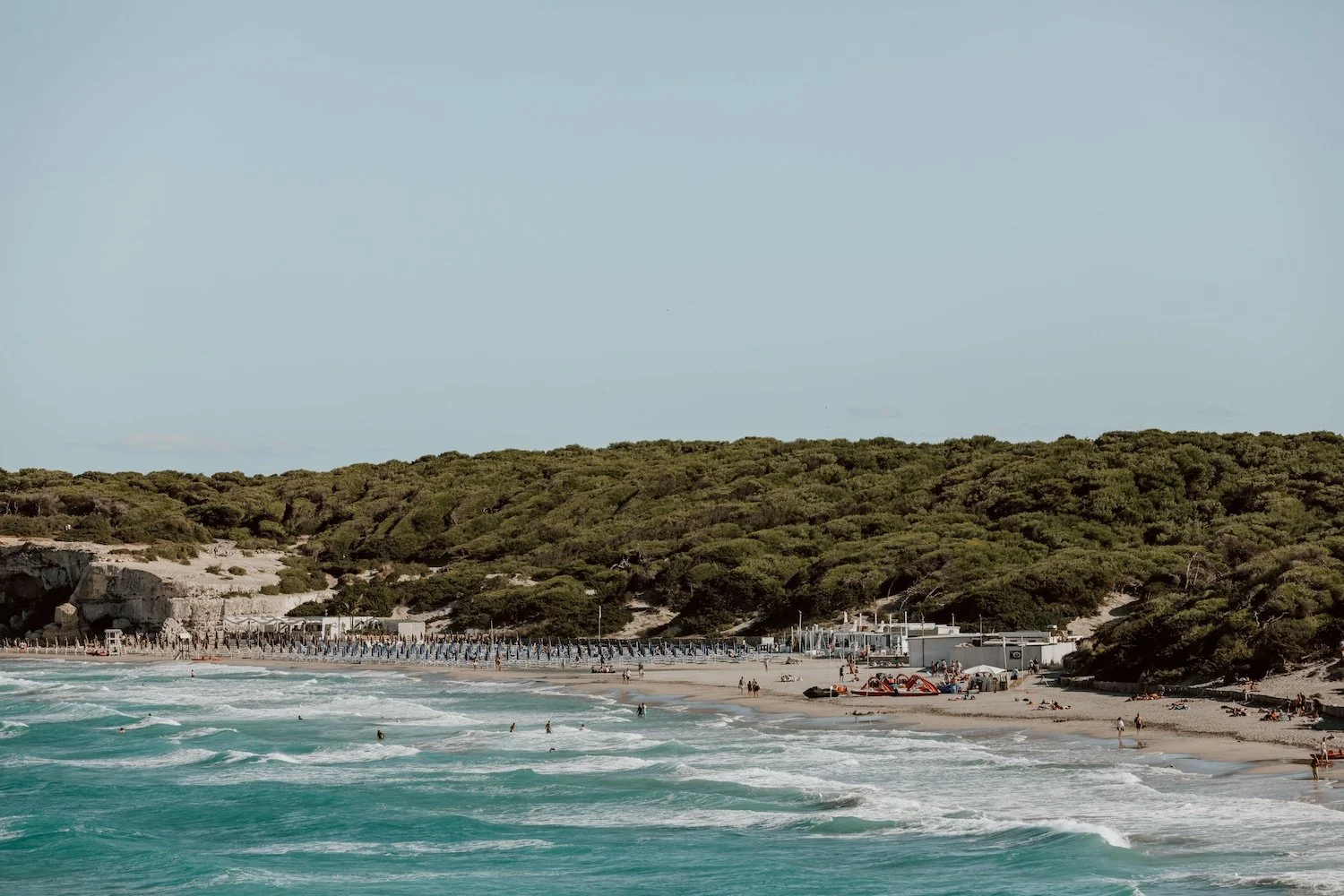
For those currently deciding where to stay in Puglia - who may not even be aware of this little town at the tip of the region - the reason to base yourself in Leuca is the coast. Drive west for the sand and shallow water around Felloniche and Pescoluse, or east for Il Ciolo, Marina Serra, Cala dell’Acquaviva, and the high coastal road towards Otranto. Boat trips leave from the seafront for the caves and inlets around the peninsula, while Gallipoli is close enough for a day trip elsewhere. This is not the base from which to cover the Valle d’Itria or work through a long list of towns; it’s somewhere to explore the southern coastline slowly.
And to do that, you really do need a car. There is no railway station, buses do not provide practical access to the beaches scattered along either coast, and Brindisi Airport is around 90 minutes away. Its position at the end of the peninsula is therefore both the reason to come and the reason not to: once here, the holiday wholly belongs to southern Salento.
Choose Santa Maria di Leuca // If you want a few unhurried days of swimming, lidos, boat trips, and coastal drives, and would enjoy the feel of a proper Italian summer resort. It’s a particularly good as the southernmost stop on a longer road trip.
Think Twice // If you won’t have a car, want a historic town with extensive sightseeing, or expect a broad sandy beach outside the door - this is a very Italian way of doing things by the sea. Be aware that prices climb steeply in August, and travellers expecting a long sweep of sand immediately outside their accommodation may find that Pescoluse better matches the holiday they have in mind.
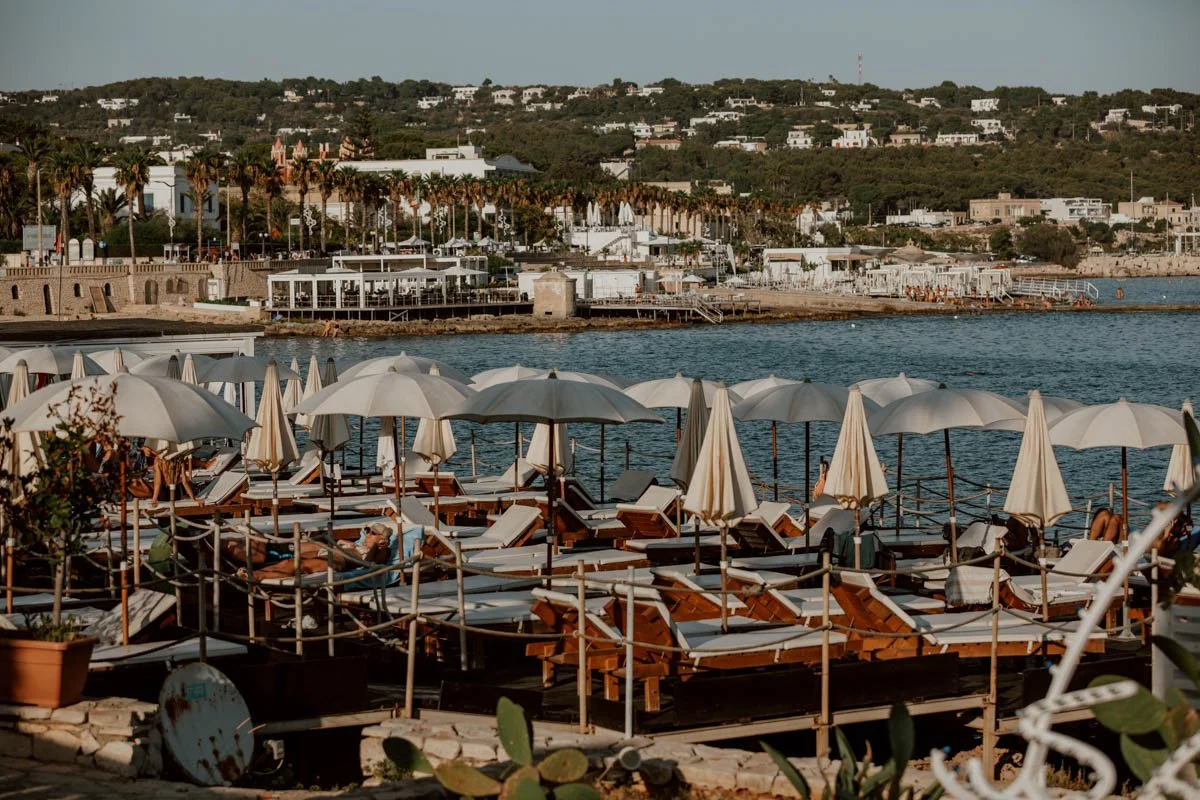
Accommodation Santa Maria di Leuca
Leuca has no old town around which to organise the search. For the easiest stay, look along the central stretch of Lungomare Cristoforo Colombo or within a few streets behind it, whilst the western end towards Punta Ristola and Lo Scalo is quieter and closer to some of the better rocky swimming spots, although dinner may involve a longer walk.
Properties higher up towards the lighthouse and sanctuary can offer wide sea views, but the climb back from the waterfront quickly becomes tiresome. Parking is less complicated than in Puglia’s historic centres, although a private space remains worth prioritising in July and August.
Hotels & Guesthouses in Santa Maria di Leuca
Villa La Meridiana | Of all the places to stay in Leuca, Villa La Meridiana feels most connected to the town’s history as a summer resort. Built in 1874, its striped ochre-and-red façade, high-ceilinged rooms, old furniture, and bougainvillea are gloriously unlike a standard beach hotel; there is also a small pool, shaded garden, and private access to the water.
Villa Romasi | An ideal option for those who wish to be close to the beach but stay within a relaxing environment, this historic property has been beautifully refurbished and offers a real oasis of calm. Guests also speak highly of the breakfast.
Biancaleuca Rooms & Suite | We stayed at Biancaleuca and would recommend it to travellers wanting a comfortable, unfussy room close to the sea without paying for facilities they will not use. During our visit, breakfast was delivered to the room, the small garden provided somewhere to sit outside, and hosts Roberto and Giulia could arrange boat trips and other local experiences. Some units also have a sea-view terrace.
A’mmare Rooms & Apartments | This place is absolutely ideal for couples or single travellers who want new, stylish, modern rooms without all the eccentricities of a full-on hotel.
Approdo Boutique Hotel Leuca | One of our top resort-style picks in town, Approdo has a swimming pool, restaurant, private parking, and balconies overlooking the tourist harbour. The rooms are more conventional than its name suggests, but it offers considerably more facilities than Leuca’s smaller guesthouses.
Airbnbs & Apartments in Santa Maria di Leuca
Stella Marina | This wonderful one-bedroom traditional house with vaulted stone ceilings is a super popular choice in Leuca - and we can see why. It’s light and airy with tasteful decor, plus has a private courtyard with a dining area and space to park a car.
Salento Sea Daniela | A particularly good option for two people, this split-level apartment sits around 50 metres from Punta Ristola. The interiors are simple, but the private upper terrace has open sea views and plenty of space for eating and sunbathing; private parking is also included.
Porto Grande Leuca | This two-bedroom apartment is just gorgeous! It’s large and modern throughout and has a huge terrace with views out over the water. It also has free parking.
The White Salmon | If you need even more space, have a look at this five-bedroom architectural masterpiece built across several levels above the water. Walls of glass, broad terraces, and a staircase leading almost directly to the sea - it’s pricey, but stunning.
Gallipoli |
The Best Base for the Ionian Coast & Sandy Beaches
Like many people that travel along Puglia’s lesser-visited western coast, we chose Gallipoli largely due to its proximity to many excellent beaches. Then strong winds arrived, our planned beach days disappeared, and we spent far more time inside the old town than expected.
It turned out to be one of the happiest accidents of the trip.
Cross the short bridge into Gallipoli and you’ll encounter a wonderful tangle of streets where baroque churches and faded palazzi sit amongst grocery shops and family homes, and a sea view is never far away. Spiaggia della Purità curves beneath the walls on one side of the island; on the other, the sun sets straight into the water. You could walk around the lot in a couple of hours, but then you would miss the swim, the long lunch, and sunset from the walls - which are really why you came.
One or two nights will be enough if you are visiting primarily for Gallipoli itself; stay for three or more if you plan on exploring the beautiful coastline. A car is by far the easiest way to reach Punta della Suina and Punta Pizzo, although Gallipoli can also be reached from Lecce by regional train and, in summer, seasonal bus. Without a car, you can explore the old town, swim at Purità, and enjoy a few slow days by the sea, but it becomes much harder to use Gallipoli for the wider Ionian coast.
July and August require a separate warning. The old town becomes extremely busy, parking is difficult, and Baia Verde draws a young, party-focused crowd to its beach clubs and bars. Some travellers come to Gallipoli precisely for that version of summer; others will find it completely at odds with the old island town they had imagined. June and September are far better suited to combining the beaches with time inside the centro storico.
Choose Gallipoli // If you want to exploring the sandy beaches and coves of western Salento
Think twice // If you are focussing more on the eastern side of Puglia and its better known spots, want peace during July or August, will be relying upon public transport to reach the beaches, or have no interest in the nightlife that takes over parts of the coast in high summer.
Plan // Our Gallipoli Travel Guide
Accommodation in Gallipoli
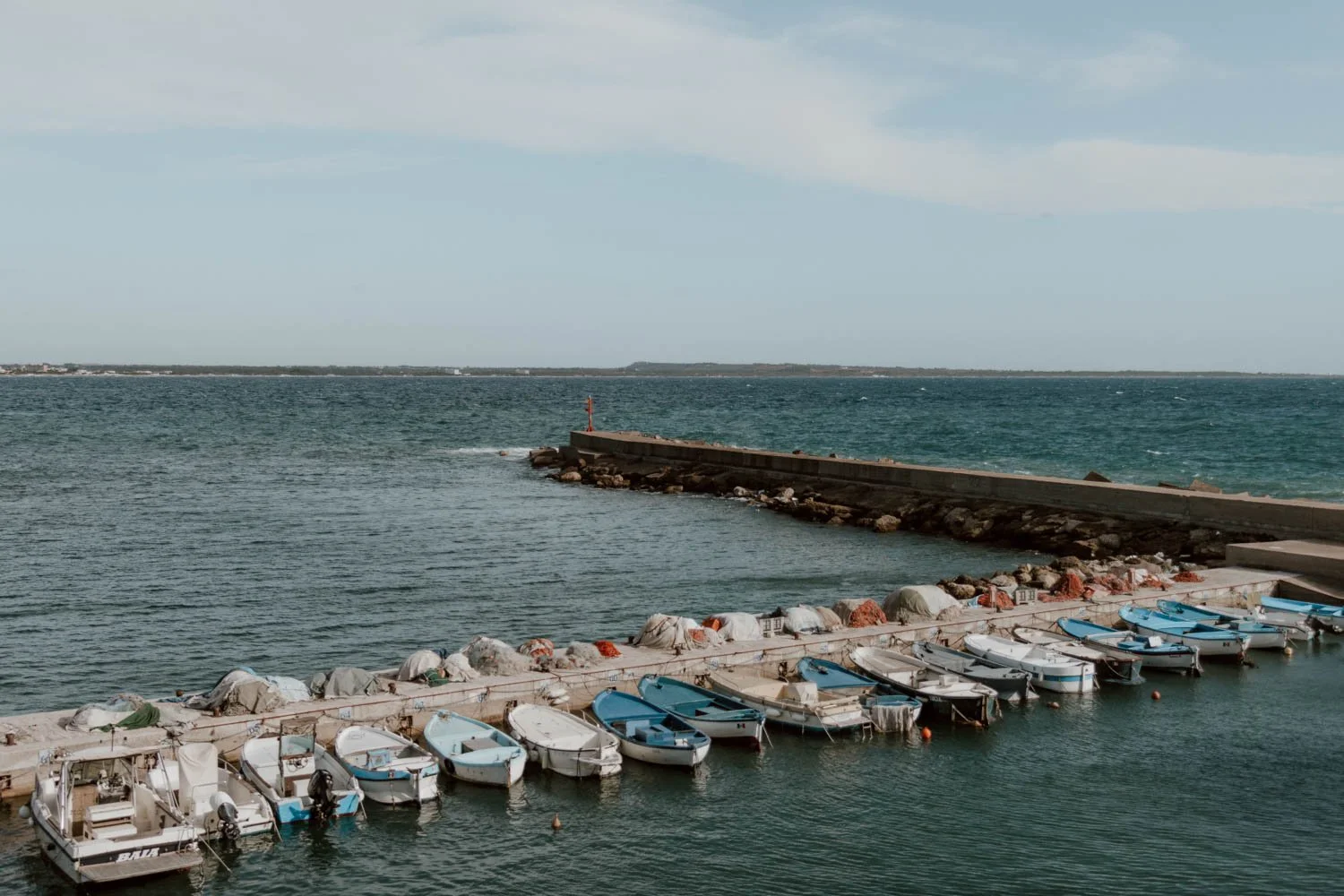
For a stay centred on Gallipoli, we would always choose the centro storico. The island is small enough that there’s no meaningful neighbourhood decision to make: the beach, harbour, restaurants, and sea walls will all be within a few minutes’ walk. We stayed in an apartment with a private rooftop and would look for much the same again—the chance to take wine and food upstairs as the sun dropped into the Ionian became one of our favourite parts of being there.
The inconvenience is getting yourself and your luggage inside. A seasonal ZTL restricts access across the bridge, and parking within the old town is not an option for visitors, so most people leave their car around the port on the mainland and continue on foot. Ask your host about luggage drop-off or collection before arriving. We would prefer not to stay in the modern town simply to avoid that walk, while Baia Verde should only be considered by travellers deliberately choosing beach clubs and nightlife over the experience of sleeping inside Gallipoli Vecchia.
Hotels & Guesthouses
Palazzo Presta | If we could stay anywhere in Gallipoli, it would be this STUNNING hotel set within the walls of a 17th-century palazzo, close to Purità beach, that makes no attempt to disappear into neutral good taste. With antique furniture, patterned fabrics, and decorative objects gathered from elsewhere, the look is eclectic and deliberately indulgent but balanced by the solidity of the historic building itself.
A rooftop bar, restaurant, and panoramic lounge areas add to its appeal, especially if you’re keen to linger in the old town after dark without committing to a night out elsewhere.
Palazzo Flora | One of the strongest additions to Gallipoli’s accommodation scene, set around a quiet courtyard garden with a small outdoor pool - still a rarity within the old town. Frescoes, patterned tiles, old timber, and carefully chosen furniture give the ten rooms plenty of personality without tipping into the exuberance of Palazzo Presta.
I Bastioni San Domenico | Built against the sea walls on the quieter southern edge of the island, this boutique hotel is far more restrained. Rooms pair vaulted ceilings and old stone with simple contemporary furniture, while the sea-facing restaurant occupies one of the loveliest positions in the old town. Pay extra for a room with a full sea view.
Corte Moline | A characterful little B&B in a traditional white-stone house, with individually furnished rooms and breakfast served upon the shared rooftop terrace. One of the larger rooms also has a kitchenette, making it a good compromise between an apartment and a hotel.
Palazzo Salapolis | Five spacious, thoughtfully designed apartments in the heart of the old town, several with private terraces. These are a strong choice if you want the freedom to cook, more room than a standard hotel bedroom, and somewhere pleasant to spend time between trips to the beach.
Airbnbs & Apartments
Dimora delle Terrazze | Our favourite of the smaller properties. Set within an old palazzo, this one-bedroom apartment retains its coloured floors, tall arched ceilings, and original doors, with local antiques and more contemporary pieces brought in around them. Both terraces overlook the rooftops and sea; the lower one also has a rather lovely outdoor shower. A handmade double daybed allows it to sleep four.
Casa Cardami 22 | A one-bedroom apartment directly above Spiaggia della Purità, with the sea framed by the living room doors and a private roof terrace for dinner, sunbathing, and outdoor showers. The renovation is relatively restrained, allowing the old stone and remarkable position to do most of the work.
Casa Coco | The strongest all-round two-bedroom option. Its interiors are simple but considered; the real draw is the outdoor space. One terrace flows directly from the living room and has a tiled shower, shaded dining table, and outdoor kitchen, while the upper terrace looks across to the sea and Spiaggia della Purità. It also has an excellent, long-established review record.
Buccarelli Palace | This two-bedroom home occupies part of an old palazzo on a quiet street in Gallipoli’s historic centre. Star-vaulted ceilings provide the architectural interest, while the private rooftop terrace has its own outdoor kitchen. The second bedroom is a twin, making this a particularly good choice for a small family or friends who do not want to share a bed.
Stories and Frescoes | Easily the most romantic interiors on this list: original frescoes, patterned cement tiles, vaulted ceilings, and a four-poster bed beneath the painted ceiling. There are two bedrooms and a private rooftop belvedere overlooking the old town and sea.
Still looking for your somewhere? Find all our guides on the dedicated Puglia travel page.
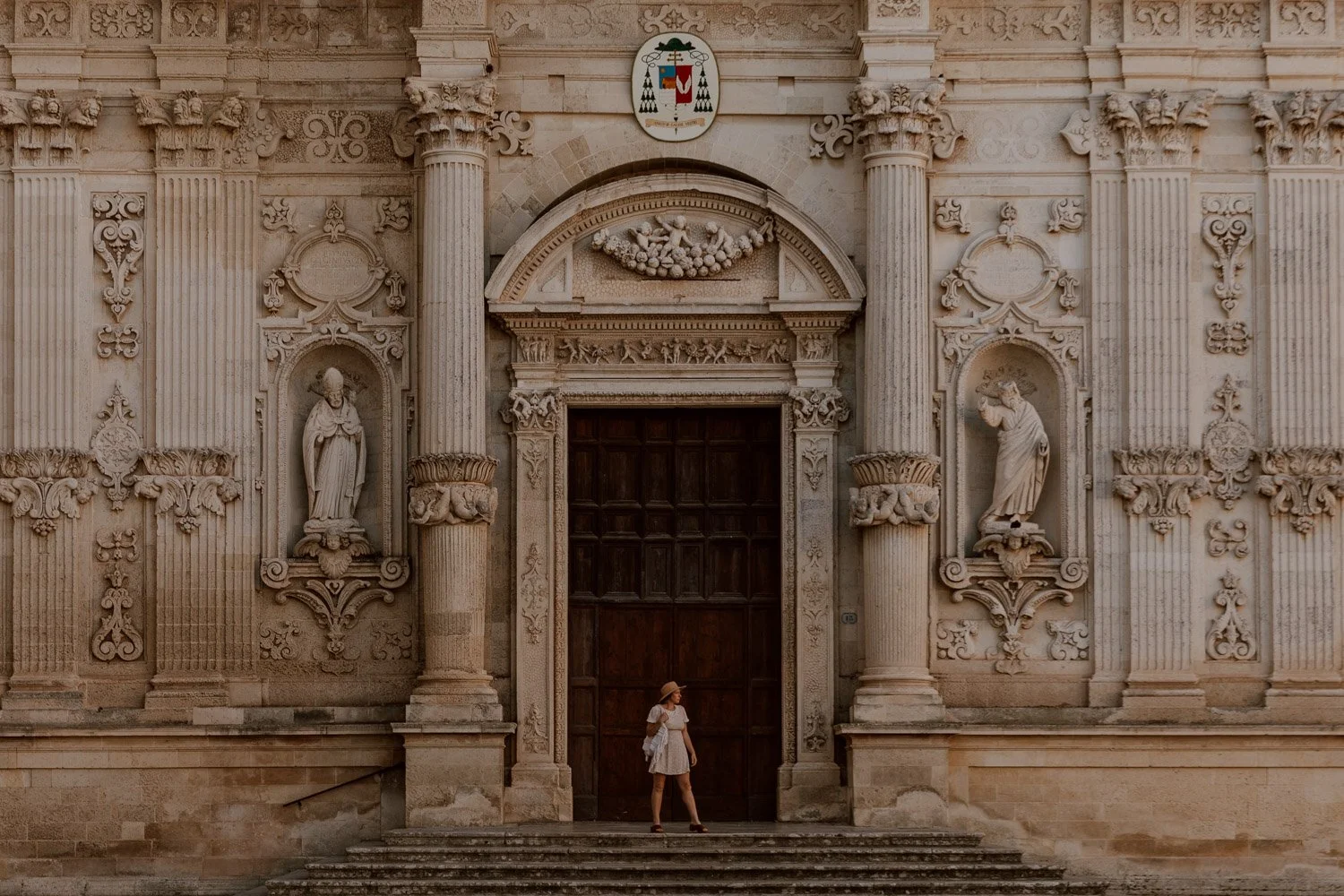



Our short guide to Galatina covers the sights you can’t miss - and where to find that world famous pasticiotto!