



13 Wonderful Things to Do in Costa Rica
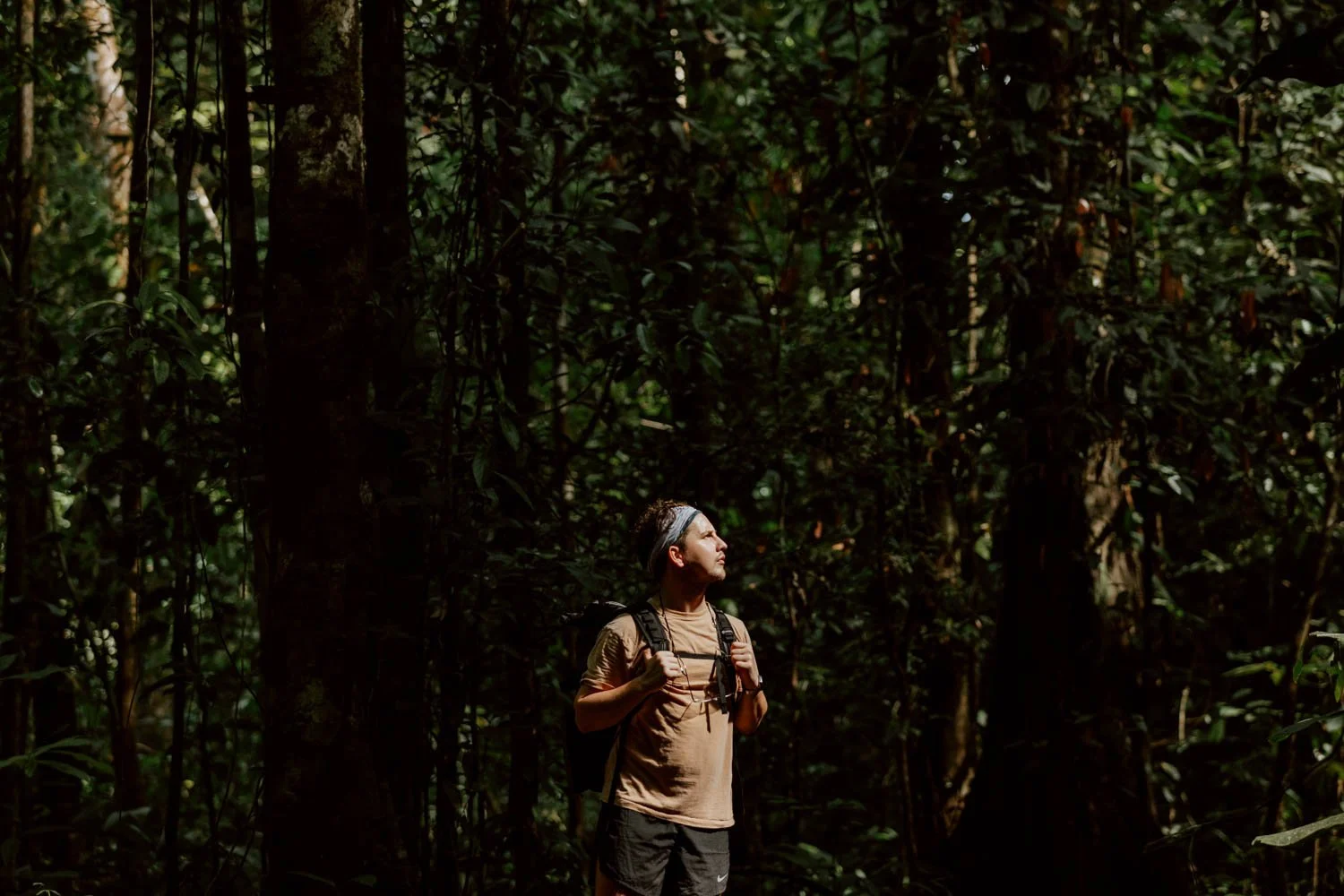
For backpackers travelling overland through Central America, Costa Rica is often the country a budget struggles to accommodate. Hostels, hotels, food, transport, and entrance fees are noticeably more expensive than elsewhere in the region, so it is sometimes reduced to a hurried passage between Nicaragua and Panama - or removed from the itinerary altogether when the money begins to run short.
On our first trip, we had considerably more time than money, and found ourselves falling into that same cycle. Buses, dorms, and bowls of pasta in a poorly maintained shared kitchen were the norm, and we were limited to experiences that cost nothing, with our days shaped by the the on-going calculation of what to prioritise and what to skip.
Eight years later, we returned with less time, more money, and a much better understanding of what we had missed.
Between those two journeys, we’ve crossed Costa Rica by bus, shuttle, and passenger boat, woken to howler monkeys in the remote Osa Peninsula, watched humpback whales surface off Uvita, flown across a wire suspended above Monteverde, and spent long, rain-interrupted days cycling the Caribbean coast.
The country’s status as a dream destination for many lies partly in the extraordinary variety of experiences it manages to bring together. Whether travellers come for surfing and yoga retreats, rainforest adventures, wildlife encounters, or simply time to unwind, Costa Rica has an unusual ability to deliver on all of them within a relatively small area. National parks and refuges provide the foundation around which much of the country’s tourism has developed, but nature is not confined to their boundaries; journeys between them pass through forest, wetlands, and long stretches of protected coastline, meaning a bus ride, boat trip, or afternoon on a bicycle can produce its own unexpected wildlife sightings.
This abundance is no accident: after losing much of its forest during the twentieth century, Costa Rica became the first tropical country to reverse deforestation, and trees now cover close to 60 per cent of its territory. A quarter of its land is formally protected and estimated six per cent of the planet’s biodiversity is found within its borders
Much of what travellers come here to see and experience today is a direct result of those choices to protect and restore its natural landscapes.
And so, whilst this is not our very favourite country in Central America, it is one where we have experienced some truly wonderful things, and created memories that we still call upon on those dark, rain-soaked evenings back home.
These are the places, landscapes, and encounters which have stayed with us - and our take on the best things to do in Costa Rica.
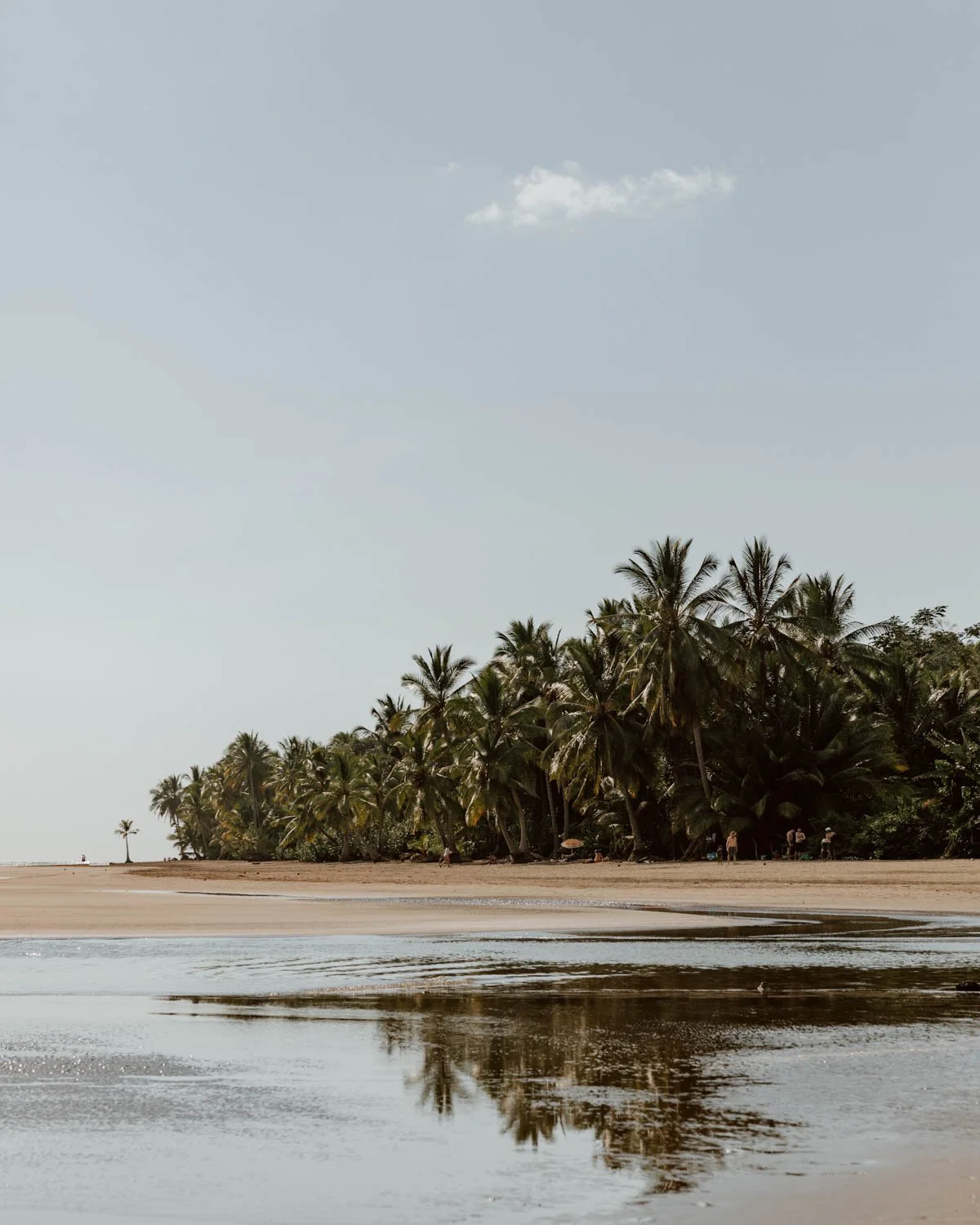
The Best Things to Do in Costa Rica
Watch / Humpback whales gather off Uvita
Unplug / In the wilds of Drake Bay
Venture / Deep into Corcovado National Park
Explore / The beaches and wildlife of Manuel Antonio
Walk / Across the old lava fields beneath Arenal Volcano
Take / A surf lesson along the Pacific coast
Build / A road trip between the cloud forests and the coast
Go / Full-on pura vida along the Caribbean coast
Witness / Turtles return to the beach at Tortuguero
Visit / The museums, markets, and theatre of San José
Zipline / Over the cloud forest around Monteverde
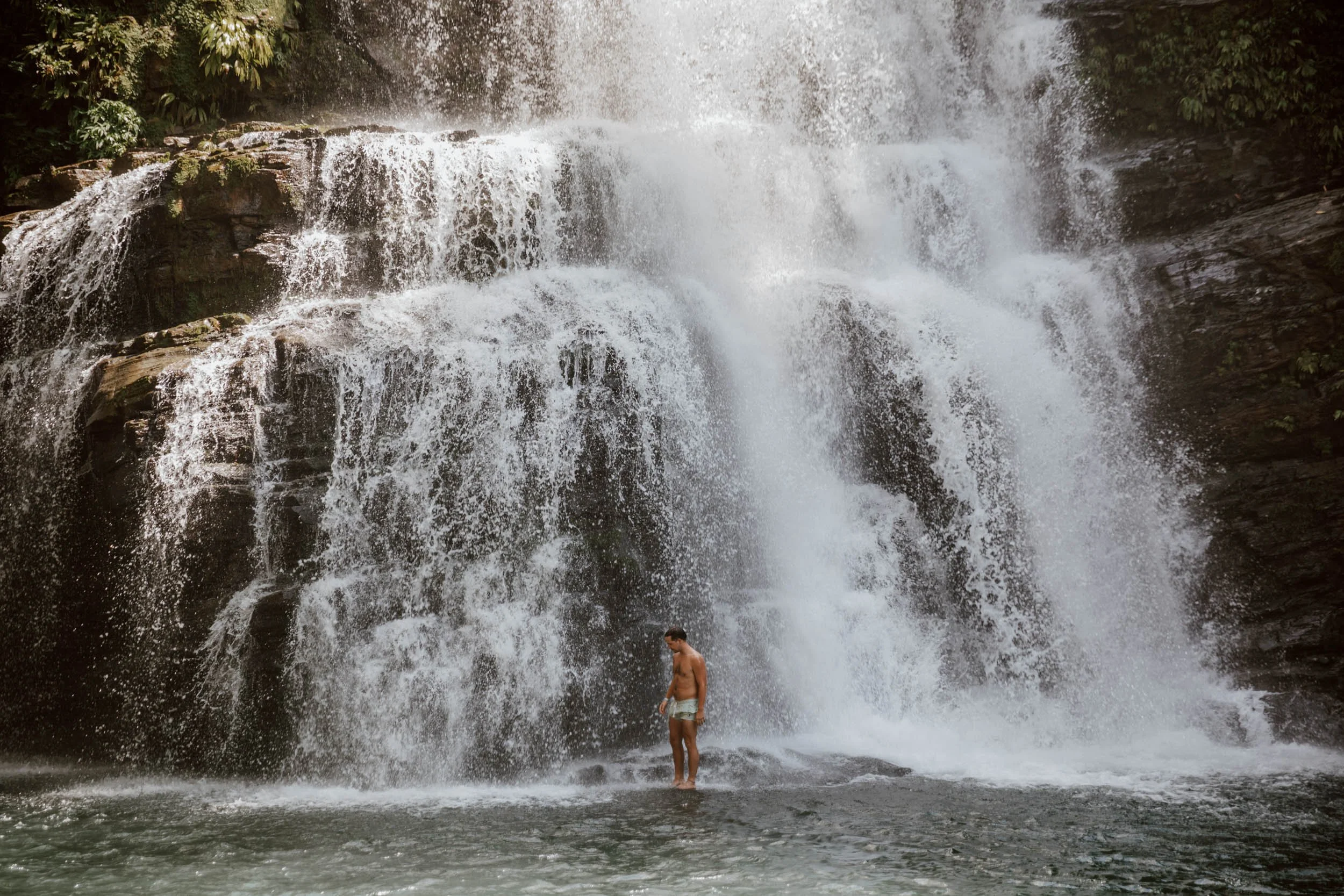
Swim / Beneath one of Costa Rica’s many waterfalls
Drink / Costa Rican coffee at a finca or speciality coffee shop
Go Whale Watching in Uvita
With so many options, it can be difficult to choose where to stay - or which places to prioritise - along Costa Rica’s Pacific coast.
After much research, and with the call of wild whales sealing the deal, we settled on Uvita.
Very much a town of dusty roads suited to the backpacker or independent traveller, Uvita borders the beautiful Marino Ballena National Park in Puntarenas province and is well positioned for exploring further south.
For us, it offers all the sorts of experiences that Costa Rica is about: nature immersion, undeveloped beaches, waterfalls, surfing and wildlife spotting, accompanied by a laid-back atmosphere that feels far removed from the built-up holiday towns further north.
Beyond the national park, Uvita waterfall tumbles into two natural swimming pools beneath the trees, whilst nearby Playa Hermosa is a long, dark-sand beach with beginner-friendly surf and a distinctly local feel. The town is also one of the most convenient bases for visiting the stunning Nauyaca Waterfalls, which involves a half-day of walking, swimming, and two enormous cascades that persuaded us to extend our stay by a night.
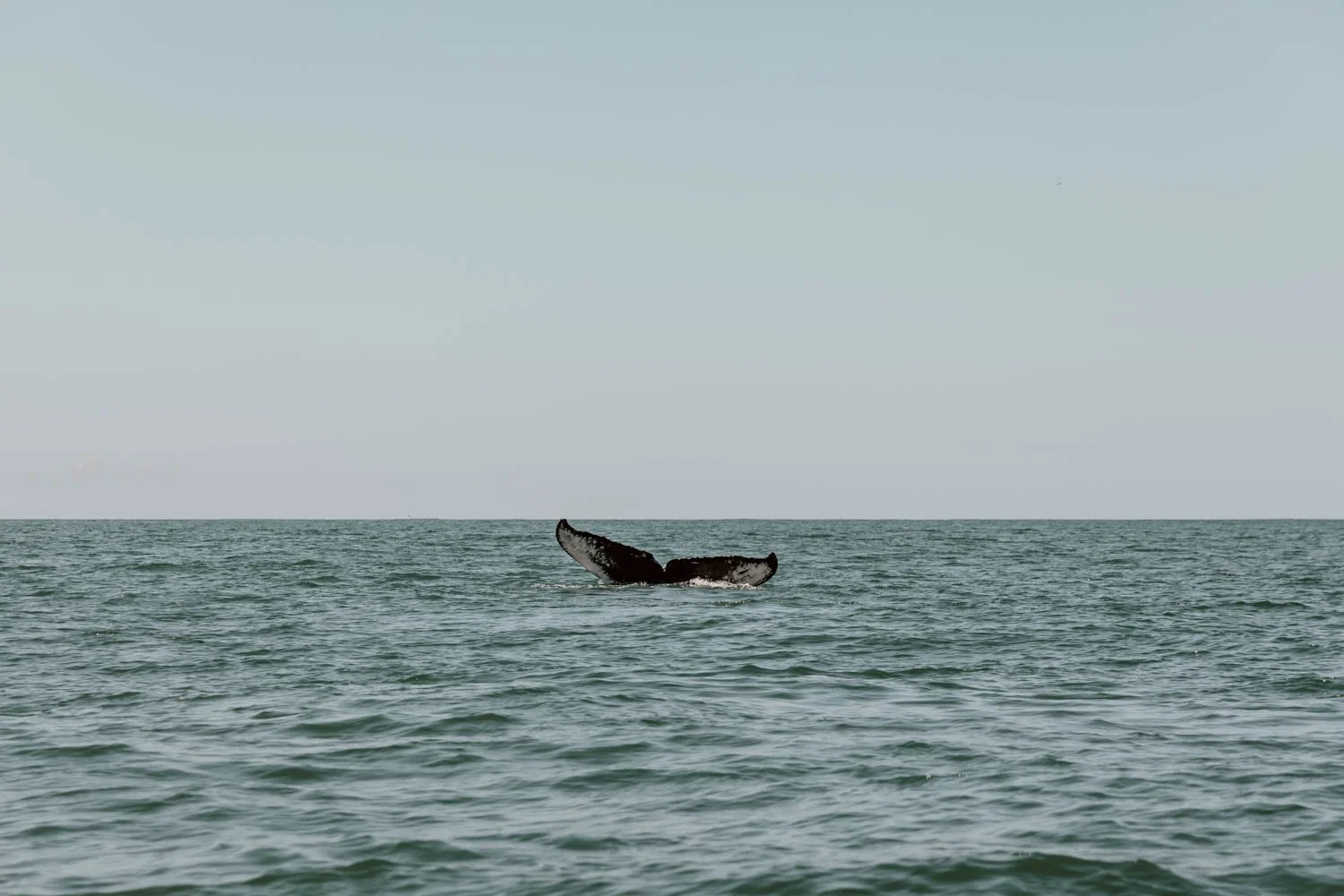
However, what really elevates Uvita beyond other places on this stretch of the Pacific is its reputation as one of the best places in Latin America to see humpback whales.
Unusually, two migrating populations pass through these waters to mate, give birth, and raise their calves. Whales travelling north from the Southern Hemisphere arrive principally between July and October, with August and September generally offering the greatest chance of sightings. A second, shorter season runs from around December to March as humpbacks escape the colder waters of the north.
Whale watching remains wildlife watching, so sightings can never be guaranteed and any operator claiming otherwise should be treated cautiously; come during the principal season and Uvita’s reputation is absolutely deserved.
The park’s other emblem is the tómbolo at Punta Uvita, a long sandbar which divides into two rocky outcrops shaped remarkably like a whale’s tail when viewed from above. It can be walked at low tide, gradually disappearing beneath the water as the tide returns.
Stay / We love the excellent hostel Cascada Verde, but if you’re looking for a little more luxury consider Vista Celestial or the stunning one of the town’s gorgeous Airbnbs (we rate Casa Serena, Villa Madom, Fruta del Cielo Villa and Jungle Villa)
Book / This highly-rated four-hour whale watching tour
Plan / 13 Wonderful Things to Do in Uvita, A Short Guide To Marino Ballena National Park & Whale Watching In Uvita | What You Need To Know
Find Wildlife & Beaches in Manuel Antonio
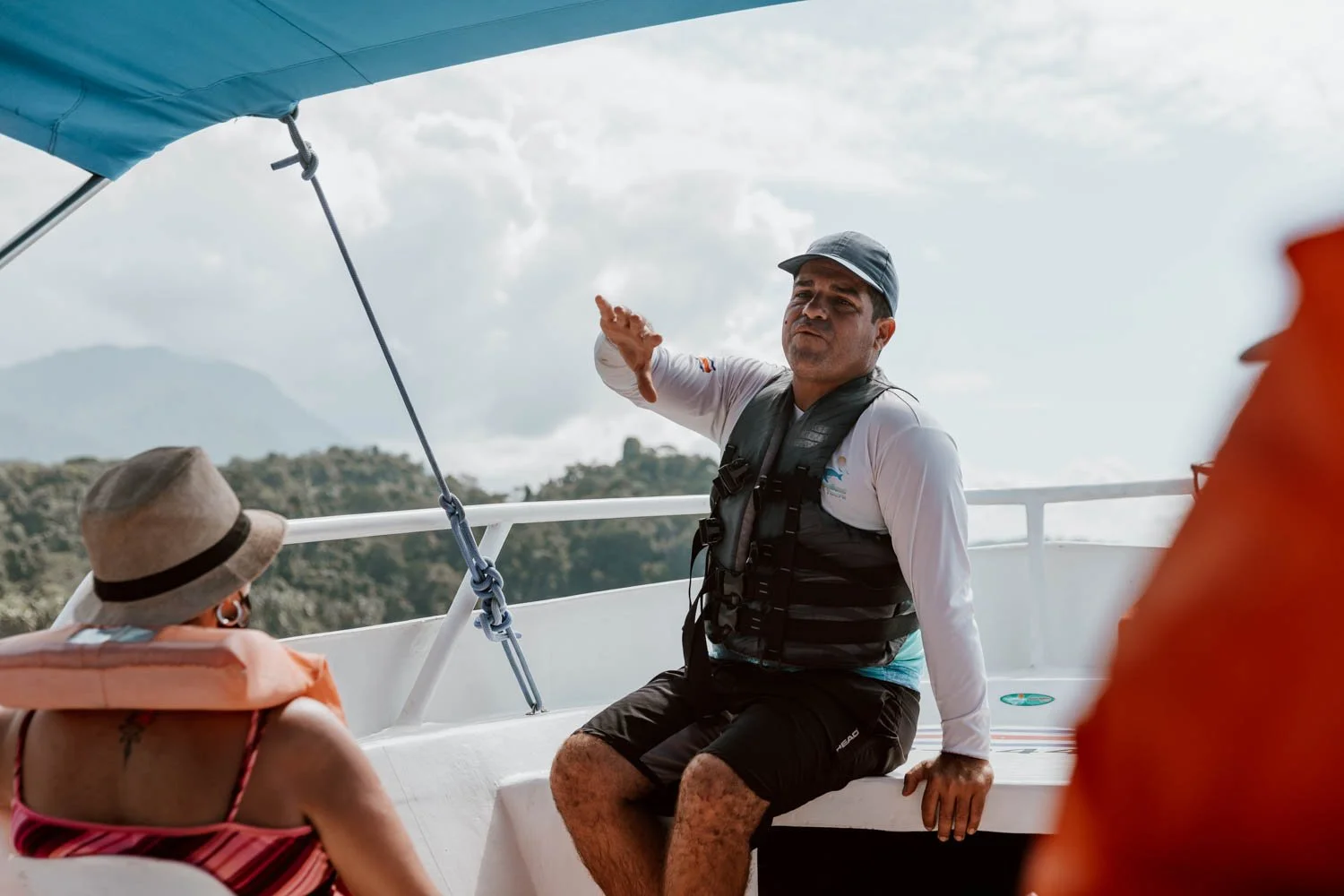
One of the smallest yet the most visited of Costa Rica’s much-admired national parks, a single day in Manuel Antonio brings you straight to an abundance of the natural elements which likely convinced you to travel to the country in the first place.
Tropical forest. Monkeys. Trails. Paradise beaches. Birds. Reptiles. Mangroves. Butterflies. The ocean.
And yes - a very, very good chance of seeing a sloth!
Despite covering fewer than 20 square kilometres of land, approximately 352 bird species and 109 mammals have been recorded here, including three of Costa Rica’s four monkey species and both its two-toed and three-toed sloth varieties.
Their relative abundance does not, however, mean they are especially easy to see. A sloth can be folded into the branches directly above your head and remain invisible, while tiny frogs, sleeping bats, nesting birds and camouflaged reptiles disappear almost completely into the forest around them.
A guide is not compulsory, but we recommend hiring one if wildlife is a priority. Without Jeremias and the bloody big spotting scope he carried, we would have walked beneath several sloths, howler monkeys, capuchins, bats, a nesting hummingbird, and various reptiles without ever knowing they were there.
Manuel Antonio’s convenient position on the central Pacific coast, roughly halfway between touristy Jacó and the beautiful Uvita, also underpins its place as a year-round fixture on most travellers’ itineraries. We entered at 7am, when the trails were still cool and quiet enough for the sounds of the forest to carry, but by one or two in the afternoon it felt like a very different park: with large groups set up on the beach, countless tour groups clustered around telescopes, and homo sapiens comfortably the most visible and vociferous of all the resident species.
At its busiest, it can feel a little Disneyland-ish.
The procession of towels and swimsuits towards the beaches is not, however, entirely at odds with the reason Manuel Antonio exists. The park was created in 1972 following pressure from the local community, who wanted to protect the area from development and preserve access to a coastline which private landowners had attempted to place beyond their reach; more than half a century later, many Costa Ricans still come principally to spend the day beside the water.
We suggest that after you’ve explored the trails of Manuel Antonio, that you choose to do exactly the same.
Stay / Millennium Manuel Hotel and The Falls at Manuel Antonio are two fantastic hotels, but if you’d prefer an Airbnb, Villa Asteria, this three-bed luxury treehouse, and this incredible park view condo and Lara Jungle are all excellent, and cover a range of budgets.
Book / A guided walk of the park - this one was excellent and good value for money
Plan / Read Our Complete Guide to Visiting Manuel Antonio National Park and Where to Stay in Manuel Antonio
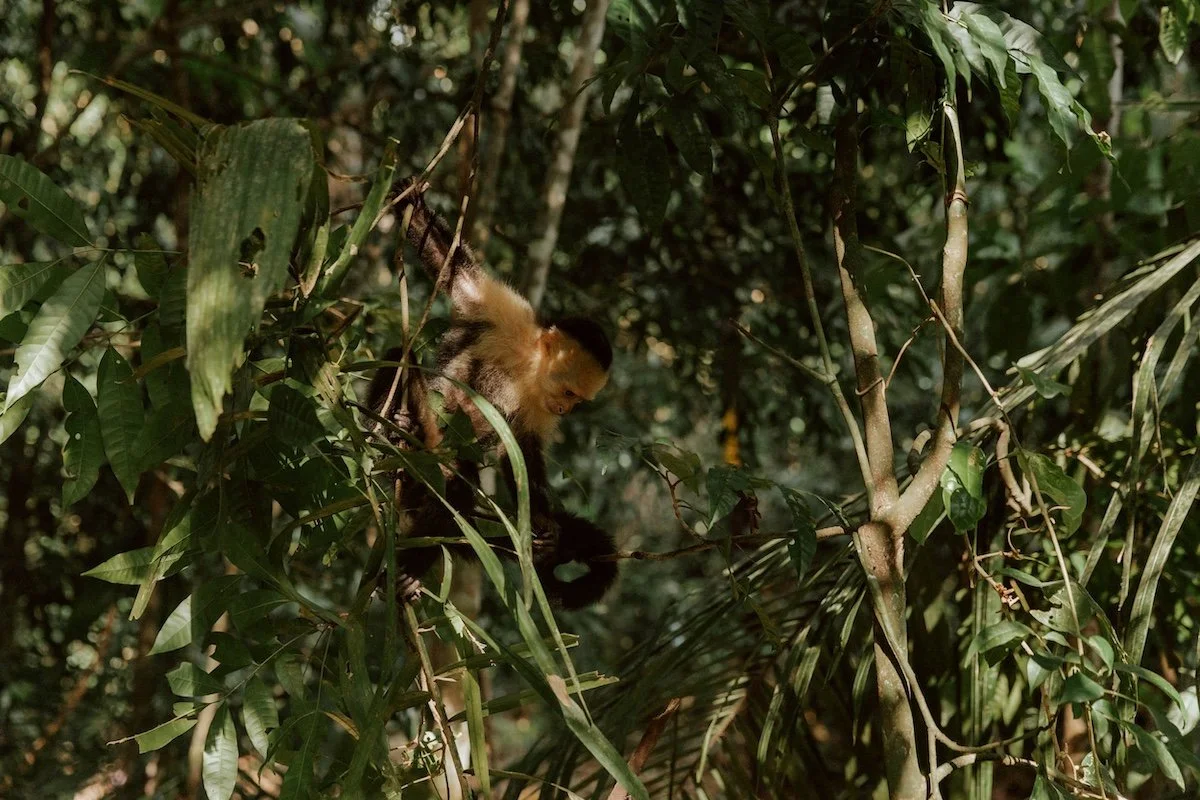
Go Wild in Drake Bay
It was a desire to feel wild that led us to board the boat to Drake Bay.
Off-the-beaten-track in southwest Costa Rica, and more akin to an island than the mainland, it sounded like the sort of place travellers dream of finding.
Indeed, this is somewhere you have to decide to visit.
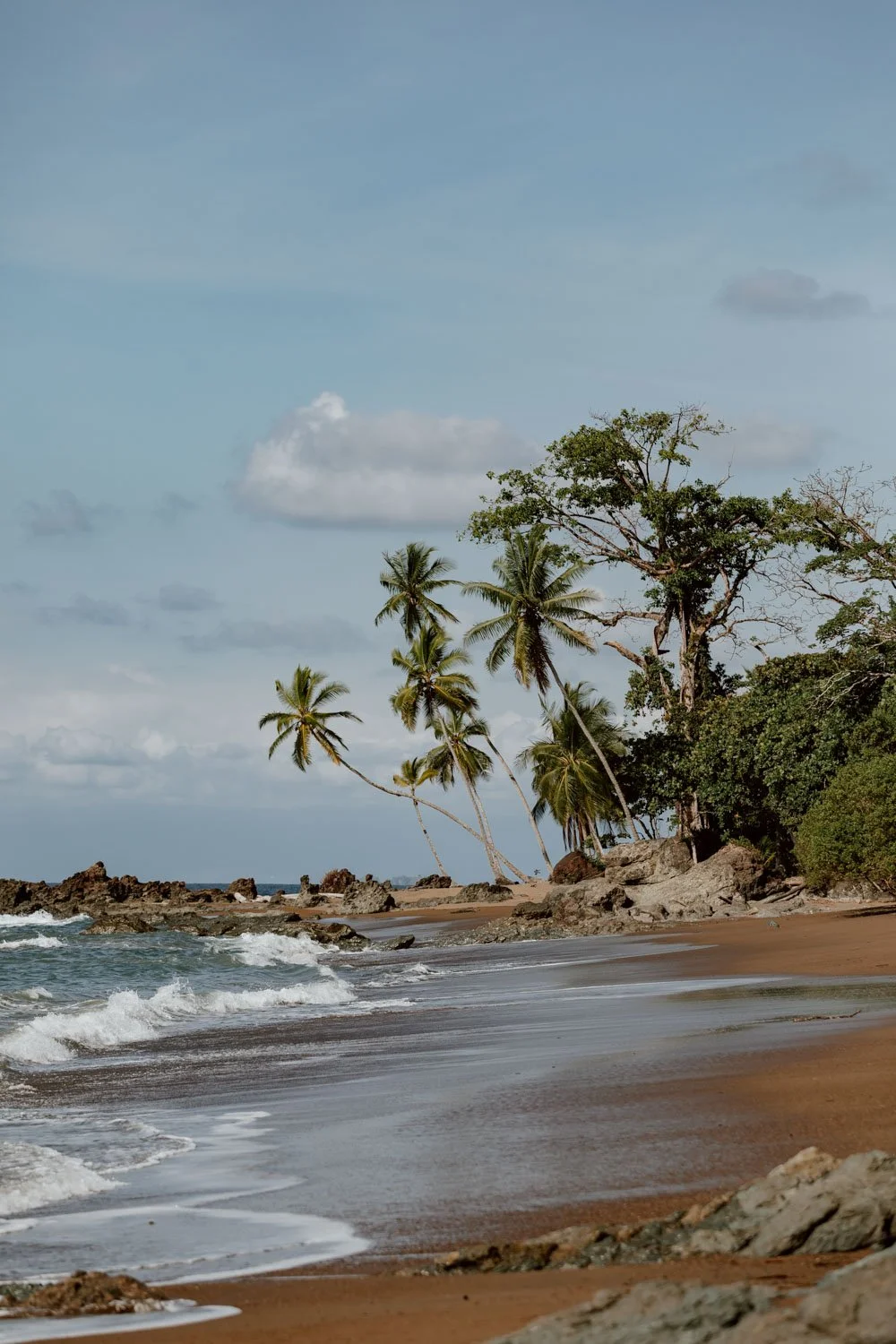
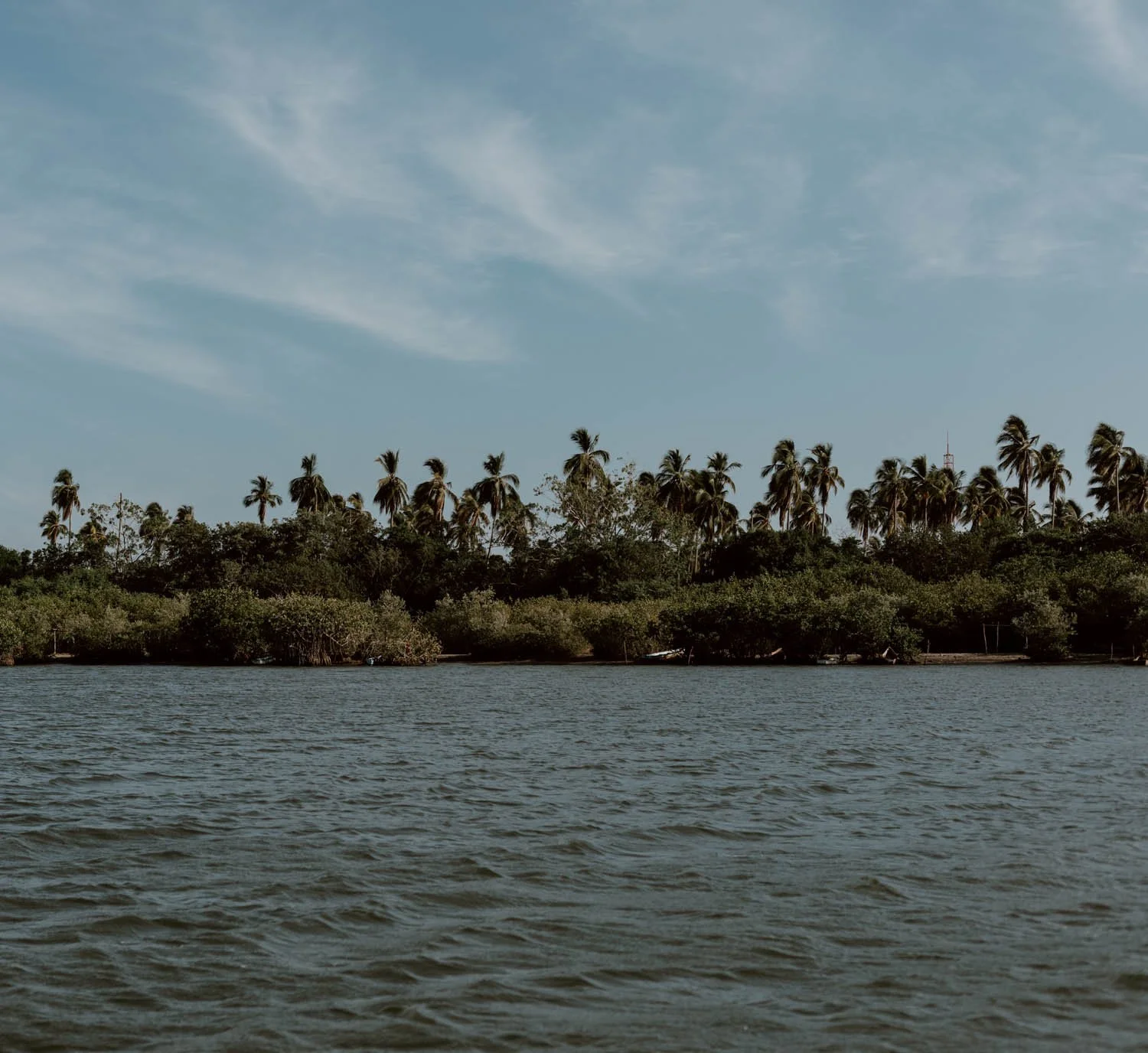
For most, the journey begins in Sierpe, where a low passenger boat carries you through the waterways and mangrove forest of the Térraba-Sierpe wetlands before emerging onto the open Pacific and depositing you, somewhat unceremoniously, on the beach at Agujitas.
Bahía Drake occupies only a small part of the enormous Osa Peninsula, a chunk of land jutting into the ocean like a footballer’s boot, but Agujitas is its principal settlement: more village than resort, with guesthouses, sodas, grocery shops and tour operators gathered between the forest and water. Elsewhere, small lodges are hidden along the coast or deep amongst the trees, reached by boat, on foot or via roads which become increasingly questionable the further you follow them.
There are no high-rise hotels or clubs, and little of the slightly tiresome breathwork-yoga-kombucha scene which has settled into several of Costa Rica’s other coastal pockets.
It’s a place for a proper adventure, rather than a pretend one.
Corcovado National Park is the headline reason many travellers come this far south (more on that next), while boats also leave for snorkelling and diving around Caño Island, a protected biological reserve surrounded by reef sharks, rays, turtles, and abundant tropical fish.
However, the best day we had in Costa Rica across two separate trips required neither a guide nor another boat.
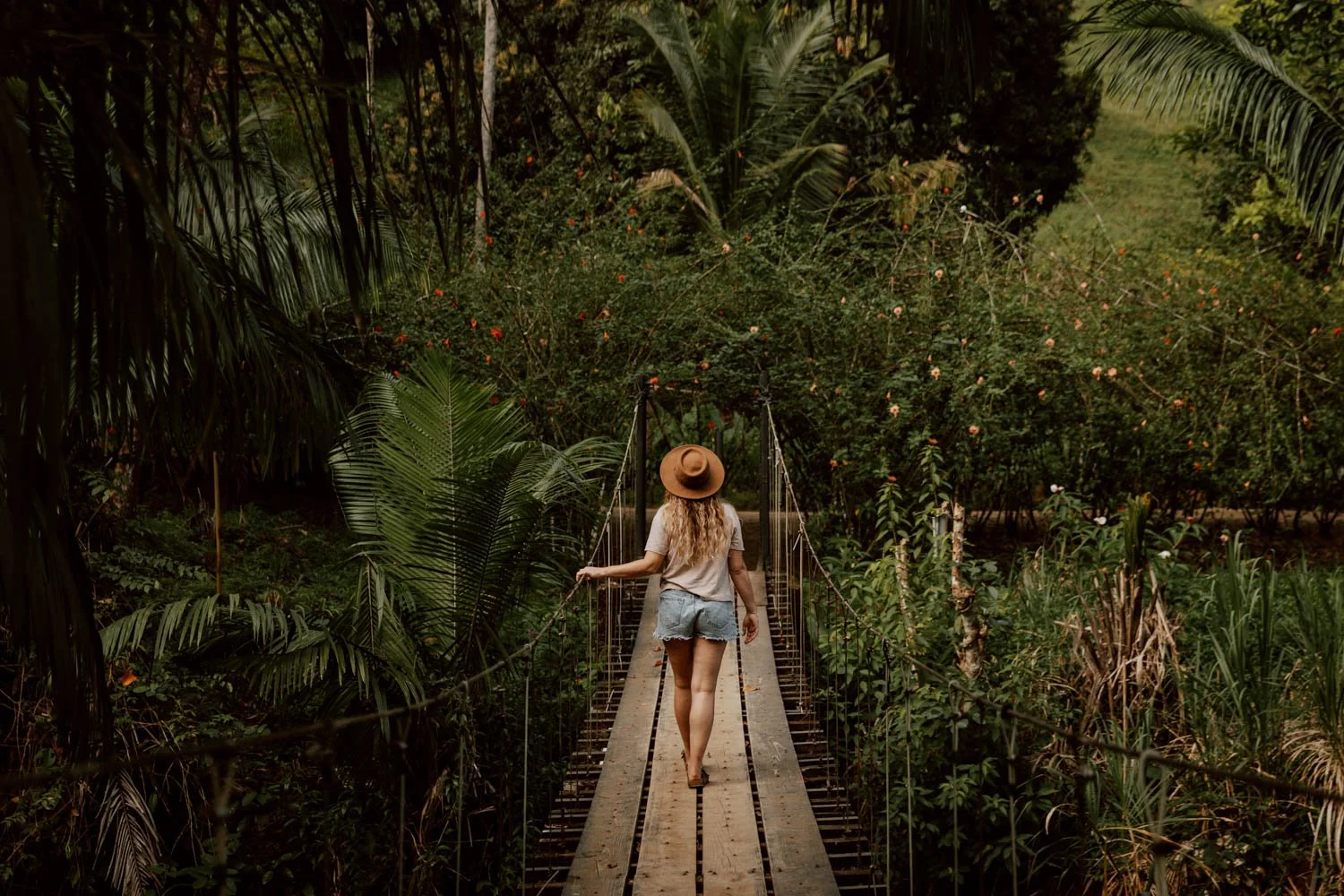
The San Josecito trail leaves directly from Agujitas and follows the coast for ten kilometres, moving in and out of the forest as it links beaches otherwise reached only from the water. We set off expecting a pleasant day hike and instead found hanging bridges, a river crossing, deserted beaches, snakes, lizards, iguanas, colourful parrots arguing overhead and, for part of the way, a friendly dog in a neckerchief - not guaranteed on every trip, we’re afraid.
It was spontaneous, completely unticketed and wonderfully free of other people; precisely the sort of outdoorsy travel day that can sometimes be surprisingly difficult to find in Costa Rica.
It also ended with both of us exhausted, chugging Powerades and warm beer in hammocks, and Emily conked out for the evening with the fan on full power.
But my goodness was it worth it.
Stay / Jaguars Jungle Rainforest Lodge, opt for a beach-side jungle lodge, stay centrally at Casa Horizontes, or opt for an excellent hostel like Casita Happy Feet
Book / A super popular snorkelling tour to Caño Island - this is an excellent full-day option. Drake Bay is also a fantastic place to spot whales, so if you visit in-season, this is the tour you want to book.
Venture into Corcovado National Park
The howler monkeys awake with a roar at quarter to five, a guttural shriek which sounds both prehistoric and hypermodern: part dinosaur call, part fighter jet flyover, crossing millennia and carrying for miles.
At Sirena Ranger Station though, it is simply our alarm clock. Around eighty other humans begin stirring beneath thin white sheets and blood-spattered mosquito nets, shuffling across the hardwood floor towards the shared bathrooms before the first walk of the morning.
This is a place where being human makes you a minority species.
Occupying almost a third of the Osa Peninsula, Corcovado protects one of the last substantial areas of lowland rainforest along the Pacific coast of Central America, and contains an estimated 2.5% of the planet’s biodiversity. Within its forests, mangroves, wetlands, rivers and beaches are around 500 species of tree, 6,000 types of insect, 367 birds and 140 mammals - extraordinary numbers made more so by the relatively small fragment of the earth in which they have been squeezed.
Jaguars, pumas and ocelots remain elusive presences, whilst tapirs, sloths, anteaters, peccaries and all four of Costa Rica’s monkey species live within the park.
In a country lauded for its nature, Corcovado is the crown jewel.
Yet a forest containing so much life does not readily reveal it. Every visitor must enter with a certified guide - a requirement we wholeheartedly support - because the trails are not always obvious and most of what lives beside them has become exceptionally good at remaining unseen. Without Donny - our crazy-haired guide with a freshly inked puma on his forearm, 40/40 vision, and an uncanny ability to imitate a howler monkey - a great deal of the wildlife around us would have remained invisible.
Most travellers enter from Drake Bay or Puerto Jiménez on a day trip, spending several hours walking around one of the park’s ranger sectors before returning that afternoon. We chose to stay overnight at Sirena, which meant that when the day trip boats turned back towards Drake Bay, we remained inside the forest.
The station is basic, sweaty and sleep may be interrupted by the residents, but the reward comes in those hours around the edges of the day: walking beneath the canopy as the light begins to change, falling asleep to whatever is moving beyond the mosquito net and waking to that first prehistoric roar, long before the next boatload of humans appears on the beach.
However, Corcovado’s remarkable numbers can create expectations no rainforest could reliably satisfy: this is not a zoo, and sightings depend upon luck as much as the abilities of your guide. Donny had seen a puma only twice in fourteen years, even with that 40/40 vision.
Much of Corcovado’s power lies beyond the sighting list though: in the setting, the sounds, the untamed and unkempt, and the fact that most of what lives here can still choose not to be seen.
Day / It’s possible to do full-day tour - this one is super popular
Overnight / We recommend spending the night in either Sirena Station or San Pedrillo Station.
Alternative / Stay at an incredible jungle lodge on the edge of Corcovado like The Jaguars Jungle Rainforest Lodge
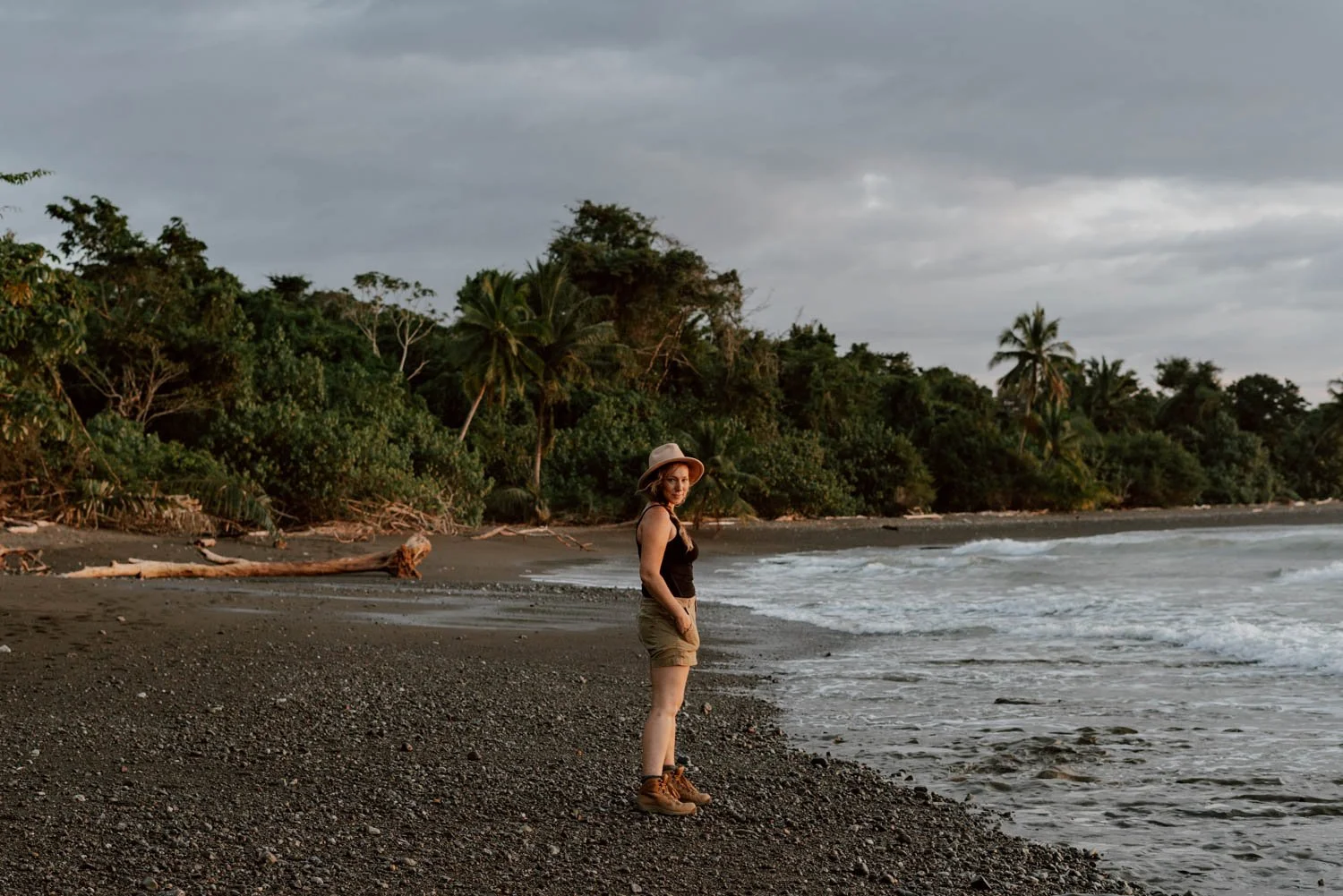
Spend Time Above the Clouds in Monteverde
It took us two trips to Costa Rica before we made it to Monteverde.
The first time around, we were travelling through Latin America for two years on a super-tight budget and couldn’t afford the experiences for which this place in the mountains had become famous. When we returned several years later with a little more money to spend, it finally found its way onto the itinerary.
Monteverde is best known for its cloud forest: a rare, high-altitude ecosystem created where warm, moisture-heavy air rises against the mountains and condenses around the canopy. Water arrives suspended in the air, wrapping around branches and feeding the mosses, ferns, orchids and bromeliads which cover almost every available surface.
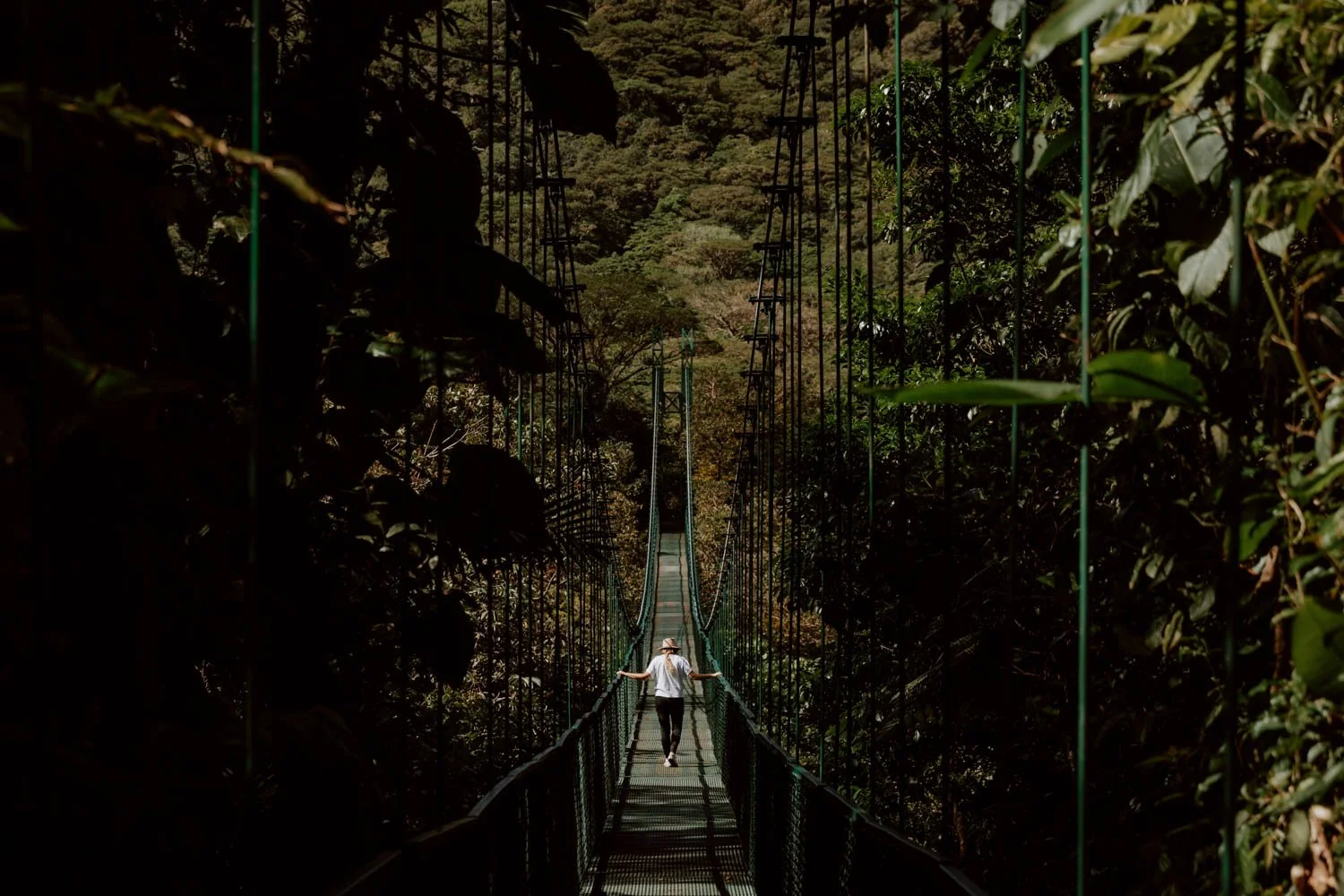
The Monteverde Cloud Forest Preserve protects more than 10,000 acres of this extraordinarily complex environment, although visitors encounter only a small fraction of it along a network of well-maintained trails. These are nature walks rather than challenging hikes, passing beneath tangled vegetation towards a waterfall, a hanging bridge and viewpoints across the Continental Divide - when the cloud permits a view at all.
Some of Costa Rica’s most coveted wildlife lives here, including the resplendent quetzal, three-wattled bellbird, sloths, monkeys and several species of wild cat. Dense forest is very good for animals and considerably less convenient for the people trying to spot them, however, so hiring a naturalist guide - and arriving early - will significantly improve your chances.
We should also be honest: our own walk through the famous reserve was more underwhelming than transformative. Perhaps we arrived with expectations built too high, perhaps we had already been fortunate enough to experience several remarkable cloud forests elsewhere in Latin America, or perhaps the increasingly expensive and controlled nature of Costa Rica’s ecotourism had begun to grate. Whatever the reason, it wasn’t the defining experience we had anticipated.
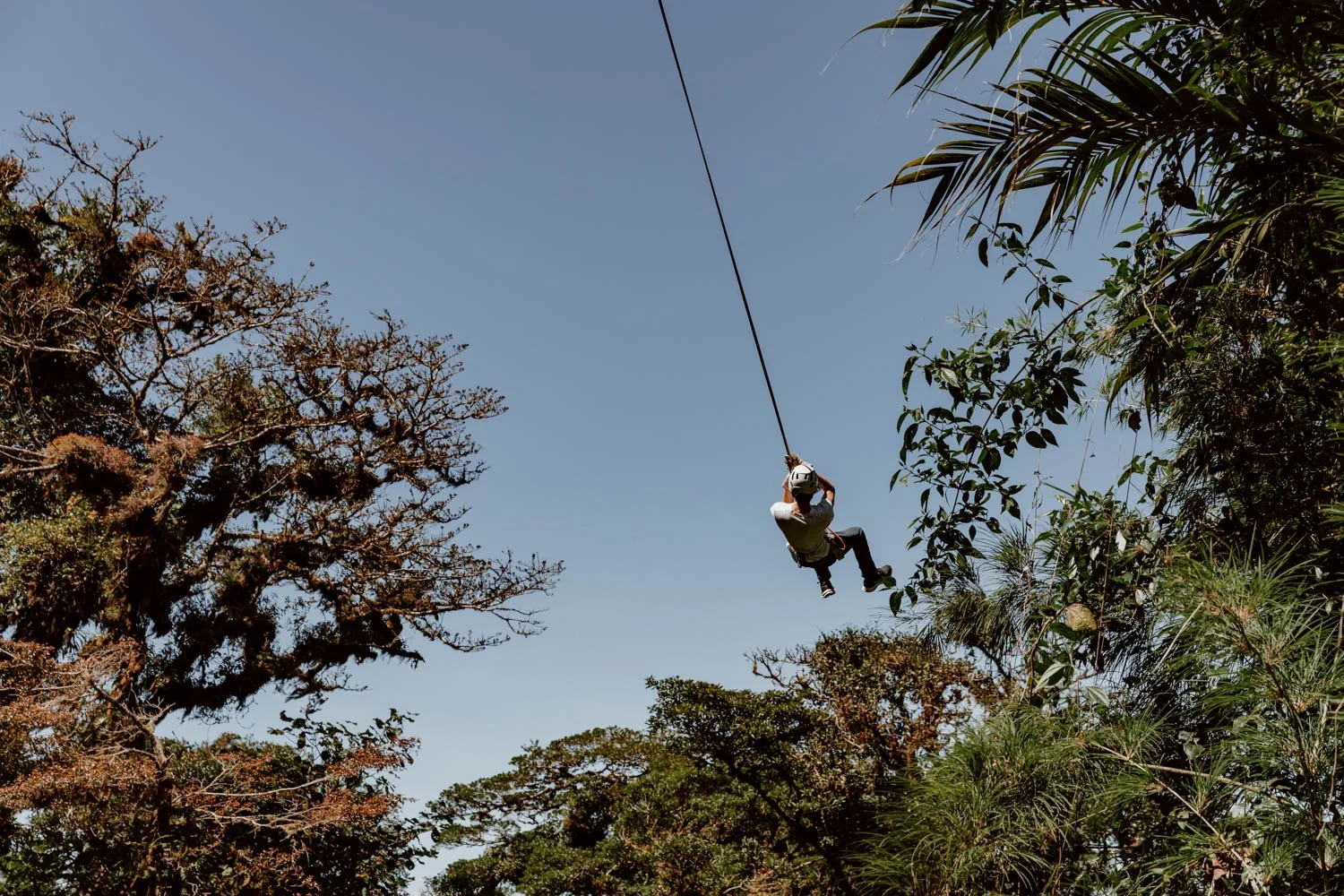
That doesn’t make Monteverde a place to exclude. Its importance to conservation is unquestionable, and for anyone entering a cloud forest for the first time, the combination of mist, silence and vegetation can be remarkable. The wider region extends beyond its most famous reserve, with the community-managed Santa Elena Cloud Forest, nocturnal wildlife walks, hanging bridges, coffee farms and some of Costa Rica’s most memorable ziplining.
The key is not to attempt everything.
Monteverde can become alarmingly expensive once each guided walk, bridge, tour and aerial adventure is added together, so choose according to what you most want from it.
Stay / Naturave offers the most unique accommodation whereas backpackers will love OutBox Inn. Alternatively, the charming El Sol Monteverde is charming guest house
Book / Consider joining a bird watching tour to make the most of your time in the cloud forest. If you’ve got a little more time (and money) get your adrenaline fix on the zipline - we went with Selvatura Adventure Park - or choose a more sedate bridge walk through the forest (you buy this as a combo bridges/zipline ticket)
Plan / The Very Best Things to Do in Monteverde and How to Visit Monteverde Cloud Forest
Walk The Old Lava Fields Of Arenal Volcano
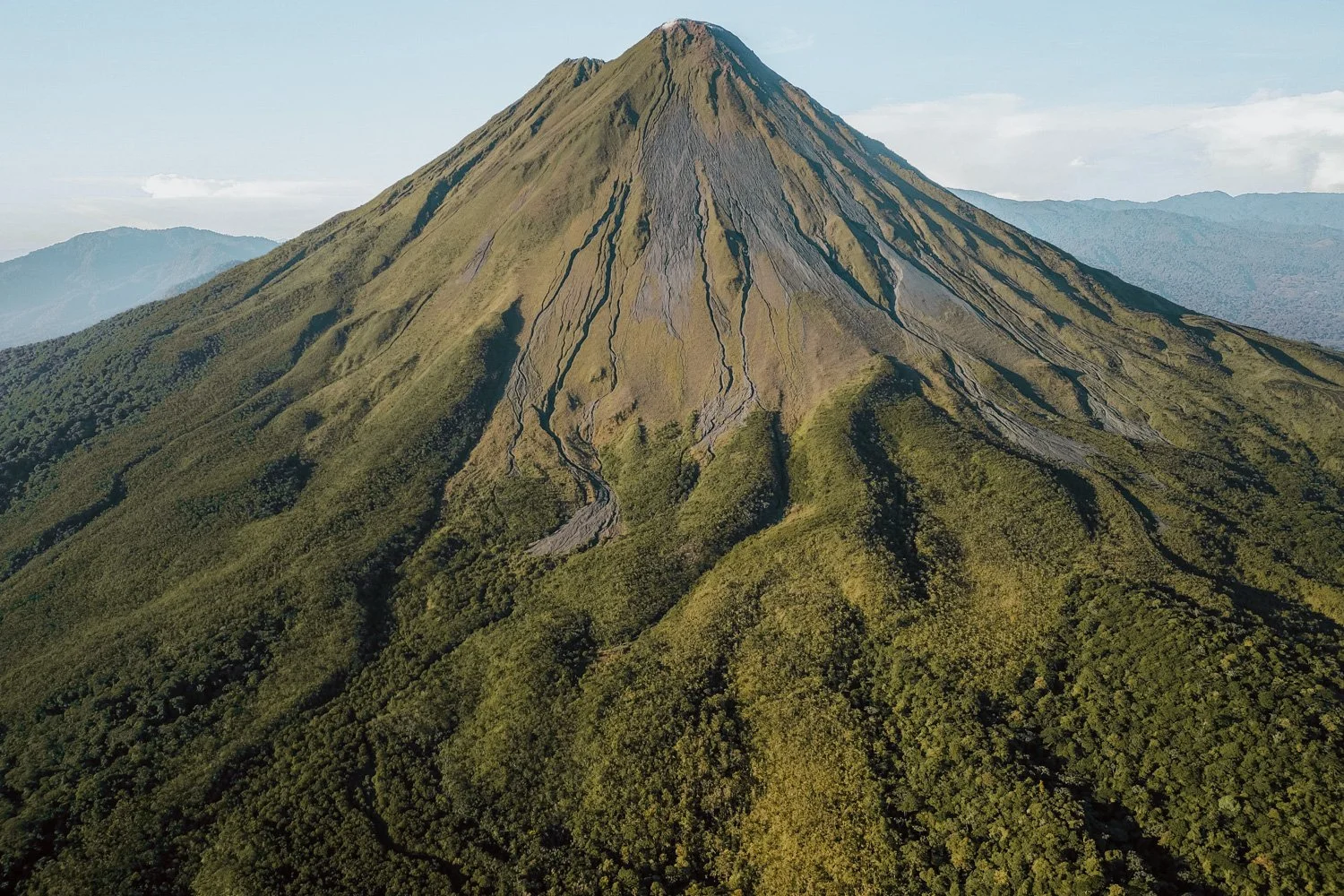
From almost anywhere around La Fortuna, Arenal dominates - and decides - the view.
When the cloud lifts, its steep, symmetrical cone rises almost 1,700 metres above the northern plains, looking so precisely like a child’s drawing of a volcano that it scarcely appears real. At other times, it disappears completely, swallowed by the weather while the town beneath carries on in its shadow.
Yet this mountain now gives little indication of what began at 7.30am on 29th July 1968, when, after several centuries without a documented eruption, Arenal exploded with such force that three small communities on its western side were devastated and 87 people lost their lives. It continued erupting for the next 42 years - that’s not a typo - its ash columns, incandescent rocks, lava flows and red glow after dark becoming one of Costa Rica’s defining images - and the spectacle upon which much of La Fortuna’s tourism industry was built.
Arenal entered its current resting phase towards the end of 2010, although old photographs, and some surprisingly persistent promotional imagery, still create the impression that lava continues to spill from its slopes.
What you can walk over today is the aftermath: on Arenal’s western flank, successive eruptions destroyed sections of forest and laid down rivers of broken volcanic rock, leaving a landscape where rainforest now presses against dark, jagged lava and plants take root in its cracks. It is not the red, liquid flow the word lava may bring to mind, but cooled and weathered stone. Rough underfoot, almost black when wet, and still startlingly bare beside the forest attempting to reclaim it.
Much of the area is out of bounds to visitors, but the Volcano Sector of Arenal Volcano National Park and the nearby private Arenal 1968 reserve offer accessible, manageable trails around the volcano’s base. Neither climbs to the crater - especially worth noting in a part of the world where hiking a volcano can become almost as commonplace as taking the bus - and entering the dangerous upper slopes is strictly prohibited.
Allow some flexibility when planning though, as Arenal is frequently hidden by cloud and visibility can alter remarkably quickly. If a clear morning presents itself, give it to the volcano as the view may not still be there tomorrow…
As for the rest of modern La Fortuna? Once an agicultural town, it expanded as travellers arrived to watch the volcano burn after dark, then continued growing around waterfalls, hanging bridges, thermal pools, rafting, wildlife tours and hot springs once the eruptions stopped. It can feel too commercial and touristic after quieter parts of Costa Rica, but few places offer so much within such a compact area.
Stay / Backpackers will love Viajero Hostel, Hotel Secreto is a pleasant affordable option, whilst Nayara Tented Camp provides a truly incredible - and one of a kind - luxurious experience. Two Airbnbs to take a look at are Cozy Volcano View and Villa Mano de Tigre
Book / If you want to cover as much ground as possible, this full-day tour has thousands of excellent reviews and brings you to La Fortuna Waterfall, hikes withing the lava fields of Arenal Volcano, and visits the hot springs. Alternatively, if you’re looking for a little more adrenaline-based fun, this white water rafting excursion is very highly-rated.
Learn To Surf
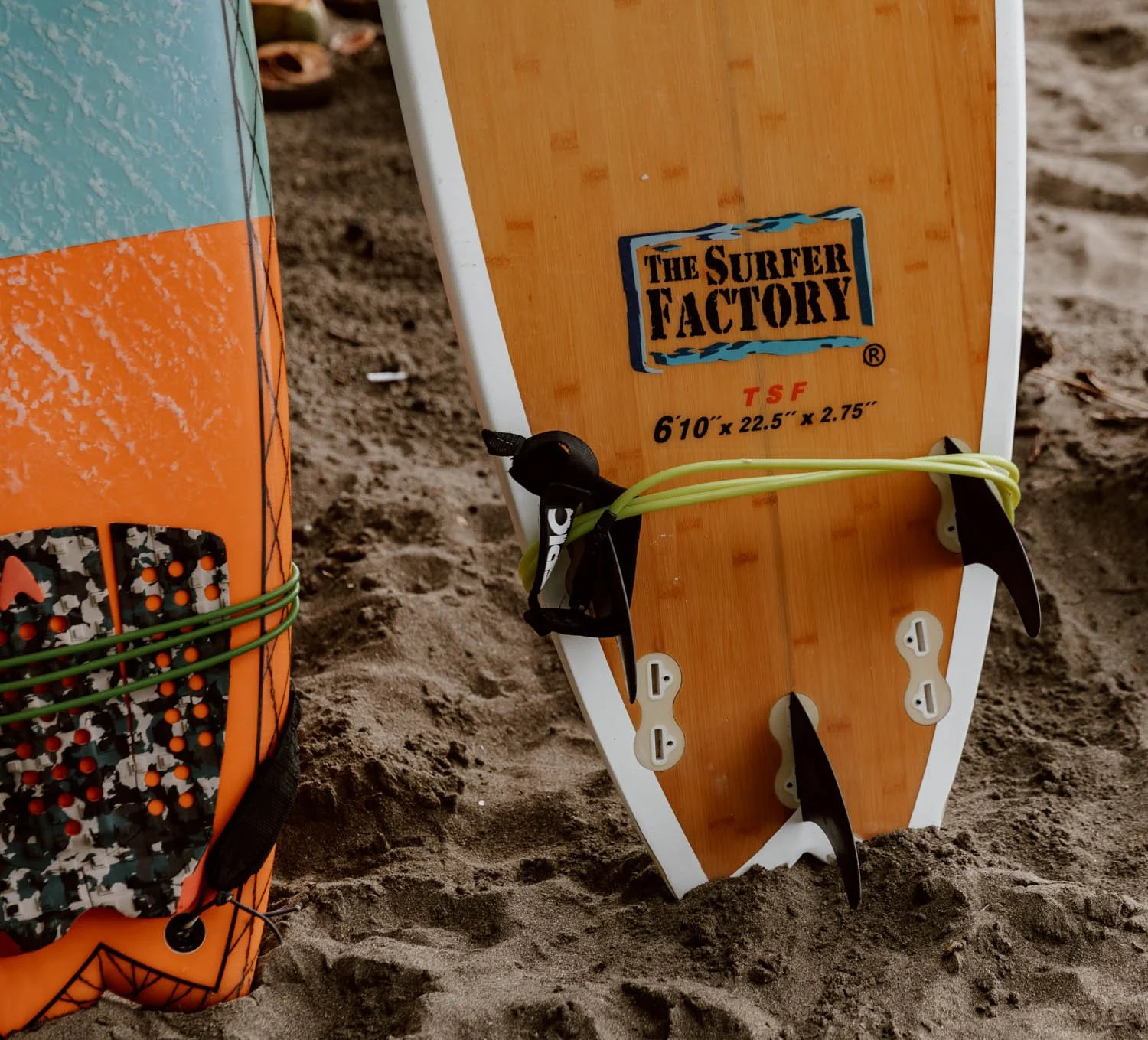
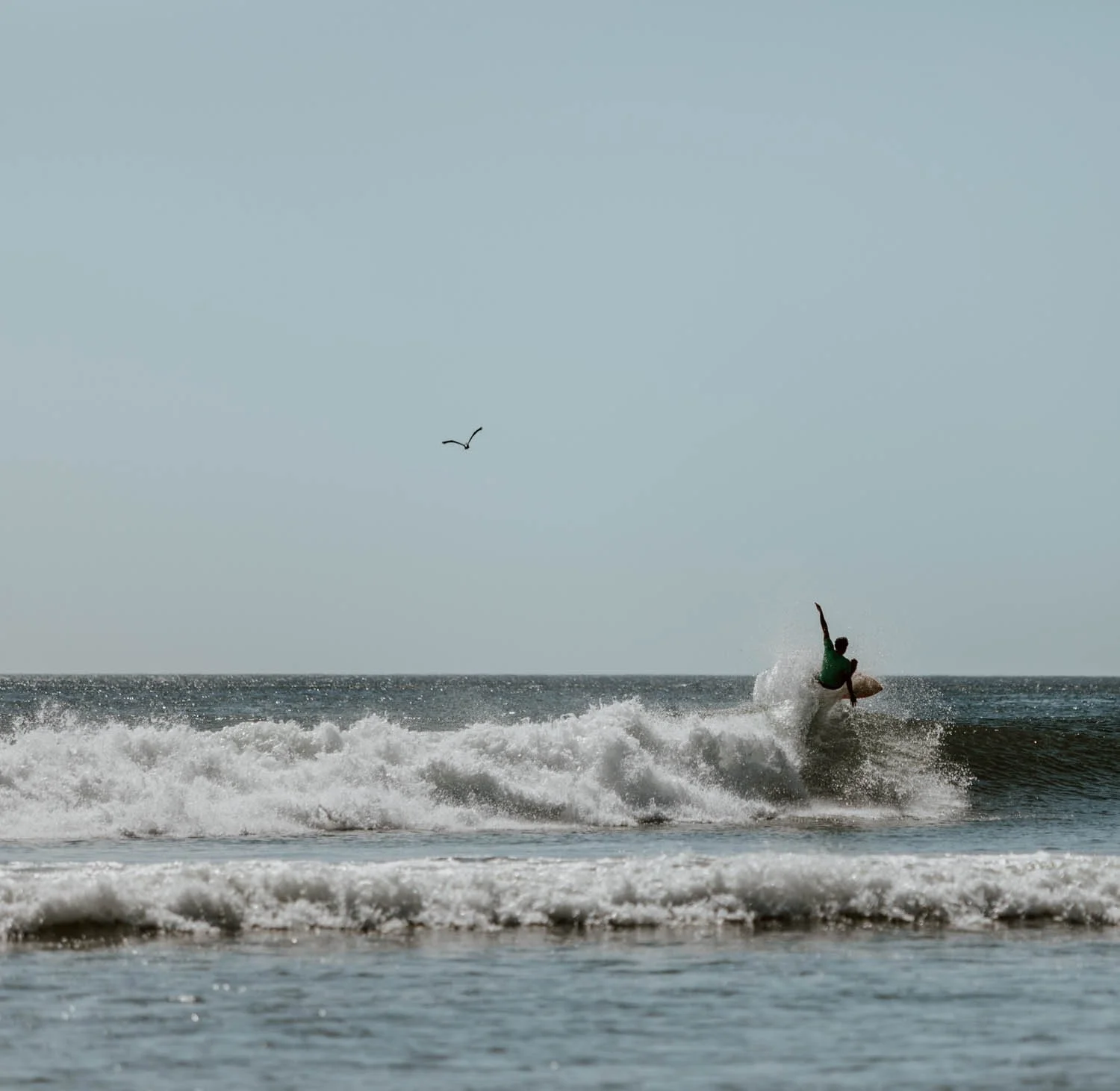
Surfboards are everywhere in Costa Rica.
Strapped to the roofs of rental cars and tucked beneath the arms of barefoot teenagers; stacked outside hostels, balanced on bicycles, or planted upright in the sand whilst their owners patiently wait for a good wave.
Spend enough time travelling along the Pacific coast and it becomes increasingly tempting to join them.
The water is warm, waves arrive throughout the year, and surf schools have established themselves beside practically every suitable break, meaning that a lesson can be added to an existing itinerary rather than requiring an entire trip built around it.
Tamarindo is the most obvious place to begin, with dozens of instructors, plentiful board hire and a sandy beach where conditions regularly suit first-timers. However, it’s also busy, built-up, and a long way from the half-imagined little surf town some travellers arrive hoping to find; this may not be Costa Rica at its most romantic, but it is one of the easiest places to arrange a lesson with little notice.
Further down the Nicoya Peninsula, Playa Guiones - the long surf beach generally referred to simply as Nosara - has several peaks across a broad stretch of sand, allowing beginners to remain in the white water whilst more experienced surfers paddle further out. Sámara can be gentler when sufficient swell reaches its sheltered bay, while Dominicalito, on the southern Pacific coast, takes some of the force out of the waves arriving at neighbouring Dominical.
The larger south and southwest swells generally arrive between May and November, bringing more powerful conditions to the central and southern Pacific side of Costa Rica, whereas December to April often produces smaller waves and cleaner morning winds in the north - usually friendlier for beginners. The Caribbean’s main surf season falls between roughly December and March; Salsa Brava at Puerto Viejo is heavy and shallow, while nearby Playa Cocles can be more approachable.
Those who already know their pop-up from their paddle-out have rather more coastline to play with - and will probably love the scene here.
Playa Avellanas has several breaks along the same sweep of coast, while powerful Playa Hermosa beside Jacó (not to be confused with the quieter beach of the same name further south) is recognised as a World Surfing Reserve. Further south, remote Pavones has an extraordinarily long left-hand wave that people cross countries to find, although its position inside the Golfo Dulce makes it more fickle than its reputation suggests.
Learn / Take a two-hour private surf lesson on Sámara Beach, or choose this exceptionally well-reviewed Tamarindo lesson with private and group options.
Plan / Read our guide on the best time & season to visit Costa Rica
Do A Road Trip
Public transport will take you surprisingly far in Costa Rica.
We know because we relied upon buses, shuttles and boats on both our trips, but it can take a surprisingly long time to cover distances that look insignificant on a map.
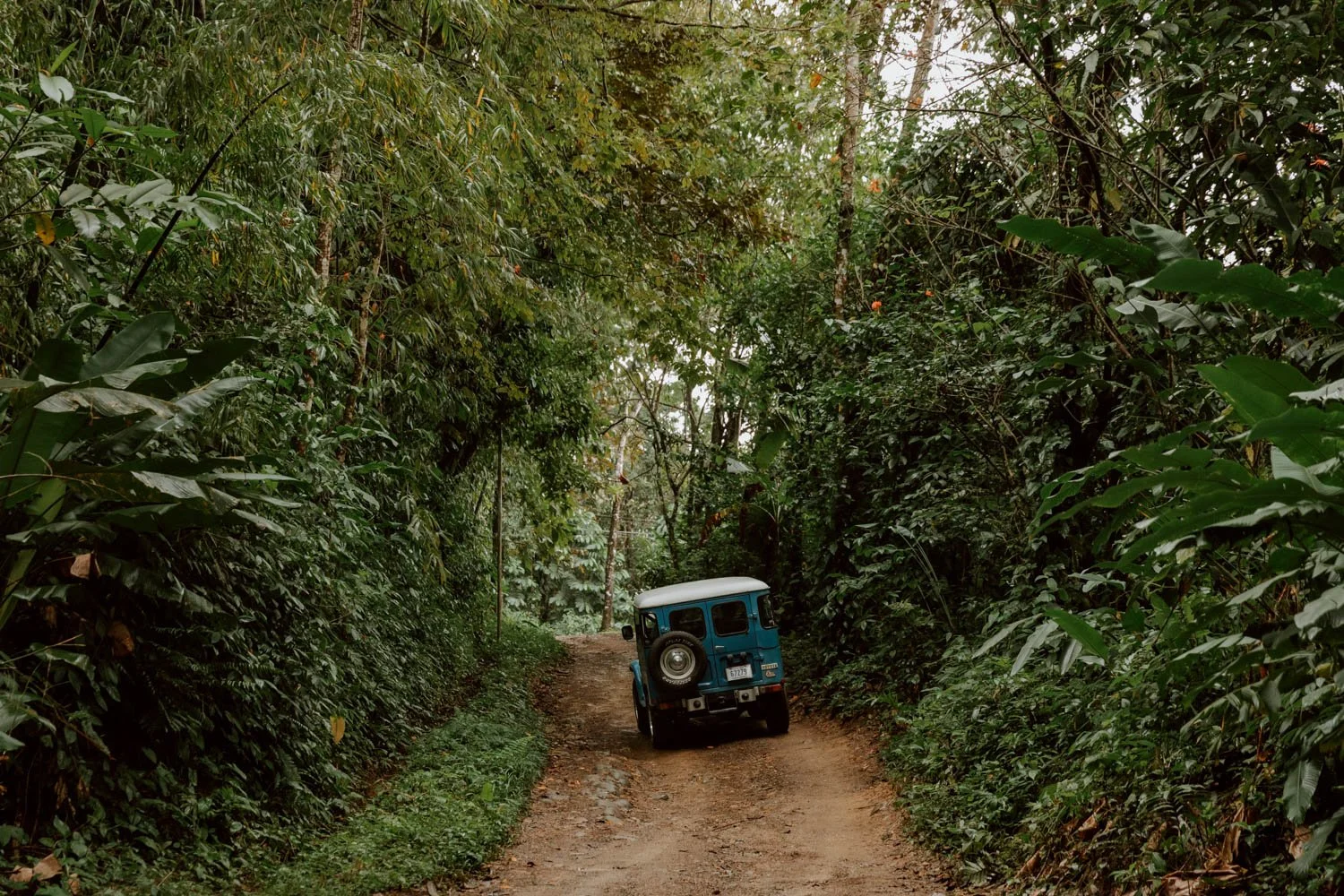
For travellers with a wish list spread between volcanoes, cloud forest and the coast, hiring a car changes the rhythm and shape of a trip. It cuts out slow connections (particularly those routed through San José) and puts waterfalls, trailheads, smaller beaches and remote accommodation within easier reach.
Quite a lot of Costa Rica also sits in the gaps between those planned stops, in places that perhaps don’t justify a journey of their own but worth an hour when you are already passing. Public transport rarely leaves room for those small decisions.
A car does.
Once transport no longer dictates where the day begins and ends, accommodation can be chosen for its setting rather than its proximity to a bus stop, and a place which rewards another night does not have to be left simply because the onward connection runs that morning.
The temptation, once handed the keys, is to stretch the route in every direction (and my goodness do we know this from experience on many road trips!). A broad circuit might leave San José for the Caribbean, turn inland for La Fortuna and Monteverde, then continue towards either the Nicoya Peninsula or the southern Pacific; trying to include both Pacific regions within two or three weeks risks spending far too much of the trip behind the wheel.
One of the biggest questions those planning a Costa Rica road trip is whether you need a 4×4? The answer is - it depends.
For many routes a regular car will be fine, but a 4×4 definitely becomes a stronger consideration during the wetter months, around more remote parts of the Nicoya Peninsula, and whenever accommodation lies at the end of an unsealed access road. For certain travel styles, it will also open up much more of the country for a proper off-the-beaten-track adventure.
Book / Your Costa Rica car rental
Explore Costa Rica’s Caribbean Coast
We spent nearly two weeks in Puerto Viejo over one Christmas and New Year.
The weather wasn’t particularly kind to us. Caribbean rain interrupted beach plans, the skies remained stubbornly grey on several days, and the version of Costa Rica sold in photographs - bright sun, blue water, permanent summer - did not always turn up. December is, in fact, generally the wettest month on this side of the country, something easily missed by travellers planning around the better-known dry season on the Pacific coast.
And yet, we left with the distinct impression that Puerto Viejo was somewhere we could have remained for several weeks.
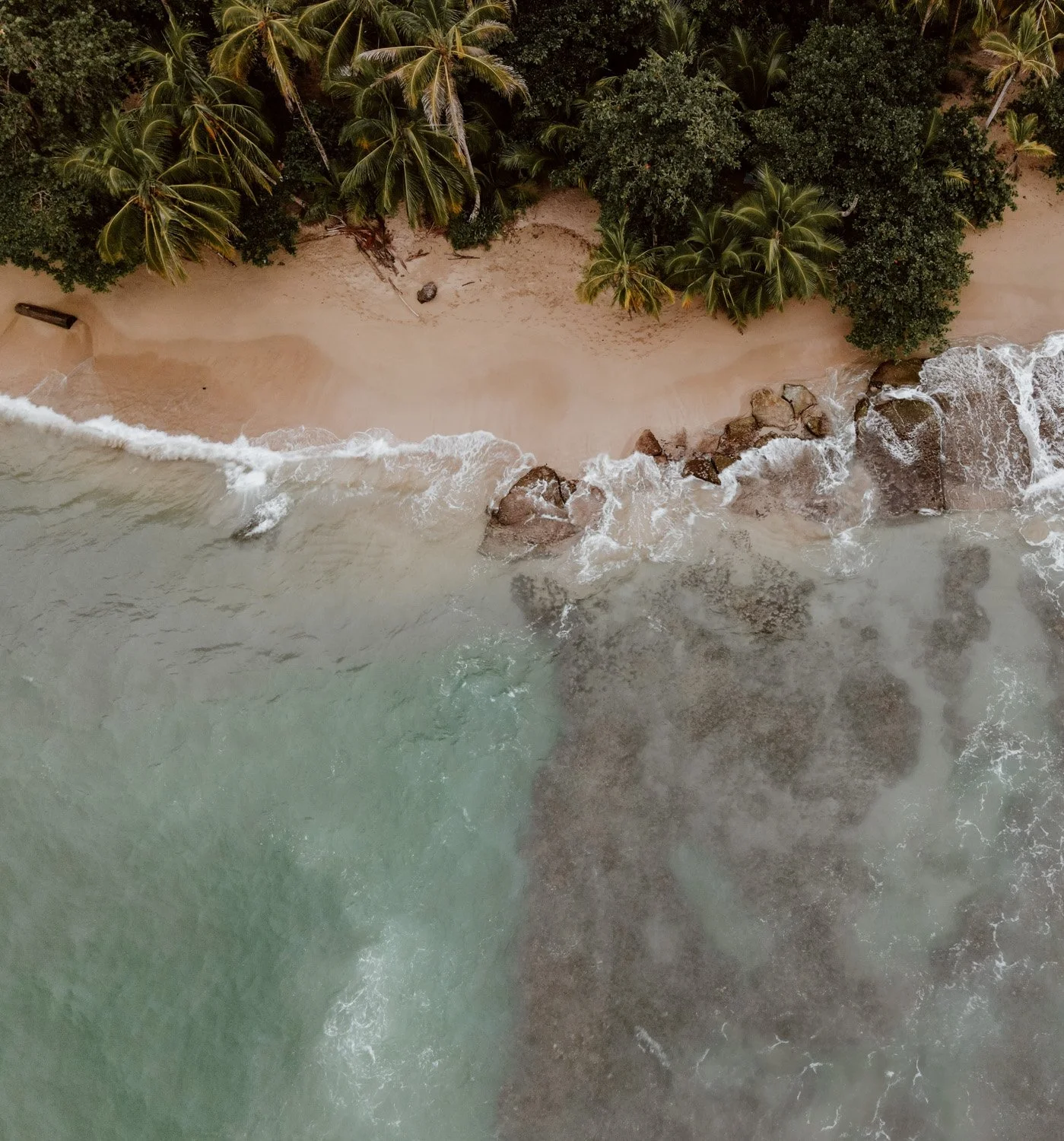
Life here gravitates towards the dusty roads and the strip of coastline running south towards Manzanillo, with beaches appearing between the forest and a string of small settlements along the way. We hired bicycles, pedalled beneath trees with sloths folded into their branches, stopped whenever the weather allowed and ate fresh fish with coconut rice.
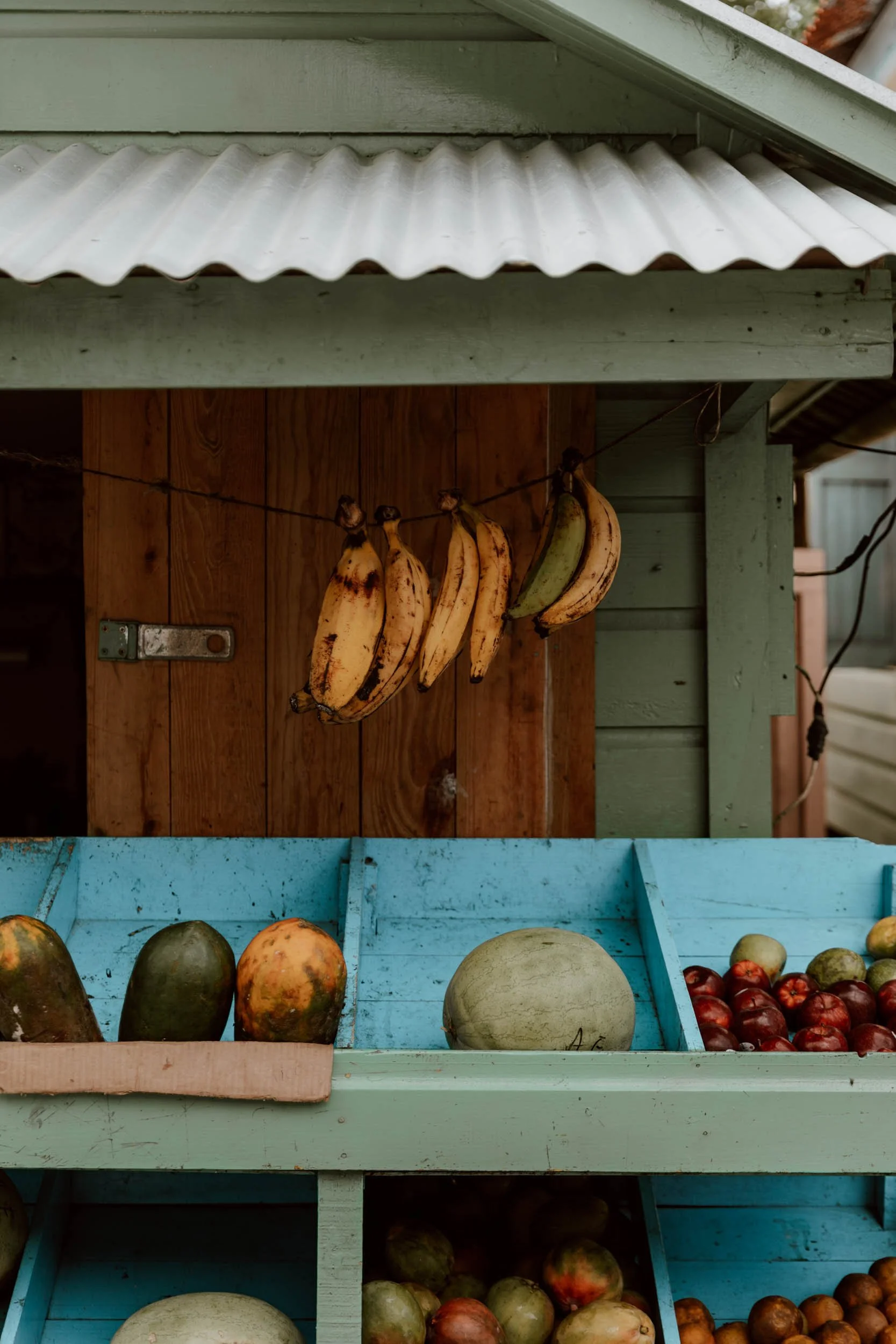
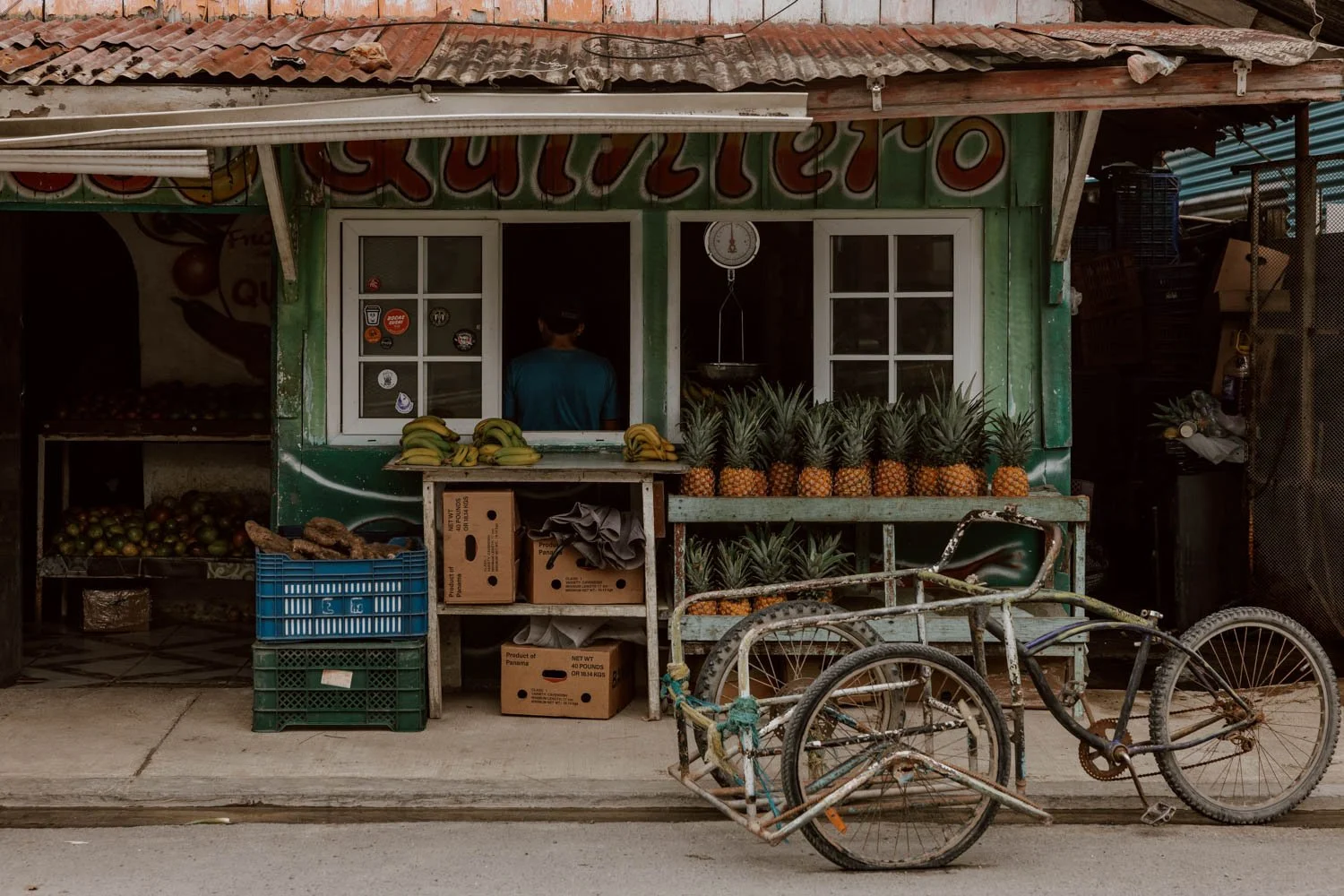
Puerto Viejo is built for this sort of unhurried existence. There are good coffee shops, yoga studios and places to work for the afternoon; enough restaurants to avoid cooking when you cannot be bothered, but markets, fruit stands and local sellers when you can. The distances are manageable and each beach offers somewhere different to spend the day, making it easy to understand how travellers arrive for a handful of nights and quietly allow their departure date to drift.
Inevitably, the changing population from growing tourism has blurred some of Puerto’s original character, and there are moments when it could be mistaken for one of several traveller enclaves scattered around the warmer parts of the world. Yet it remains undeniably ‘Caribbean’ - not simply a mood assembled from reggae, palms and painted signs, but the product of a history which unfolded at some distance from the Spanish-speaking Central Valley, allowing an Afro-Caribbean culture, language and food tradition to develop here which remains distinct from that found elsewhere in Costa Rica.
Whilst Puerto Viejo is the principal base, much of the appeal lies along the coast beyond it. From the surf and broad sands around Cocles to smaller coves concealed behind the trees, before Manzanillo marks the entrance to the Gandoca-Manzanillo Wildlife Refuge.
Near Playa Chiquita, the Jaguar Rescue Center rehabilitates injured, orphaned and displaced wildlife, with guided visits helping to fund their care and, where possible, release. Despite its name, do not arrive expecting a jaguar; the temporary residents are more commonly sloths, monkeys, birds and reptiles.
North of Puerto Viejo, Cahuita National Park protects another meeting point between forest and Caribbean Sea. Its coral reef can be visited with an authorised guide when conditions permit, while the coastal trail runs for several kilometres behind pale beaches and through lowland forest where monkeys, sloths, coatis, raccoons and iguanas are regularly seen.
Go Chasing Waterfalls
In a country crossed by steep volcanic ranges and fed by heavy rain, rivers rarely travel far before the land drops away beneath them.
Practically, this means that those travelling in Costa Rica will learn the Spanish word for waterfall very quickly.
Casacada appears on hand-painted boards beside the road, at the entrances to national parks and on maps directing you towards private farms where a path disappears into the forest. Some come with changing rooms, concrete steps and an entrance fee; others require a muddy walk, a river crossing and a little faith in the sign nailed to a tree.
We’ve learned that few are worth completely upending an itinerary to visit, but several deserve an afternoon of exploration if you happen to be nearby.
At La Fortuna, a staircase of more than 500 steps descends through the forest towards a 70-metre column of water, with swimming permitted in the calmer river downstream. Río Celeste, inside Tenorio Volcano National Park, is sought out for something altogether different: an almost improbable blue created when two clear streams meet and suspended aluminosilicate particles begin scattering sunlight through the water. As swimming isn’t permitted within the park, it’s debatable whether we’d recommend it to everyone.
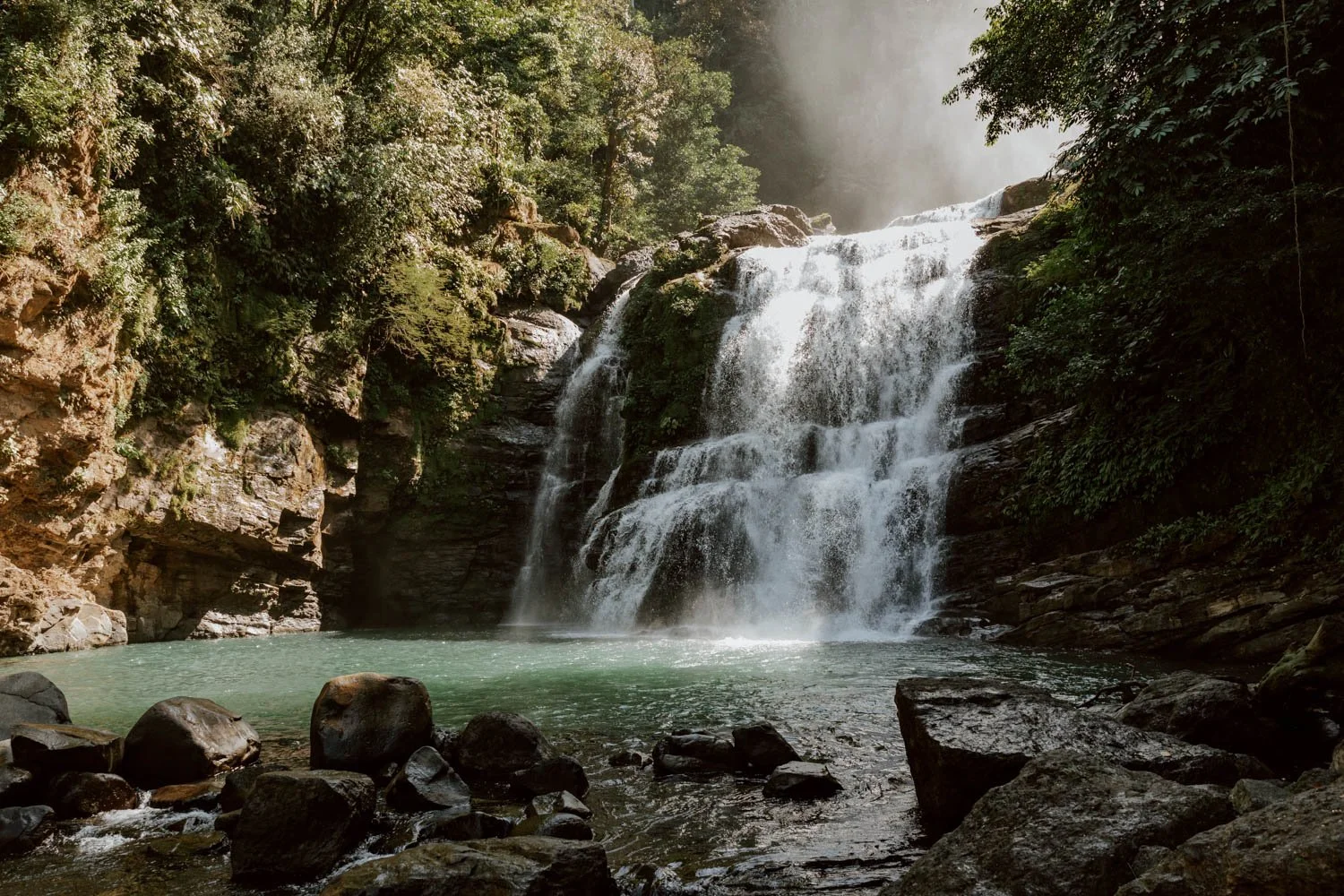
On the southern Pacific coast, the two tiers of Nauyaca drop into a broad natural pool in the hills behind Dominical, making this the strongest choice for those who want to walk, swim and remain for several hours, whilst Llanos de Cortés, near Liberia, is far less demanding: a wide curtain of water, sandy bank and swimming pool you can reach within minutes of leaving the car.
The deeper commitment belongs to Bajos del Toro, where rivers and forest wrap around a small highland settlement north of the Central Valley. Catarata del Toro plunges into an old volcanic crater, while the neighbouring Blue Falls reserve follows a pale-blue river between cascades and swimming holes; together, they meet the threshold to justify planning a day chasing waterfalls.
Book / From Manuel Antonio, this full-day trip to Nauyaca Waterfall inlcudes lunch and plenty of time to swim beneath the falls. Alternatively, this Eco-Chontales Waterfall tour visits a far less familiar 45-metre cascade, with swimming holes, natural waterslides, and lunch.
Know / You can visit the Costa Rican waterfalls throughout the year, but they’re significantly more impressive in the winter months when there’s more water and power. However, that also comes with muddier paths, stronger currents, and enough sediment to temporarily obscure the blue of Río Celeste and Bajos del Toro after heavy rain.
Plan / 13 Wonderful Things to Do in Uvita & A Guide to Visiting Nauyaca Waterfall
See Turtles in Tortuguero
We didn’t make it to Tortuguero on either of our trips to Costa Rica - something we know will need to be rectified one day - but our regret reinforces that it should aboslutely be in this list.
On the northern Caribbean coast, Tortuguero village occupies a narrow strip of land with the sea on one side and the broad Tortuguero River on the other, beyond which lies a half-submerged world of rainforest, lagoons, and natural waterways. There are no cars in the village and no road connecting it to the rest of Costa Rica; most visitors travel overland as far as La Pavona before transferring into a low passenger boat for the final hour.
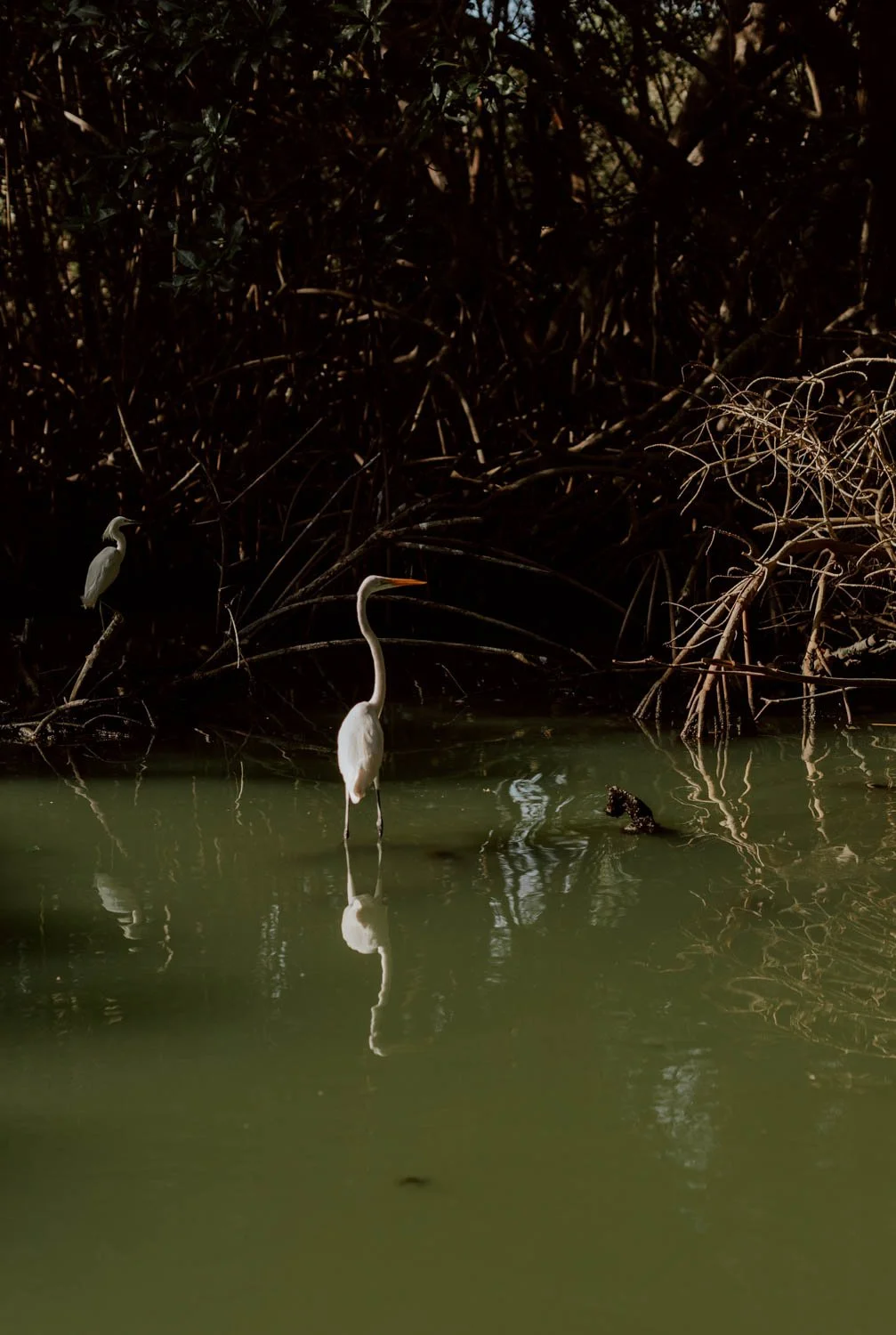
The national park protects one of the largest wetland systems in Costa Rica. Early-morning excursions enter its narrower waterways by canoe, kayak or small boat, with guides searching overhanging branches and half-submerged logs for caimans, river turtles, sloths, and some of the 400-plus bird species recorded here.
Those waterways account for much of the daytime wildlife, but it’s turtles that have shaped the name, history, and modern economy of Tortuguero.
Turtles and their eggs had long been taken for food here, but during the 1950s the stories of a Caribbean beach crowded with nesting green turtles brought American zoologist Archie Carr to Tortuguero, where his research helped reveal both the extraordinary importance of the colony and the scale of its decline.
The conservation programme established in 1959 is now the longest continuously running sea-turtle research project in the world, while the surrounding land was first declared a national park in 1970. Monitoring, protection, and tourism have since become tightly entwined with life in the village, where an animal once principally valued for its meat, eggs, and shell now supports guides, researchers, lodges and boat operators.
And they still nest here in extraordinary numbers, with the largest green-turtle nesting beach in the Western Hemisphere found on the black sand runing along Tortuguero’s Caribbean edge.
For anyone coming specifically to witness this, the season will determine the trip, and research tells us that Tortuguero deserves at least two or three nights rather than being squeezed between boat connections. Outside those months, the canals, forest, and extraordinary birdlife remain, but it may not feature so heavily on itineraries.
If you’ve been part of any turtle experiences elsewhere in the world, you may be surprised by the regulations in place here: nobody is free to wander onto the beach with a torch and wait, instead visitors must join an authorised guide and remain back from the shore while trained trackers patrol assigned stretches of sand, moving forward only when a female has settled into a stage of nesting that can be observed without disturbing her. The no torch rule is strictly enforced, and phones must remain hidden way. If you do anything the guide deems as dangerous or even distracting to the mumma turtle, you’ll be escorted away pretty sharpish.
All you’ll have are memories, but we suspect these may be some of the best.
Stay / Splurge at Mawamba Lodge or go a bit more laidback and pura vida at El Deseo Serendipity Tortuguero
Know / The first females generally arrive in June or July and continue until October, with the greatest numbers around August and September; leatherbacks make their earlier appearances between March and June, joined by far smaller numbers of hawksbill and occasional loggerhead turtles.
Book / This highly rated green-turtle nesting tour, led by a local guide during the principal nesting season.
Give San José a Chance
Few travellers will leave Costa Rica and tell you that San José was the highlight.
On our first budget backpacking trip through Central America, the city was somewhere to arrive, spend the night, and move on from. In a country of wildlife, cloud forest, coffee plantations in the hills, and coastline on two oceans, the architectural mishmash of the capital hardly stood a chance.
It did not offend or disappoint us; it simply failed to make us feel very much at all.
Fast forward eight years, and the city was the starting point for a nine-week trip through the region. A late-night arrival meant staying over was the sensible choice, and we decided to use the extra time to give San José a proper second look.
There is still no escaping the traffic, concrete, security shutters and occasional sense that the city has been assembled without a great deal of concern for how its parts sit together. Yet amongst it all, we found and appreciated considerably more than we had remembered.
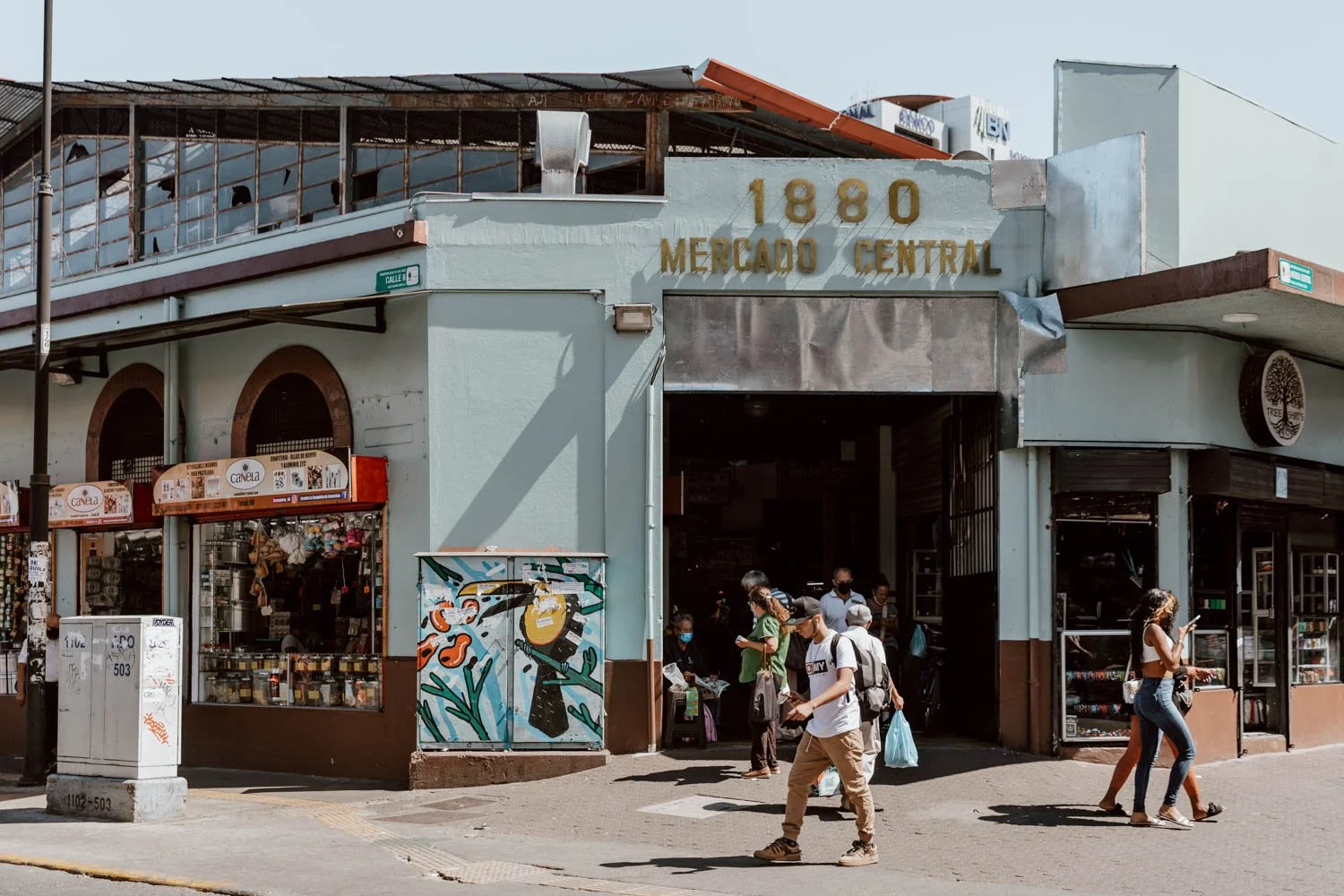
The Mercado Central was busy, local and full of life; the Pre-Columbian Gold Museum revealed its treasures beneath the very centre of the city; and the grand nineteenth-century Teatro Nacional looked like a small piece of Europe dropped beside the Plaza de la Cultura.
Best of all was the Museo de Arte Costarricense, housed inside the former terminal building of Costa Rica’s first international airport at the edge of La Sabana Park. Its galleries, sculpture garden and extraordinary Salón Dorado made it the best art museum we visited anywhere in Central America.
We still would not take time from Corcovado, the cloud forest or the coast specifically to fit in the capital, but if your flights leave you with a day in San José, it need not be written off.
Stay / Our hostel picks are Chillout Hostel Barrio Escalante and Capital Hostel de Ciudad but if you’re looking for a hotel with a touch of class, check out Gran Hotel.
Book / This excellent tour of Mercado Central or this popular walking tour will help you understand the city a little better
Drink The Coffee
Long before tourism flooded this small Central American country, it was coffee - its first major export - that changed Costa Rica’s fate, transforming the economy of the Central Valley and the fortunes of San José. The National Theatre is perhaps the grandest surviving expression of that new wealth, its construction partly funded through a tax on exported coffee.
Today the crop continues to cover hillsides across the country, with differences in altitude, rainfall, soil and temperature giving the coffee grown in each region distinct characteristics. Over the last quarter of a century, independent micro-mills have made those differences easier to trace, allowing smaller producers to process their own harvest rather than watch it disappear into larger regional lots, and keeping the finca and its people attached to the coffee all the way to the bag.
However, for all the newer language of single origins, varietals, and processing methods, Costa Ricans did not need the speciality-coffee movement to introduce them to pour-over.
Long before it was repackaged by minimalist coffee shops and presented as something new, coffee was being brewed in homes across the country through a chorreador, a wooden stand holding a reusable cloth filter through which hot water is slowly poured.
And whilst San José now has the scales, glassware and earnest tasting notes of any modern speciality scene, the beans behind them may have travelled only a few hours from farm to roaster. Cafeoteca - named among the World’s 100 Best Coffee Shops in 2026 - works through a library of more than 25 coffees from all eight growing regions, while Franco roasts its own beans and once counted Emiliano Hellmund - Costa Rica’s 2023 Barista Champion - as its head barista. Beyond the capital, Nativo Coffee Roasters in Nicoya is highly regarded, while Café Monteverde, owned by a collective of 21 local families, serves coffee they’ve grown, milled and roasted themselves within sight of the surrounding farms.
A worthwhile finca tour allows you to follow the journey from bean to cup, but the best choice depends largely on your route through Costa Rica, Doka Estate and Finca Rosa Blanca can be visited from San José, Café Monteverde and El Trapiche operate around Monteverde, while tours near La Fortuna commonly combine coffee with cacao and sugar cane. Since much of the story will overlap, one tour is enough; if possible, take it during the principal harvest from October or November into February, when there is a better chance of finding ripe cherries on the branches and the processing machinery at work.
Book / In La Fortuna, this coffee and chocolate tour follows both crops from the plants through processing and roasting, with generous tastings along the way. Alternatively, this farm and roastery tour in Monteverde is more firmly focused upon coffee, visiting the fields of a fifth-generation producer before tasting six different preparations.




From its nature parks and wildlife to the surf and wilder beaches, these are the best things to do in Costa Rica.