



What We Learned Hut-to-Hut Hiking in the Dolomites
It’s so much more than a multi-day hike.
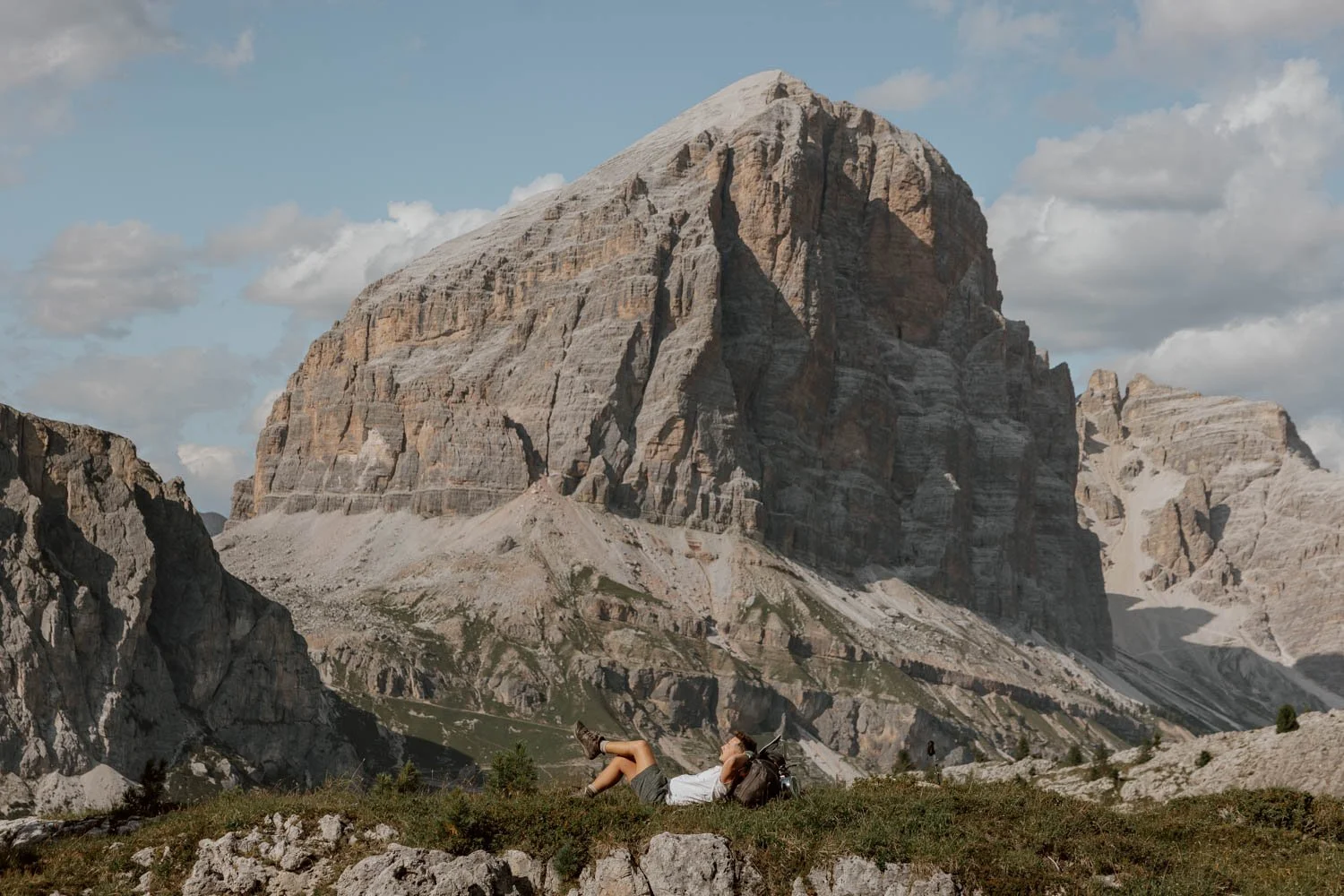
“Thousands of tired, nerve-shaken, over-civilised people are beginning to find out that going to the mountains is going home; that wildness is a necessity”
John Muir
·
On our second trip to the stunning northeastern Italian region, we tied our boots tight and set out carrying everything in two backpacks.
The plan? Six days hiking amongst the jagged silver-blue peaks and green pastures of the Dolomites. Taking us far from the convoys of motorbikes, cyclists, road-trippers, and day trip crowds down below, the mountains would be our home.
This wasn’t about wild camping or going off-grid though, as going hut-to-hut in the Dolomites offers a whole different style of hiking: you wake, you follow the trail, you stop at remote rifugios, you walk some more, then you eat and sleep in cosy mountain huts.
It’s bunk beds, sore feet, dirty socks, cow bells, gnocchi bowls, and a cold beer after a 15km day.
There are however endless possibilities and permutations for hut-to-hut hikes in the Dolomites, and knowing which to string together into a rewarding and realistic few days of walking isn't an easy puzzle: the mountains are vast, the trails don't connect as neatly as you might expect, and accommodation in most rifugios needs to be secured months in advance.
So, for this adventure, the route we followed was the self-guided Dolomiti Trail designed by Travelbase, with the company also taking care of the logistics, admin, and those crucially important rifugio bookings, leaving us to concentrate on the important things.
Things like the next espresso and strudel stop, lingering over lunches at 2,500 metres, and soaking up the endless extraordinary, crowd-free scenery.
It wholly changed our perspective on what the Dolomites is, and how the region should be enjoyed.
In this post, we want to give you a sense of what several days hiking in the heart of the Dolomites actually looks and feels like - from the trails and the highlights, to the challenges and the ravioli - so you can decide whether it’s the best way for you to experience the region. We’ve also shared practical advice on the items we wouldn’t set off without, big mistakes to avoid, when to book accommodation, and what you really need to know before you start planning a route of your own.
These are the nine lessons we learned hut-to-hut hiking in the Dolomites.
p.s. The summer season here is brief, and if you’re planning last-minute and already missed the booking window for the rifugios, don’t panic! We may have a solution for you…
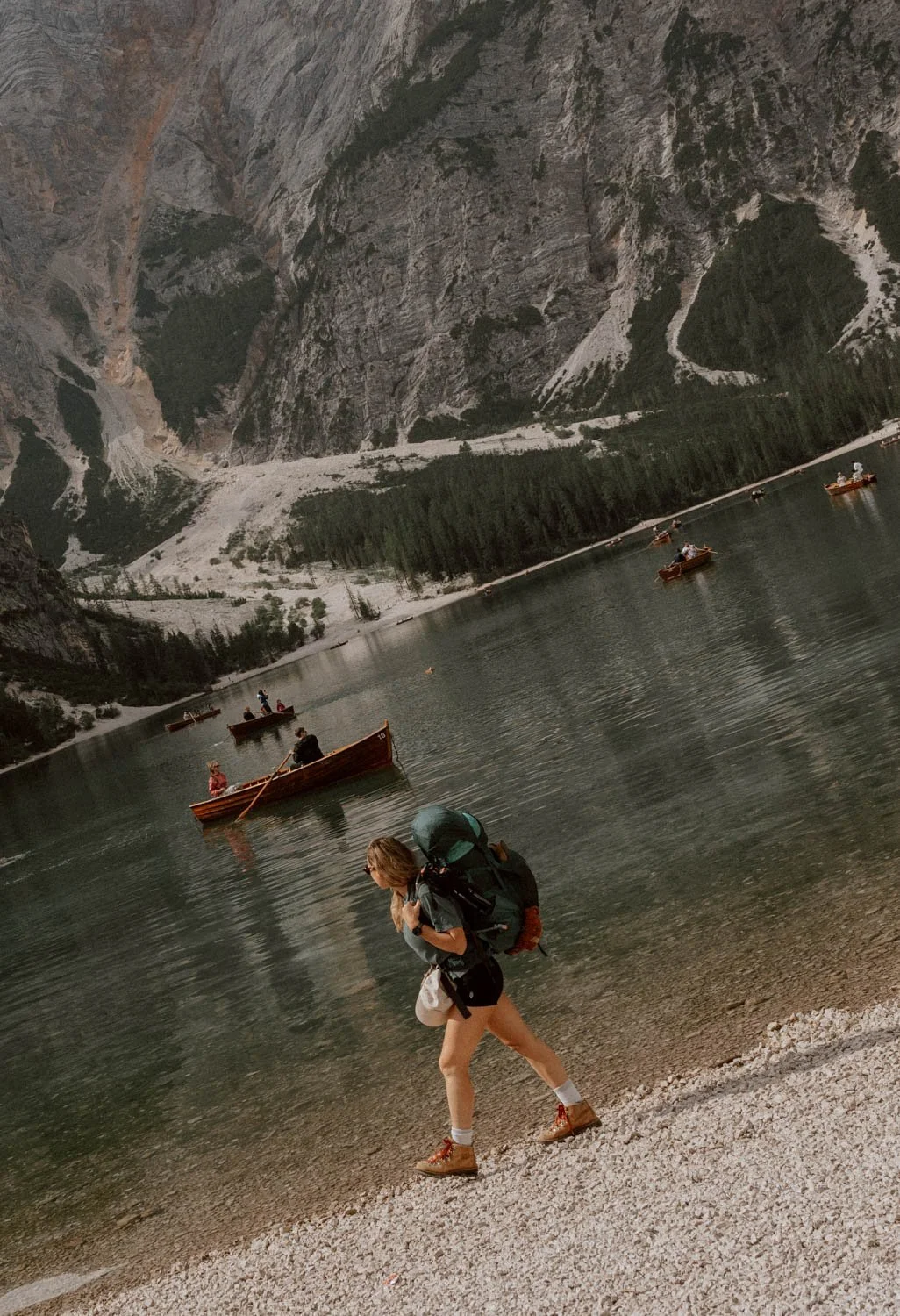
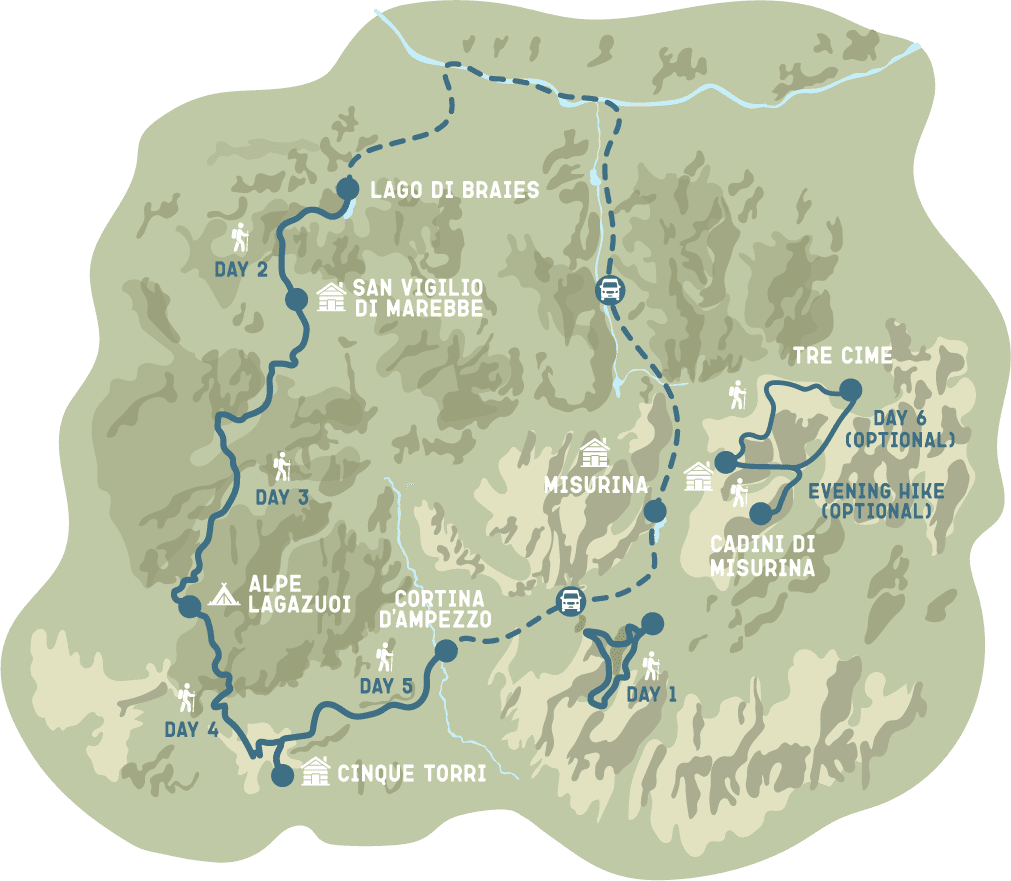
The Dolomiti Trail | Our Route
Day 1 / Hike Lago di Sorapis & Stay in Misurina | 13km
Day 2 / Hike from Lago di Braies to San Vigilio di Marebbe | 10km
Day 3 / Hike from San Vigilio di Marebbe to Alpe Lagazuoi | 22km
Day 4 / Hike from Alpe Lagazuoi to Cinque Torri | 14km
Day 5 / Hike Cinque Torri to Cortina d’Ampezzo | 12km
Day 6 / Extra day hike to Tre Cime
1.The Season is Really Short
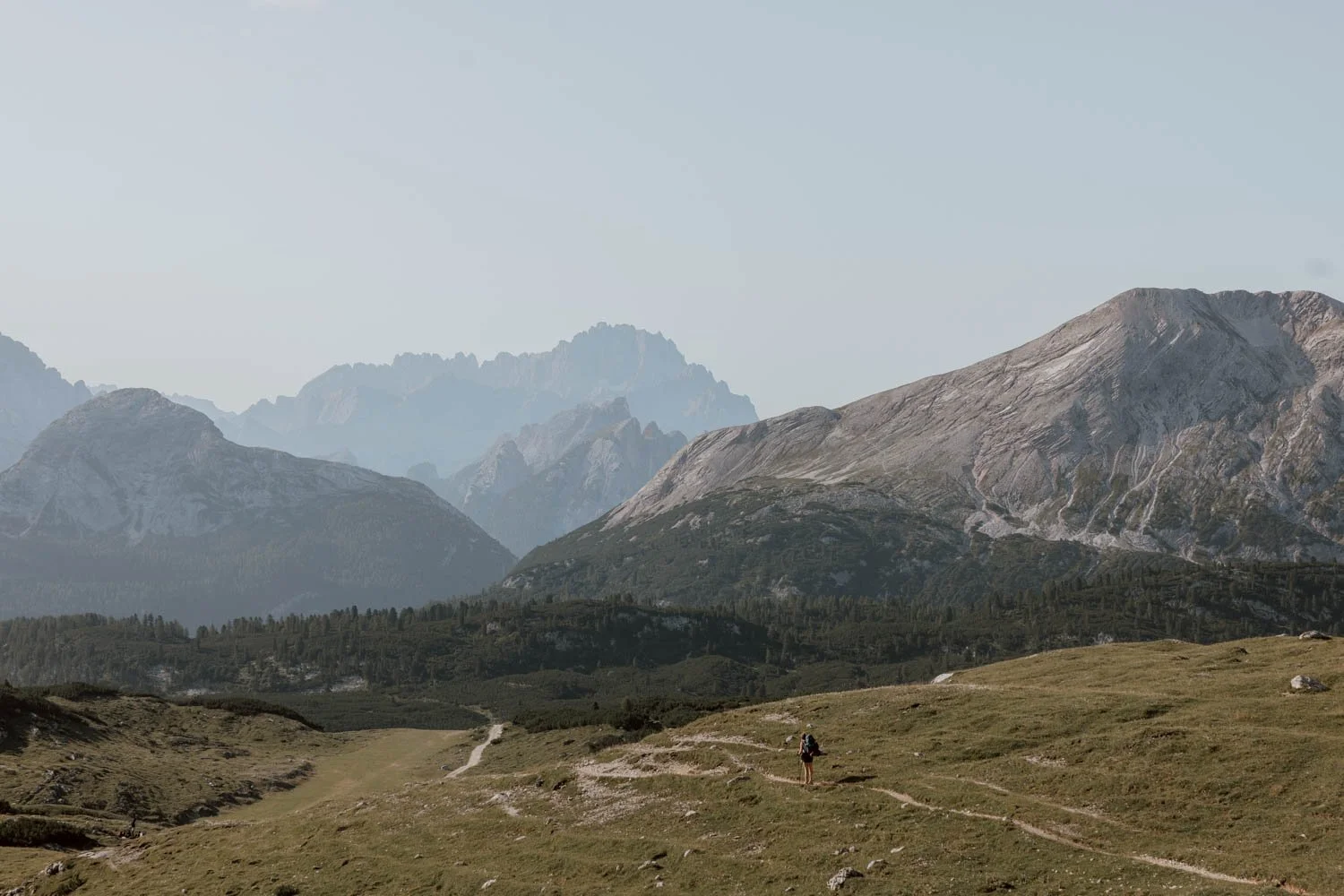
The Dolomites - primarily a winter skiing destination - has a painfully brief summer season.
As the snow doesn’t reliably clear from the passes and peaks until around the middle of June, the mountain huts and many hiking trails are closed until then.
This means hut-to-hut hikers should only plan to visit from the third or fourth week of June until the end of September. If you’d rather be on the safe side, then waiting until July will offer a better guarantee that everything will be accessible on your route.
We did our hike at the end of July, and bar the odd rain shower, conditions were ideal.
2.The Role of The Rifugios
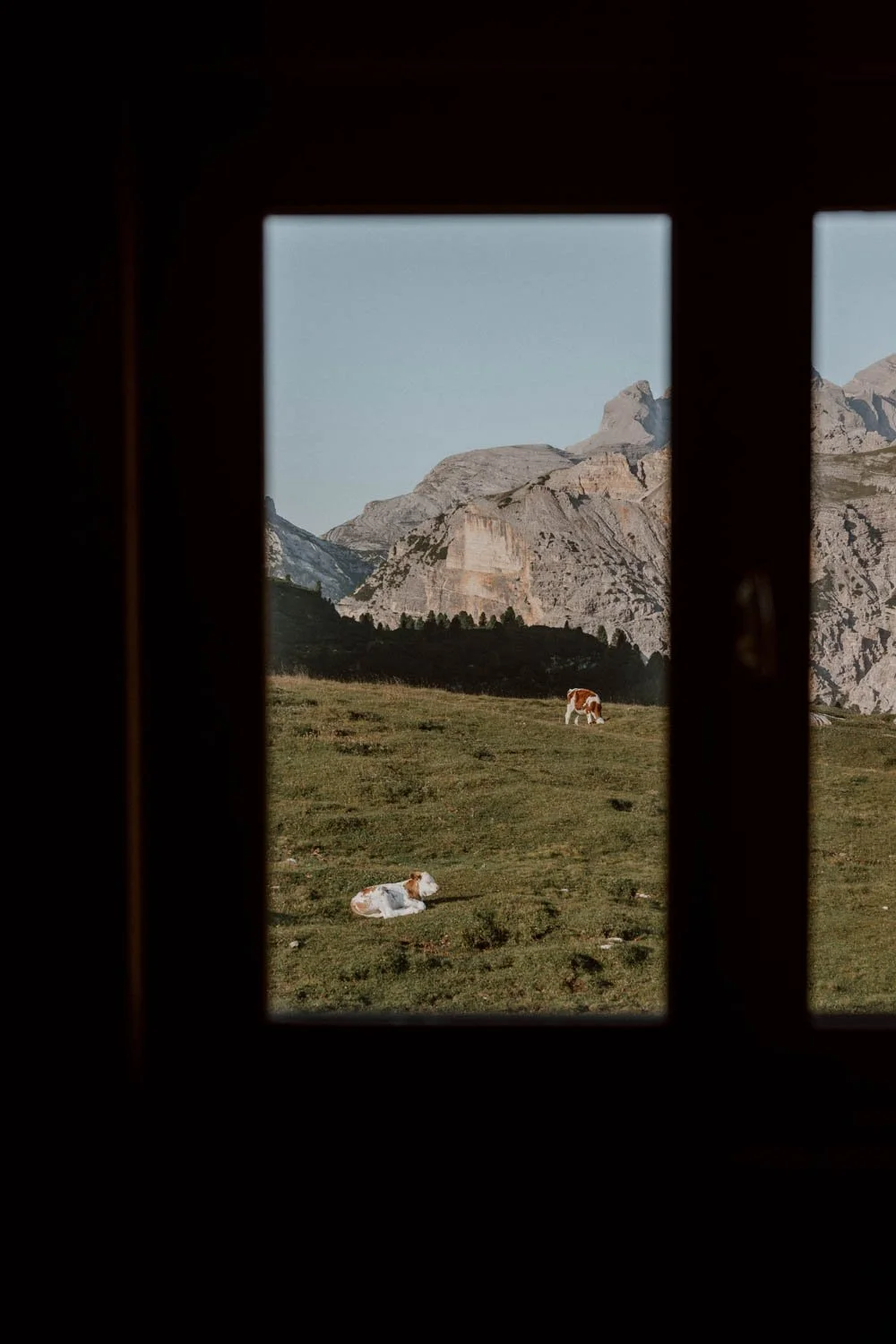
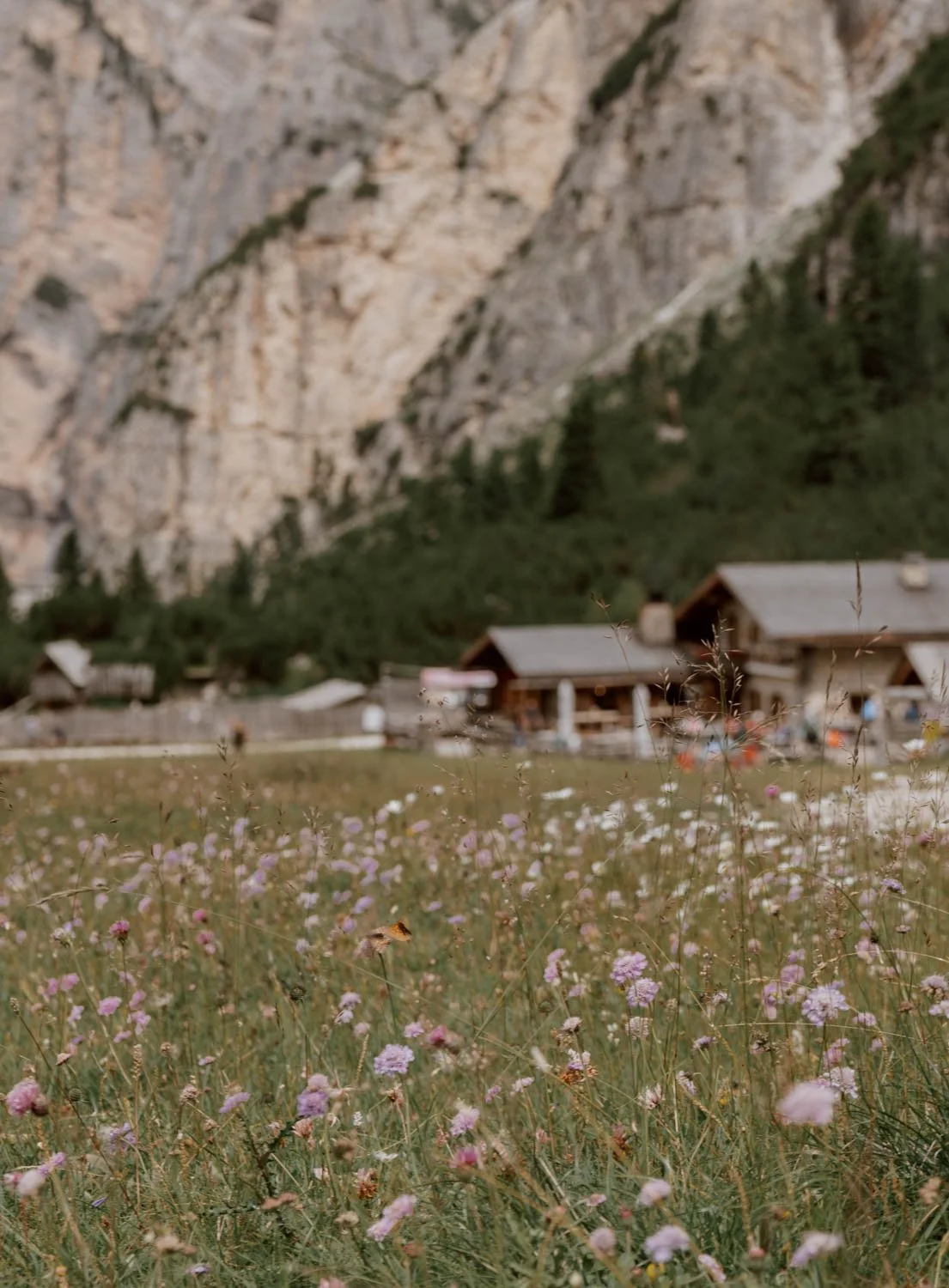
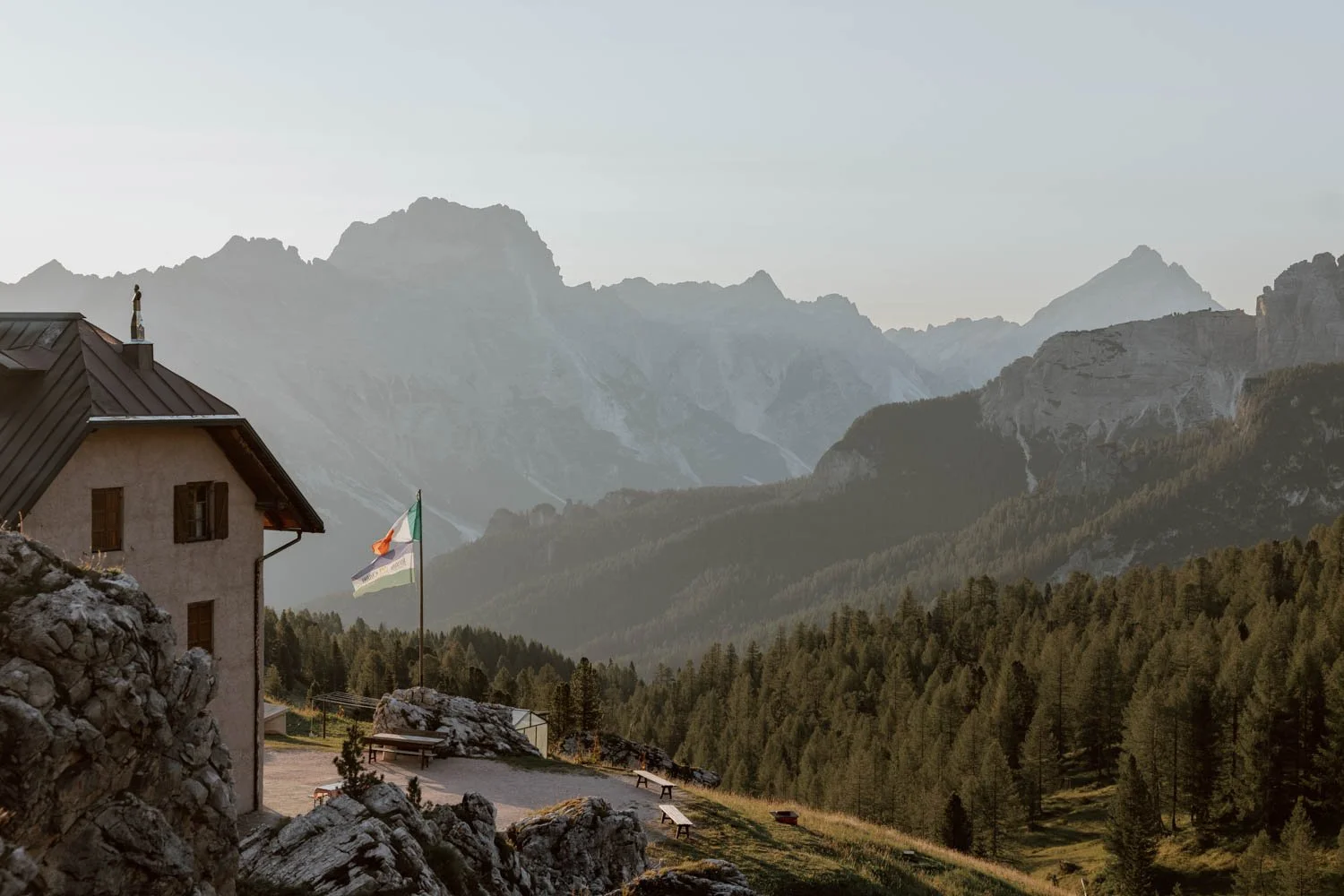
Scattered throughout the Dolomites, rifugios* are traditional accommodation where hikers eat, drink, and sleep high in the mountains.
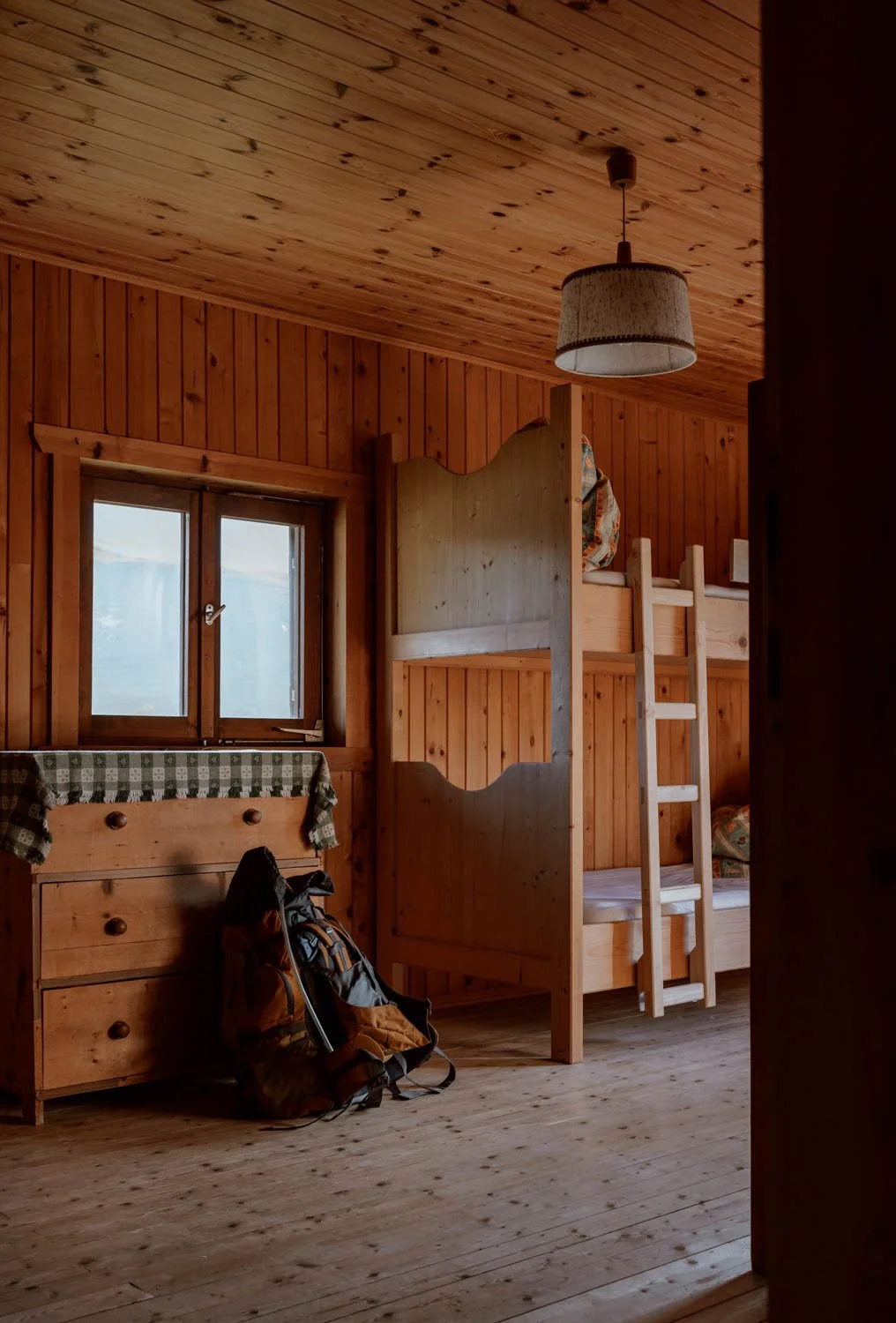
Some are incredibly remote, perched high above the valleys, while others are popular stops on a day hike or drive. Some are simple and rustic; others more modern and comfortable. Size varies, but they all offer hearty meals, hot showers, beds for dozens of tired hikers, and a unique sense of camaraderie when everyone’s arrived there on foot.
We honestly didn’t appreciate how central they are to the Dolomites travel experience on our first trip here, and we’ve become slightly evangelical about them since!
These ‘huts’ are what make this sort of multi-day hiking possible, but they’re also a huge part of what makes it so distinctively wonderful. You start and finish each day at them and, after several hours on the trail, there’s something pretty special about rounding a corner and seeing your rifugio waiting ahead: somewhere to take off your boots, share a table with fellow hikers, eat a big plate of pasta, and watch the mountains change in the evening light.
You will not find any other accommodation options up on the trails.
And this is where a well-planned route really comes into its own as there should also be at least one rifugio along each day’s trail for a mid-morning espresso and pastry, a long lunch in the mountains, or a well-earned beer break before the final stretch (all of which we indulged a little too much on the Dolomiti Trail).
Know / Despite the location, these aren’t campsites and they don’t offer pitches or shared kitchens. You’re staying in proper mountain accommodation, usually with shared dormitories or private rooms, with all meals served in the small restaurant. Wild camping is also officially banned across most of the Dolomites' parks - which is partly why the rifugio system exists in the first place.
*in Italian, the plural of a rifugio is rifugi, but every English-speakers says rifugios.
3. You Need To Book Them Early
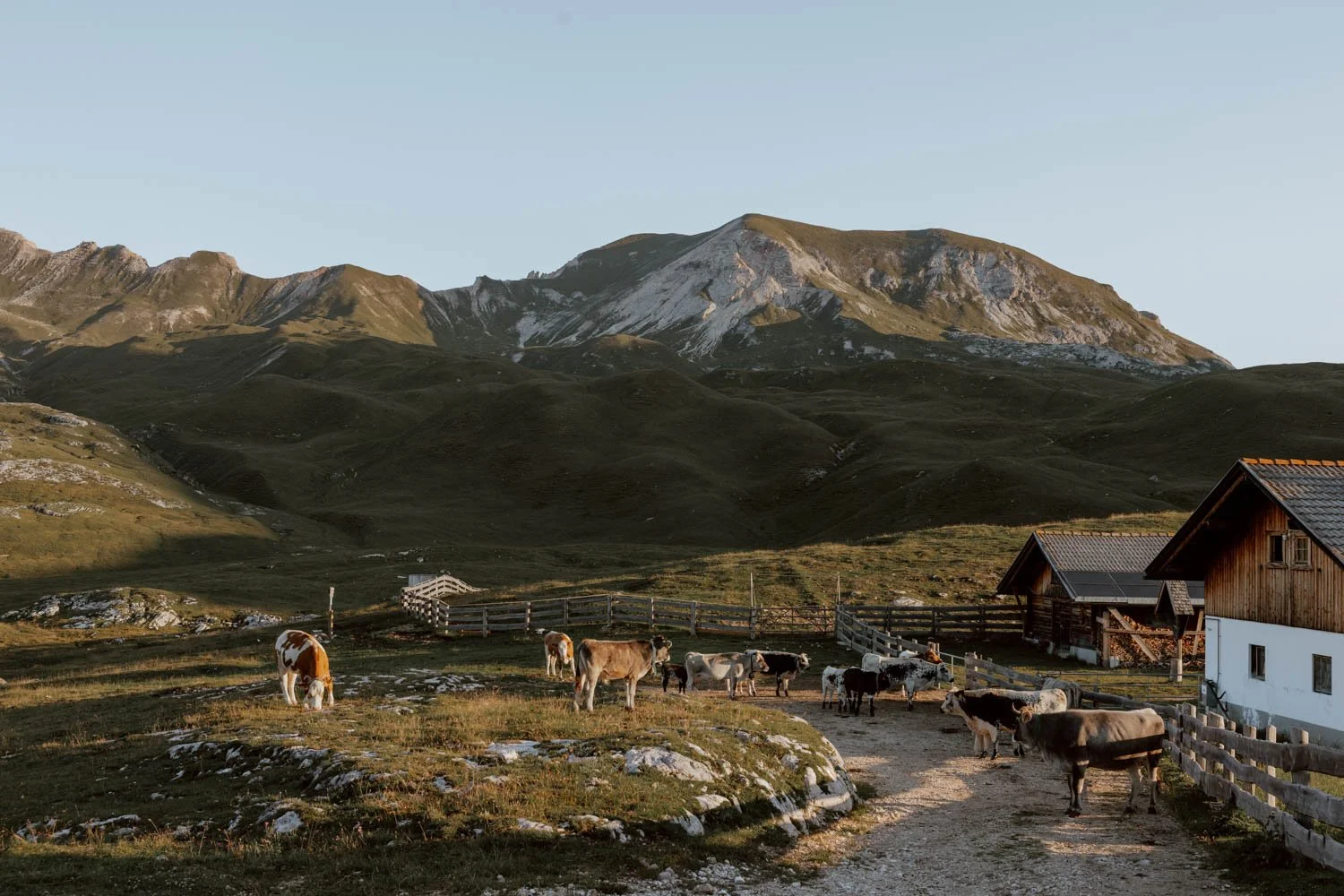
As the rifugios are integral to every hut-to-hut hike in the Dolomites, and have a limited number of beds, demand often outstrips supply.
Throw in the short season and increasing hype about the region, and this means they can sell out months in advance.
For meticulously planned out routes and last-minute Dolomite trips, the lack of availability can obviously throw a massive spanner in the works: you cannot turn up to a rifugio in the middle of nowhere without a reservation and expect them to have space.
The standard advice is to try and book your mountain hut at least six months in advance of your dates.
This presents an admin challenge, which isn’t helped by the fact that there isn’t a single overarching website that permits you to see all the options, check availability, and contact the owners. Instead, reservations are still made via the individual hut websites and/or e-mails.
The opening of the booking window for the season also varies from rifugio to rifugio, but the general timeframe is January-February.
So, in a very Catch 22 sort of way, you need to know your route to book your huts, but you can't finalise your route until you know which huts you've managed to book.
It’s absolutely possible, but will require some effort, time, and patience.
We should also emphasise that dorms are common, and you shouldn’t expect to secure a private room at most huts.
Know / A major benefit of hiking with Travelbase is that they’ve already taken care of the rifugio bookings along their Dolomiti Trail route, so you don’t have to do all the work and availability is guaranteed. This is also why it’s a great option if you’re looking last-minute, just realised you’ve missed the entire booking window, but your heart is still set on doing a proper hut-to-hut hike: if they’ve got a date available, it’s yours.
4. How Fit Do You Really Need to Be?
Long-time readers of Ad Roads will know that we adore hiking.
Earlier in the year, we took on part of the Lycian Way in Turkey, whilst the previous spring saw us spend two weeks completing the Fishermens’ Trail in Portugal.
So, whilst not the fastest hikers by anyone’s definition, we’re both quite experienced and pretty fit.
Was the 85km Dolomiti Trail easy for us? No. Was it achievable? Yes. Was it worth the effort? Abso-bloody-lutely.
Would we suggest taking it on if you’re not very active and have never done any proper hiking before? Probably not.
That answer still isn’t going to be particularly useful though, as being ‘fit enough’ is hugely subjective. An experienced, very active hiker might describe a day as moderate that someone less accustomed to mountainous terrain would find a pretty serious slog. And in the Dolomites, the elevation gains and steep gradient in sections can make a relatively modest distance feel considerably harder than it looks on paper.
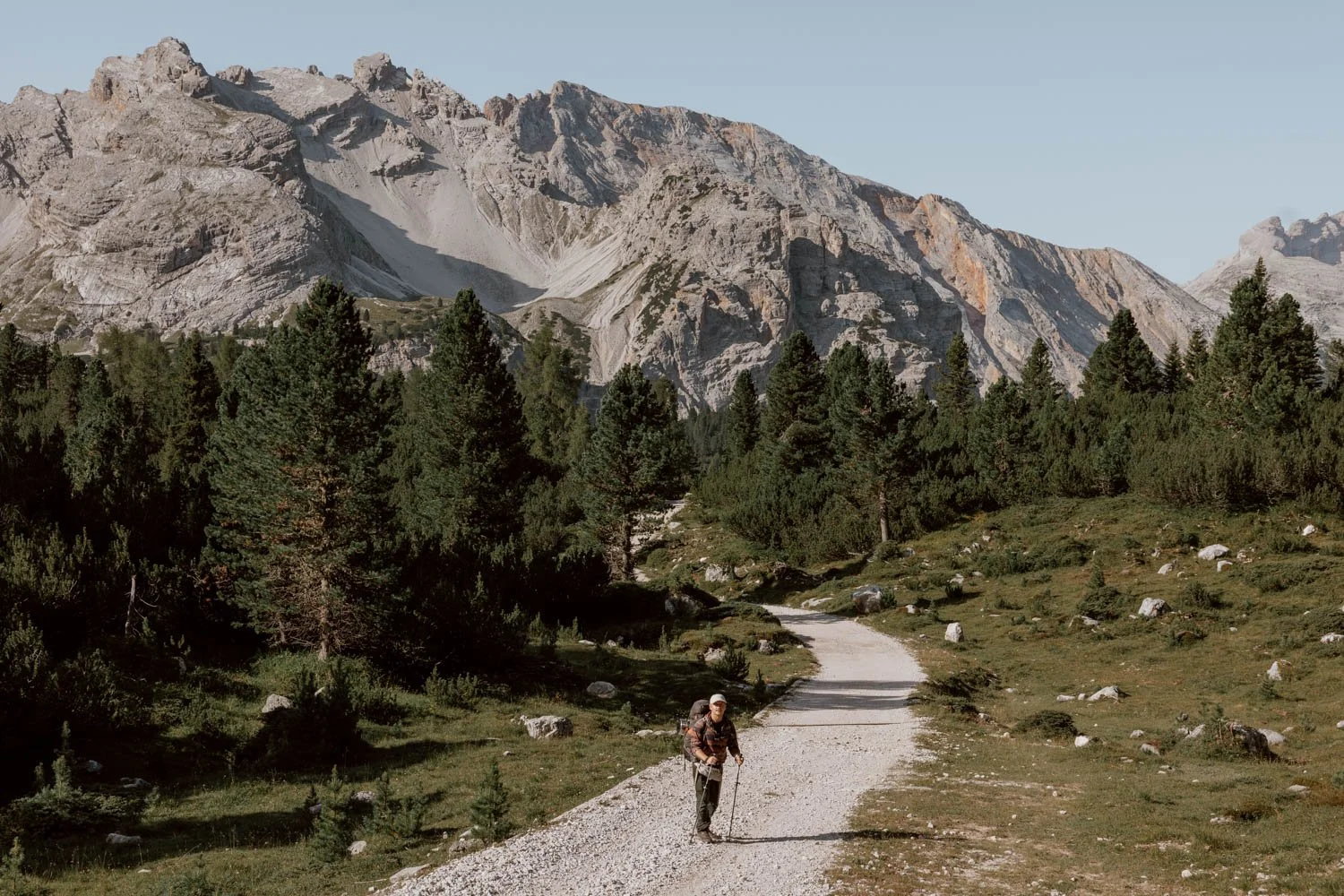
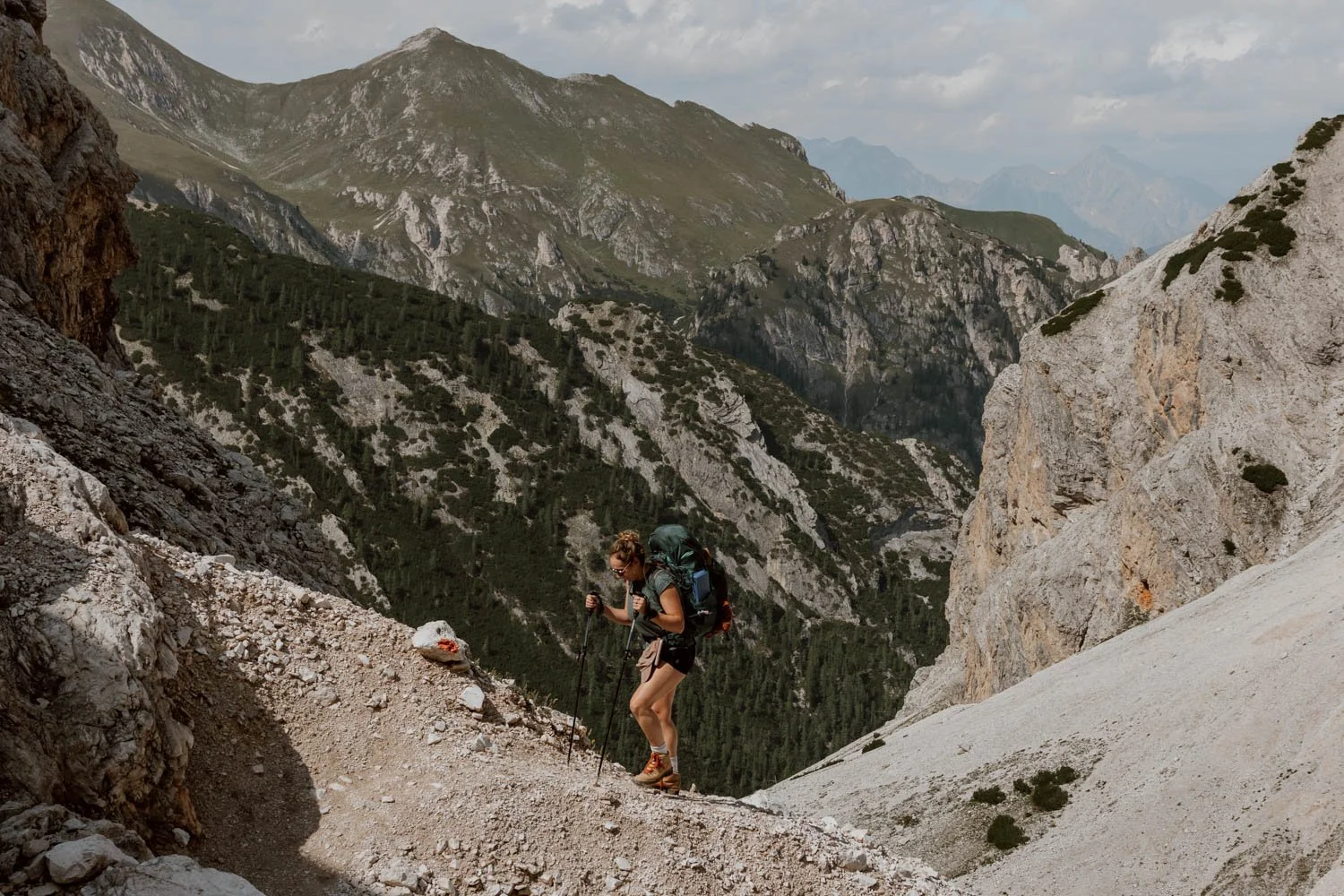
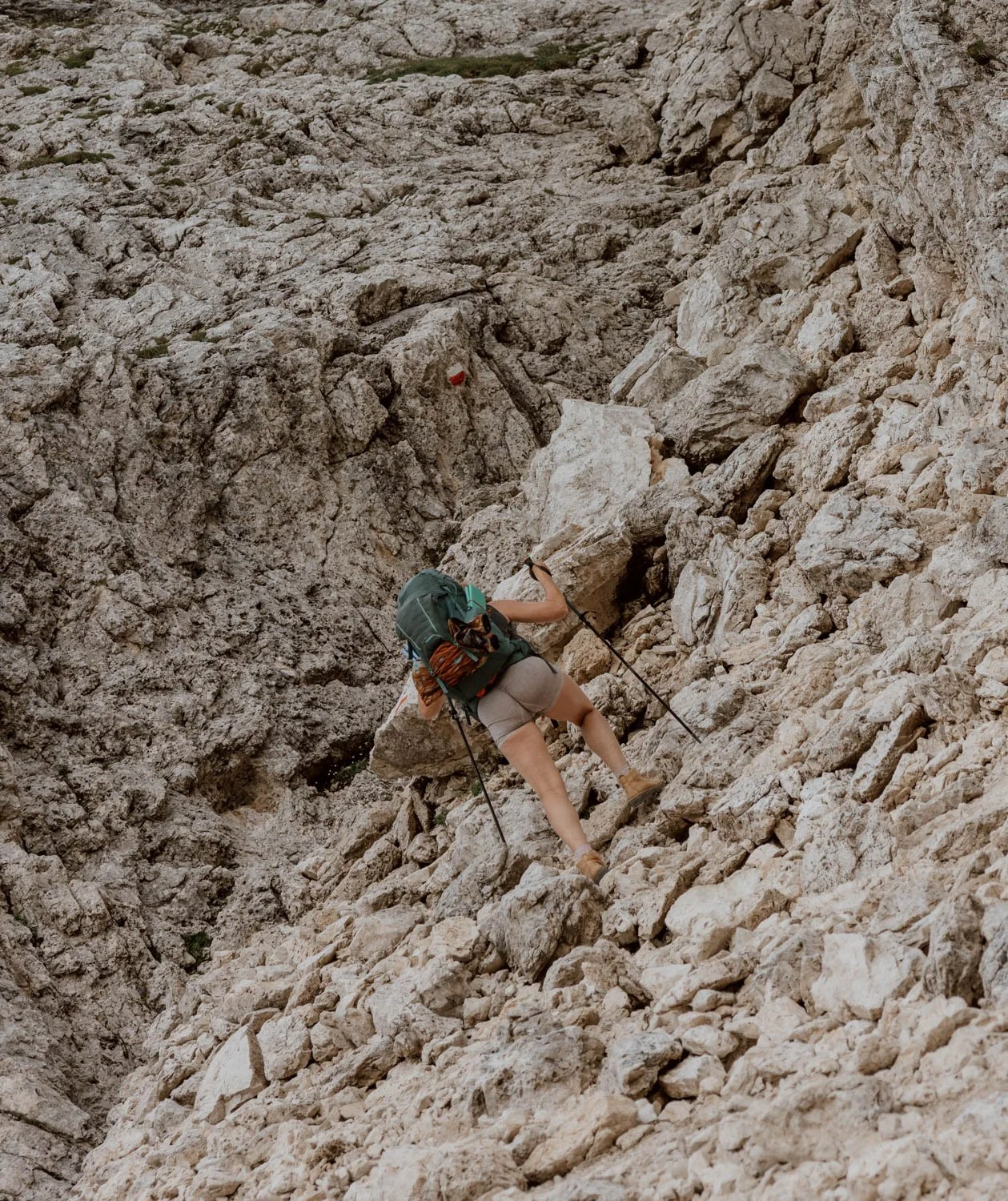
Simply put, these mountains demand more of you than a straightforward forest amble or coastal trail; across our route, there were a few hard ascents, long uneven descents, and stretches where fatigue made everything that bit harder. Nothing technical or terrifying, just tiring.
Our fourth day involved a 1,300 metre ascent and a 790 metre descent!
So whilst you don’t need to be a mountaineer for most established hut-to-hut routes, you should have a decent level of fitness, be comfortable spending 6-8 hours on your feet, able to tackle sustained uphill sections and, depending on the route, dealing with some unexpected scrambling.
Then there’s the cumulative effect.
A single long day hike in the mountains is very different from doing it day after day, particularly when you’re carrying a backpack weighing 10-13 kilos. By day four or five, legs that felt pretty fresh at the start of the trip may have rather different ideas about another big climb. Being fit is one thing, you also need a certain of stamina if going hut-to-hut over multiple days.
Yet, we aren’t positioning any of this reality as a negative: type 2 fun is a big reason why we love to hike - and the feeling of satisfied exhaustion with a beer at the end of the day is tough to beat. It’s always vale la pena.
What’s most important is being realistically ambitious about what your body is capable of.
5. The Realistic Route-Planning Principles
This perspective on fitness and stamina should also underpin the design of your own hut-to-hut hike.
As we mentioned earlier, there are literally hundreds of Dolomites hut-to-hut hike permutations: you might spend three days around the Cinque Torri and Tofane, follow the Alta Via 1 through the eastern Dolomites (the classic, but a demanding 140km across 10+ days), tackle the shorter Alta Via 4 around the Sexten Dolomites, Tre Cime and Sorapis, build a longer trip around the Sella and Sassolungo, complete the Rosengarten Traverse or head further west towards the Brenta Dolomites.
And within each area, the possibilities multiply again: how many days you have (3, 6, or 14?), how much elevation you’re comfortable with, whether you want to prioritise famous peaks and viewpoints or quieter trails, how challenging you want each day to be, your budget, and whether there’s a specific rifugio you want to include.
Whilst the Alta Vias are the classics, there’s no single definitive hut-to-hut route in the Dolomites, and two people can spend five days on the trails and come away having experienced completely different mountains and challenges.
When doing your research and route planning though, there are several key principles to shape everything. These aren't about limiting yourself, but rather ensuring you choose or build a route you'll actually enjoy:
· Are the daily distances manageable? On the Dolomiti Trail, most days were 10-14km, with a single day covering 22km from San Vigilio di Marebbe to Alpe Lagazuoi. Ironically, two of the shorter days were the most challenging due to the elevation and terrain.
· Underestimating the elevation difference is where mistakes or surprisingly long, gruelling days will come in. Our 10km day from Lago di Braies to San Vigilio di Marebbe looked easy on paper, but only because we totally underestimated the 880m elevation gain! So, when looking at hut-to-hut hike itineraries, don’t just look at the distance!
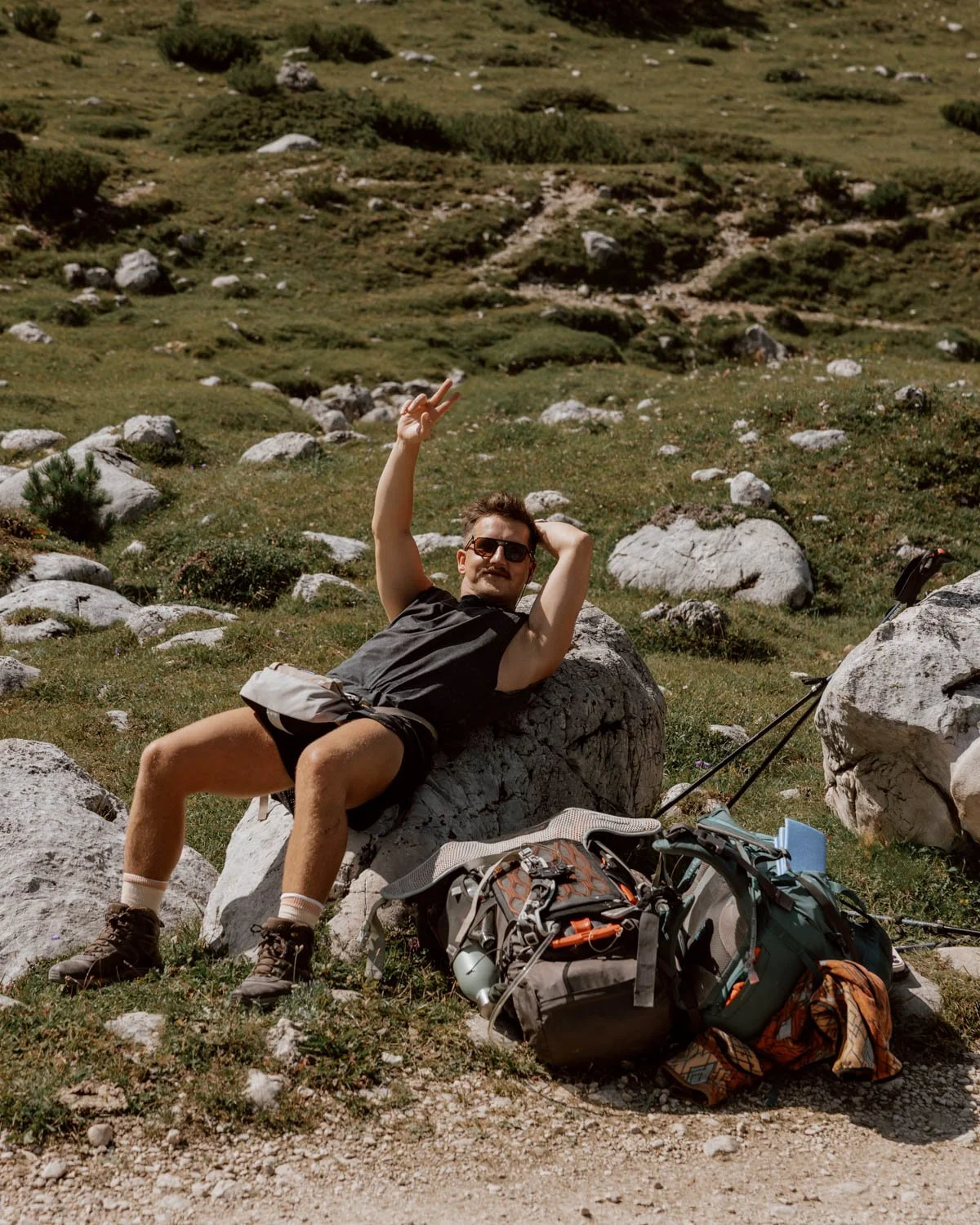
· We were out walking from 8am to 6pm most days, but that’s because we never rush lunch and stop far too often to take photos and videos. Others in our group were quicker, usually arriving at the rifugio or campsite a couple of hours earlier.
· One deadline on a hut-to-hut hike that you may not initially think about is dinner. Rifugios generally serve their evening meals at a set time, often around 6 or 7pm, and unlike arriving back at a hotel in town, there’s no restaurant next door if you roll in late. So when assessing a day’s hike, the question isn’t simply “Can we get there before dark?” but “Can we comfortably cover this distance and elevation and arrive in time for dinner?”
We cut it fine several times, usually because we’d have made good progress in the first half, then take too long for lunch and/or underestimate the second half.
· Safety shouldn’t be overlooked. Though a route may intersect at times with roads and cable cars, many of the trails and huts are isolated. In the event of an emergency, it may be necessary to rely on a helicopter rescue. This isn’t to alarm you, but before setting off deep into these mountains, it is important to appreciate that reality - and take the necessary sensible precautions.
Quick point on the impact of altitude: some rifugios and passes on hut-to-hut routes do sit above 2,500m - including Rifugio Nuvolau (2,575m) and Rifugio Lagazuoi (higher still) - but altitude sickness is not going to be a genuine concern for most hikers (you’re also unlikely to spend prolonged periods of time at this altitude).
For a first-time, we’d therefore suggest not being too ambitious, follow something that’s established, and try to have most days under 15km. A route that’s manageable and safe is going to be much much more enjoyable than the alternative. Also, if you’re a little concerned about your fitness, there’s no need to take on an entire long-distance route such as the Alta Via 1 simply because you’re in the Dolomites. A well-planned three-day hut-to-hut itinerary can give you a fantastic taste of the experience and scenery without committing to a week of demanding mountain days.
Travel Tip // It’s also important to be aware that you don’t join a hut-to-hut hike to tick off the big attractions in the Dolomites. Whilst you may be fortunate that your route pieces together one or two, you may well spend many of your days up in the mountains passing through villages, by lakes and over mountains you’ve never heard of before. If you really do want to visit some of the more well-known places, you will do better to tack on extra days either side.
When working out the total number of days available though, bear in mind that you’ll need to be in the Dolomites at least the night before your hut-to-hut starts, and will probably want to factor in a rest day after it ends.
6. Stopping Is As Important As Walking
Ok, we’ve perhaps focussed a little too much on the practical and the logistics.
If we haven’t yet made it crystal clear, we already knew the Dolomites are absolutely f*cking stunning, but doing the hut-to-hut turned it up to eleven.
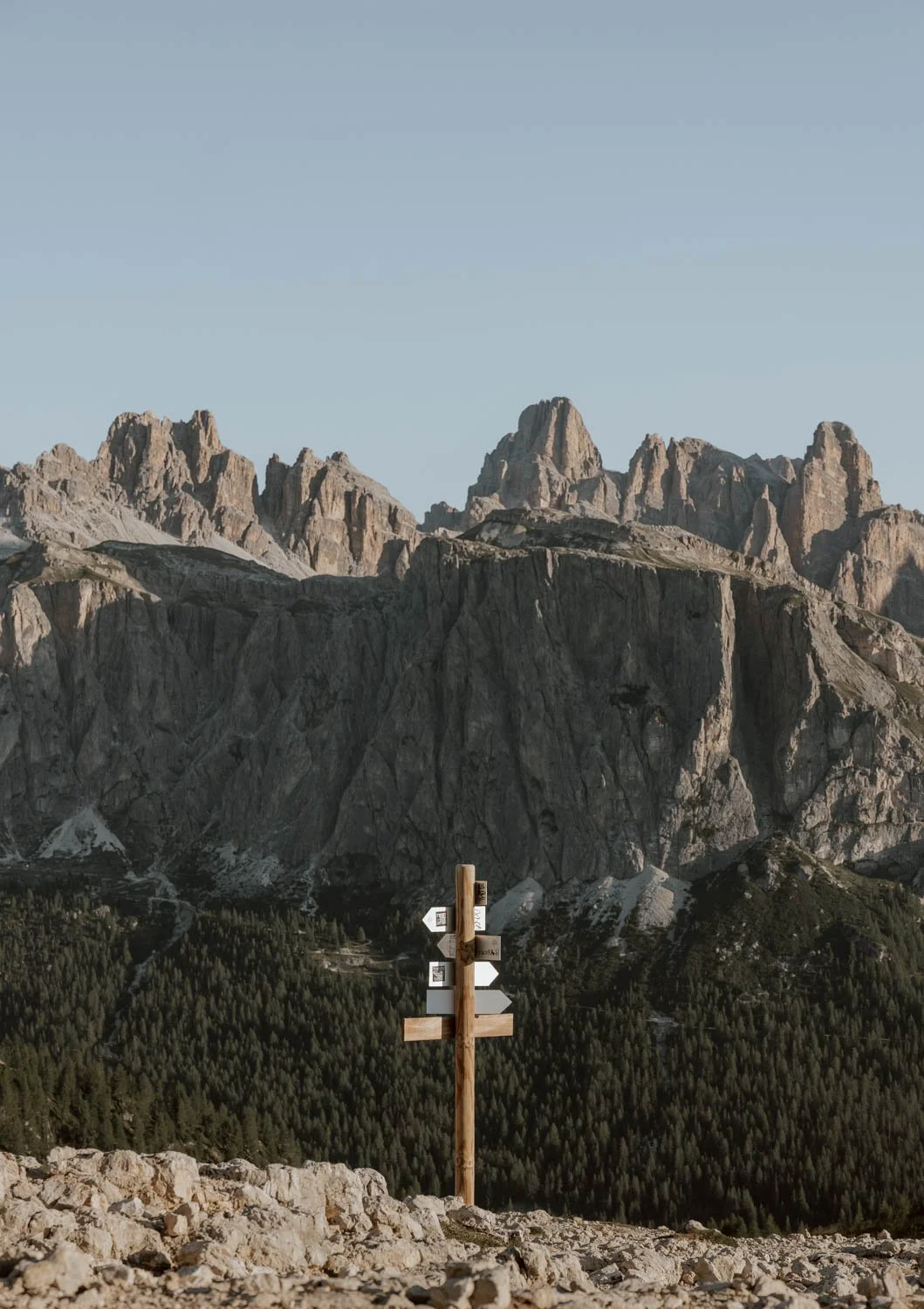
It became a recurring theme of our days for constant exclamations at the peak or a painting unveiling itself before us on the trail. We’d say drop that scene or section in any other country and it would be a bucket-list hike for many, but we didn’t even know what they were called. It really is difficult to convey just how many ranges there are in the Dolomites, but you get a sense of constantly being surrounded by them.
That’s why we were never in much of a rush: there’s no medal for finishing a hike first, and the gold is often found in the moments in between.
Indeed, perhaps the most wonderful aspect of hut-to-hut hiking in the Dolomites - and what sets it apart from multi-day hikes in many other countries - is that you’re still in Italy (albeit, a distinctly Austrian-influenced version of it). Along the trails, separate from the rifugios where you’ll spend the night, are others perfectly placed for a natural pause in the day: that mid-morning espresso and krapfen, a cold beer, or a proper lunch, with menus about as far removed from a soggy egg-and-cress sandwich as you can imagine.
So, whilst time management and sticking to a pace is important, you should also stop and savour what only a proper hut-to-hut in the Dolomites can give you.
If in doubt, use our rule of thumb: knowledge is being aware that stopping for a slow lunch of dumplings, ravioli, and a mezzo litro of white wine isn’t a good idea on a 22km day, but wisdom is doing it anyway.
7. What About Water & Food Along The Trail?
Whilst we’re huge advocates for rifugio lunches and dinners - albeit we wished the latter started later - the costs of eating at them adds up, especially if you’re planning to be on the trails for 4+ days. On certain days, they may also be not conveniently located for a proper stop along the way.
So, what other options do you have? This was, rightly or wrongly, actually our primary pre-trip concern.
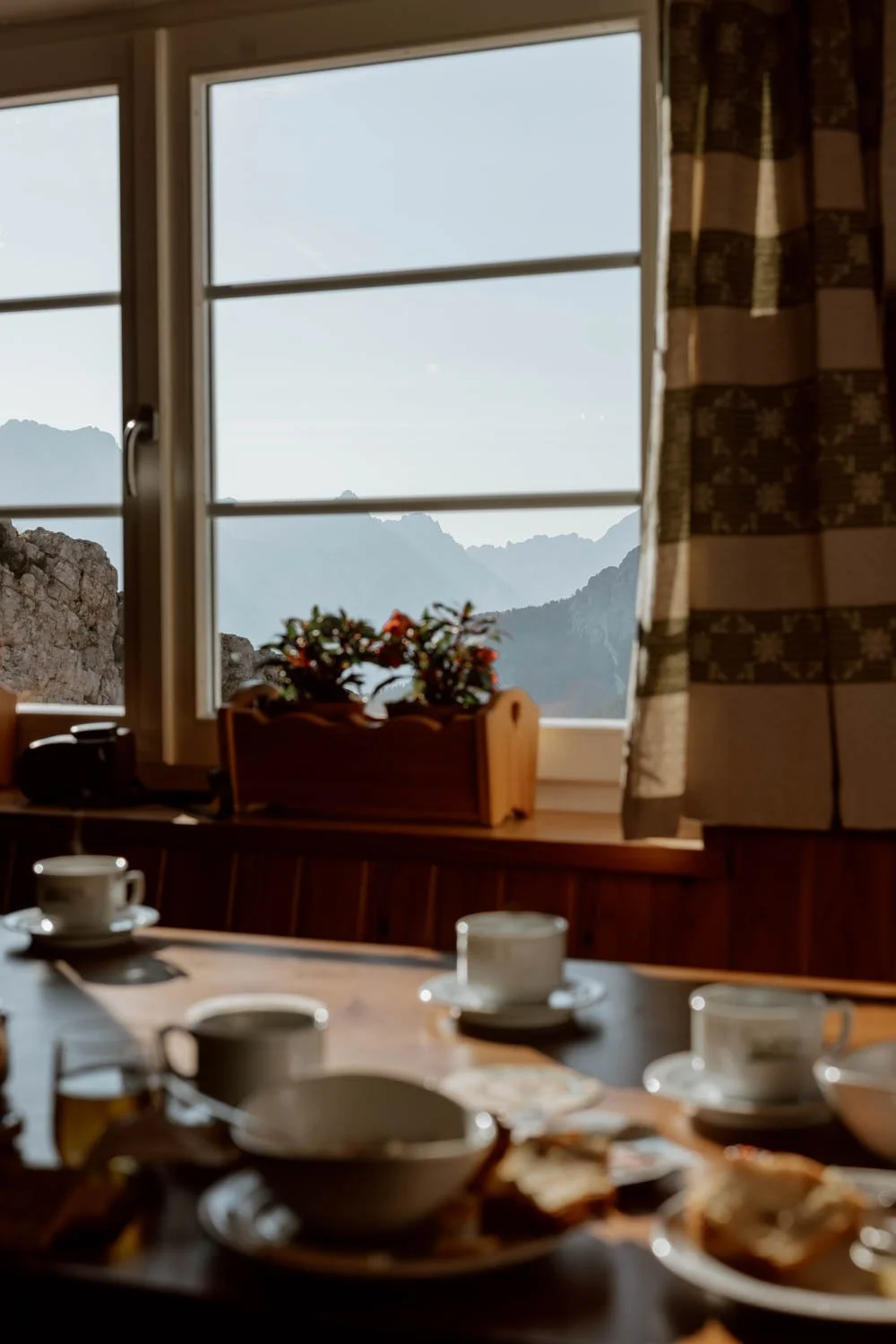
Breakfast will usually be included at your rifugio, and fuelling up properly is the best way to start the day. However, as these places really aren’t easy to resupply, etiquette is important and you shouldn’t snaffle anything away in your pockets for sustenance later in the day.
Packed lunches can be ordered the night before at some rifugios though for an extra fee.
Beyond that, unless that day’s trail intersects with a village or campsite, you really won’t find anything else along the way except rifugios (unfortunately nobody has set up a Spar at 2,400m and marmots have yet to master supply-chain management).
Large parts of your day will be really really remote.
This is why packing a supply of good nutritious snack bars is essential - we swear by Clif Bars, and got through all ours across the six days. Nuts, dried fruit, anything packable and lightweight - which does include Haribo Tangfastics - are also good little energy toppers.
Otherwise, bringing your own gas stove and dry foods is going to be your most straightforward option.
So, whilst the costs of eating at rifugios will add up, given how limited your other options are for buying items of your own lunch or topping up supplies along the way, it's worth building those meals into your core budget from the start rather than treating them as an extra. The Dolomites is not the place to try and go on a diet or conserve your energy - your body will be craving all the carbs and protein you can throw at it by Day Three.
Typical Costs // Expect to pay up to €20 for a main and a drink, espressos around €2, milky coffees up to €4 depending upon the location, €4 for a freshly-baked krapfen, and beers around €4 - 6.
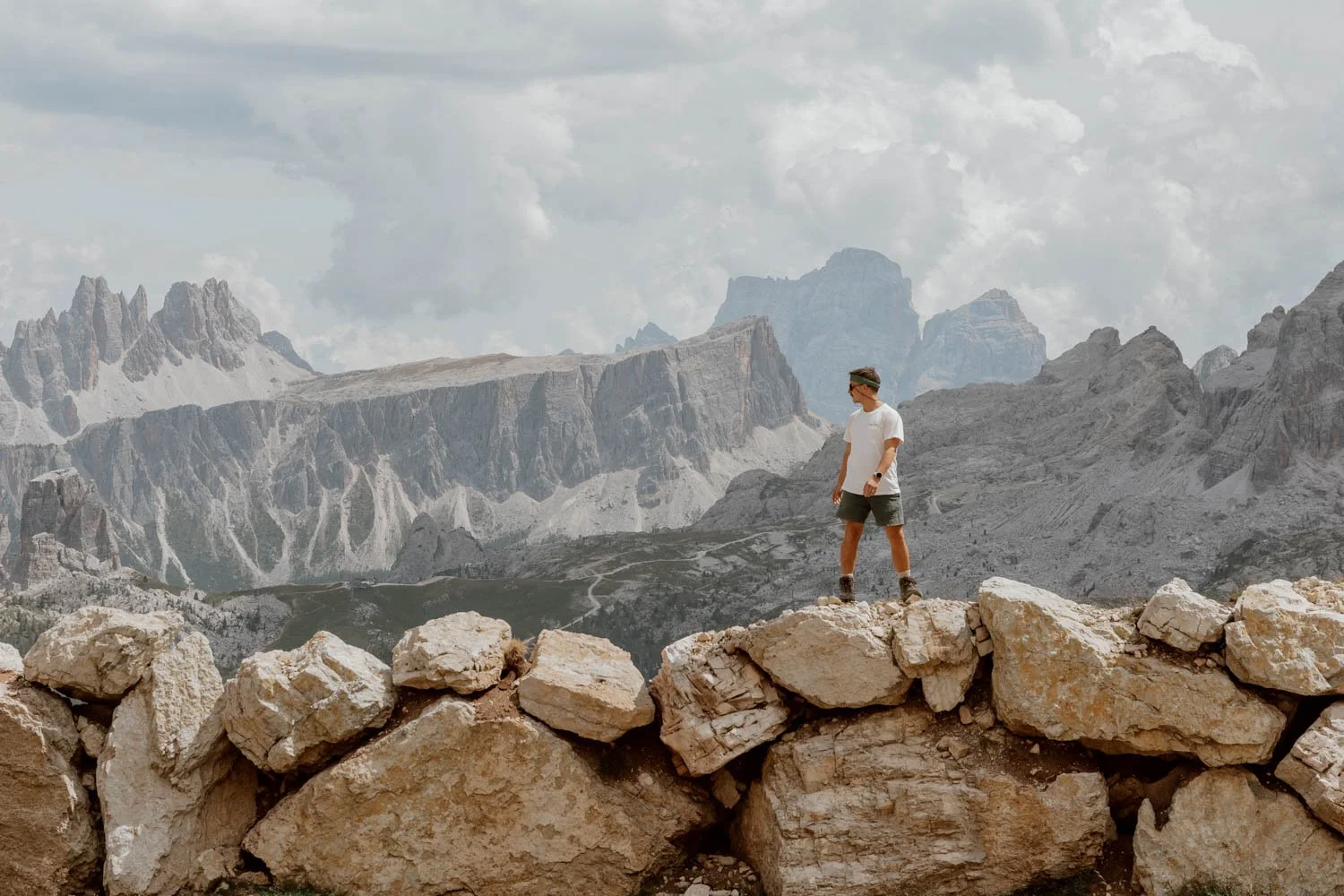
The hydration situation on a hut-to-hut is easier.
Many huts have water that’s safe to drink, and they either let you top up for free or charge a small fee (€1). There was unfortunately a drought during our hike and some specifically asked hikers not to top up from the taps and instead purchase bottled water. If a rifugio is supplied by a limited or non-drinkable source, they’ll have signs up advising.
On our hike, there were also occasional streams and sources to top up, but this varied from section to section rather than being something to rely on.
So, the rule of thumb is to always start in the morning well-hydrated and with full bottles, then top up whenever you get the opportunity.
We’ve previously relied on reusable water bottles, but Emily insisted we buy a 2.5L and 1.5L OSPREY HYDROPAK before the Lycian Trail, so we brought them to the Dolomites. Admittedly, they do their job very well, but are an absolute pain in the arse if you’ve forgotten to slide them in before repacking your bag in the morning.
Another great addition to our bag - to which we’ve become slightly addicted - are the ZeroFive hydration tablets.
Know // Breakfast and most dinners are included on the Dolomiti Trail, but lunch is a separate cost and down to you. Travelbase does offer a food pack as an add-on (€65 per person), which includes a small gas stove and freeze-dried food packs by RealTurmat. We opted for this, mainly because food always tastes better outside and we loved the idea of making our lunches in the most scenic spots.
Despite the packs being the most delicious version of outdoors food we've ever had (a definite upgrade on Pot Noodles), the reality was that we only managed a couple of proper lunch stops like this over the six days. On two evenings, we ended up eating them for dinner instead - once because we arrived 15 minutes before the rifugio's dinner cut-off and wanted beers first rather than rushing straight to a sit-down meal, and the other time because we really liked them.
8. Don’t. Pack. Too. Heavy.
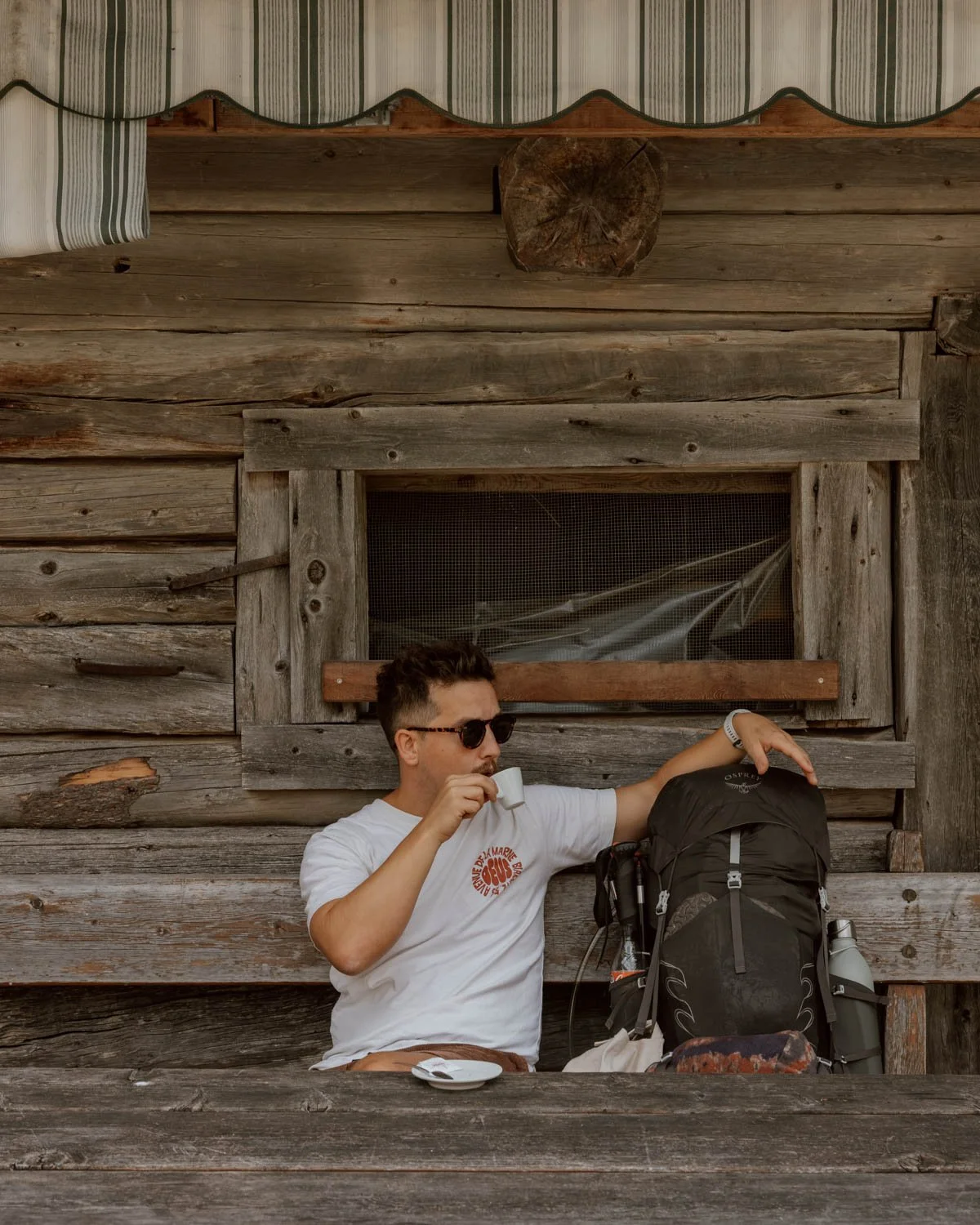
For reasons photographic and paranoiac, we always carry far too much when we hike.
Travelbase provided a comprehensive packing list, and were quite clear that everyone should aim to pack and carry no more than 12 kilograms.
That's including water and food.
What it most certainly didn't factor in was Emily insisting we bring a laptop, extra camera body, the big lens, and a drone that we never even used.
In her defence, we were staying around in the Dolomites for a week after the hikes, but you can probably now understand why Andrew had more weight on his back than the porters on the Inca Trail.
As well as the extra 5-6 kilos the tech adds, it also takes up a lot of space in Andrew's backpack, meaning Emily's burden also increased with the shared toiletries, snacks, and those food packs we'd ordered.
We ended up closer to about 16 / 18kg each for the first few days.
Although we can get away with this approach on day hikes, it really catches up on a multi-day trek - and this was certainly the case on the Dolomiti Trail. Shoulders get achy, energy is sapped faster than it should be, and by the end of some days, those final few kilometres felt longer than they have any right to.
There were several discussions - or arguments as some may call them - about how we'd both ended up carrying so much more than we should for four of the six days.
So, learn from our mistake for your own hut-to-hut: be ruthless about what you take, weigh your bags before you leave, and repack if necessary. Leave plenty of space in your backpack, too. Everything seems to expand once you’re actually on the trail, and packing up in the morning takes longer when you’re forcing everything into an already-full bag.
And if you have somewhere safe to leave anything you’re not sure you’ll need, take advantage of it. Those extra few kilograms might not seem like much when you’re standing in the car park on day one, but they feel rather different several days and thousands of metres of elevation later. As far as we’re aware, there isn’t a universal luggage-transfer service covering hut-to-hut routes across the Dolomites, so don’t assume you’ll be able to send your excess luggage ahead. Check what’s possible for your particular route before you leave.
Know // Whether you think they’re just for old people and Austrians, we’re here to tell you that hiking poles are an absolute game-changer for a Dolomites hut-to-hut and some of the ascents and descents would have felt nearly impossible without them. Trust us - pack your poles.
9. Respect The Mountain Weather & Pack Lip Balm
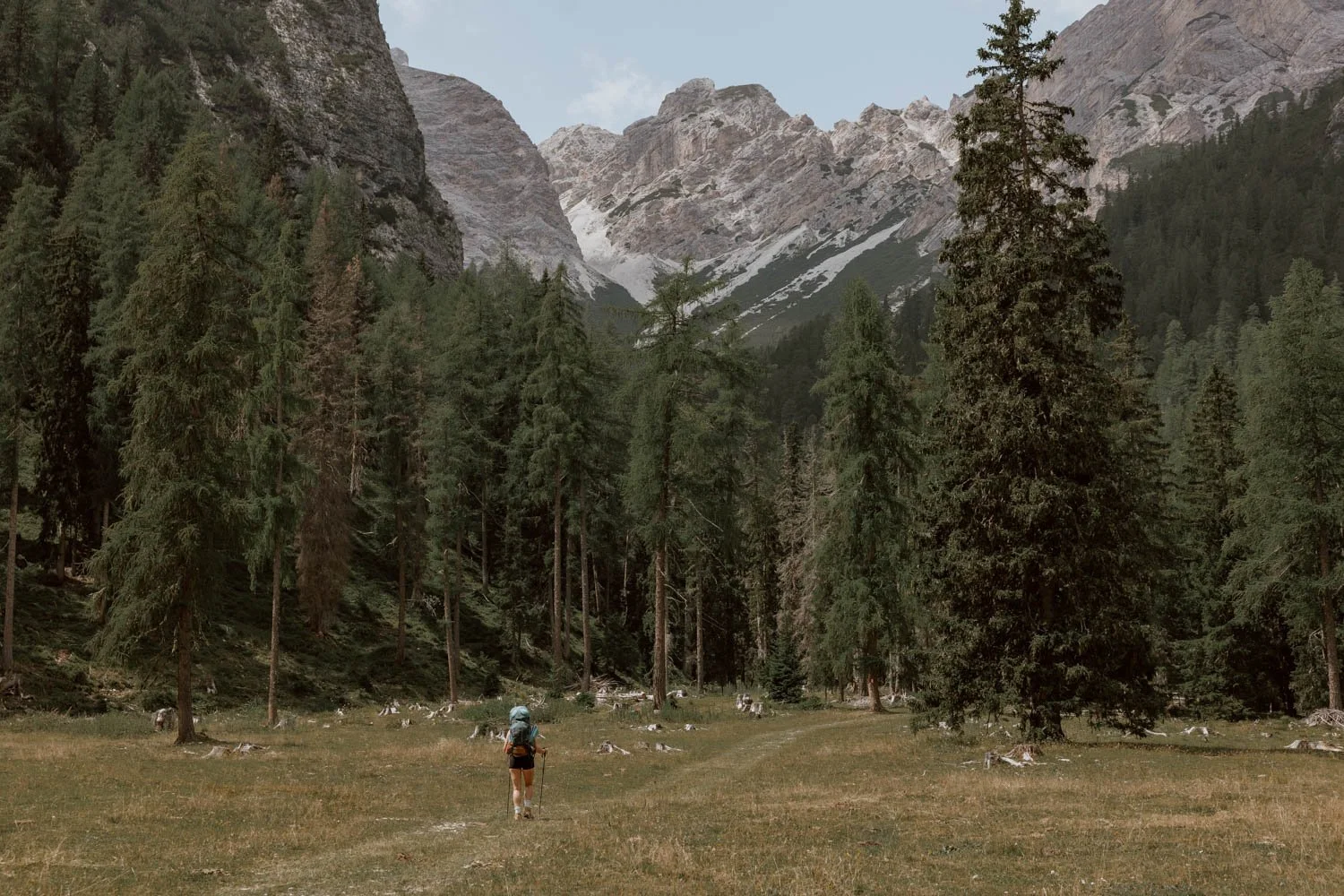
We were blessed with sunshine and clear skies in July, with only an hour where we were caught in passing rain, but we still needed every item of cold weather clothing.
Despite being summer in Italy, the climate and temperatures up in the Dolomites are a whole different world to Sicily, Puglia, and Calabria.
Mornings and evenings are very chilly, and packing some warmer layers is important. You may have been sweaty and sweltering for hours on the trail but, as soon as the sun goes down, you’ll be digging out your fleece, hat, and trousers pronto.
When on the trails at this altitude, the sun is also much harsher than you think, and high SPF suncream and lipbalm need to be applied.
Rain and thunderstorms also to be expected at some point at this time of year. Whilst this presents its own frustrations in terms of views and hiking conditions - and the distances to cover mean you may not have any option but to march through the deluge - the greater threat is everything being soggy could put a real dampener on your mood for the rest of the hike. A proper waterproof jacket is non-negotiable, whilst you have to have the appropriate rain-cover for your backpack.
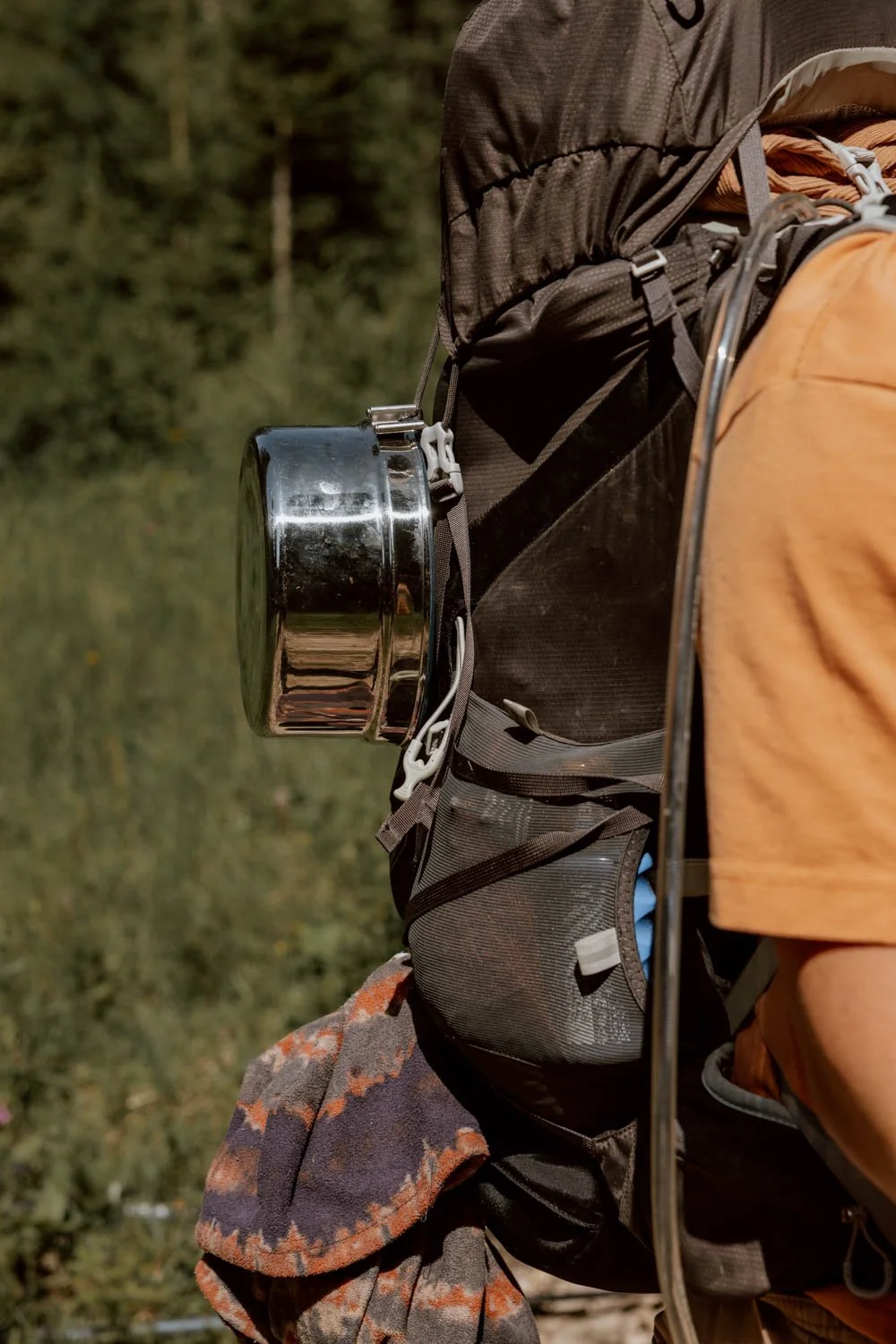
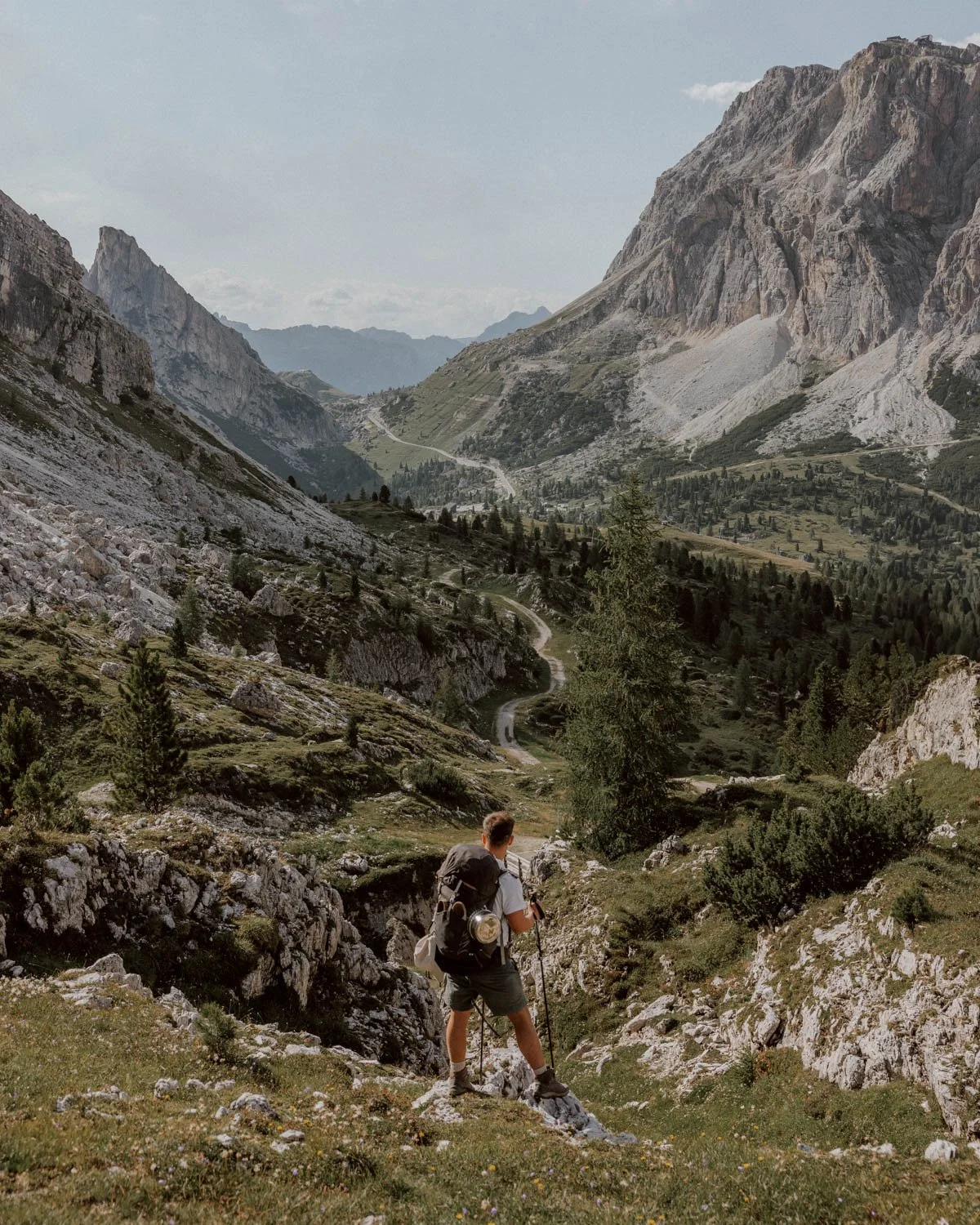
Based on our experience, shoulder pain, and the typical conditions you’ll find in late June to September, these are the absolute essentials that everyone should pack for a summer hut-to-hut hike in the Dolomites lasting a minimum of two to three nights:
A proper hiking backpack that you’ve used before, with good support straps around the waist. We had a 45L and an40L.
A black bin bag for dirty clothes
Good, worn-in hiking boots that go above your ankle (not hiking trainers)
A pair of good hiking socks for each day
Flip-flops or sandals for the evening and morning
T-shirts, shorts, and a pair of trousers*
A lightweight waterproof jacket (not just water-resistant).
A fleece for the mornings and evenings
A cosy hat for the mornings and evenings
A lightweight down jacket. We thought that these were not going to be necessary, but very happily threw them on at least once or twice.
Thermal base layers (optional)
A Hydrapak or CamelBak
If not, refillable bottles for at least 1.5L of water
A hat
A buff
Sunglasses
Minimal toiletries: toothbrush, toothpaste, small shampoo, small face and body wash.
Suncream (body + face, SPF 50)
Lip balm with SPF (a biggy)
Plasters and blister treatment — Compeed
Compostable/plastic-free wipes
Travel towel
Mobile phone charger
Battery pack. Charging points can be limited at some rifugios and, if you're relying on a navigation app, your battery will drain quick.
Head torch
A sleeping bag liner, which is a requirement for some rifugios
*Travelbase specifically recommends non-cotton T-shirts and shorts so they dry more quickly, but we both prefer to hike in natural materials - weight and lingering dampness be damned!
Travel Tip// You also need to start your hike with plenty of cash (for younger readers, that’s a physical form of money). Whilst many rifugios now accept cards, cash was still surprisingly the only accepted method of payment at a few we visited. Further, whilst the Dolomiti Bus company has an app for tickets and sometimes accepts cards on board, we could only pay with cash whenever we used it.
We suggest carrying at least €100 per person, more if you like a couple of beers in the evenings. Don’t expect to find an ATM once you start walking.
A Quick Note on Travelbase
As long-time readers will know, we turn down most partnerships because we prefer to travel independently.
We only say yes when something genuinely fits how we like to travel and, just as importantly, fits what we think you'd actually want to do too.
Travelbase was a clear yes on both counts.
For us, a big appeal of their bespoke Dolomiti Trail adventure is the fact that it's self-guided and we could hike independently. They do all the admin and bookings, but you're the one out there on the adventure. They also provide an app with planning support, trail maps, and contact with their support team in the Dolomites before, during, and after the trip. Their rangers also provide an in-person briefing before you set off on your first day.
To be clear though, there are other Travelbase hikers following the same itinerary and staying at the same accommodation, with the group often sharing the dinner and breakfast table. It's not mandatory to hike as a group or with others, but it means solo or social travellers can dip in and out of company as they like.
Basically, independent travel with a safety net!
We both loved our experience on the Dolomiti Trail, and genuinely recommend it if you're looking for a hassle-free way to go hiking in the heart of the Dolomites - or an excellent last-minute option if you've left it too late to book everything yourself.



An Italian city unlike any other, Naples take many people by surprise. Get ahead of the crowd with our essential things to know before you visit Naples, Italy.