



13 Wonderful Things To Do in Milos, Greece
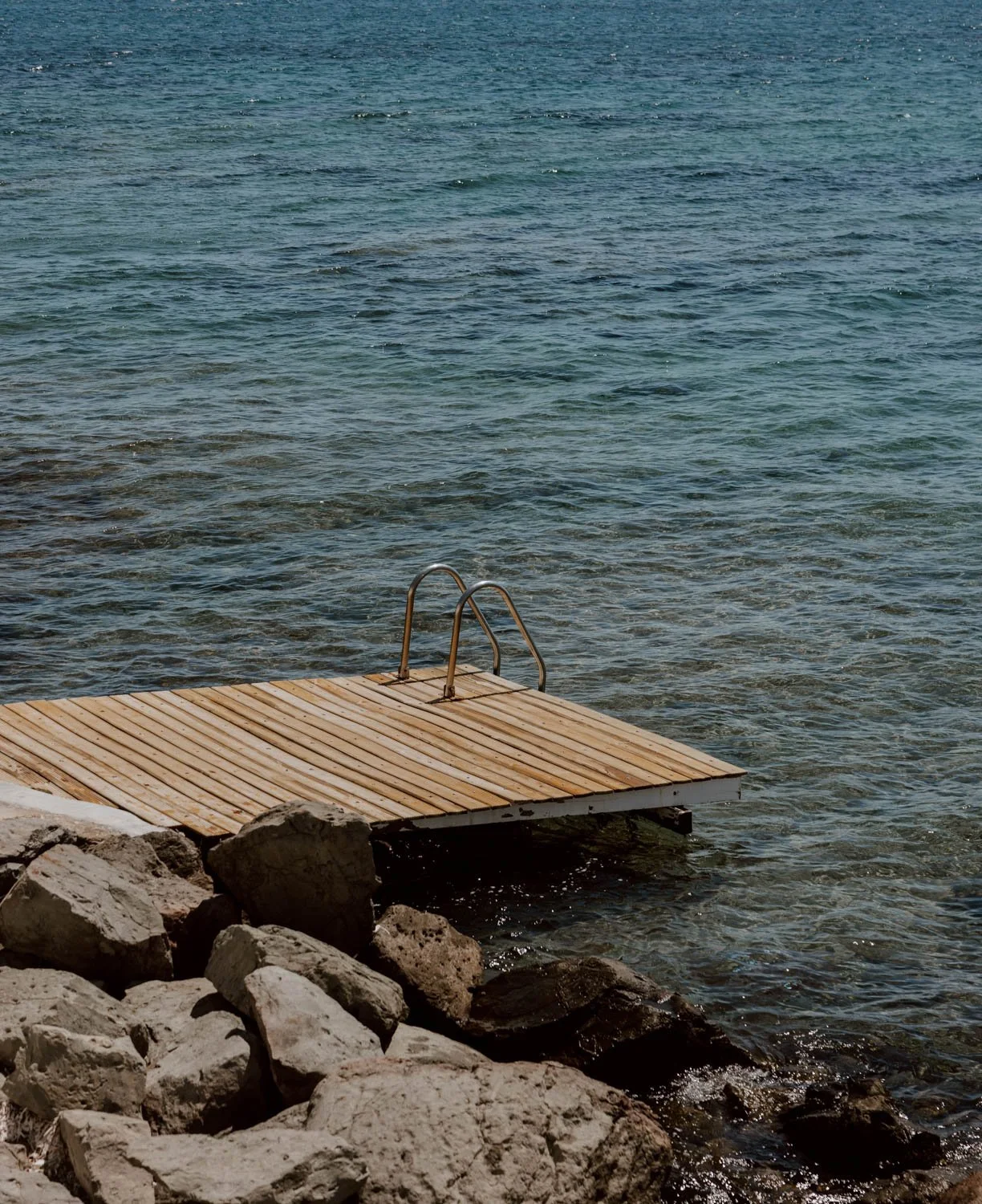
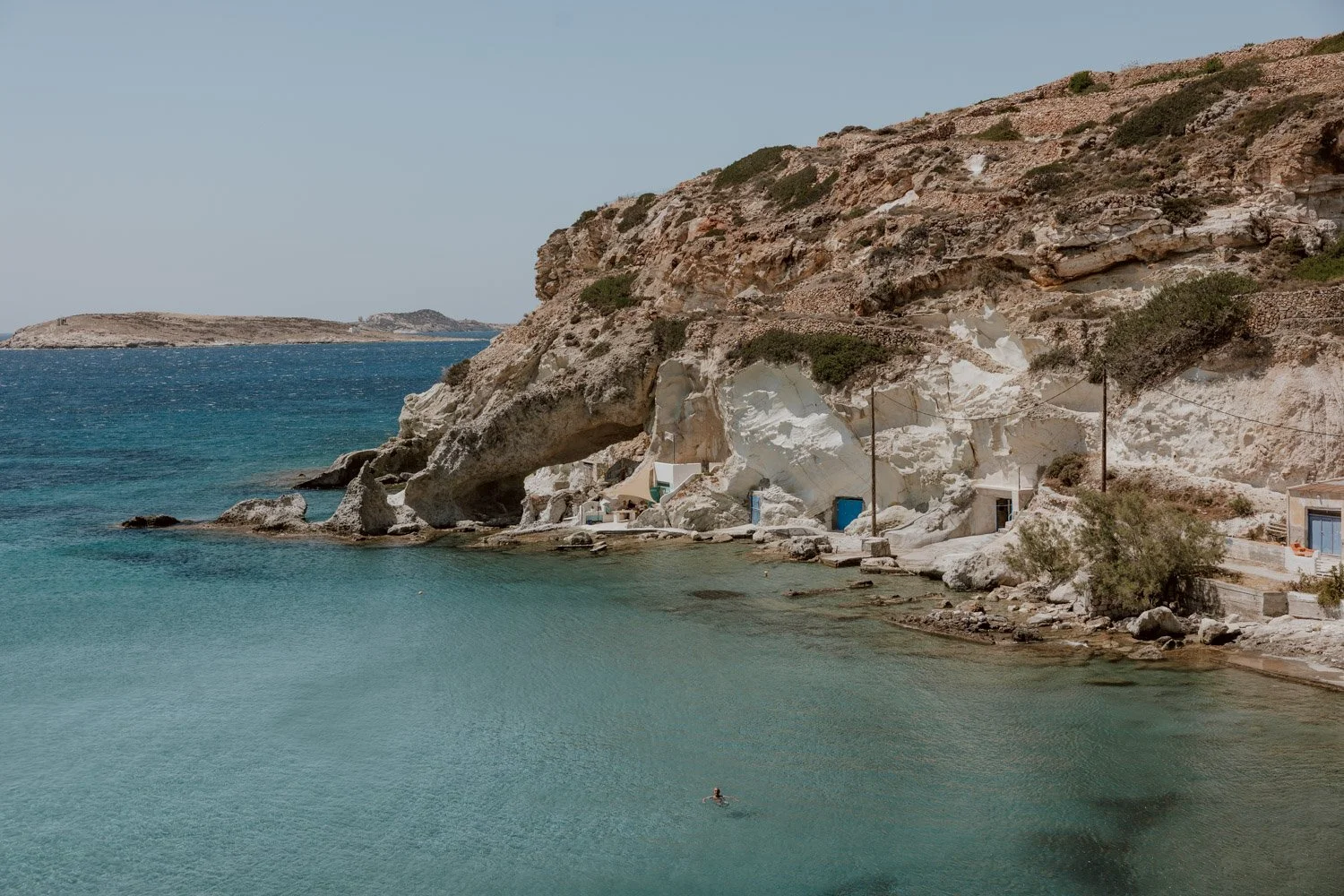
At the corner of a wild beach in the north of Milos, there lies a converted red-and-white boathouse.
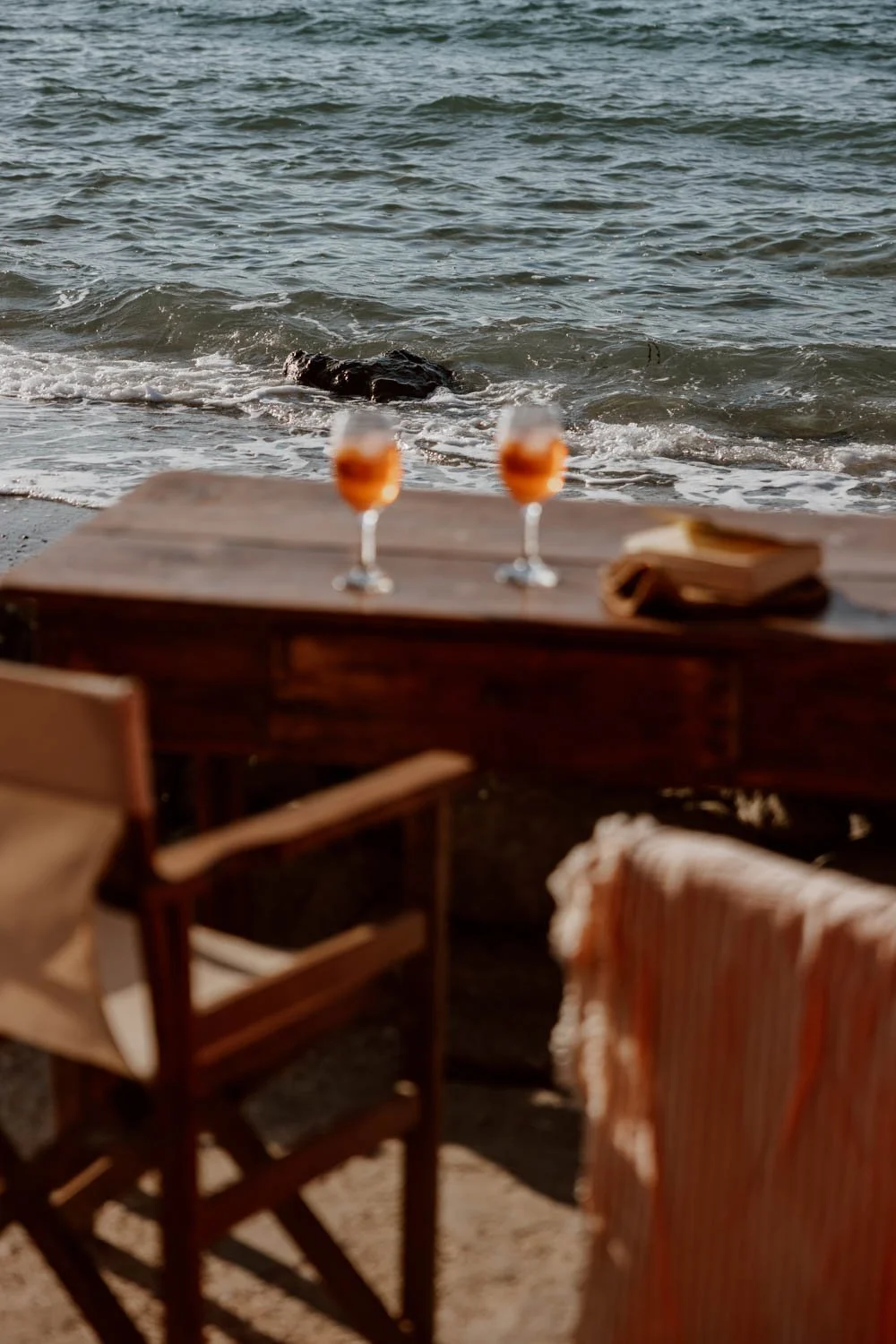
Outside, you’ll find a rickety wooden table that gets sprayed by the sea, a misshapen kayak, and two plastic sunloungers that have seen better days. Inside, there’s a bed, a small fridge, a faded watercolour of a sailboat, and three ways of making coffee.
To reach it, you have two options: carry your suitcases along the sand, or take your chances on the back of a quad-bike with a retired Athenian dentist who speaks the Queen’s English.
For us, that little boathouse in a hard-to-reach corner of this beautiful island became one of our happiest places on earth.
-
In the southwestern Cyclades - a ferry ride from Sifnos and Santorini - the island of Milos offers the a dreamy version of those Greek summer vibes: dips in sparkling cerulean water, staying in whitewashed houses on sunburnt hillsides, watching fishing boats bobbing in quiet coves, freddo espresso sips in the shade, days fuelled by fresh seafood and sloppy souvlaki, and starlit nights ending with a final drop of honey raki for the road.
It’s difficult to do it wrong.
What truly sets Milos apart, though, is what happens at its edges - where weathered rock meets the Aegean.
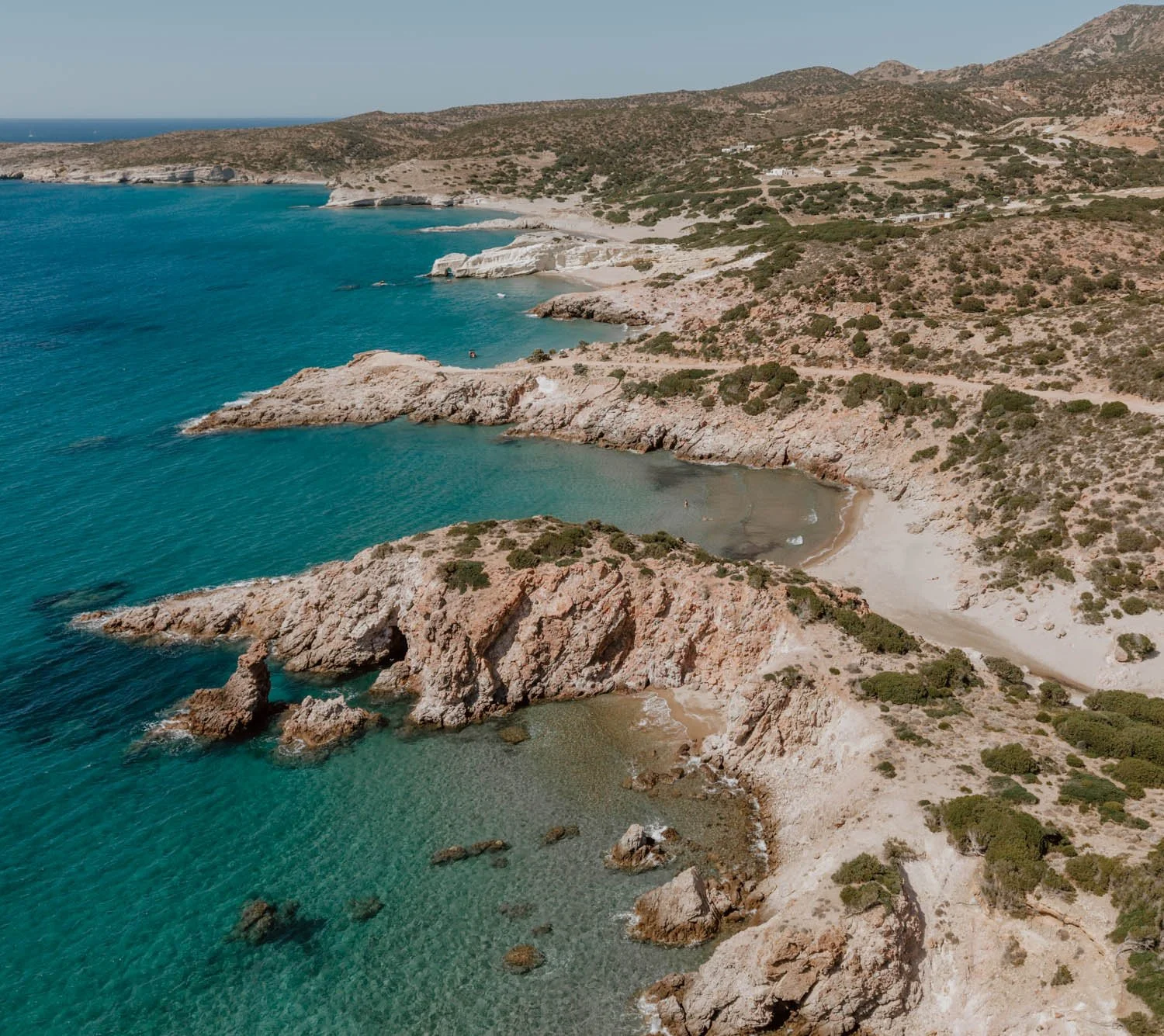
Formed by a restless volcanic past, the island’s coastline has been carved, collapsed, bleached, and stained into an extraordinary range of shapes and colours. In one corner you’ll find lunar-white rock shelves; in another, rust-red cliffs and honey-coloured sand; elsewhere, sea caves, arches, cut-quarries, and narrow coves framed by impossibly picturesque fishing villages.
On Milos, “going to the beach” rarely means the same thing twice.
Unabashedly a holiday island - where accents are just as likely to be Australian as European - the best way to find your own happy place there is to embrace its coastal variety: beaches with sunloungers and restaurants, rustic stretches with a single taverna or beach bar cabin, and wild spots with nothing at all. Unlike some other Cycladic islands, most are relatively easy to reach, making it simple to mix and match depending on your mood.
In this guide, we’ve shared all of the very best things to do in Milos. From the unmissable lunar landscapes to the lesser-known wild west, the best beaches to the colourful fishing villages, and personal recommendations on unmissable sunsets, foodie fixes, and gorgeous retreats. There’s also practical insights and travel better tips to elevate your experience and avoid a few common mistakes.
Whether you’re there for three days or have a slow week to savour, this is 13 Wonderful Things To Do in Milos, Greece.
The Milos Essentials
Sunrise, sunset & sunbathe / At Sarakiniko
Eat & drink / In The hilltop town of Plaka
Take / A boat trip to Kleftiko - this one is highly-rated
Visit / A trio of photogenic fishing villages
Enjoy / A lazy south coast beach day
Rent / An ATV to explore the island
Trace / The north-east coastline
Wine & dine / By the sea in Pollonia - book this vineyard tasting
Step / Into ancient Greece
Go / Rogue in the wild west of Milos
Stay / Somewhere really special like the converted boathouse we loved, White Pebbles Suites for luxury, Milos Cove for a secret hideaway, a syrma in Klima or this gorgeous traditional set of suites in Plaka
The Contours of Sarakiniko
The most famous place in Milos, and one of Greece’s standout landscapes, Sarakiniko is an icon.
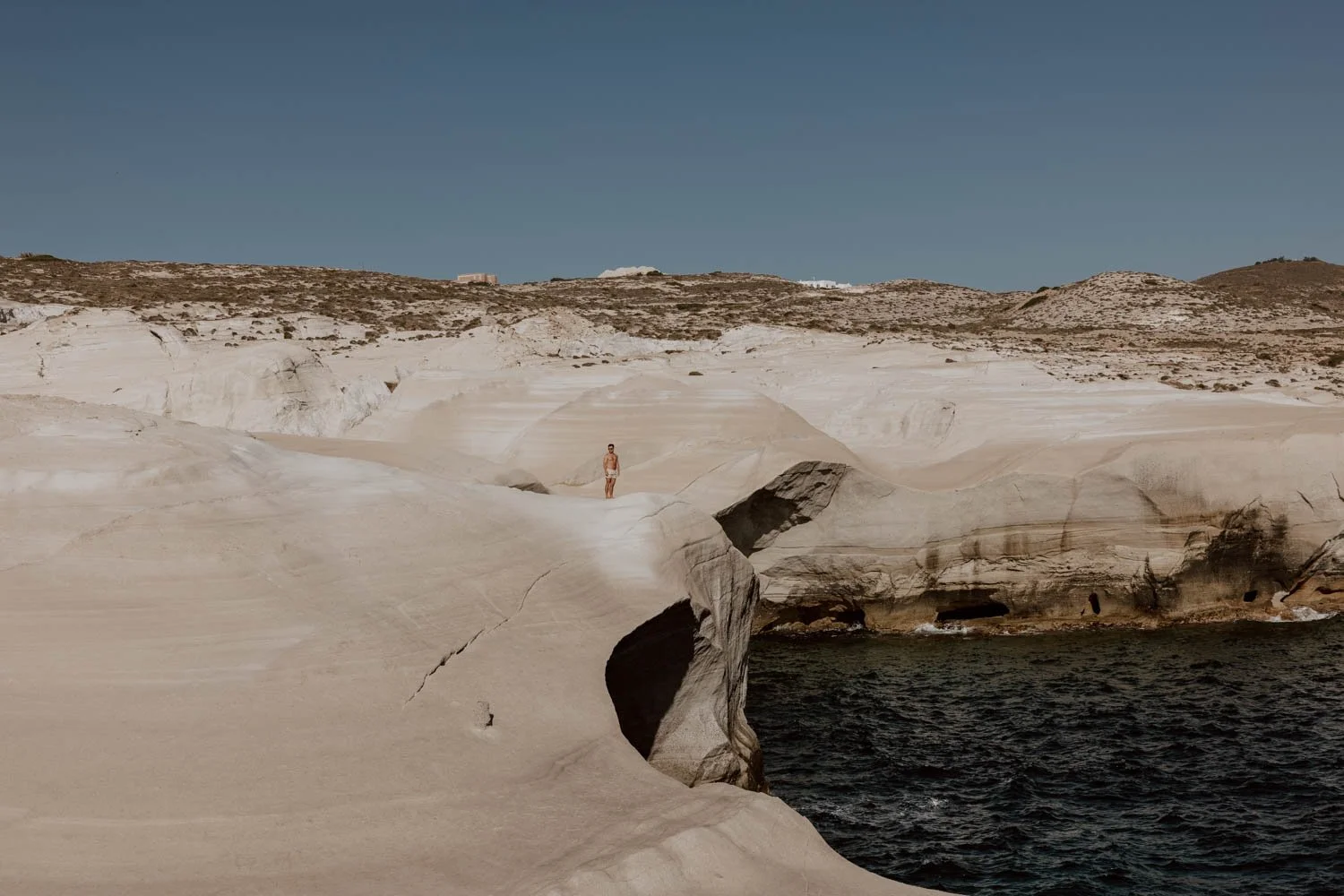
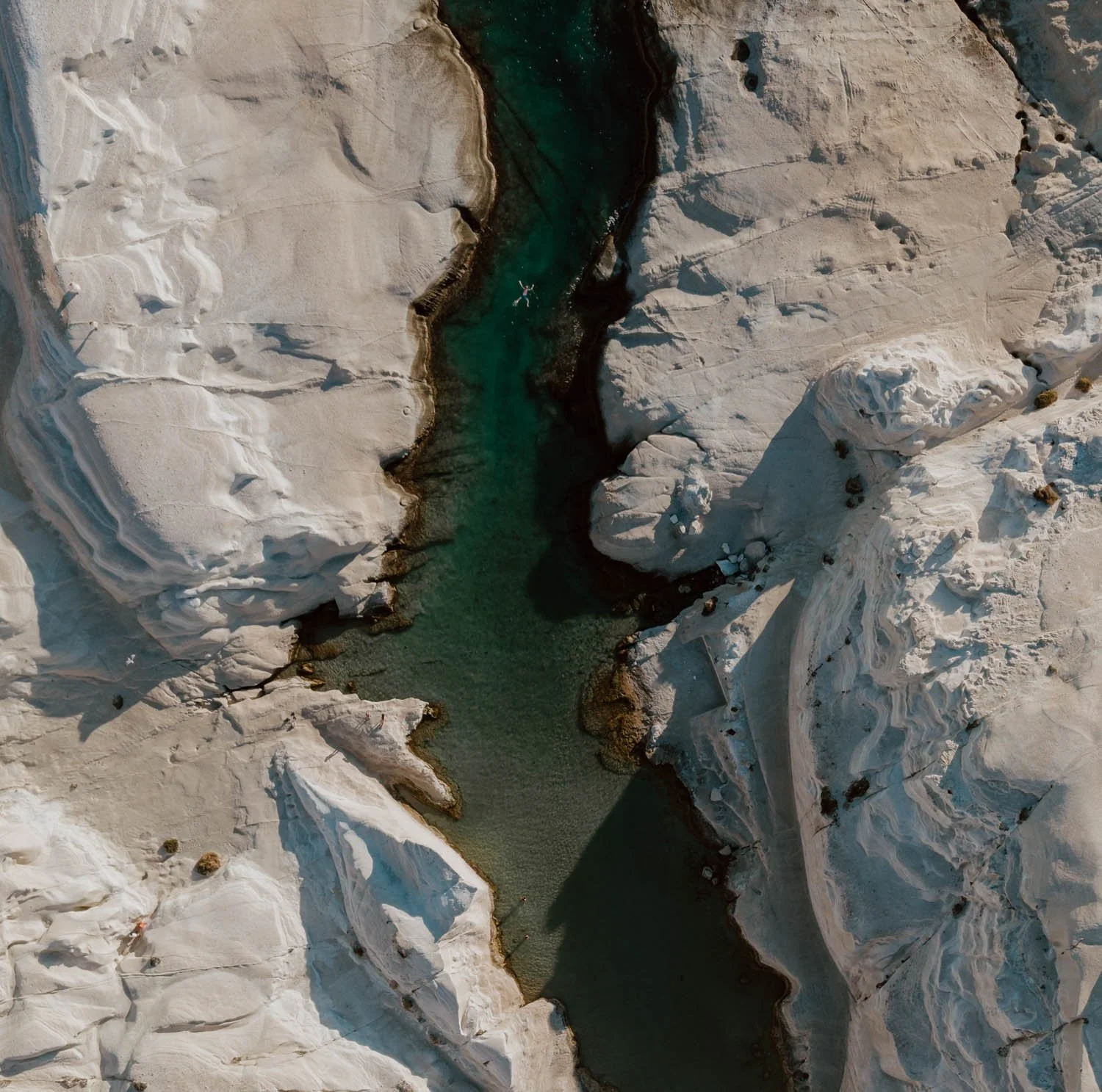
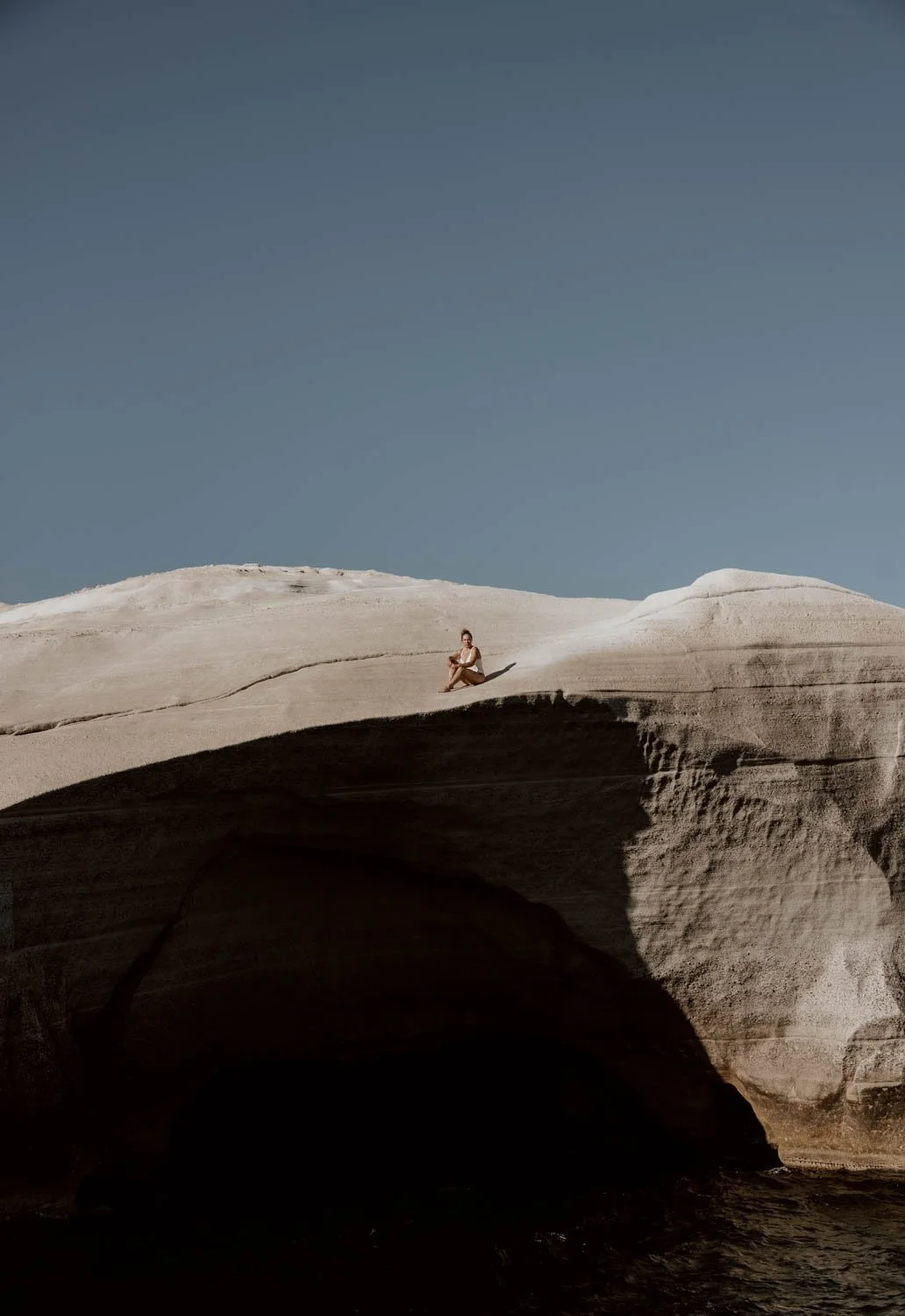
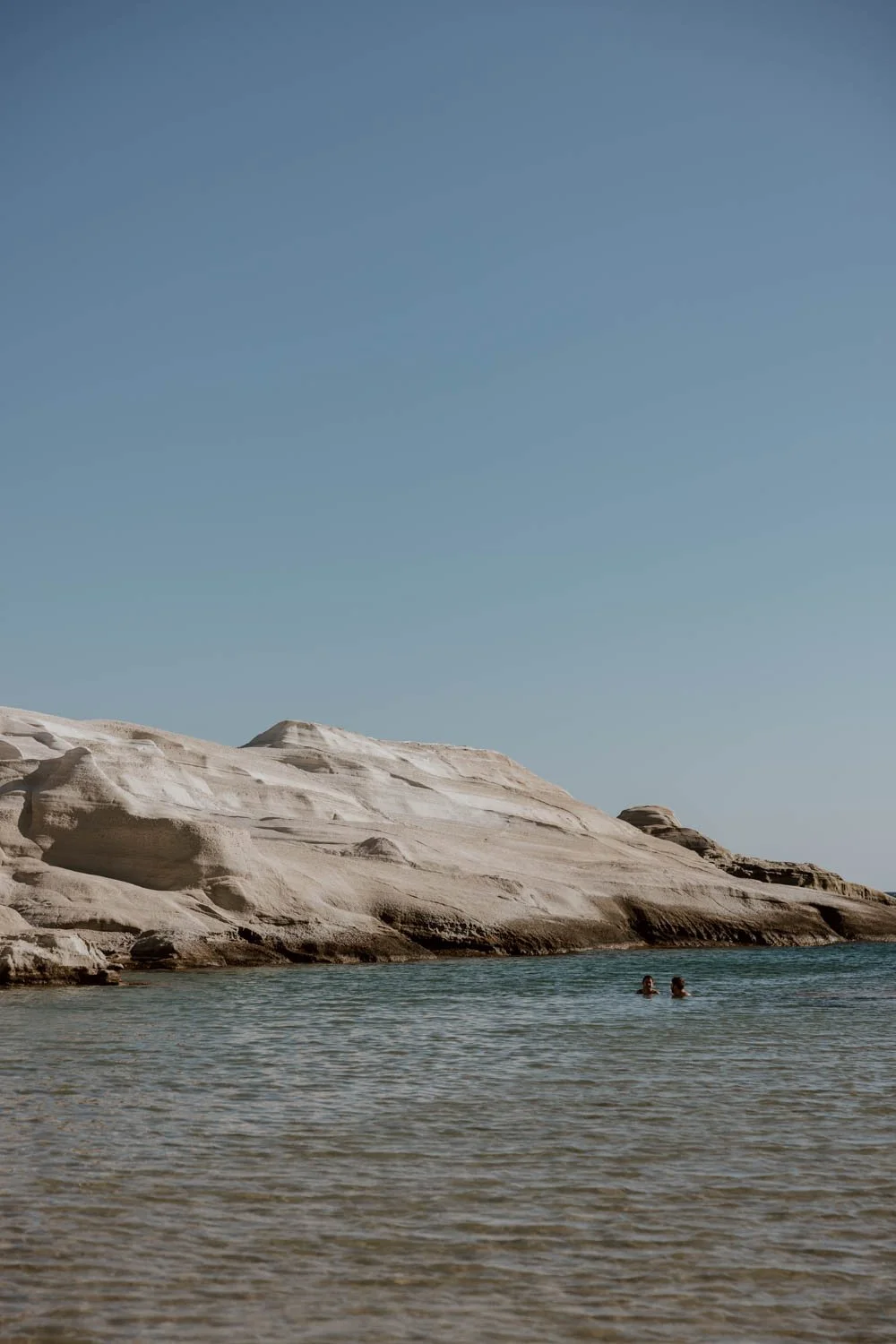
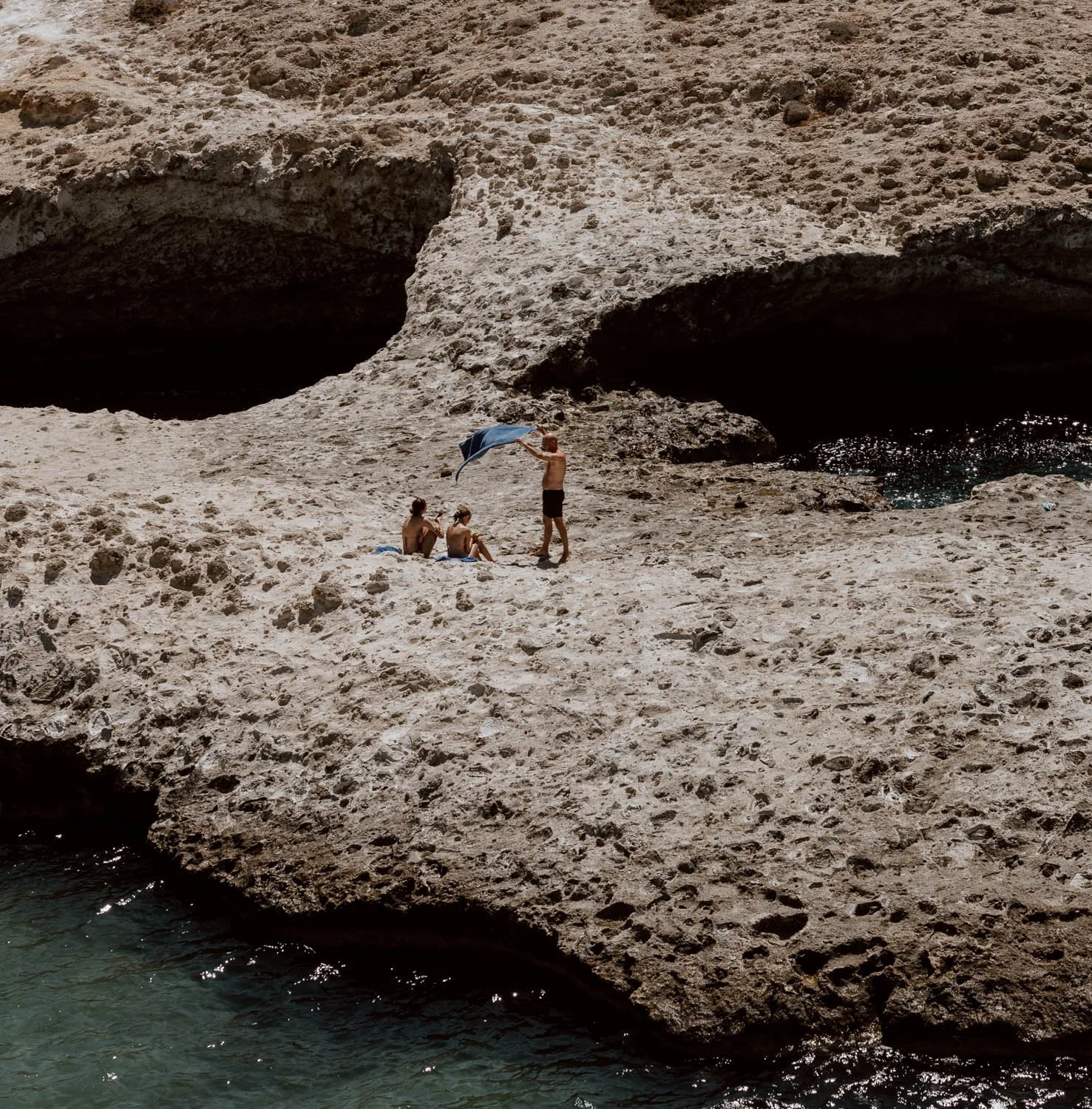
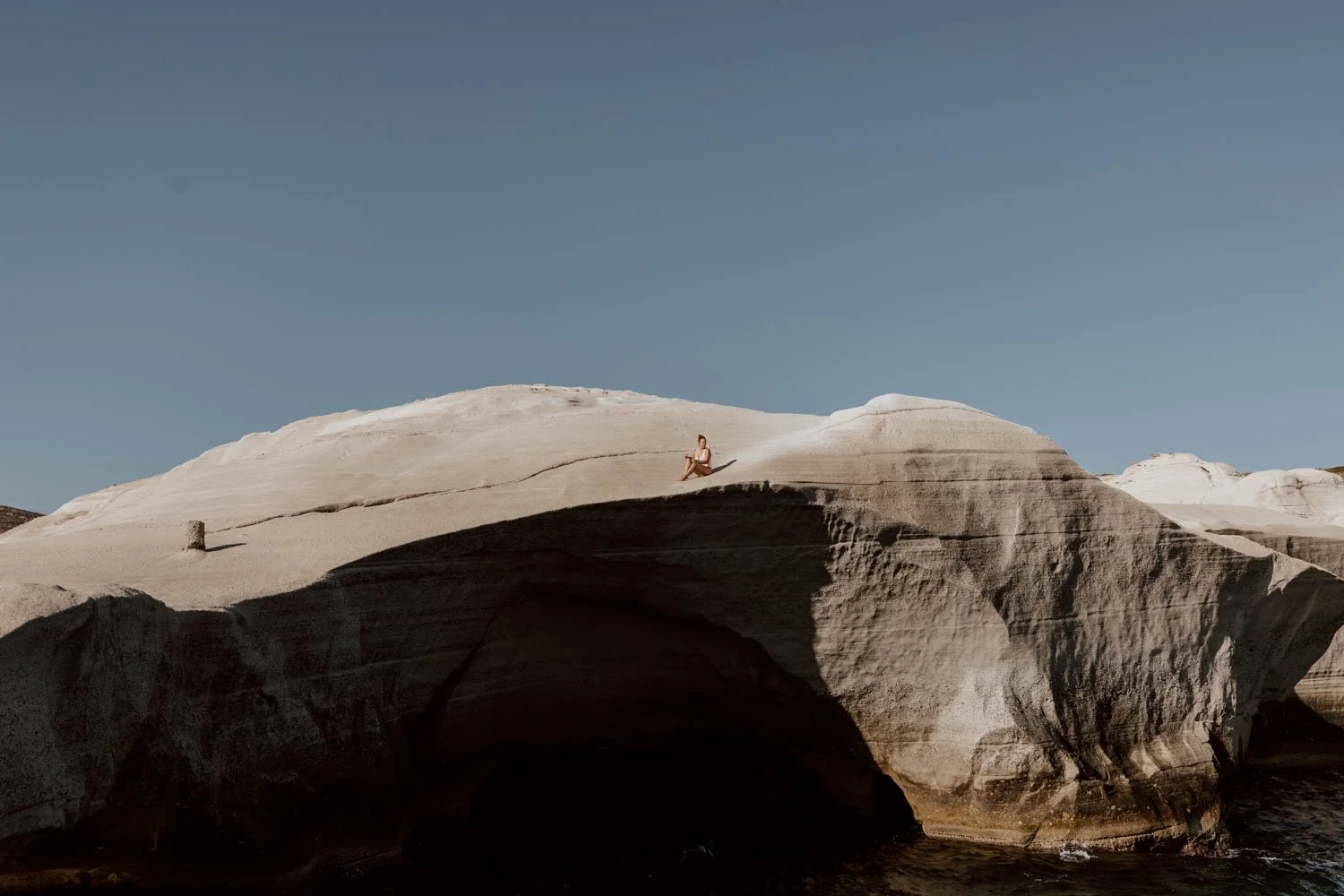
A vast expanse of chalk-white volcanic rock stretching into the Aegean, it’s been bleached and shaped by centuries of sea and sun. Smooth underfoot, it offers natural decks for sunbathing, pools for swimming, platforms for cliff jumping, all framed by pristine arches and bridges.
Often likened to the moon, our eyes instead saw a colossal Greek marble that the sea has been quietly sculpting.
Now, everyone visiting Milos wants to spend some time at Sarakiniko, and we assumed the magic would vanish under the peak summer heave. Thankfully, in reality, while the crowds were obvious, the other-worldly landscape remains generous enough to find quiet corners, lay a towel, and enjoy one of the island’s most striking settings without feeling overwhelmed.
If you have time and the inclination, it’s not a bad idea to visit twice: the interplay of the shifting light and the white stone creates a noticeably different scene as the day rises and fades.
Sunrise with few other people around is special, whilst sunset sees many more people lingering on the rocks and arriving for photos. What’s important to know though is that, despite being busier than most places on the island, Sarakiniko isn’t just an Instagram backdrop - it’s remains a part of Milos where you can come to swim, sunbathe, and spend a few unhurried hours.
Arguably, it’s most striking when the sun is high and the colours sharpen, with that gorgeous, very Greek contrast between the creamy white rock and the blues of sky and sea.
Go | On the north coast, it’s very easy to reach. There’s a dedicated bus from Adamas to Sarakiniko, with the first departure around 10am and services every hour thereafter. Journey time is about 15-minutes, tickets €2 pp, and the bus stop is here (maps) - find the current timetable on the official website.
As this is one of the busiest buses on the island, it’s a good idea turn up earlier at the stop to guarantee a spot on the way out and back.
You’ll find the free parking area just before the bus stop, whilst lots of people also park up at the road side. One or two areas are reserved for buses though, so don’t assume someone’s left a generous space just for you!
Do | There are a couple of popular cliff-jumping spots here, and in summer you’ll almost always see people taking the plunge. The issue isn’t getting in though, it’s getting out. The only exit appeared to involve swimming back through a narrow rock opening into a small circular pool. When there’s any swell, waves surge through the gap and rebound off the rock walls, creating a powerful whirl that can slam swimmers against the stone and drag them off balance.
In the space of ten minutes, we saw three people pulled hard into the rocks and needing assistance. Those who understood the rhythm of the swell and waited for a lull managed it; others clearly underestimated it. It’s possible in calm conditions - but in rougher seas, it becomes genuinely dangerous.
Know | It’s just you and nature down there, so you need to bring in any towels and beach stuff. Note that there’s very few shaded areas in Sarakiniko, and it isn’t possible to erect a parasol or beach tent, so a hat and extra water is essential. It’s a good idea to wear shoes as the rocks are hotter and rougher than you may expect in parts.
There’s no sand or traditional beach, with the white rock both the shoreline and star of the show. Embrace it.
There’s a food truck by the bus stop for drinks and snacks. As with each and every beach in Milos, make sure you bring out whatever you bring in.
Where to Stay | There a few different types of accommodation near Sarakiniko, including this isolated and unique boathouse (which won’t suit everyone but may be perfect for some), and some fairly standard but highly-rated lodgings like Limeri Apartments and Sarakiniko Rooms.
There are some absolute standouts though.
Not on Sarakiniko but relatively close, Theia Villa is an outrageously stunning private retreat for elevated island living. Built in 2021, this contemporary three-bedroom villa blends minimalist design with comfort and privacy, offering impeccable interiors alongside a pool area of our dreams.
If you’d prefer a boutique hotel set-up, take a look at the luxurious, adults-only Cave Suites Milos instead.
Plan // The Best Beaches in Milos
Eat, Drink & Play in Plaka
Much of your time and attention in Milos will, understandably, be focussed on being down by the sea.
Yet, on slower mornings or when the sun begins to cool on your skin, the place to be is up in Plaka.
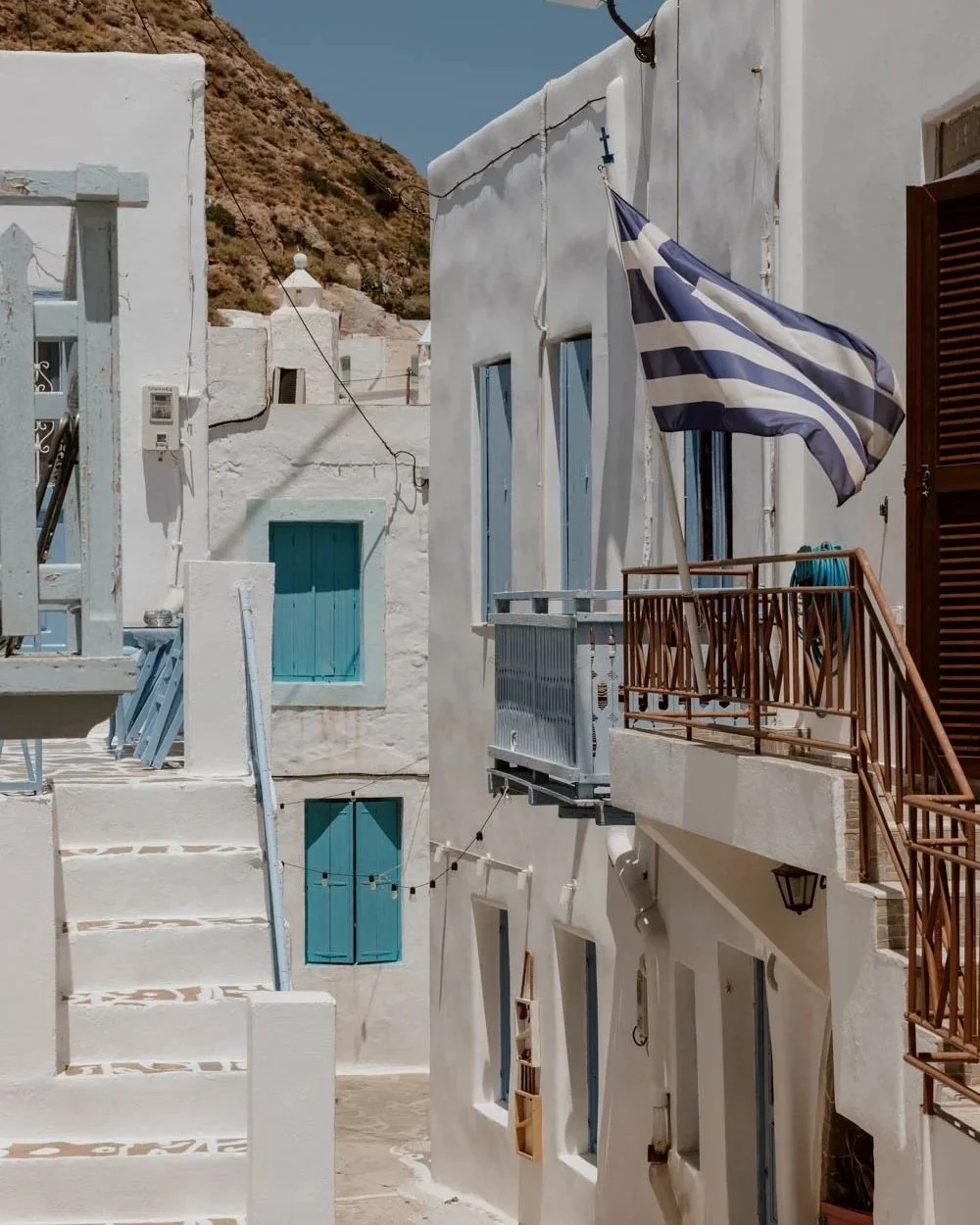
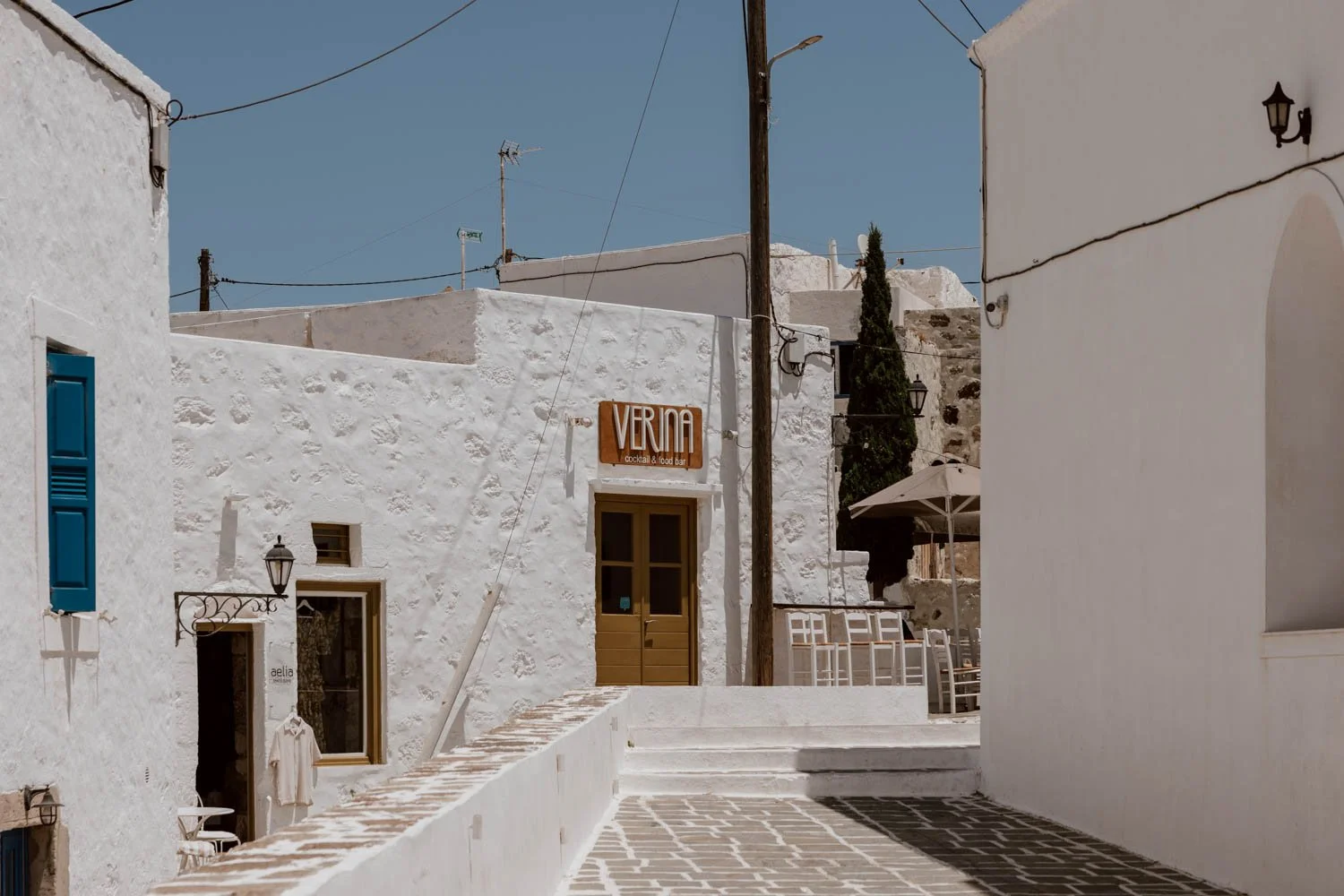
Set on a hilltop, this is the island’s capital and principal historical town. Compact and largely pedestrianised, its whitewashed buildings and narrows streets offer up a change of pace and scene. For us, in the evenings, you should prioritise it over the more modern and functional port town of Adamas.
One can contentedly stroll around without too much of a plan - going cafe to church and castle to cocktail - then stumble upon (or seek out) its privileged viewpoints down, across, and beyond Milos.
Plaka also has some of the best foodie picks, drinking holes, and evening ‘vibes’ in Milos - but this can depend on how busy it gets - and is going to be an excellent choice of base for some travel styles.
Go | Don’t try to drive up to the town instead, head to this large, free car park and walk up the hill.
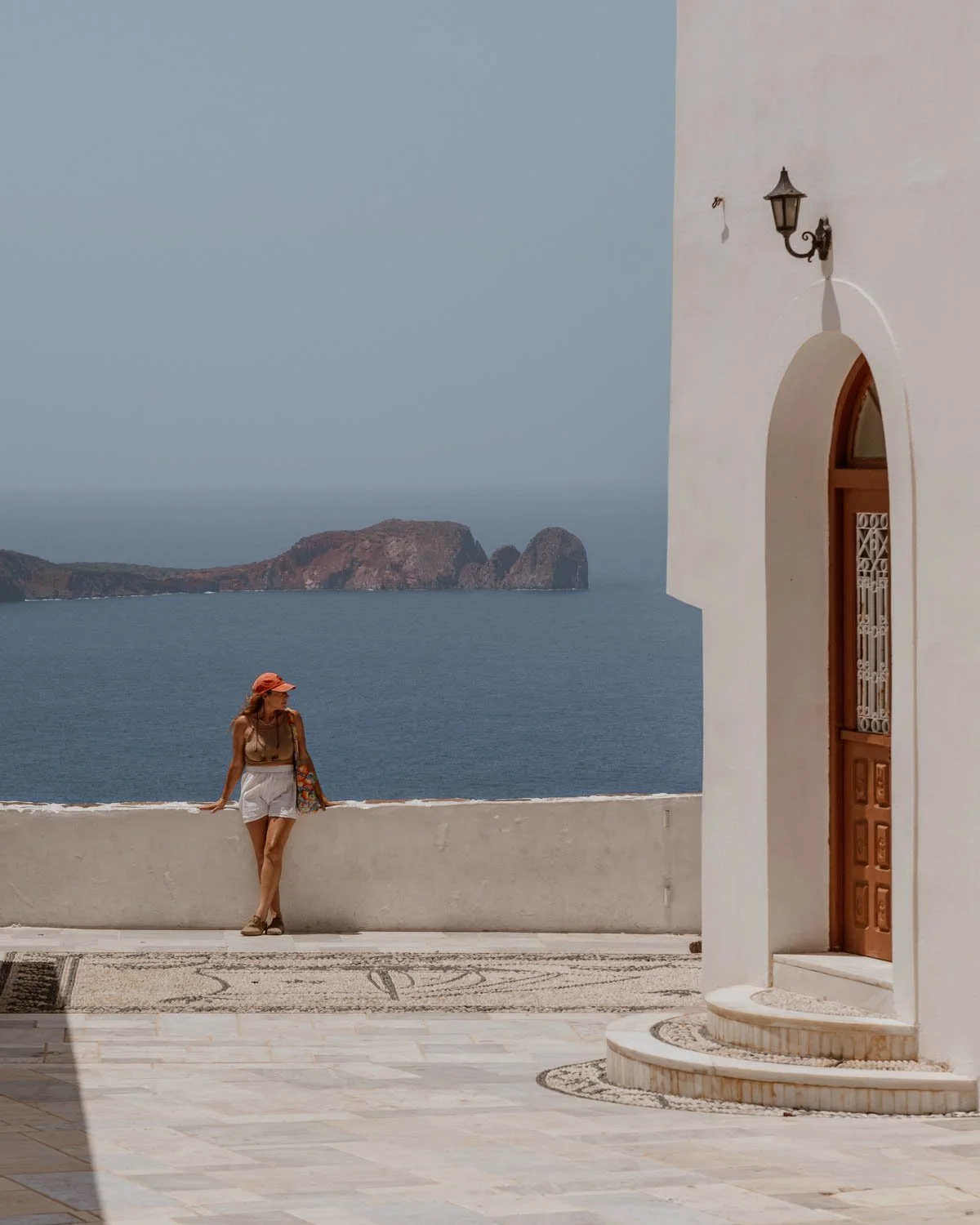
Do | Watching a wonderful sunset from the terrace of the Church of Panagia Korfiatissa (maps) is top of everyone’s list, but it’s important to know that it can get very, very busy. Overly so by the end. If you want to get a spot on the wall, turn up in good time. Lots of people buy a takeaway drink from the nearby bars, but do remember that you’re right by an active, working church (even if others don’t).
By the way, the view from the terrace is also pretty fantastic during the day.
Visit | Built in the early 1200s to defend against pirates and control Cycladic trade, it’s a short, steep walk up stairs and stones to the Venetian Castle of Milos (maps). This crowns Plaka and offers sweeping views, which are another popular options for sunset. Wear trainers or shoes, bring beer or water.
See | The passion and displays of Asteris at the tiny Marmara Sand Museum may just change your views on geology as a subject
Buy | Something original and beautiful from the little CERAMICA KYMBE workshop
mapsEat | We had an excellent lunch down under the trees at Kyra, an new-ish restaurant with a considered menu and foodie twists on Greek classics. For a casual gyros, grab a spot on the stairs of Vlahos.
Archontoula is a good - albeit very popular - shout for a traditional Greek meal in the centre of Plaka.
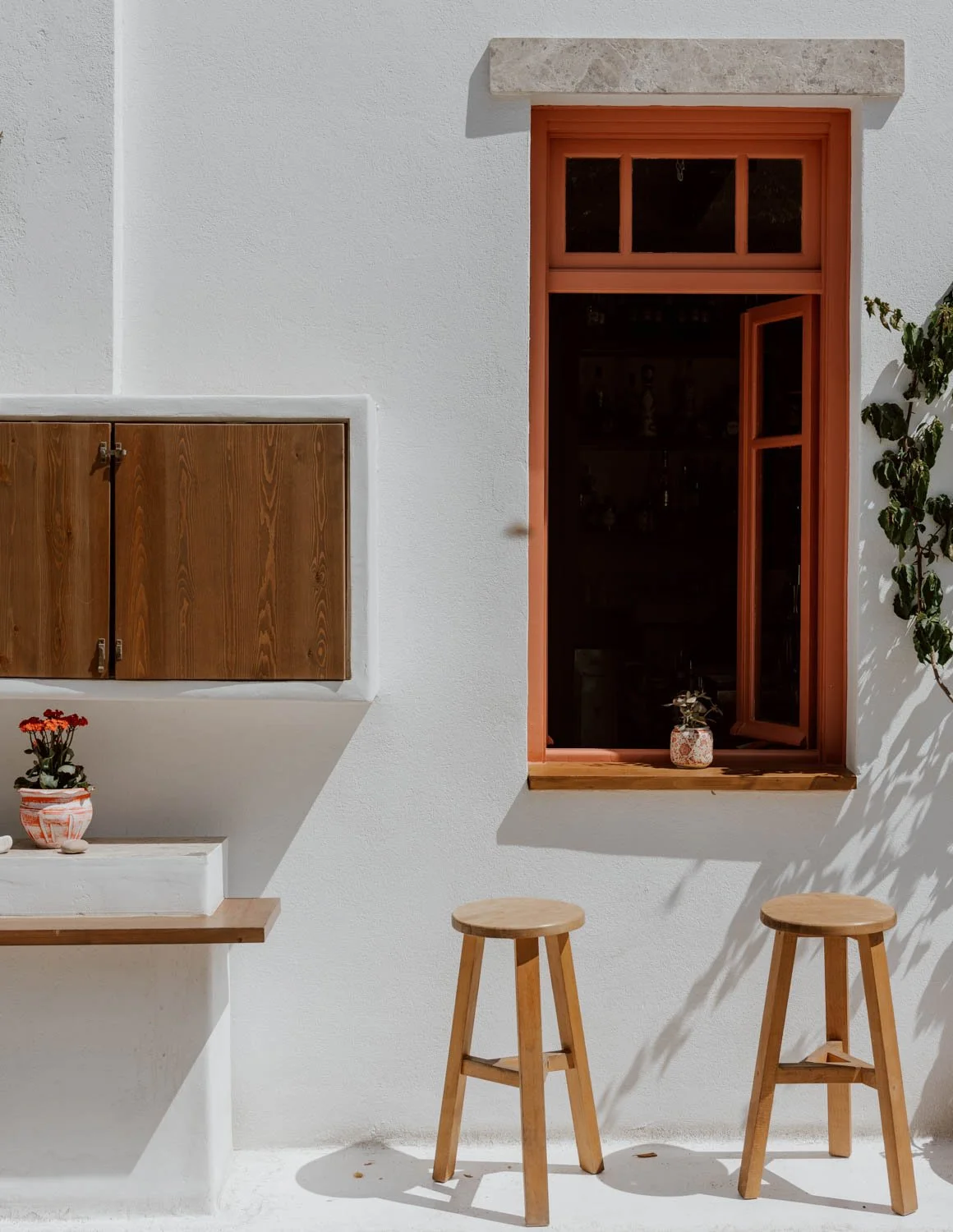
Drink | Verina Coffee was favourite of ours, with good coffee and great cocktails - it’s more chilled if you go before and after the sunset crowds. We chose not to bother with the incredibly popular Utopia Caffe - it’s one for sunset but expect lengthy queues and wait times to get a table. A friend told us that the secret to enjoying its cocktails and setting is to turn up after the sunset photoshoots have departed.
Stay | If being based right on the coast isn’t a priority, then definitely consider Plaka; in hindsight, we actually think we’d have been better staying there than in Pollonia.
If you’re looking for something extraordinary (and don’t mind paying for the privilege) opt for Niove Suites or D3 Milos but we’d stay in Castrum Traditional Sunset Suites in a heartbeat.
Alternatively, two Airbnbs we love are House Dolce and Cliffside Residence.
A Boat Trip to Kleftiko
We’ll start this entry with a confession from us and a lesson for you: we didn’t actually go on a boat trip in Milos.
It was all organised for Andrew’s birthday, with a nifty self-drive boat booked for the day so we could explore the cliffs and coves of the southwest coast at our own pace. Unfortunately, we hadn’t factored in that a very Greek summer phenomenon - the Meltemi wind - had changed direction, meaning our boat trip was cancelled.
The operator was excellent in offering us the chance to reschedule at no extra cost, but the problem was we didn’t actually have any more days left on the island!
Gutted? Absolutely - especially as Kleftiko is really only accessible from the water.
So, why on earth is it listed number three in this article all about the best things to do in Milos?
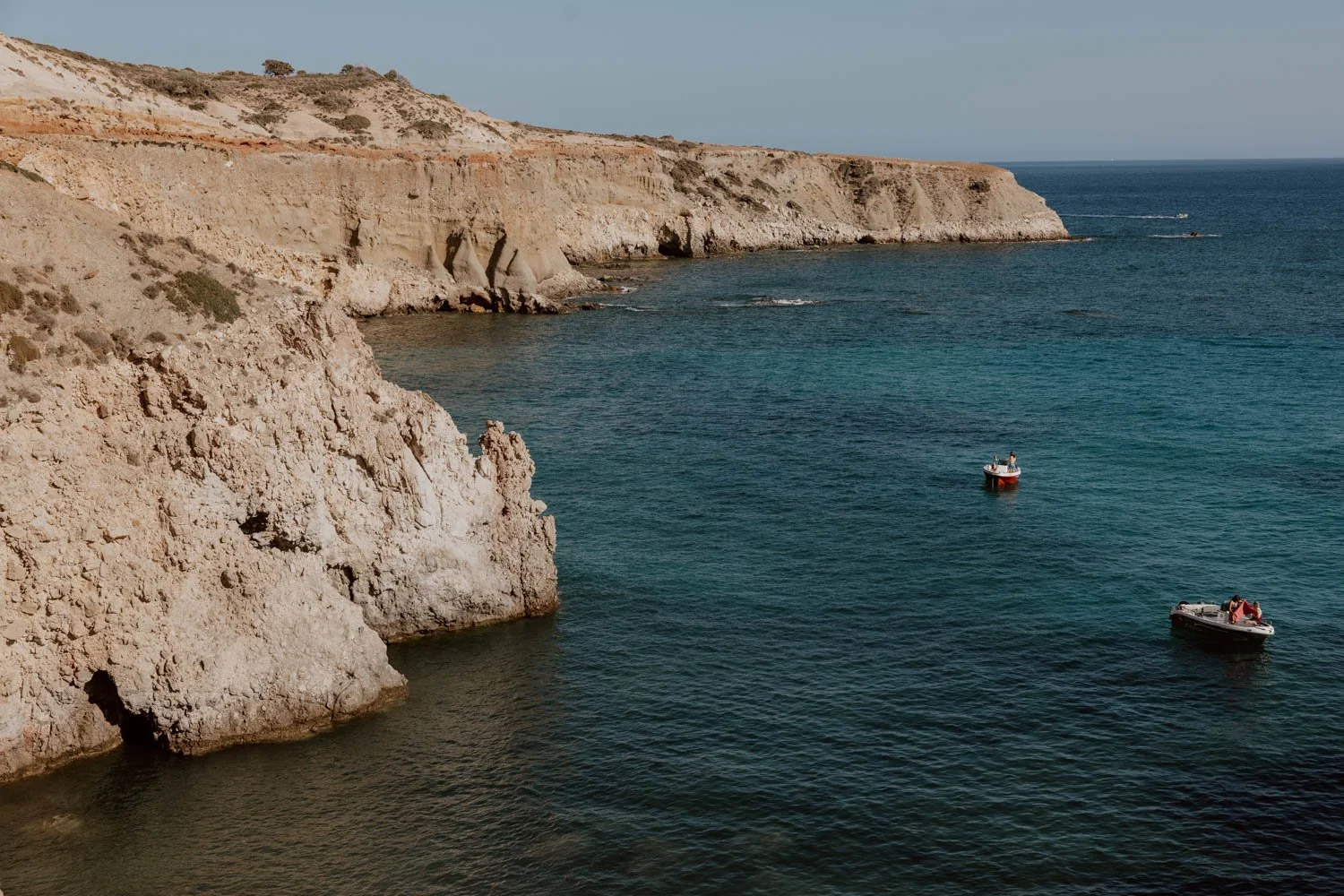
Well, because it’s undoubtedly one of the island’s signature experiences, and we’re well-travelled enough to know that a boat + swimming + a coastline like this = a bloody great way to spend a day. Almost every trip brings you to swim, snorkel and admire the caves and cliffs of Kleftiko, as well as other secluded beaches, but you can opt for anything from a full-day luxury private catamaran to a boozy group sailing trip from Adamas, or a smaller half-day speedboat departing from the south coast.
Whichever vessel or version you opt for, make sure you learn from our mistake and book it for the beginning of your trip, not the end!
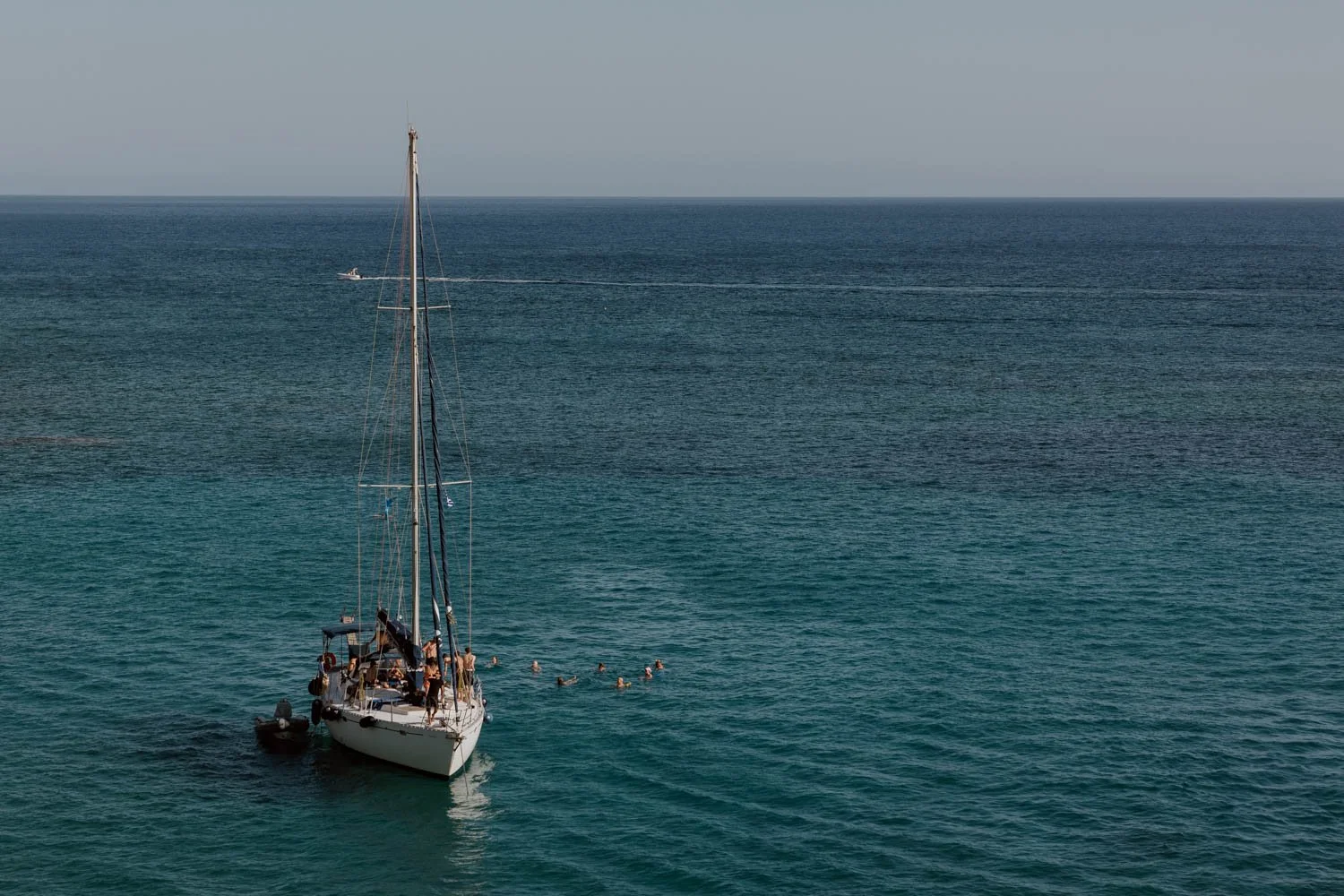
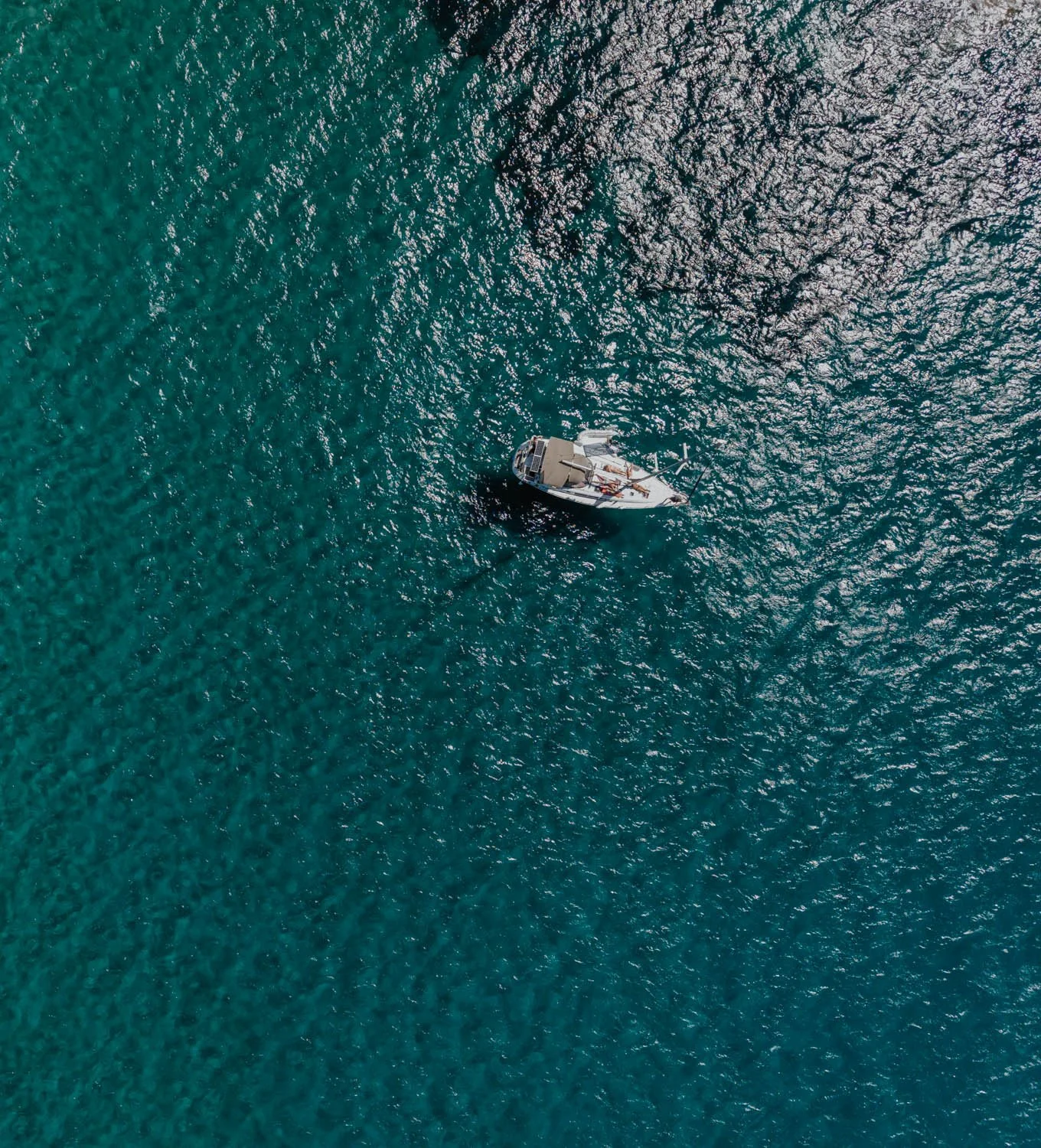
Know | Where you set off from primarily depends on where you’re staying, but the northern port town of Adamas (where your ferry arrives) is the main departure point for catamarans and large sail boats. From there, they go via the lesser-visited western side of Milos to reach Kleftiko, with a number of stops and swims along the way.
Several south coast beaches offer alternative departure points, but this is primarily suited to renting a small self-drive boat (no licence required).
A full-day boat trip is the most popular option, but half-day tours and rentals are also available. Note that some include limited drinks, whilst others are open bar…
Book | We’ve shared a selection of incredibly highly-rated experiences below, suitable for a range of budgets:
From Adamantas
· A Full-Day Luxury Catamaran Cruise - Private or Shared
· Milos & Polyaigos Full-Day Sailboat Tour with Lunch
· Small-Group Full-Day Cruise with Snorkelling and Lunch
· Half-Day Speedboat Cruise to Kleftiko with Snorkeling
From Agia Kiriaki
Visit The Fishing Villages of Milos
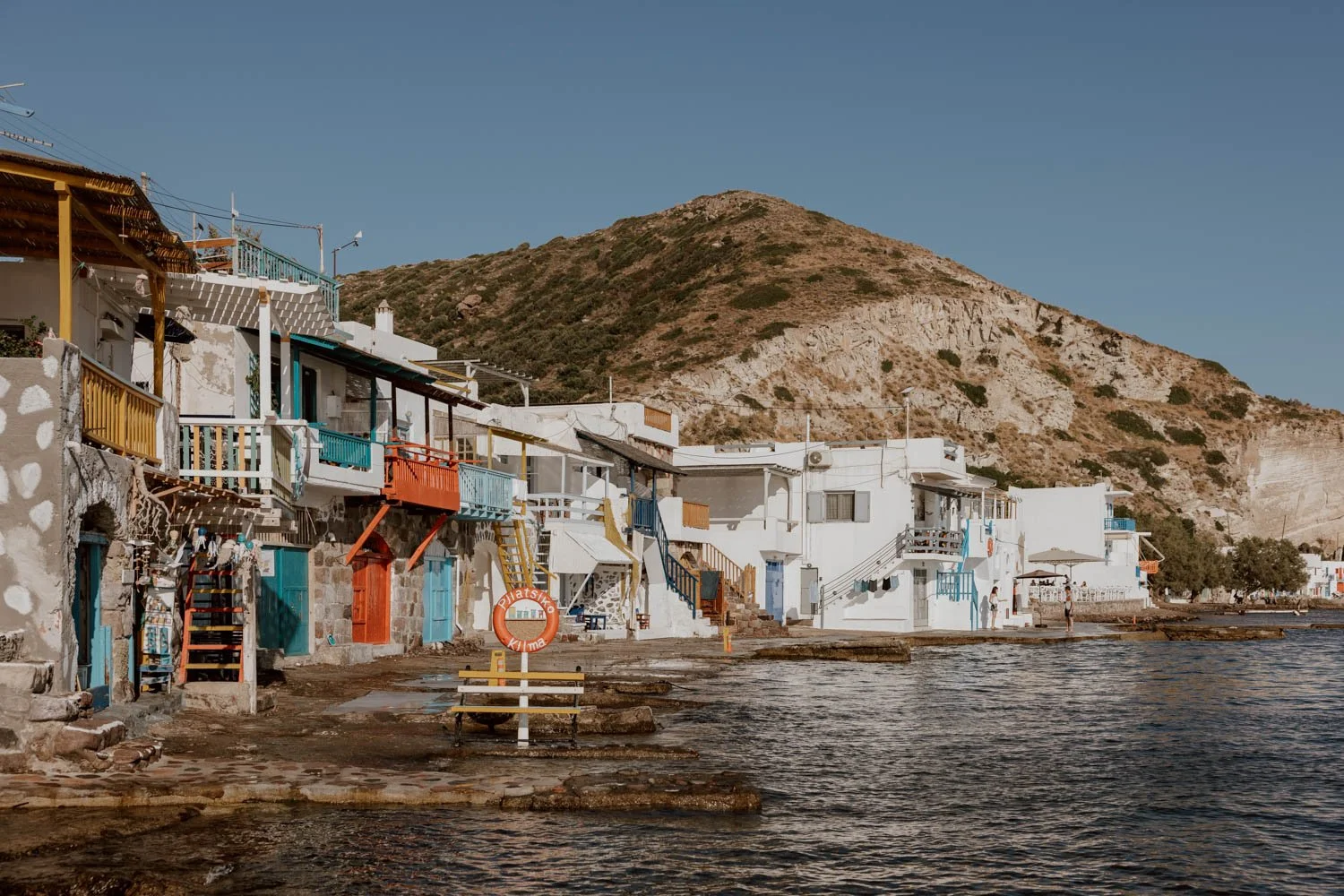
Amongst all Greek islands, Milos stands out for its syrmata.
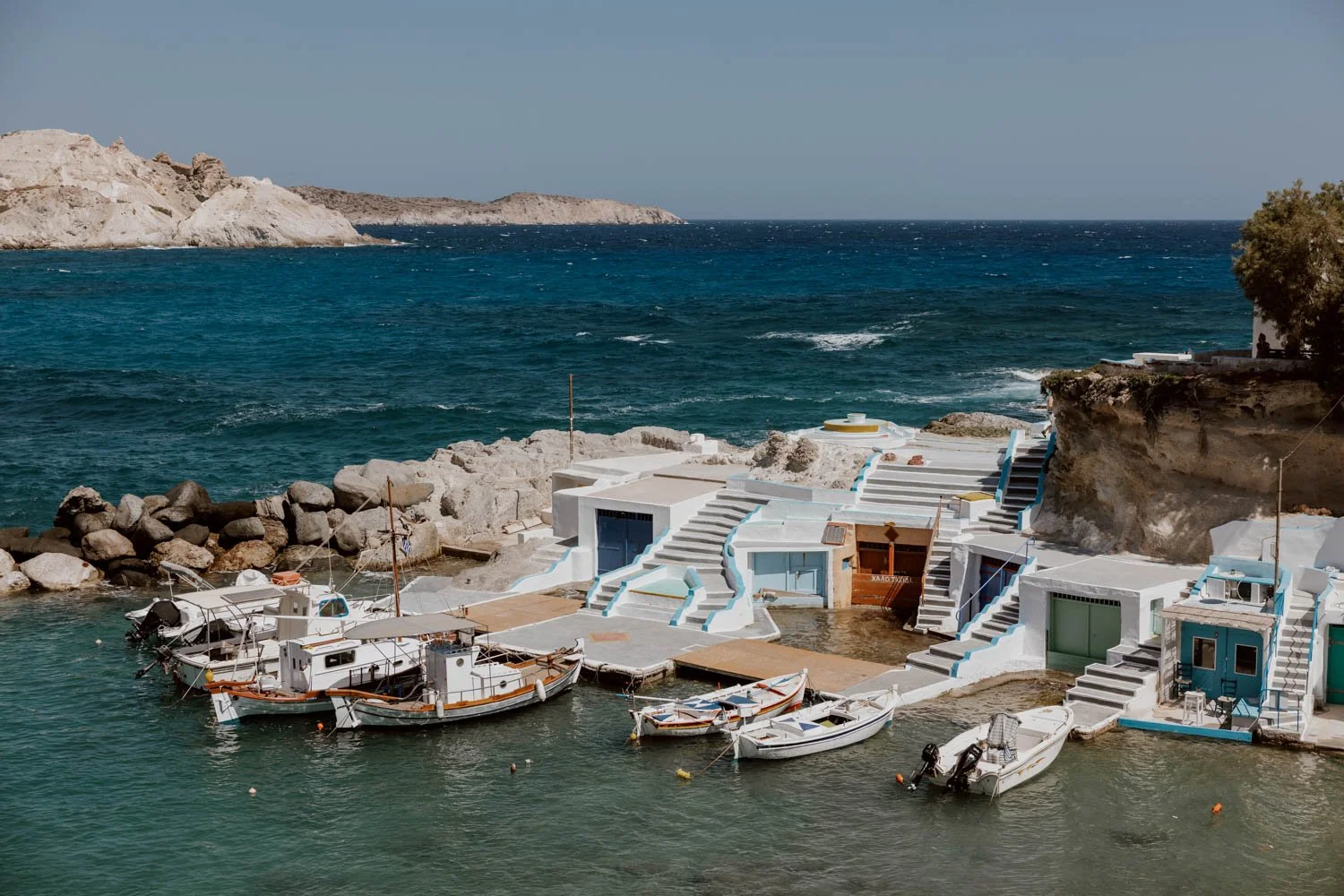
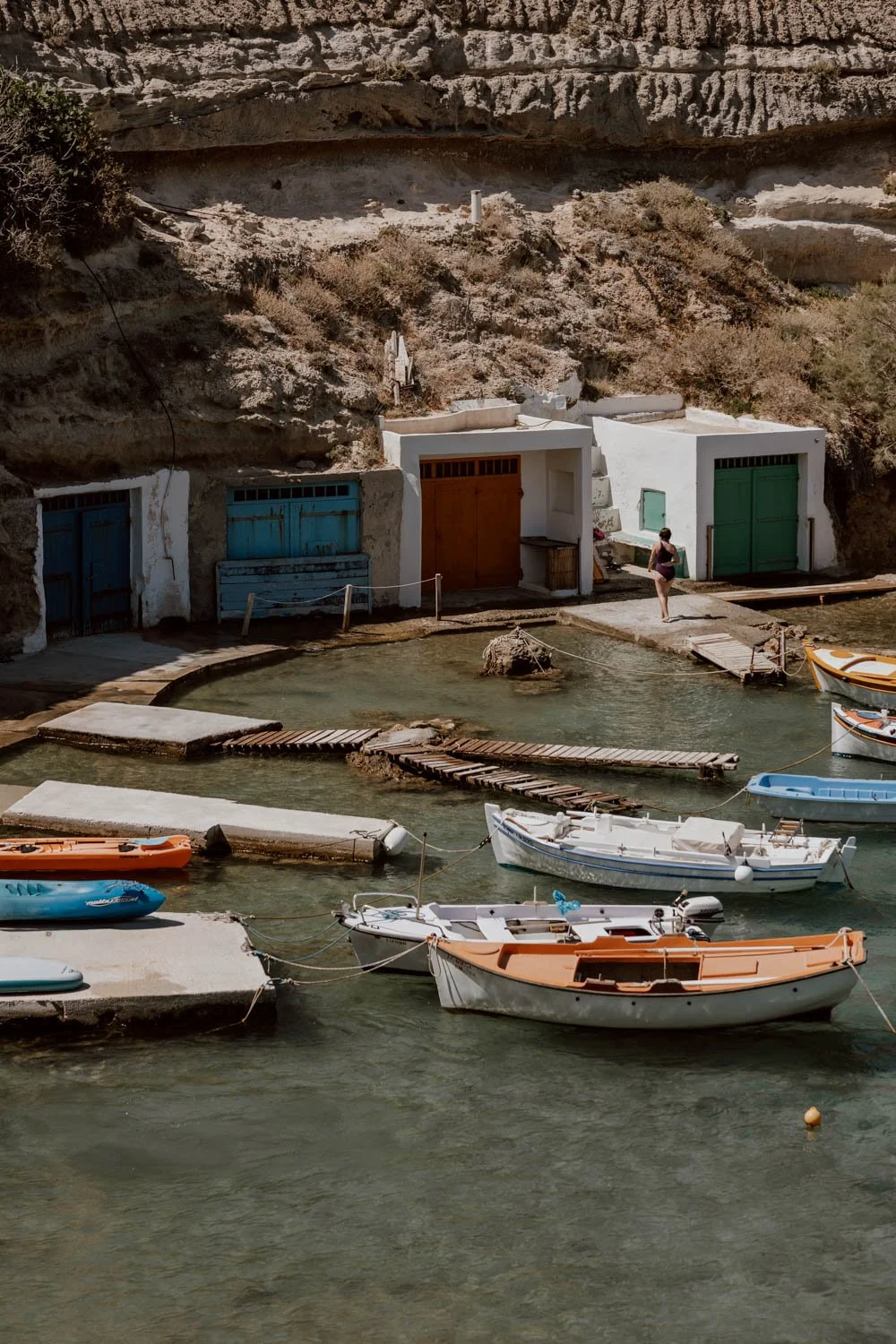
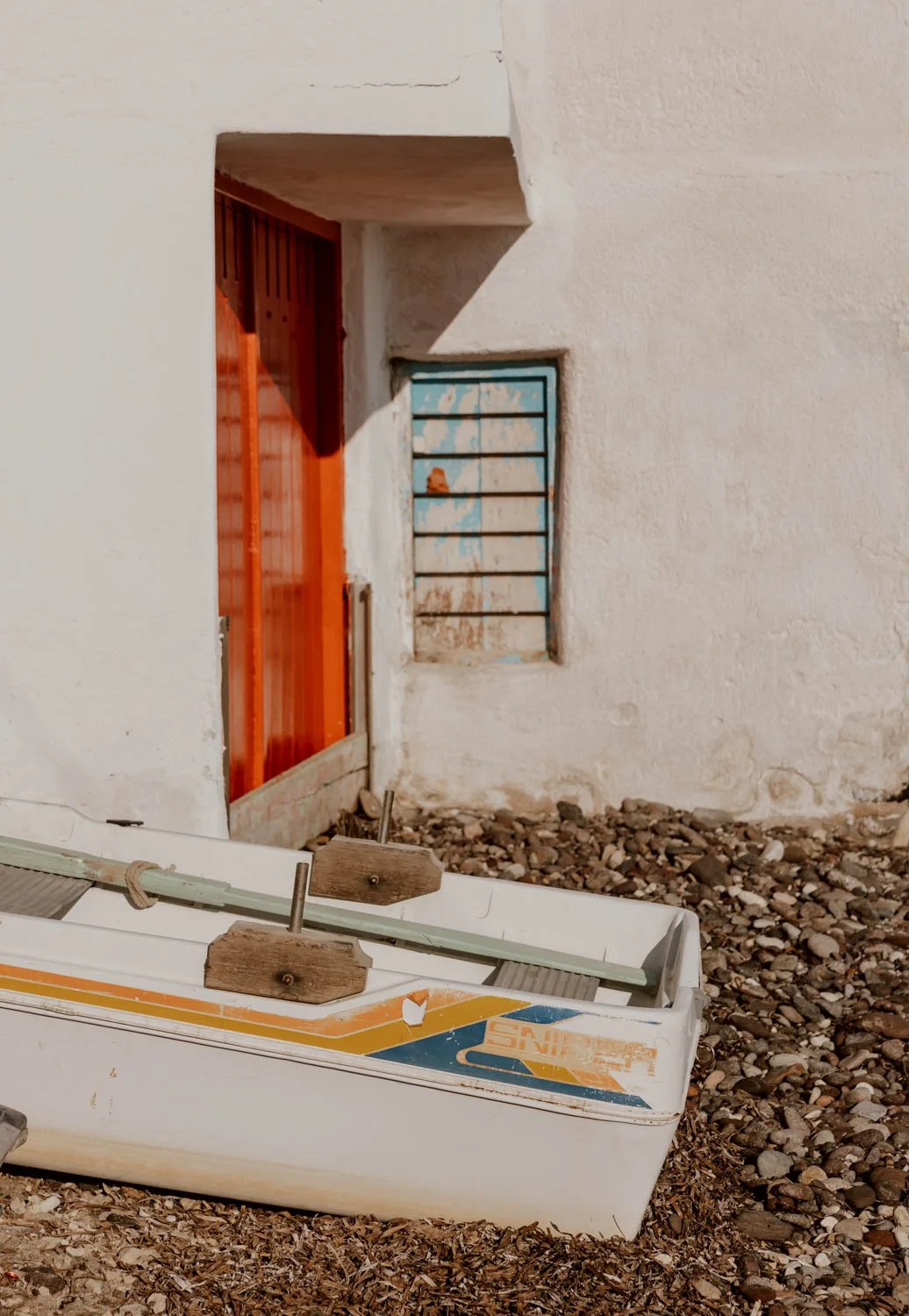
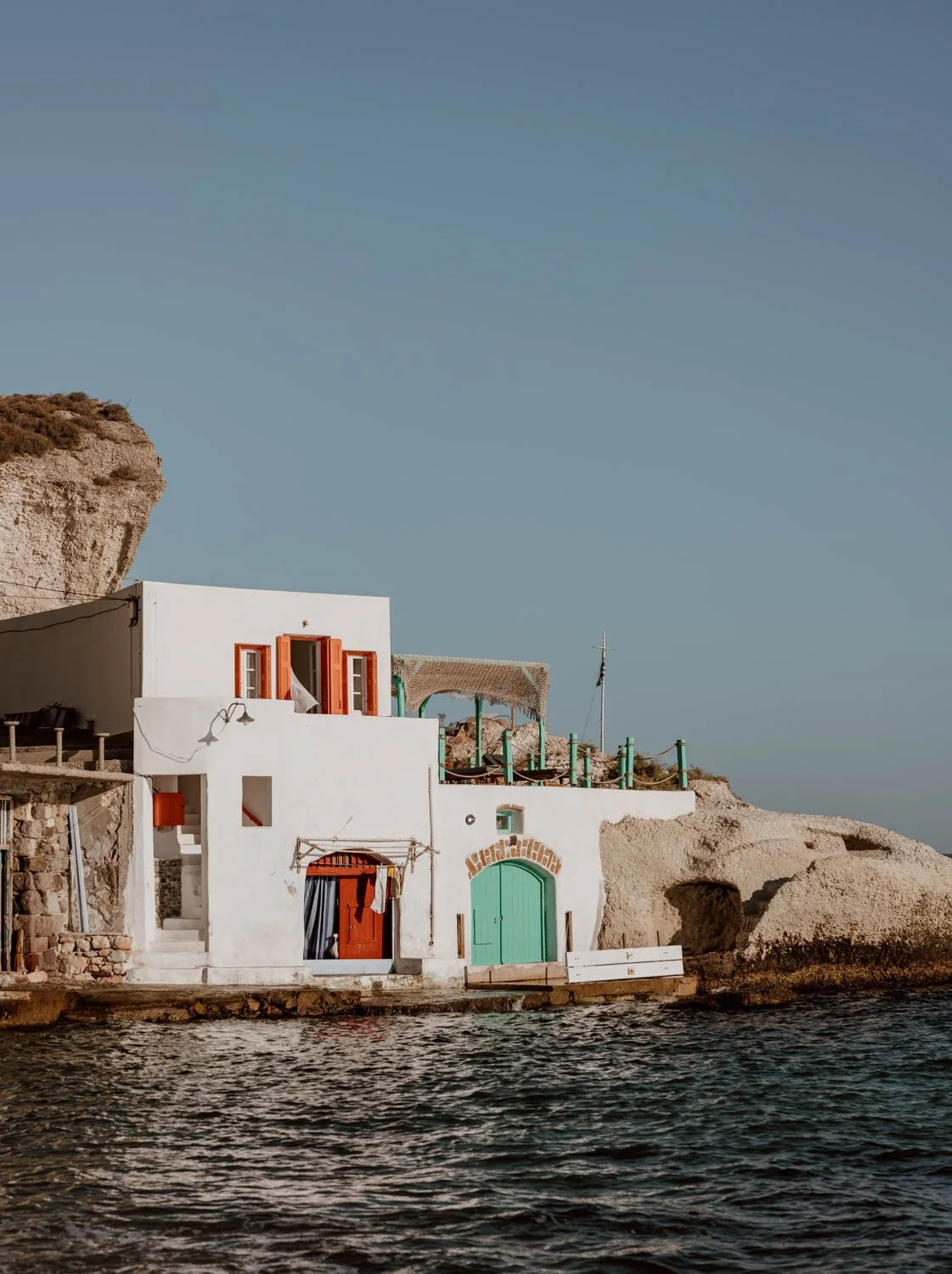
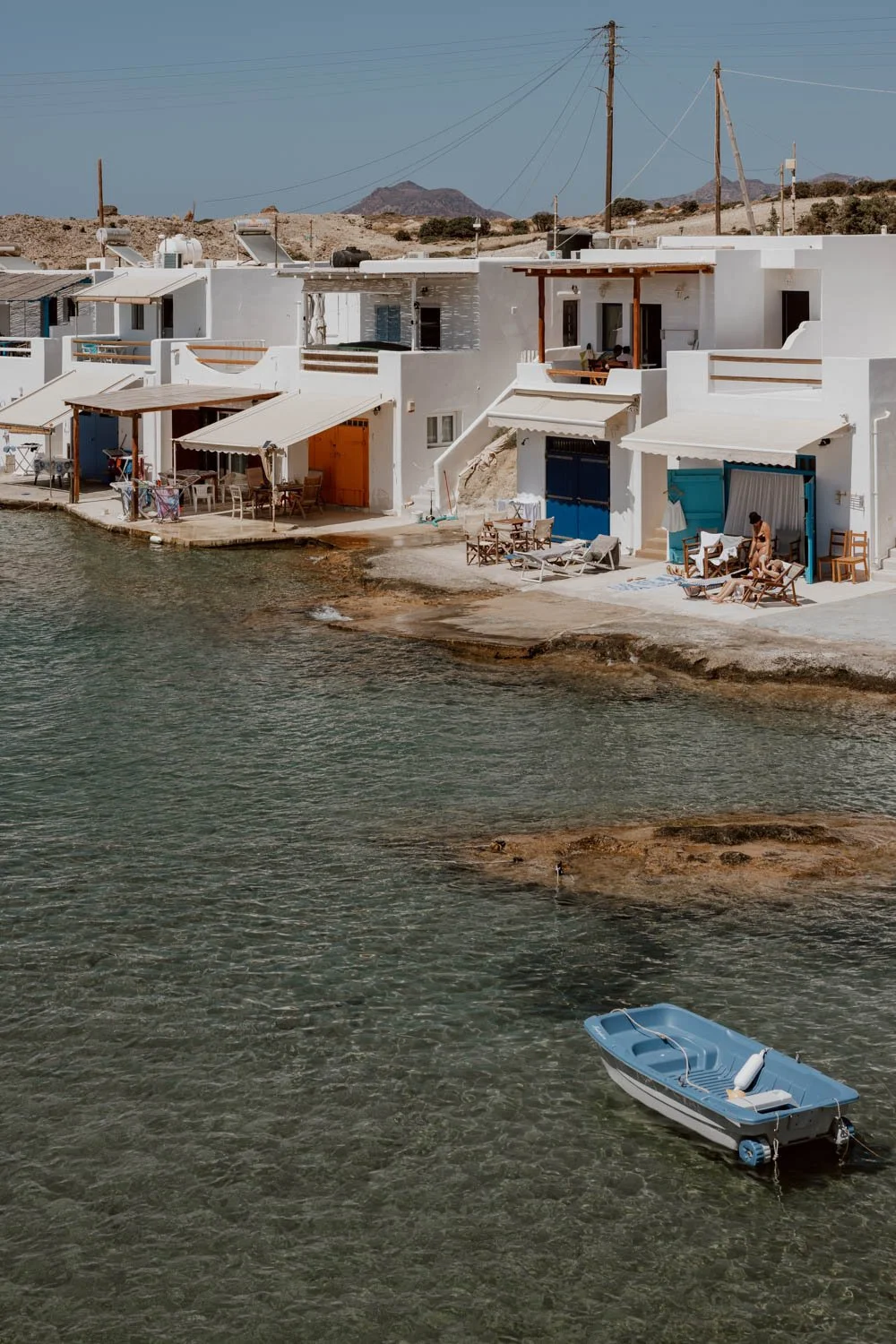
These traditional storehouses for boats and fishing equipment are set at the precipice of the shore, situated so fishermen could drag their boat straight from the sea. White-washed with colourful doors and shutters, these ‘boat garages’ are often just a single-room built into the rock, whilst some are free-standing or have a second storey where the family would live during the season.
Found in pockets and clusters on the coast, villages grew up around them, and they’re a piece of cultural heritage as well as amongst the most photogenic places on the island.
There are three that everyone makes a point of visiting - Mandrakia, Klima, and Firopotamos - and they’re conveniently all on the north coast. Personally, we felt splitting them out into standalone ‘experiences’/things to do in Milos would be a tad disingenuous: they’re small and for some travellers may simply involve a photography pitstop and half hour walk around, whilst for others they lend themselves to lunch and dinner by the sea, or a few hours sunbathing.
Staying in a syrmata - whether for a couple nights or the whole of your trip - also features in many plans for Milos. These days, few boathouses are used in the traditional way, with the majority reimagined into unique holiday homes. Some are basic, whilst others have been upgraded into something verging upon luxury.
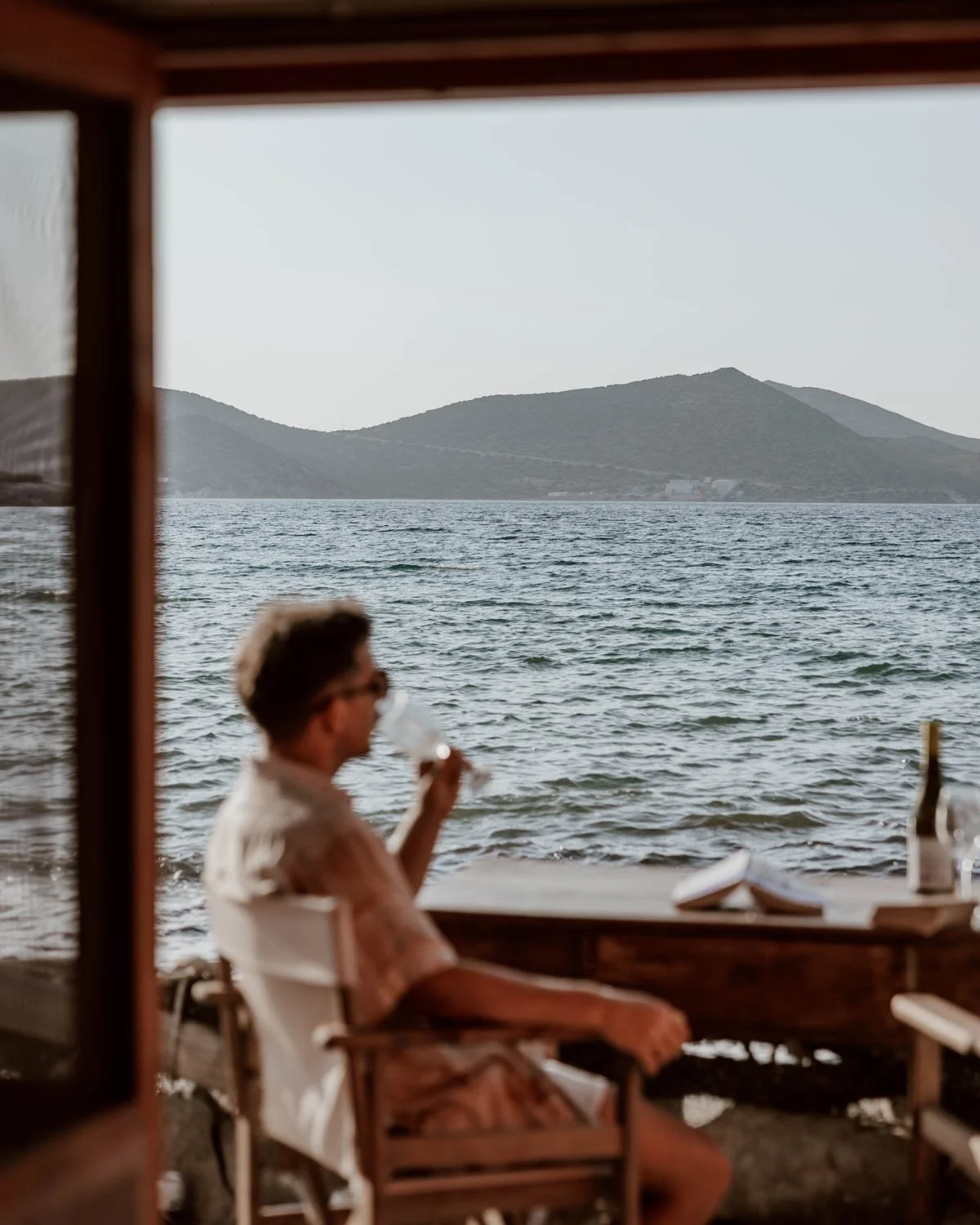
The interior design isn’t the most important feature though, rather the sea-facing setting where you’re just steps from your kitchen table to the salty water.
As mentioned, we stayed in this one at the end of a secluded beach and it exceeded our wildest dreams.
However, before putting all your budget on this, it’s important to be aware of THREE important caveats
Even once supply and demand is factored in, the price charged from some syrmata in Milos is genuinely ridiculous.
The set-up and setting may not be suit all travel styles, meaning a shorter stay may be better than treating it as your main base
Whilst the three pretty syrmata villages we feature below have some fantastic boathouses and are the most obvious choices, they are also destinations in their own right for everyone exploring the island. This means privacy is limited during the day, and you’ll almost certainly have some twat thinking it’s acceptable to pose for photos on your roof or sunbathe steps from your door.
Mandrakia
Little Mandrakia is one of the best preserved, with each of its 52 buildings protected.
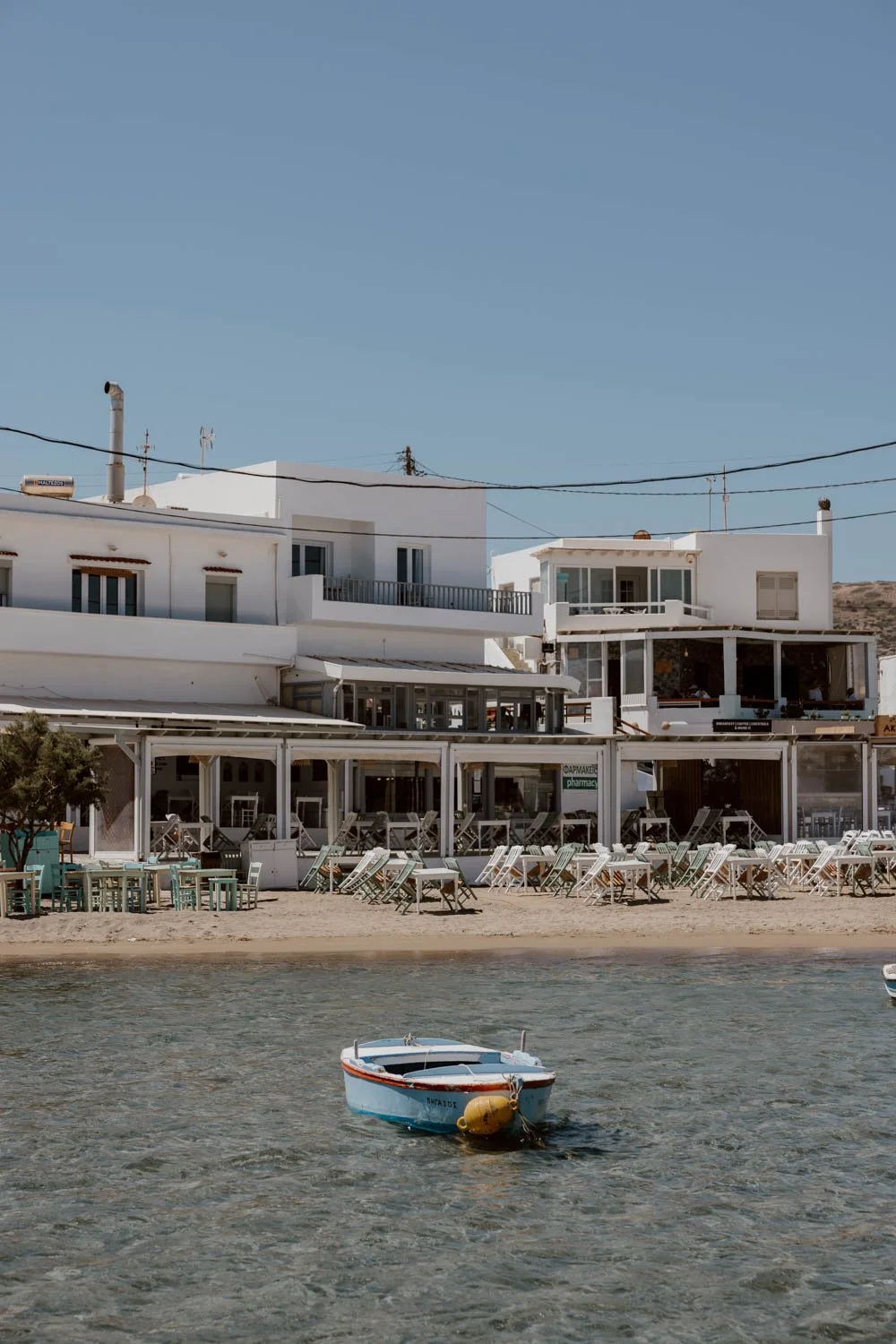
Most visitors come to wander along the narrow waterfront, take a few photos of the colourful doors and fishing boats, stroke a passing cat, and perhaps settle in for lunch or dinner by the water at the popular Medusa. It’s not somewhere you’ll linger for hours, but it’s an easy, pleasant stop and the way the syrmata curve around the small harbour gives the whole place the feel of a natural amphitheatre facing the sea.
Stay / When we visited is seemed that there were lots of holiday makers staying in the boathouses that line Mandrakia’s peaceful harbour but when we’ve come to write this guide there is a dearth of them available to book online; we can only assume that its protected status means the majority remain family-owned.
Thankfully for those hoping to stay here, there are a few iconic ones to rent: Esperanza Boathouse 3, a relatively spacious option that has been beautifully modernised is our favourite, but Golden Cave is another wonderful option.
There are also a couple of stunning ones just around the corner (and these may be even better as you’ll have fewer people taking photos whilst you sunbathe!), places like Esperanza Boathouse 2. The interior is small and considered, but the real draw is the table and sunlounger set up on the little rocky outcrop just beyond the door.
Klima
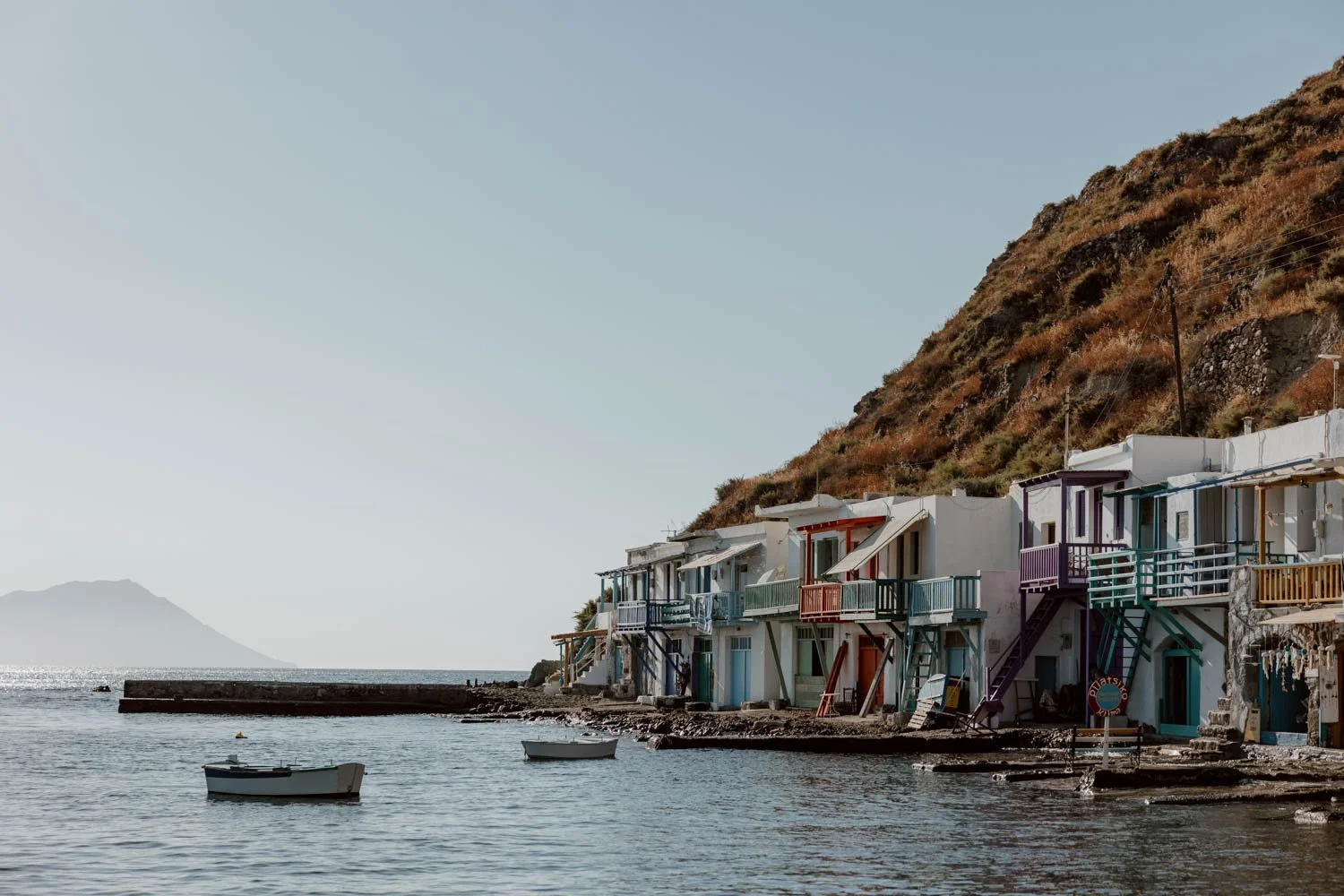
In the foothills, Klima is a little more lived-in and frayed at the edges than Mandrakia, but that only made it more appealing to us.
Whilst Mandrakia is formed around a shallow natural harbour, Klima stretches in a simple line along the water’s edge, its colourful syrmata facing directly onto the sea. The layout lends itself to lingering, with a sliver of ‘beach’, jetties, and benches combining on the far left side to make it somewhere that those who don’t need sand can spend a happy few hours sunbathing and swimming.
Whilst you can head down there at any time, timing your visit for the golden hour and sunset is increasingly popular. The open-air Astakas is the only restaurant, and offers a fabulous setting from which to enjoy drinks and dinner by the water as the light fades behind the hills. Prices are a little more than elsewhere, but won’t break the bank; it’s also open for breakfast and lunch, but reserving in advance is essential if you want a table on the front row for the sunset seating. You may get lucky if you just show up, but waiting an hour or so would probably ruin the moment.
You can also walk between Klima and the old amphitheatre, which we feature later in the post.
Watch your step on the patchwork concrete path, especially when the tide is up and it becomes a slippery gauntlet.
Park | It can be confusing on first arrival. If just visiting with a rental, park for free at the road side as far down as you can go until you see the clear ‘don’t continue’ sign. If less cavalier, you can park more easily in the big dustbowl free car park further up and walk down (here on Google Maps). If dining at the restaurant though, ignore all signs and continue driving right down until you’ll find a large car park reserved for clients.
There’s no direct bus to Klima, so most people walk down the hill from (then back up to) the stop up in Tripiti - you should combine this with the Venus de Milo and Amphitheatre trail we talk about later in the post.
Stay | Aganta Klima Syrma, Traditional Sirma and Turquoise Boathouse are three of our favourites but is a good shout if you’d like a private terrace if you’d like somewhere to sunbathe away from the tourists.
Klima Bay offer a more hotel-like stay with fully equipped kitchens, modern furnishings and individual terraces / gardens that may suit those looking for a more private experience in Klima - but still with the sea a few steps from the door.
You can find more Klima recommendations over in our dedicated Where To Stay in Milos guide.
Firopotamos
Whilst Google Maps and others refer to Mandrakia and Klima as ‘beaches’, Firopotamos is the only one of this trio that actually features in our Best Beaches in Milos.
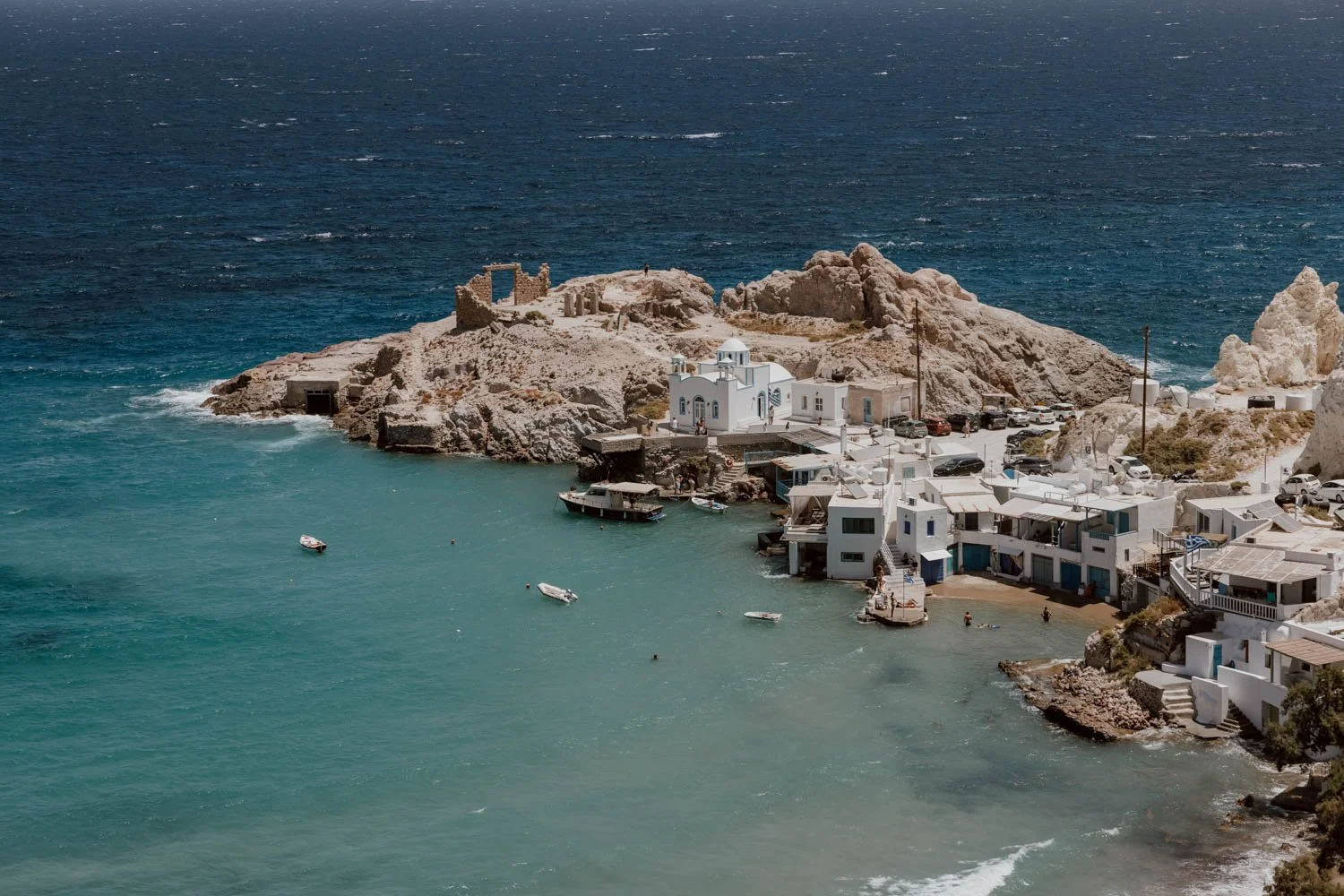
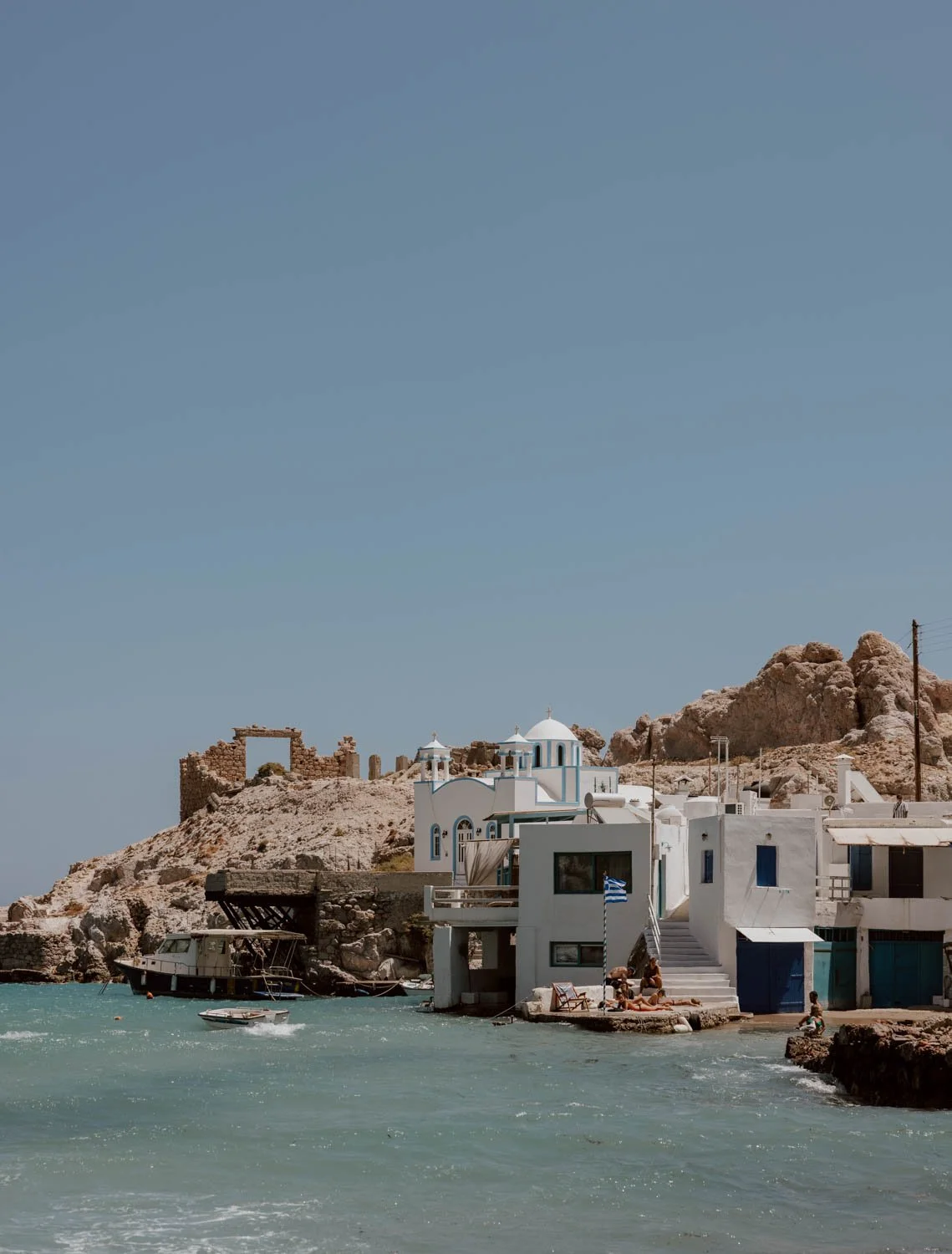
Its small beach is a narrow crescent of sand backed by a few syrmata, tamarisk trees, and a beach bar with graffiti calling Greece ‘God’s Home’. Not amongst the finest on offer in Milos, but still perfectly fine.
The real draw here is the photogenic scene around the cove: waves lapping at the cluster of whitewashed boathouses, the little Church of Agios Nikolaos, and ruins framing the thrashing sea
It’s a real pleasure to walk around and look out upon.
As it’s part-tourist attraction, part-beach, we wouldn’t necessarily send you down here for a proper beach day but it’s a must-do stop when exploring the north of island and somewhere you can happily swim, wander, and linger for an hour or two.
On calm mornings and afternooons, it’s one of the most quietly beautiful corners of the island.
Stay | The majority of syrmata in the village and on the beach have been converted into accommodation, with Endless Blue, the spacious, Thavma View, Thavma Boathouse, and Giasemi Boathouse amongst the pick of the options. If you want to open your door and step right out to the beach and sea, then go for Ergina’s Boat House.
Plan// The road down there isn’t great, and the parking situation can be quite stressful when busy - we’ve shared all the details in our Best Beaches in Milos guide.
A South Coast Beach Day
We’ve touched upon them already and, if you’ve travelled to the Cyclades before, you’ll be well-versed in the Meltemi winds.
These dry, northerly winds typically arrive from June through August, sometimes lingering into early September. They’re a defining feature of the Greek summer season - nothing to stress about, but something to anticipate (especially when you’ve got a boat trip planned).
Thankfully, most islands also have a simple rule of thumb: north-facing beaches tend to be more affected, while south-facing are usually calmer.
This is why the pick of Milos’ serviced beaches are found along the south coast and, when you’re craving a lazy sun lounger day with a long lunch and cocktails at hand, that’s where you should focus your attention.
That side of the island is also visually distinctive, layered in warm mineral colours - rust red, burnt orange, ochre, pale yellow, and soft beige - streaked and folded like paint brushed across the cliffs.
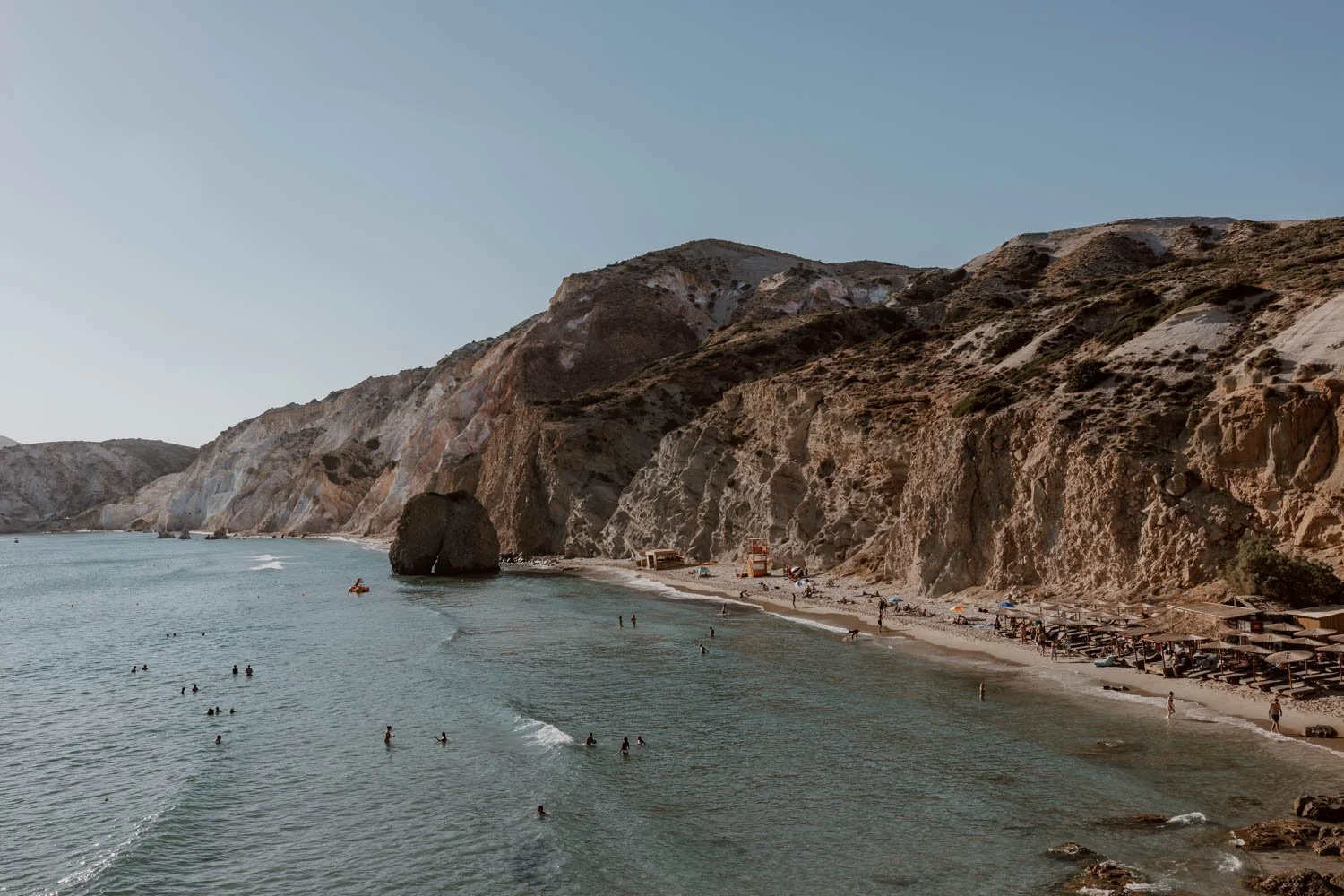
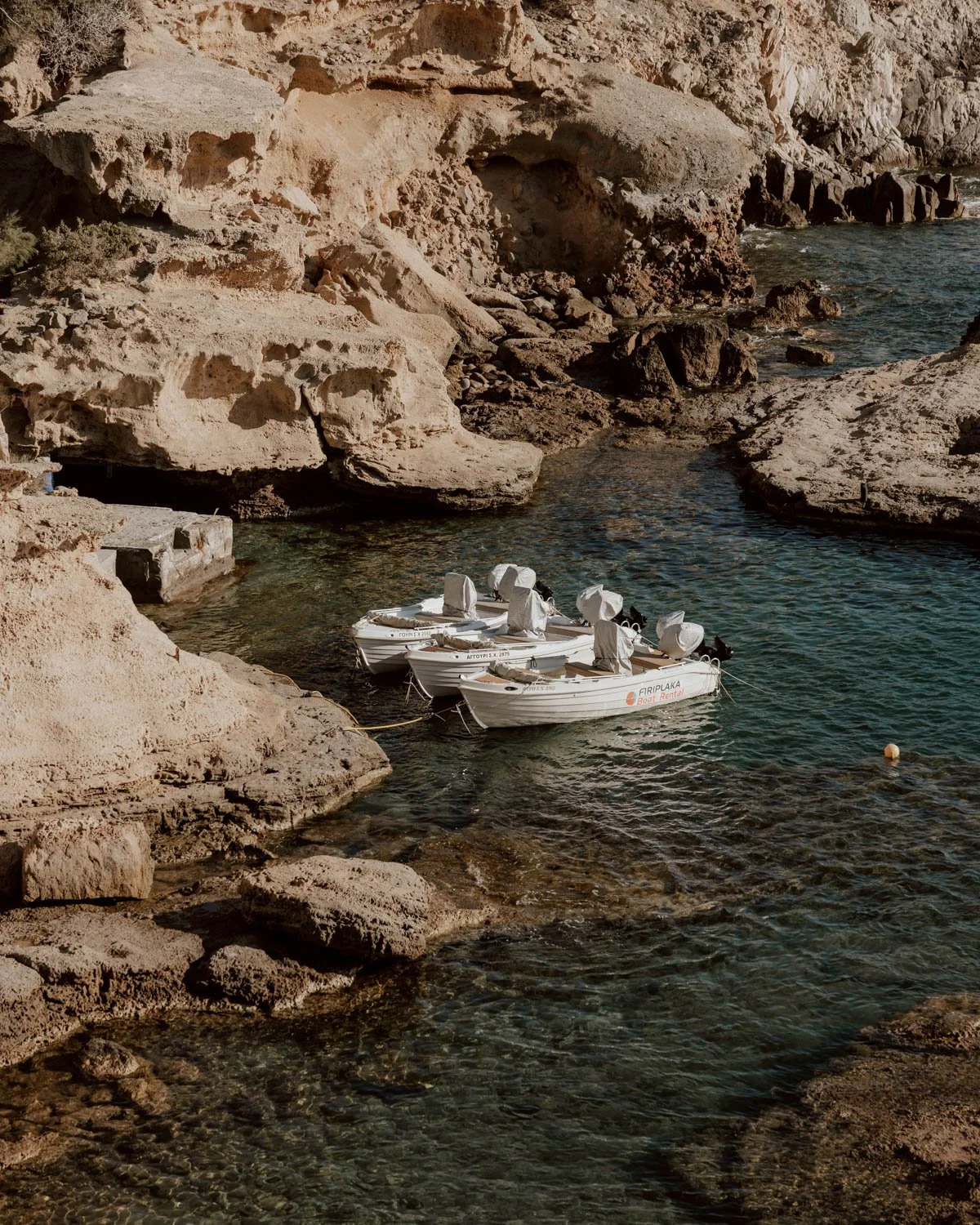
Where | Paralia Palichori is the most accessible and popular, with several beach clubs, but we much preferred the atmosphere and aesthetics at Firiplaka and Agia Kiriaki. If you’re looking for somewhere to splurge or spoil someone, then Provatas beach is our recommendation.
If you’ve got a rental car or scooter, you can happily string several of them together in a single day - or visit a few before choosing the favourite to lay your towel down. You can find more details, transport, and insights in our guide to the Best Beaches in Milos.
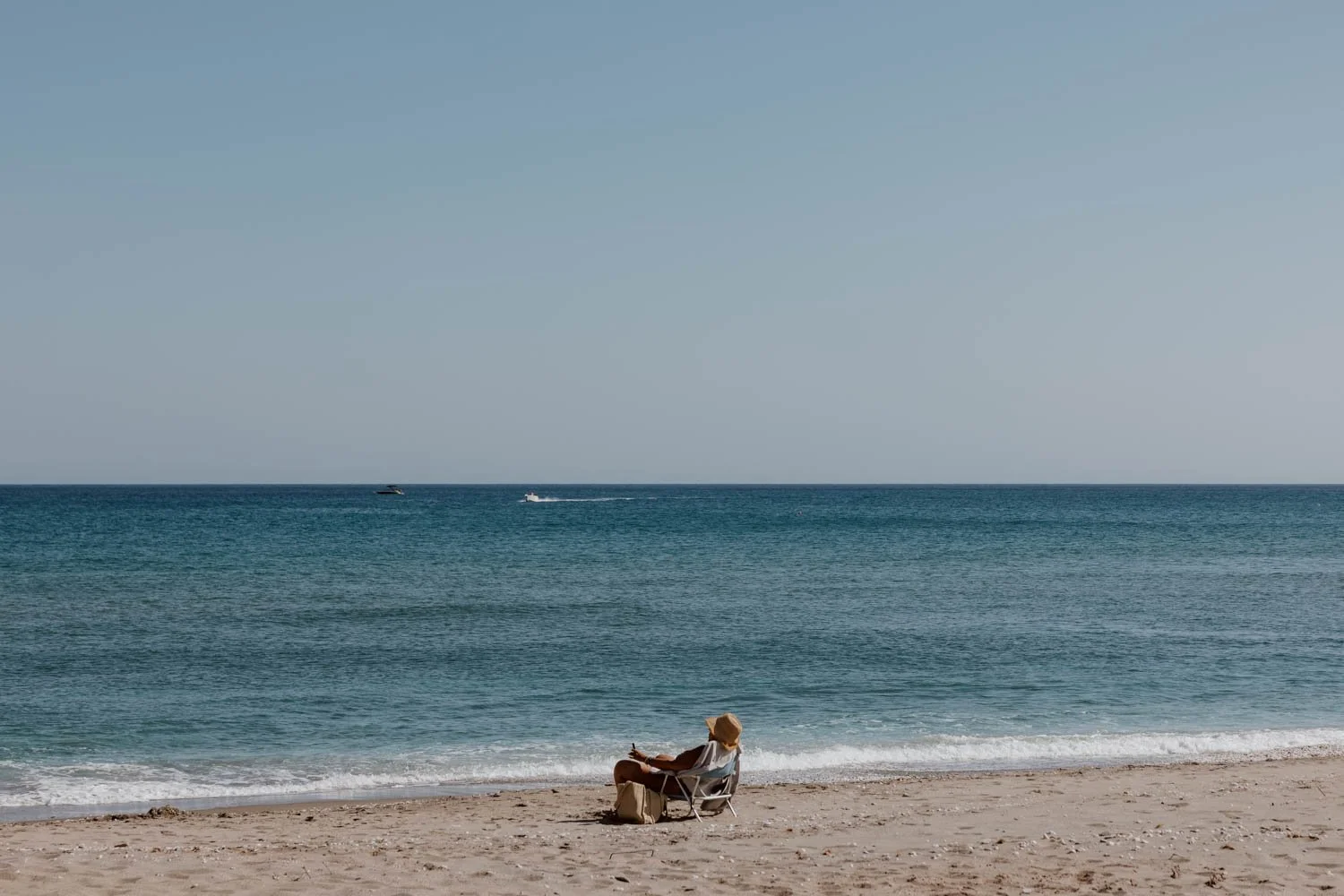
Know | Whilst these southern beaches all have a beach club offering daybeds and parasols for rent (starting at €30 for a pair) and places to eat/drink, it’s important to note that they also have ample free, public areas of beach to enjoy.
Plan // Where To Stay in Milos
Rent An ATV (Or A Scooter)
During our week on the island, we ended up renting an ATV, a scooter, and a car.
Whilst it may sound like we had no clue what we were doing, that’s only half-true.
There’s a decent and affordable bus network on Milos, which allows travellers to reach most of the main towns and beaches for a €2 one-way ticket. You can use it to get to Plaka, Sarakiniko, Polonnia, and several beaches on the north and south coasts.
It lacks flexibility though, strongly favours those based in Adamas, and some routes only run a handful of times per day. Any itinerary that wholly relies on the buses is also bound by them, whilst it inevitably restricts where you can stay, with a few of Milos’ standout secluded locations sitting beyond the network.
This means renting your own wheels for at least part of your time on the island makes sense - partly out of practical necessity, partly to improve logistics, and partly because it’s a lot of fun.
That feeling of the sun on our back, sweat on our skin, salt in the air, dust swirling from the road, and the coastline stretching ahead as you chase the horizon: that’s as essential an ingredient of Greek island summer for us as feta, tzatziki, and freddo espresso with a little bit of sugar.

The good news is that a scooter will be suitable to access most of the places you’ll want to visit in Milos on a shorter trip, including the north and south beaches. These are cheaper to rent (€20-30 / 24 hours) and easier to find a parking space at peak times.
However, for those lacking any experience on two-wheels, renting an ATV will offer a more stable (and therefore enjoyable) ride Where the scooter requires more experience and skill on certain dusty roads to beaches, these four-wheelers tend to do the work for you. If you’re only renting wheels for a day or two in order to explore the north and south of the island, then this will offer the more memorable way to do it, whilst also allowing you to carry more beach supplies in the cargo box. Rates are around €40-65 for 24 hours, depending on the model.
An ATV or a 4x4 is also essential if you want to go off-the-beaten-track and hit up the wild west of Milos, which we cover later in the post.
Cars are available to rent but, unless you’re a group or family, we think they can cause more problems than they solve here and we only plumped for one as we needed to move us and our luggage to that gorgeous out of the way boathouse.
Alt | If you’re unable to drive, or uncomfortable at the thought of it, then consider heading out on this 4x4 Jeep Tour.
Another highly-rated tour is the Milos Jeep Sunset Adventure: Off-Road & Hidden Hilltop Gems
Plan // We’ve shared more about the pros and cons of the rental options, money-saving tips for booking, insurance, advice on the road conditions, plus more details on the bus network and taxis in How To Get Around Milos (published soon)

Follow the North-East Coastline…
Real talk time.
Some of you will only be spending a few days in Milos as part of Greek island-hopping trip and, once you’ve taken care of the big-hitters like your boat trip, just want a reliable way to pull together a really good day.
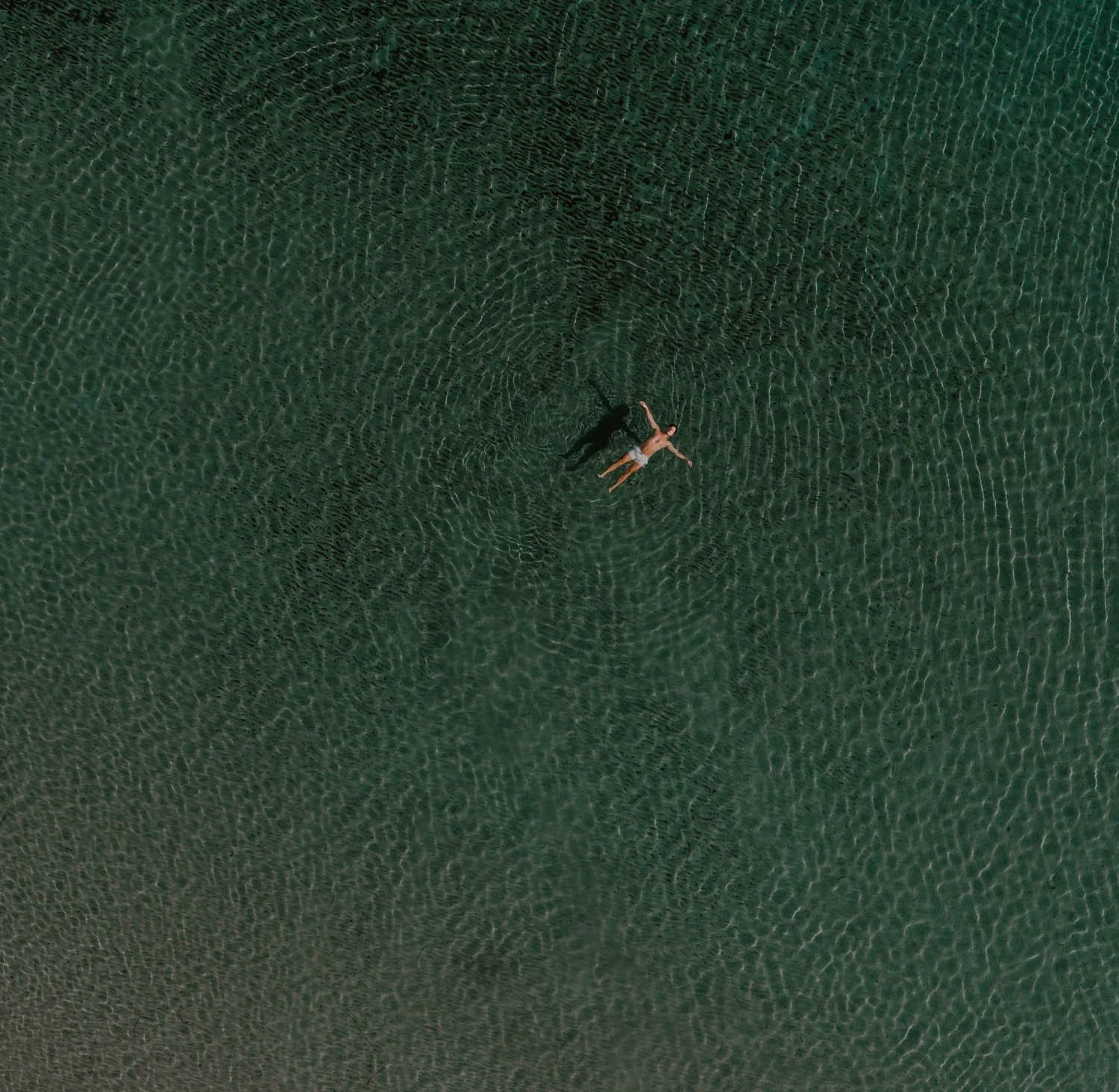
We’d recommend taking the main road out of Adamas, and following it all the way to Pollonia. The tarmac traces the north-east coast, where you’ll find a string of wild beaches and swimming holes - some well-known, others largely overlooked.
The relatively frequent Adamas-Polonnia bus service follows this road and stops on or near the various beaches, so you can 100% do it that way. However, if you’re weighing up whether to rent a vehicle or not, this is the ideal day to do it: the main road is in excellent condition, and reaching the beaches usually just means a short walk from the roadside or a quick trundle down a dusty track, so it’s an easy, low-stress way to ease yourself into driving on Milos.
Set your own pace and rhythm - dipping in and out of all the beaches, settling down on your favourite - and all roads (or the only road) lead to Pollonia…
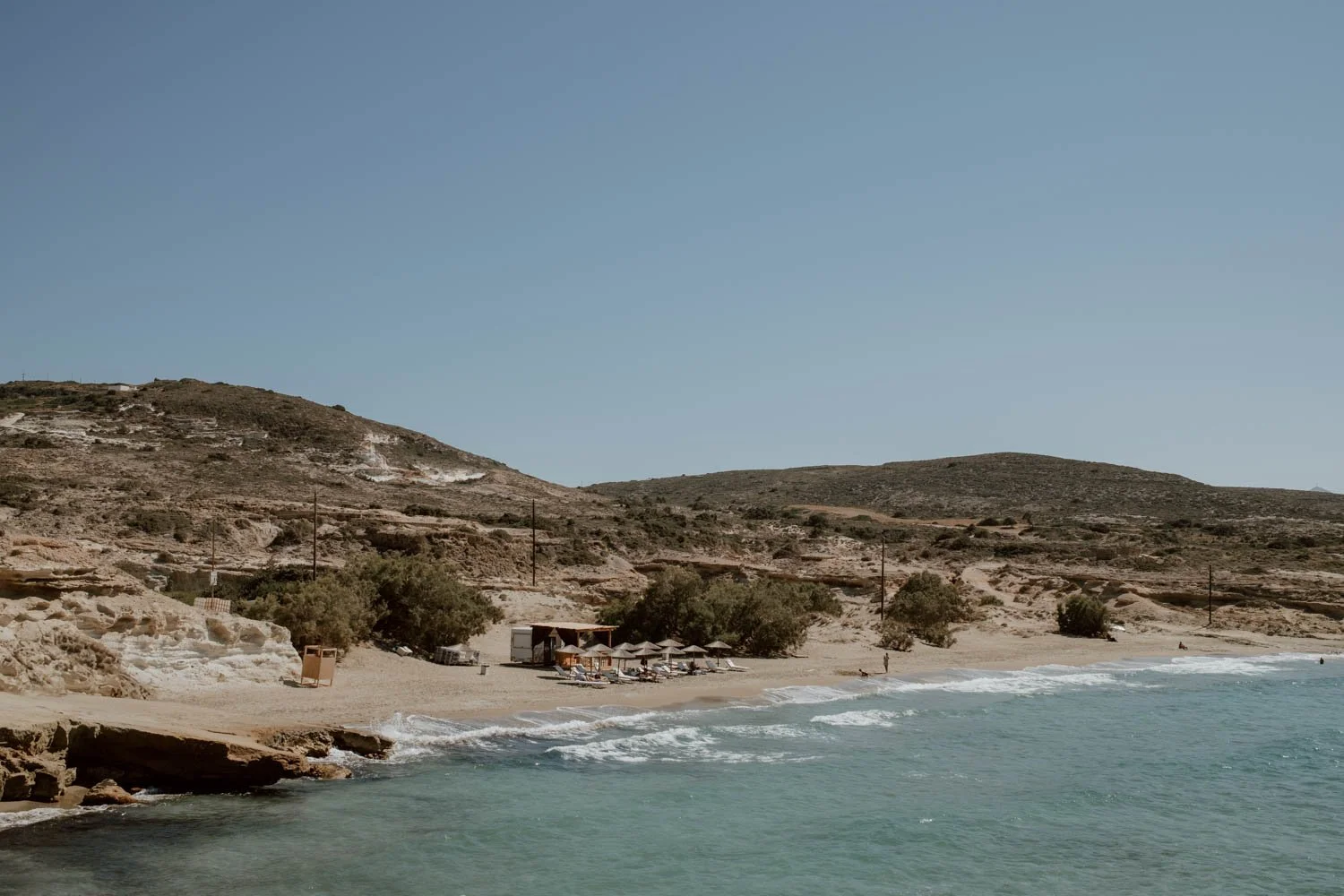
Where | Recommended stops include Mitikas, Alogomandra, Papafragas - find more details on each in our Best Beaches in Milos guide. If you’re renting a vehicle that day, then you should definitely consider including Sakarniniko on your route, whilst you could also expand your coverage to include the fishing villages if you’re on a ‘see everything all at once’ sort of schedule.
Bring | Whilst there’s a lot of accommodation along the northeast coast, there’s not much in terms of shops and restaurants. Mitikas has a simple beach snack shack and there’s an EKO fuel station along the way with a small shop (maps), but it’s a good idea to bring some supplies and stuff for the beach.
Know | This is definitely best done on a day when the Meltmi is weak.
Top Tip // If you’re based in Pollonia, simply do the route in reverse and end with a sundown cocktail at Akri Bar or Mostra in Adamantas.
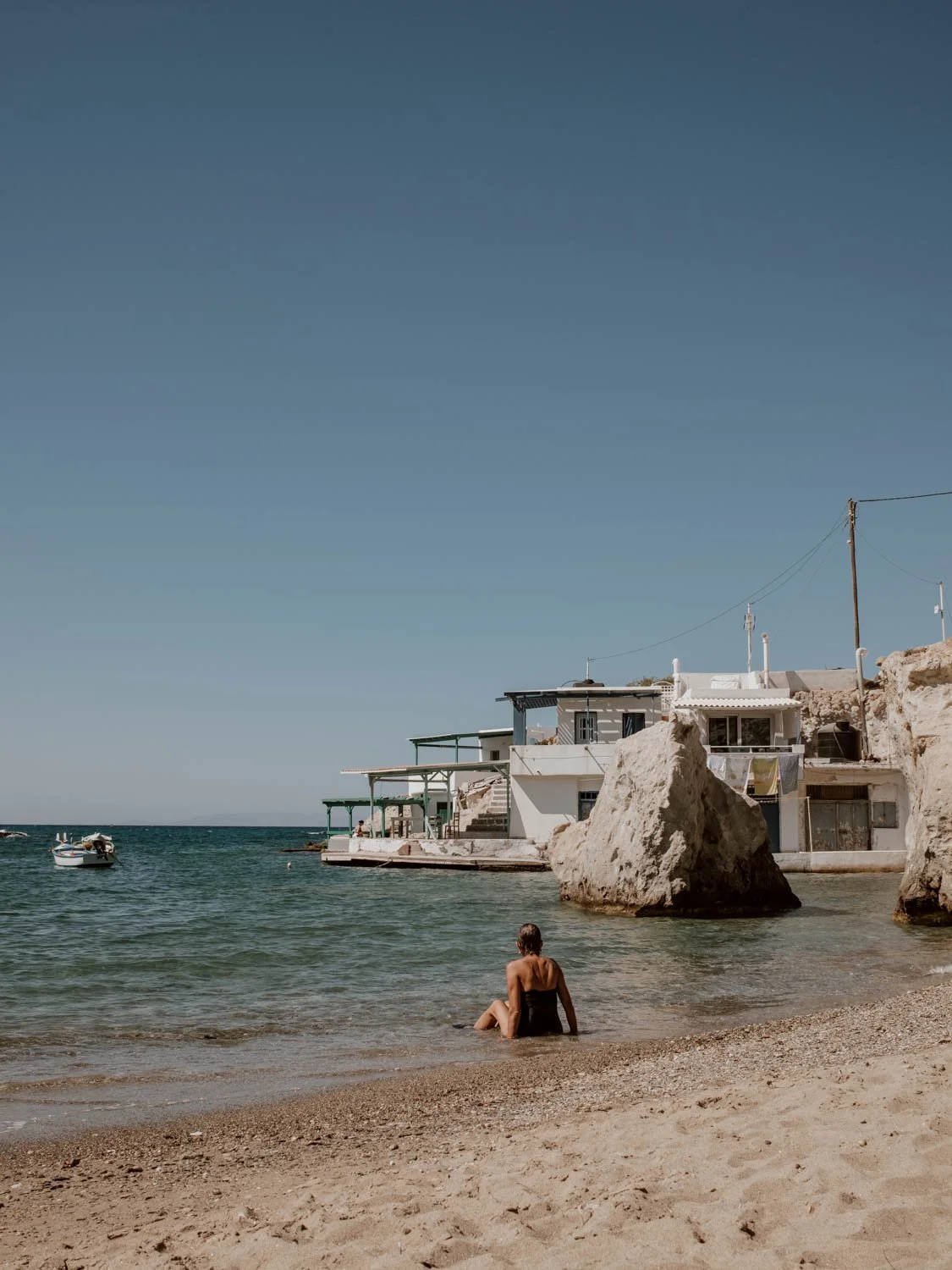
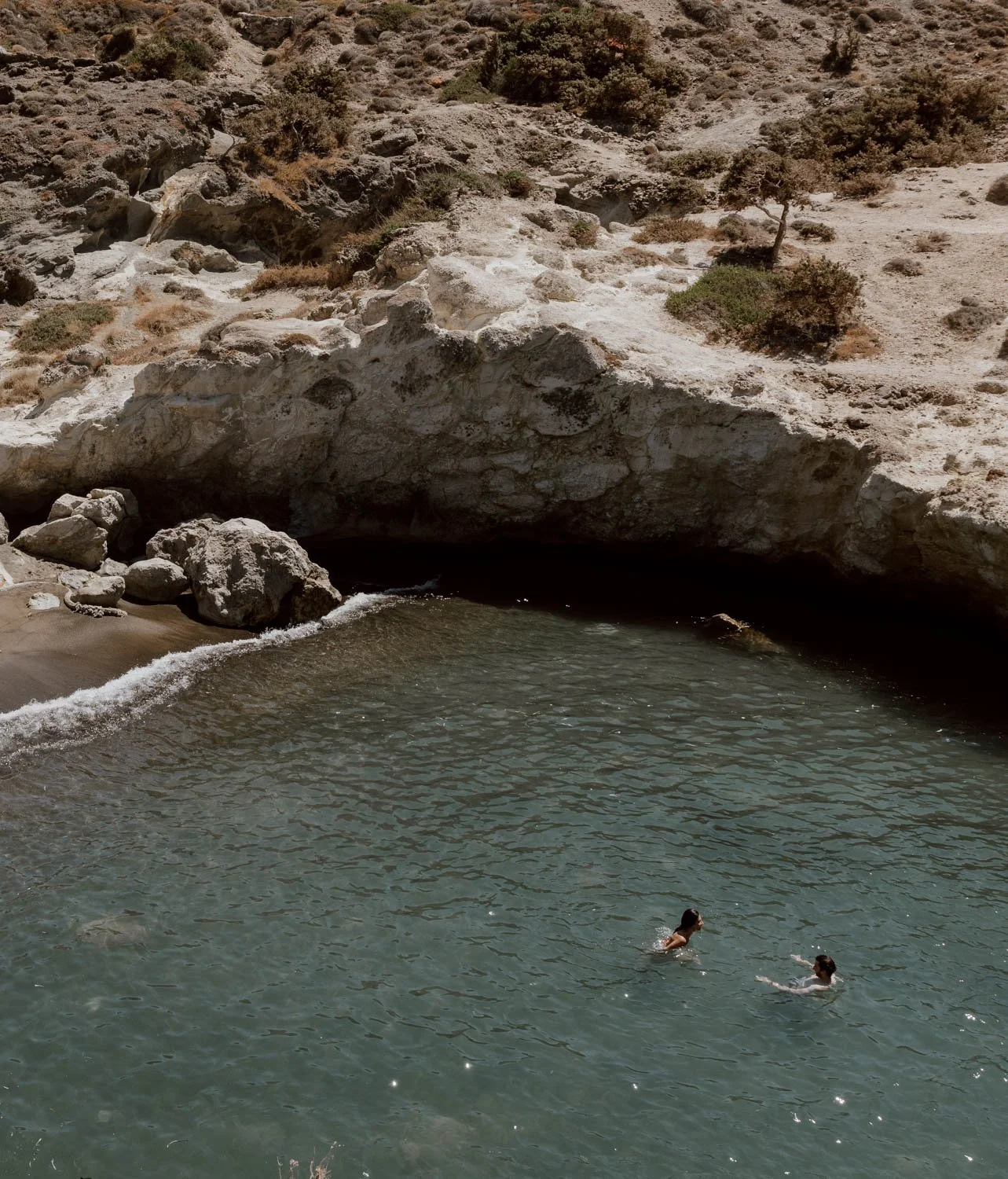
...Then Wine & Dine in Pollonia
We based ourselves in Pollonia for the first part of our trip and, for some visitors, it will be the perfect place to say in Milos.
On the northeastern tip, looking across the water to Kimolos, it gathers around a small harbour and a sheltered bay with the kind of seaside set-up that is always going to appeal: waterfront tavernas, a family-friendly beach on your doorstep, a line of low-rise stays, and a pleasant balance between tourism and daily life.
It’s the third ‘town’ of the island - smaller and less frantic than Adamas, more resort-style than Plaka - and has everything you’d need for an easy-going holiday base.
We don’t recommend going out of your way just to spend time on its beach, but Pollonia delivers in other ways.
For those following our recommendation to drive the northeast coast, pitching up there once you’re a little salty and sunburned is a very good idea: shade, cold drinks, and a late lunch or early dinner at the handful waterfront restaurants await (as well a brilliant backstreet gyros if that’s more your mood).
Otherwise, daytrippers are drawn to Pollonia for two signature experiences you won’t easily find elsewhere in Milos.
First is the family-run Kostantakis Winery. Their relaxed tours involve a walk through the vines and a look at the small-scale production process, before sitting down to enjoy a generous lineup of the estate’s wines paired with local cheeses and island products. It’s part tasting, part storytelling, with the winemaker sharing how Milos’ long-neglected volcanic soil vineyards have been slowly revived over the past decade.
If you don’t consider yourself a wine person, this would be a lovely way to start your journey.
You can read the excellent reviews and book with free cancellation here and here
Then, as the temperature fades to that wonderful summer evening balm and you’re ever so gently sozzled, take your place at one of the restaurants looking out on the bay. These spill onto the beach and harbour, with tables and chairs lined along the water’s edge or on a raised wooden deck, with the soft lapping of the the waves providing the soundtrack. It’s a lovely, unpretentious dining setting, but also incredibly popular so it’s a very very good idea to make a reservation.
The menu focusses on fresh seafood and traditional Greek plates.
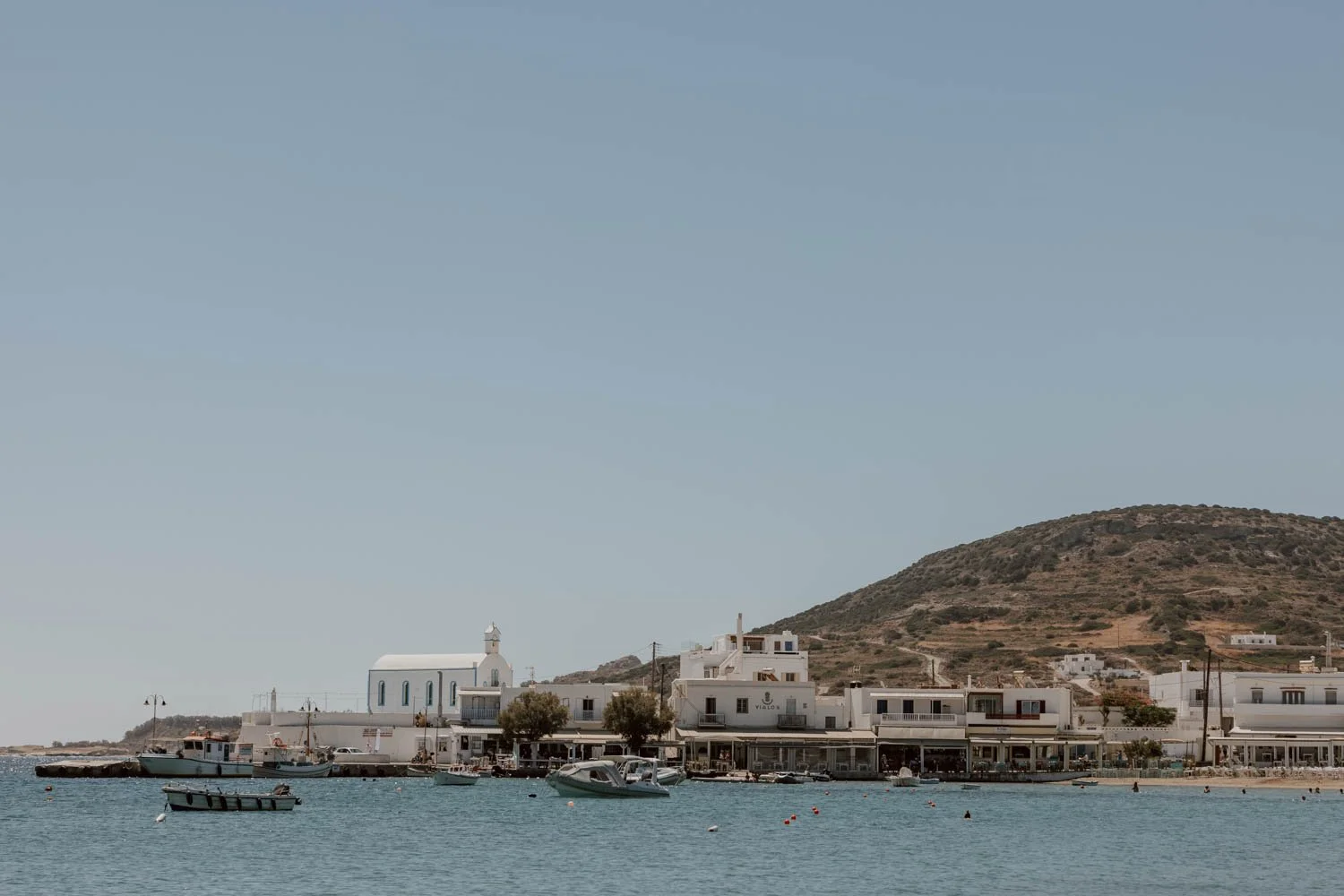
Go | As mentioned, you can easily reach Pollonia on the bus from Adamantas in 30 minutes, €2. If arriving with a rental vehicle, make your way to the dusty, free car park steps from the beach (here on Google Maps).
Book | The wine tour runs at 12.30pm and 6pm - book with free cancellation here and here.
These timings mean, you can choose arrive there for midday, do the tasting tour, enjoy lunch by the water, then have a few hours on the beach.
Eat | We can personally recommend Nama, whilst Yialos is a long term favourite. Others we’ve great reviews include Rifaki, Akrotiri, and Ethos
Tip | If visiting purely to wine & dine, we recommend spending your morning and early afternoon at a beach elsewhere, go home to wash the sand off, change into something nicer, then arrive in Pollonia in the late afternoon for the 6pm tour.
Know | The ferry to Kimolos departs from Pollonia, taking 20-30 minutes. The neighbouring islands has a population of around 900, and some do it as a day trip from Milos. We looked into this quite a bit, but ultimately decided to focus on slowly doing the best things to do in Milos and savouring our time, rather than spreading ourselves too thin. Next time though…
…and we’re happy to share that we actually went to little Kimolos the following summer - and sort of got stuck there.
Find out more in our Kimolos travel guide.
Do / There’s a highly-rated shared boat trip from Pollonia to the uninhabited island of Polyaigos - find out more here.
Stay | The absolutely stunning White Pebble Suites is the foremost luxury stay in this part of the island (with a price tag to match), but Milos Breeze is a larger boutique hotel that offers a refined stay at a slightly more affordable choice. Personally, we love the look of the longstanding favourite, Captain Zeppos which offers four stunning suites in the overlooking the harbour.
Alternatively, if you’d prefer your own space, Pollonia has an abundance of excellent Airbnbs. We stayed in Felix, a quirky four-bedroom house but would love to stay in the super special Poseidon House if we ever returned. Kostantakis Pool House is a gorgeous three-bed option, Esperia House is our two-bed pick and Zen Milos Green Apple is a fantastic budget-friendly option.
Step Into Ancient Greece
Some people say the Venus de Milo causes trouble, but we think she’s ‘armless.
(sorry, I’ll get my coat)
We profess that, until we arrived, we’d never made the connection between the island and one of the world’s most famous statues. Though she has resided in Paris for nearly all her modern life, this is where she was discovered.
There are several versions of that discovery, with most suggesting a farmer found her buried on his land, but two things are certain: she was dug up in 1820 and a Frenchman got involved at some point. The 6’8 statue, thought to date from approx 120 BC, was bought and presented to Louis XVIII, who gifted it to the Louvre, where it quicky became one of the highlights of its star-studded collection.
So, whilst Milos isn’t as notable as other Greek destinations for its antiquity or historical credentials, the absent Venus is a reminder that its story still stretches back millennia - and there remains something here to intrigue the history-minded traveller.
A plaster cast replica has long existed in Plaka’s small Archaeological Museum of Milos, but another copy was recently installed close to the discovery site (the precise location is unknown). This Venus is outdoors and faces the sea but, not too sound too snooty, the location could have been given a little more consideration and space from the road. Find it here.
Instead of just driving out and stopping for a photo, those who’d like to learn more should instead consider walking down from Plaka or the closer Trypiti, and combining the new Venus with two nearby historical sights.
The Catacombs
These remarkably well-preserved catacombs, a secret early Christian burial site from the Roman-era, cover quite a small area and the ticket is a bit steep at €10 per person. However, this includes a 5-10 minute guided tour and helps to preserve the site. Under 18s and EU students enjoy free entry.
Note that, from the statue, you’ll have to walk down stairs for about five minutes to the entrance, and then go back up the same way.
You can find the Catacombs of Milos here on Google Maps, open 8.30am-3.30pm (closed Tuesdays).
The Amphitheatre
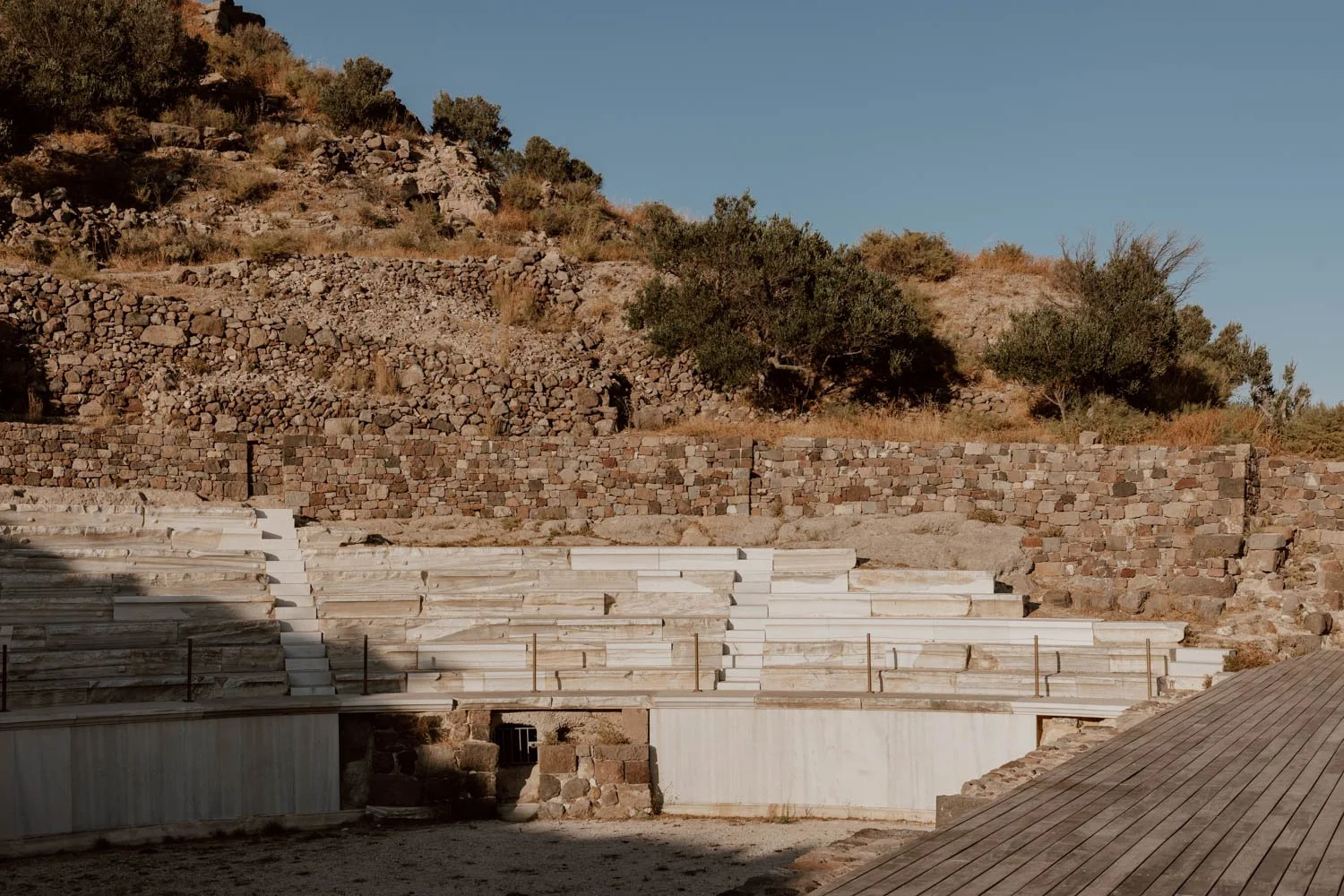
It’s also a five-minute walk from the statue down to the partially-restored Amphitheatre. It’s in a wonderful setting on the slope - those ancient Greeks really were on to something - and it’s still used for open-air performances in summer. We actually went there just before sunset when they were setting up for a show, and still regret not cancelling whatever our plans were to stick around.
For more historical context and artefacts, factor in an hour for the Archaeological Museum of Milos in Plaka. Set in a lovely Neo-Classical buildling, its summer season hours are 8.30am-3.30pm (closed Tuesdays & Thursdays). Entry is €5 for adults, €3 concessions.
It’s best to do this walk in the morning or late afternoon. The path from the statue, via the Amphitheatre, ultimately takes you down to Klima, so you could extend your visit to include, but consider how you’re going to actually back to the bus up the hill.
Top Tip // We drove through Tripiti on a couple of occassions, and were envious each time of those dining at Restaurant OKTO and Glaronisia. On the same narrow street, they’ve both got an outdoor terrace with great views, and the former is very highly-regarded by foodies.
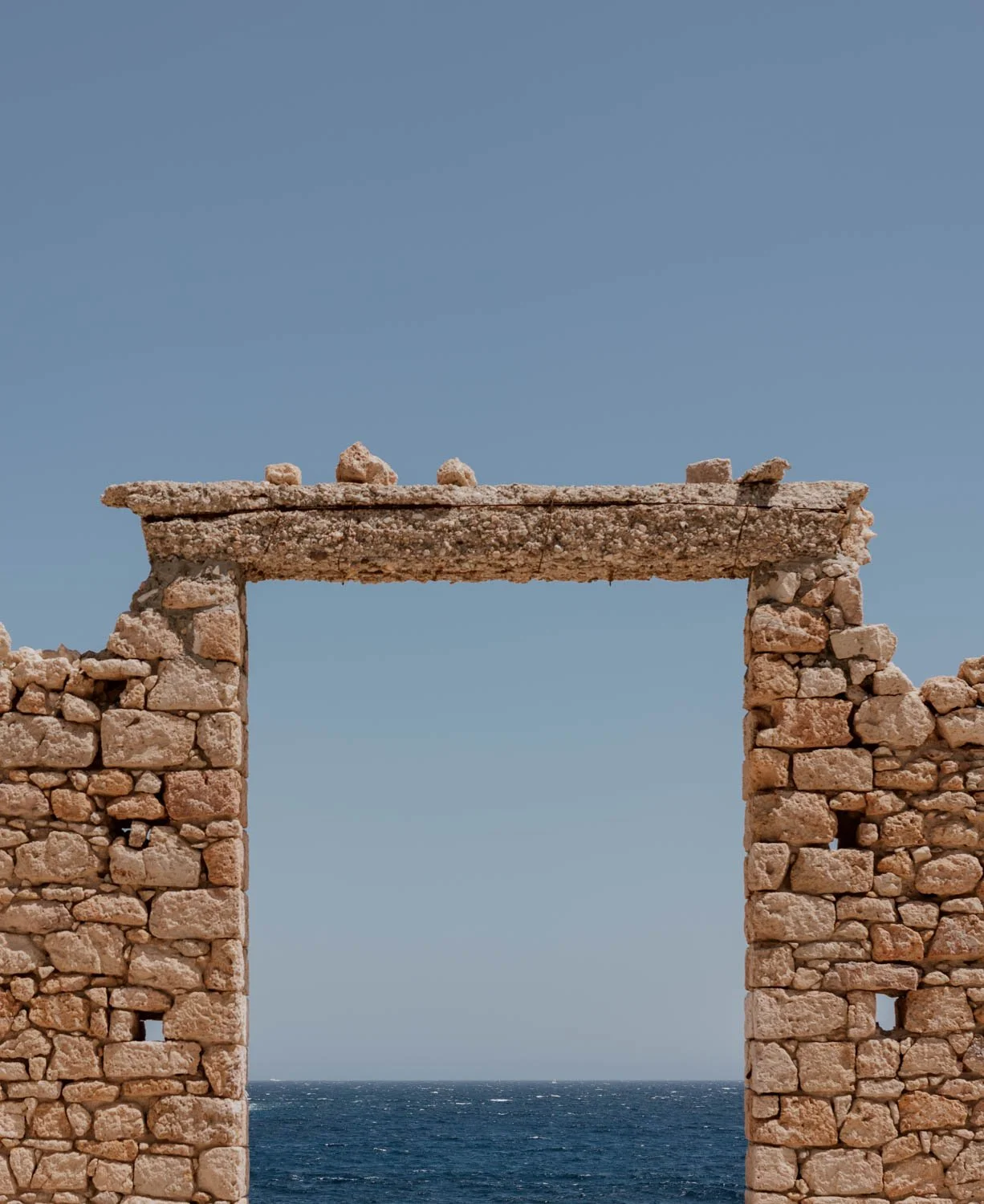
Go Rogue in The Wild West
We like to tell people that Milos is half as big as it appears.
When planning, the eagle-eyed amongst you may have noticed that all the main experiences and things to do in Milos are heavily tilted toward the island’s northeast and southern coast; the whole of its western half is rarely mentioned.
There are reasons.
Nearly all of that half remains untouched and undeveloped, with just some poorly-connected dusty roads, a few homes and, genuinely, nothing else. It’s off-limits for (nearly) every car, scooter, and ATV rental company, and nobody stays over there, let alone ventures across for a day trip.
Curiosity and nominative determinism meant we simply had to cross the imaginary border, but it also sounded like way to have an adventure.
We discovered three things:
It is really rugged and remote, and we saw only a handful of other people out there
Emily really does not enjoy when I do powerslides on an ATV
There are some gorgeous beaches, that you’ll probably have all to yourself
Is it worth the effort and expense of setting aside a whole day out of your Milos itinerary? Probably not for those short on time or just wanting to relax and focus on the highlights of Milos.
However, if you’re a traveller who wants to escape the summer crowds, or just thirsts for a bit of adventure, then heading west is definitely one way to find it.
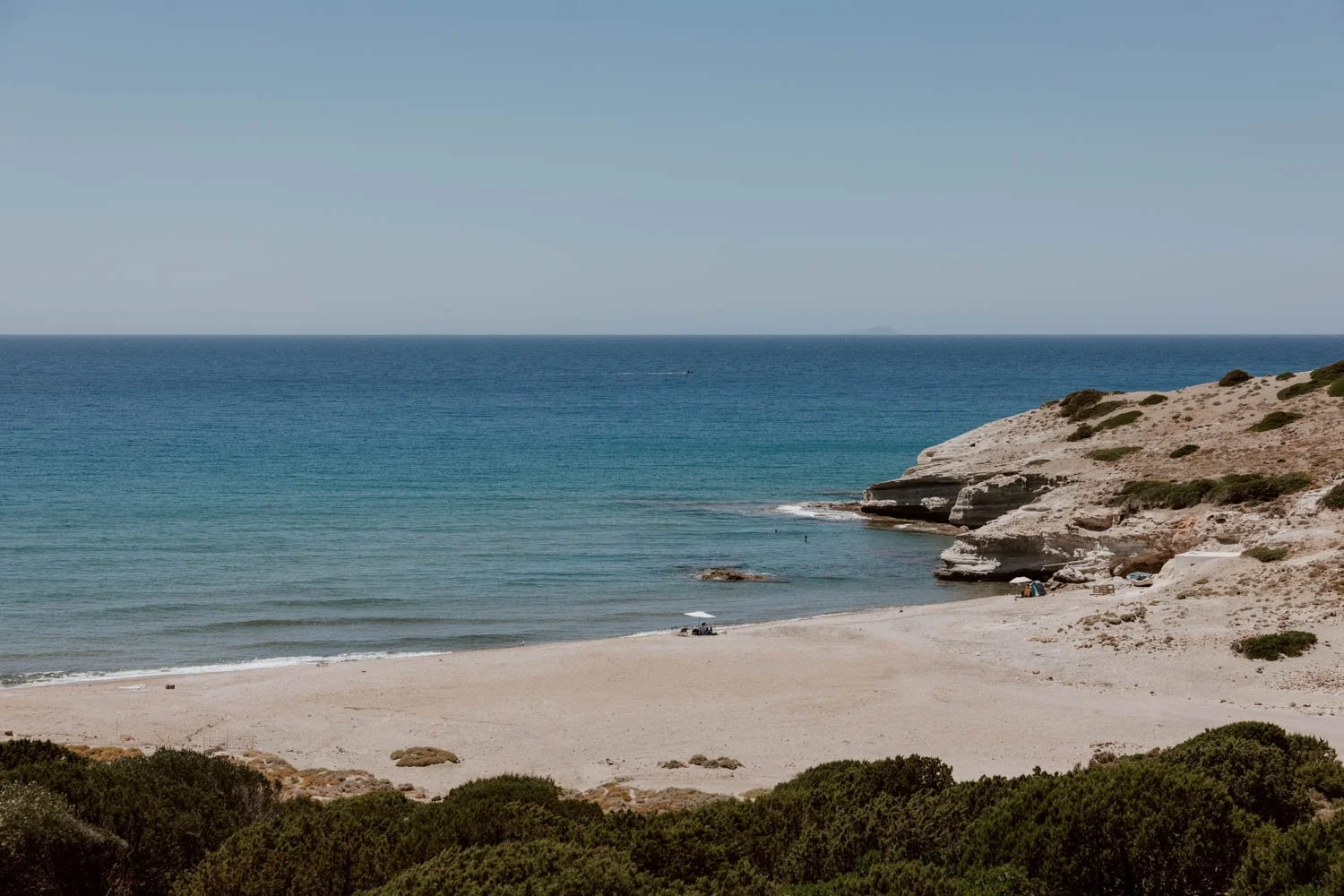
Visit | We recommend Ammoudaraki, Triades, and Agios Ioannis - find out more in our guide to the best beaches in Milos.
Know | You can only attempt to visit western Milos with a suitably powerful ATV or a 4×4, but some rental companies explicitly forbid even this with their vehicles. Do not attempt to visit this part of the island without the suitable vehicle and understanding of the conditions.
Prep | The distances and time spent out in western Milos can be greater than you anticipate, and there’s zero infrastructure. You need set out from Adamas with a full tank of fuel and bring in everything you’ll need (plus extra) - hats, suncream, snacks, water, sunshade.
Mobile and data signal is also very patchy, a fully-charged phone and a downloaded map is essential, as well as contact details for your rental company.
Alt | It’s a totally different way to spend a day, but we should mention that the boat tours from Adamas sail down this side of the island on their way south, and include some swimming, beach, and cave stops - like this one.
Stay Somewhere Really Special
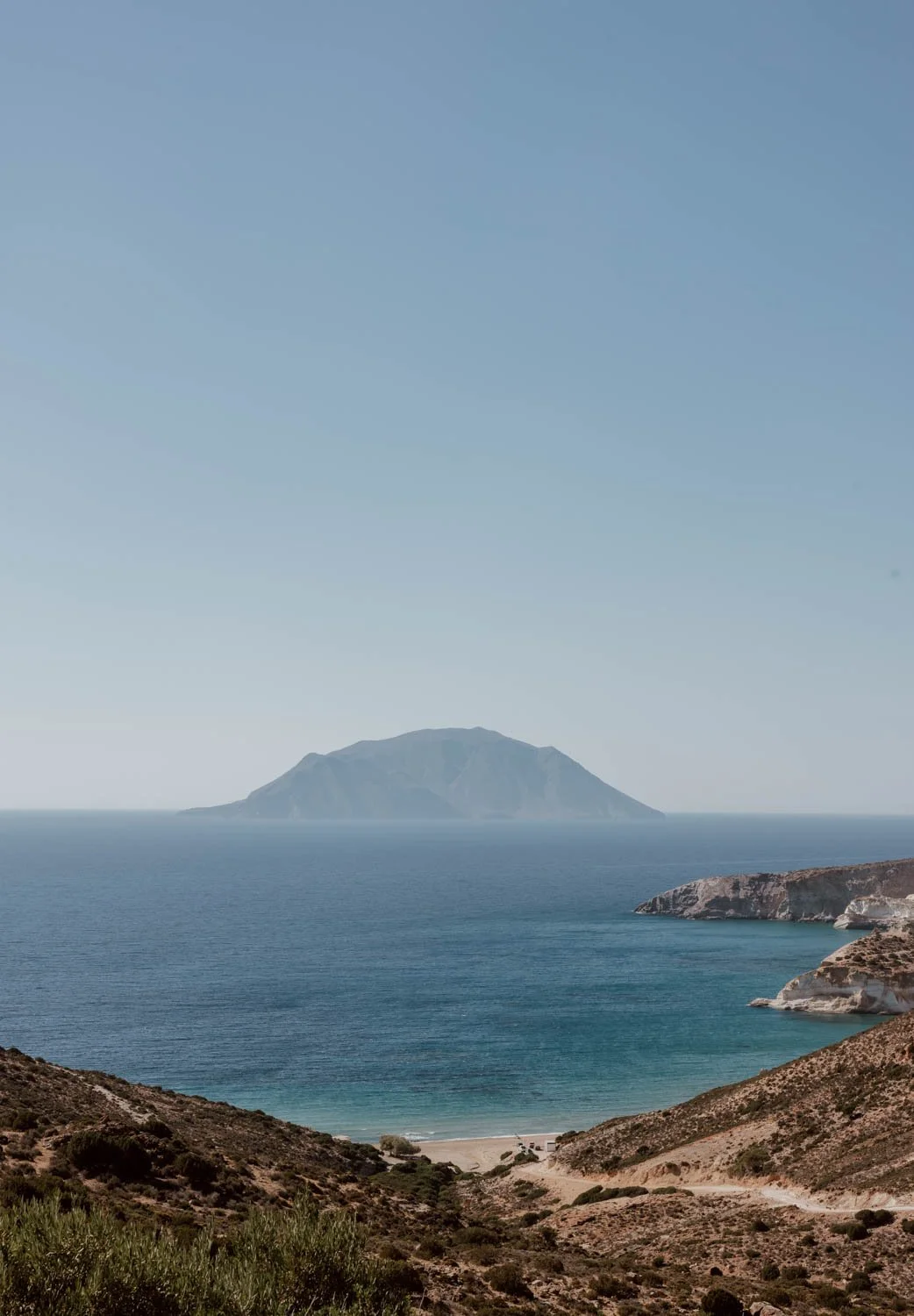
Our biggest surprise in Milos? That you can still make this island what you want it to be.
Although it’s nowhere near the levels of Santorini, Naxos, and Mykonos tourism, Milos is far from a secret - it’s a social-media darling and an increasingly popular choice in the Cyclades. We knew that going in and put expectations where they needed to be.
First sight and every pass through the busy port town of Adamas reinforced all this. Base yourself there for a few days in July or August, hopping only between Kleftiko, Sarakiniko, and Plaka for sunset, and you’d leave with a rather blinkered impression of the island.
Could you still have a bloody great time? Absolutely. For some travellers though, it may not deliver the overall experience of a Greek island escape.
This is partly why we intentionally chose to split our time in Milos across two distinct bases and accommodations - and if you’re here for longer, we’d encourage you to consider doing the same.
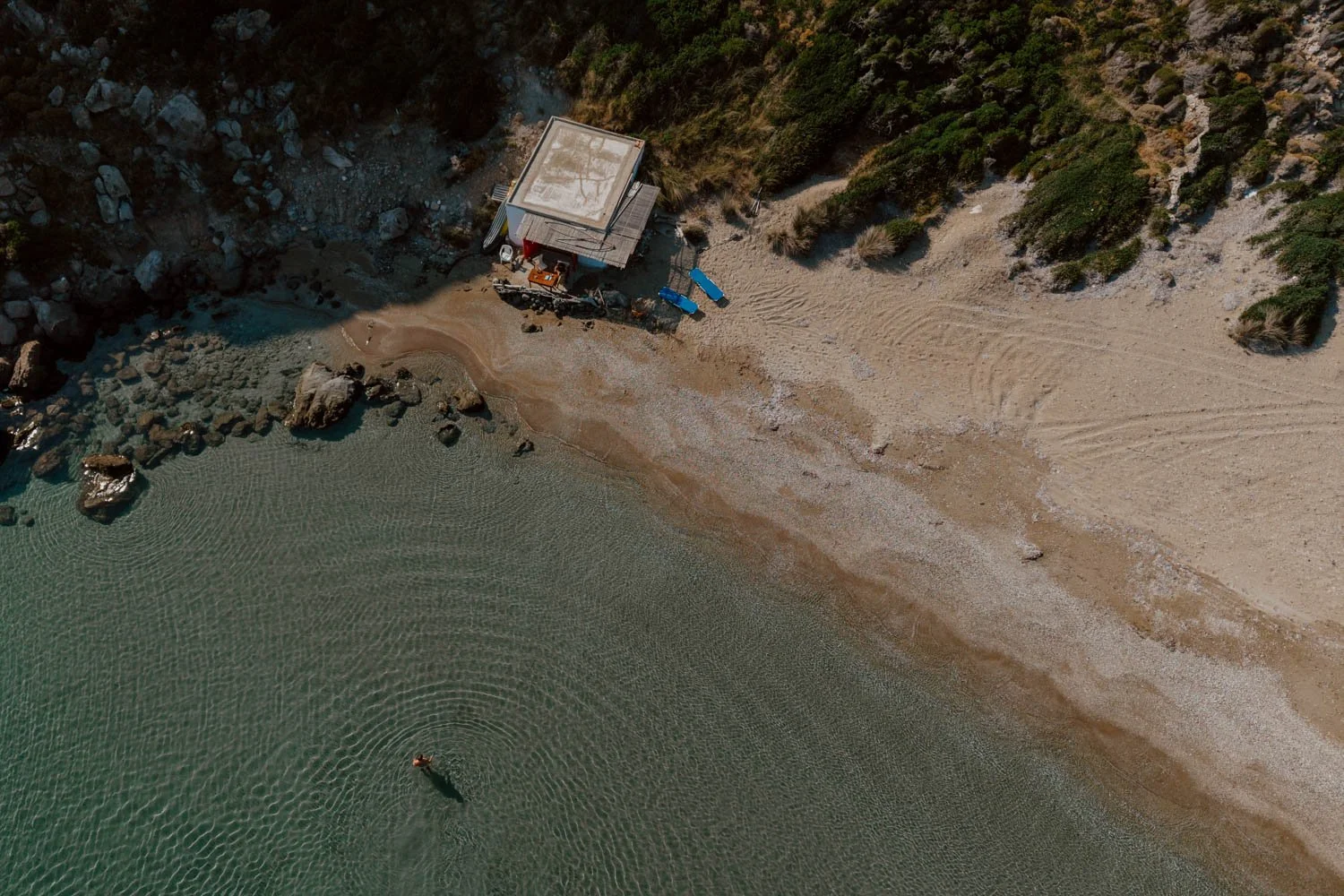
Where certain bases - Plaka, Pollonia, and Adamas - deliver in terms of convenience, ambience, amenities, and range of accommodation, the layout and topography of Milos offers a myriad of secluded boutique retreats, isolated converted syrmas, and scattered traditional houses.
In short, the sort of stay that can really make your overall experience shift from ‘great’ to ‘unfortgettable’.
As we hinted at right at the outset, the decision to go beyond our usual budget for this converted boathouse at the end of a quiet beach did just that - and it still crops up in our conversations at least twice a week.
It really was that special to both of us.
Now, the easy thing to do here would be to simply push you toward Klima and Firopotamos, but the price and popularity of those may not be right for everyone. The remoteness and logistics of our boathouse may also not be right for everyone. Some may want rustic isolation, others a sense of understated luxury not too far from a restaurant.
You can find a curated selection of the best places to stay in Milos in this guide - we’re sure you’ll find your own somewhere special.



Our guide to the best things to do in Serifos, from exploring hilltop Chora, and wine tasting in the wilds, to finding the island’s loveliest beaches.