



How To Visit Ostrog Monastery, Montenegro
“It is as though this rocky nest had waited for centuries to become the home of an uncontainable sanctuary... In Ostrog heaven and earth embrace. The earth rises up and is joined to the heavens, and the heavens come down to the earth, revealing to all people the greatest of mysteries in the person of the God-Man, Jesus Christ.”
I think you can probably blame it on my British sensibilities; I saw a queue and joined it.
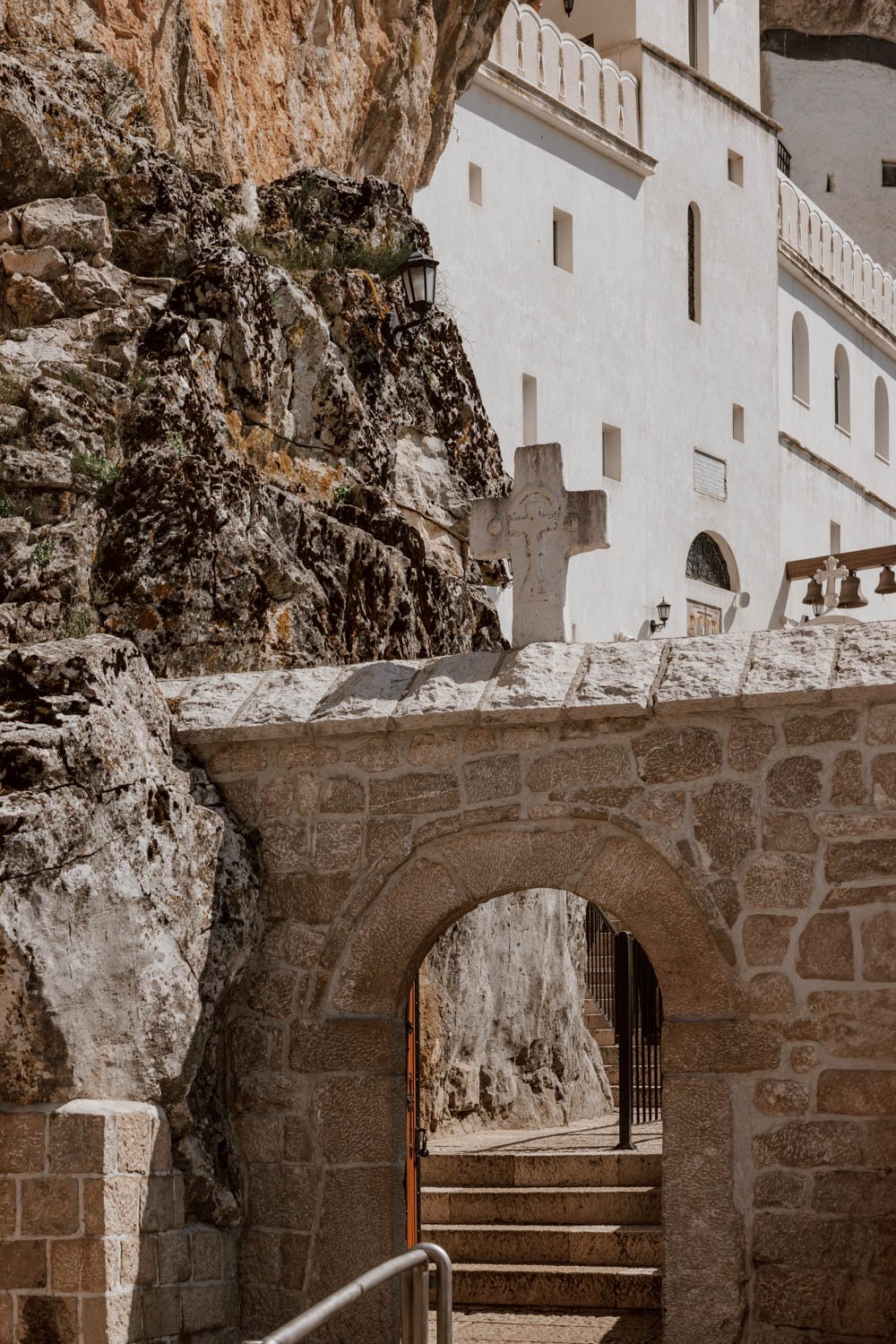
We hadn’t done much research on Ostrog beyond how to reach it and having arrived later than planned, the main terrace felt busier than I’d expected. Ahead of me people were moving through a small stone archway set back from the plaza and so, without pausing to ask what waited beyond it, I followed. Quickly I found myself standing in a line outside a narrow doorway carved directly into the rock face, the air carrying the faint scent of wax, incense and something older, cooler.
No one spoke. The queue moved in increments rather than steps until the interior, all frescoes and golden light, came into focus: an Orthodox priest in dark robes; a young couple holding their child between them; a gesture, a murmur, the child lifted briefly and blessed beside a glass-covered tomb.
It was only then that I understood where I was.
I had walked into the cave church that holds the relics of Saint Basil, the 17th-century bishop who retreated to these cliffs during the instability of Ottoman rule and whose body has rested here since his death in 1671. More than three hundred and fifty years later, people still come to stand beside him, because many believe that a prayer spoken here - close to his body, within this narrow chamber of rock and candlelight - can help cure illness or ease whatever has become heavy in their lives.
By the time I reached the front of the line, I realised that I was, inadvertently, waiting for a blessing myself.
I muttered “English,” then, for reasons that felt suddenly important, “Christian.” The priest nodded. Whatever he said was not in a language I understood, but it was delivered with the same gravity as to those before me. I bowed when he indicated. I kissed the plaque bearing Saint Basil’s name because that was what the moment required.. And then I stepped aside, slightly disoriented, aware that I had participated in something I hadn’t set out to seek, and that it had not been staged for visitors.
Indeed, Ostrog does not present itself as a tourist attraction.
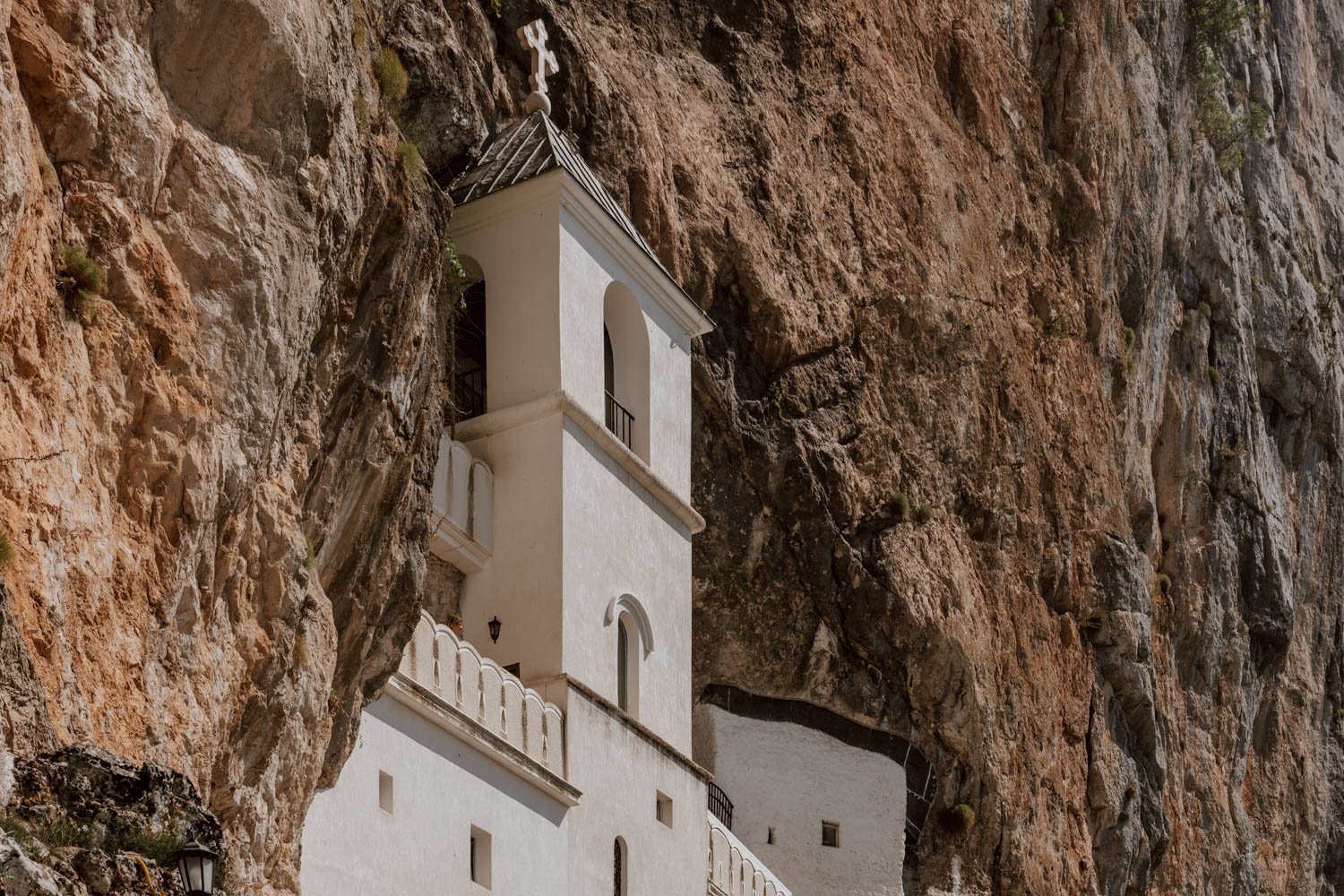
It is a working monastery, improbably carved into a vertical cliff above the Bjelopavlići plain, and seemingly floating somewhere between heaven and earth. The most important pilgrimage site in Montenegro, it has been shaped by centuries of devotion and continues to draw Orthodox Christians from across the Balkans - some barefoot ascending the same steep bends as the cars but without complaint, treating the climb itself as part of the prayer - alongside Catholics, Muslims, and travellers who may arrive with curiosity rather than conviction.
For visitors like us, it’s the startling white façade fixed into dark rock that first catches the eye from the valley below. But, as we often find when encountering certain religious sites across the world, it’s not the architecture, however impressive, that lingers afterwards; it is the quietly resolute faith exhibited by the believers who cross their thresholds - steady, unshowy, deeply held - that the prayers spoken there will be answered.
This is our guide to visiting Ostrog Monastery in Montenegro
The Ostrog Monastery Essentials
· Most important pilgrimage site in Montenegro
· Easy day trip from Budva, Kotor, Podgorica, and Lake Skadar
· Don’t rely on all Google Maps listings
· The drive up is narrow and challenging
· Free to enter
· Dress, act, and photograph respectfully
· Expect to spend 1-2 hours
· Avoid on May 12th, St Basil’s Day as hugely busy with pilgrims
· This super popular tour has departures from along the coast and includes the Monastery alongside Durmitor National Park & The Tara Canyon
The Monastery Layout | Upper & Lower
Ostrog is divided into two main sections:
· The Lower Monastery sits further down the slope and forms the main complex, with accommodation buildings, courtyards, and the 19th century Church of the Holy Trinity.
· The Upper Monastery is the famous part built directly into the cliff face - the white façade that appears almost vertical from the valley floor, and what you’ve likely seen photos of. Two cave churches are carved into the rock itself, including the small chamber that holds the relics of Saint Basil.
The road between the two sections is around five kilometres long, steep, narrow, and very, very bendy! There’s also a footpath through woodland that many pilgrims take between the two setions, particularly those visiting as part of a vow or feast day observance. The walk up can take 30 - 40 minutes depending on pace and temperature. Unless attempting it in the early morning, we really wouldn’t advise this walk in the summer heat.
Top Tip // Avoid visiting on 12th May - this is main feast day for St Basil and the place gets absolutely choc-a-bloc with pilgrims.
How to Get To Ostrog Monastery
During our road trip, we found that Google Maps has loads of wrong listings and locations if just type in ‘Ostrog Monastery’, some of which are nowhere near the actual site and others which mix up the two distinct sections.
To save yourself confusion or a wasted trip, you can find the correct listing for the Upper Monastery here and the Lower Monastery here.
Driving & Parking
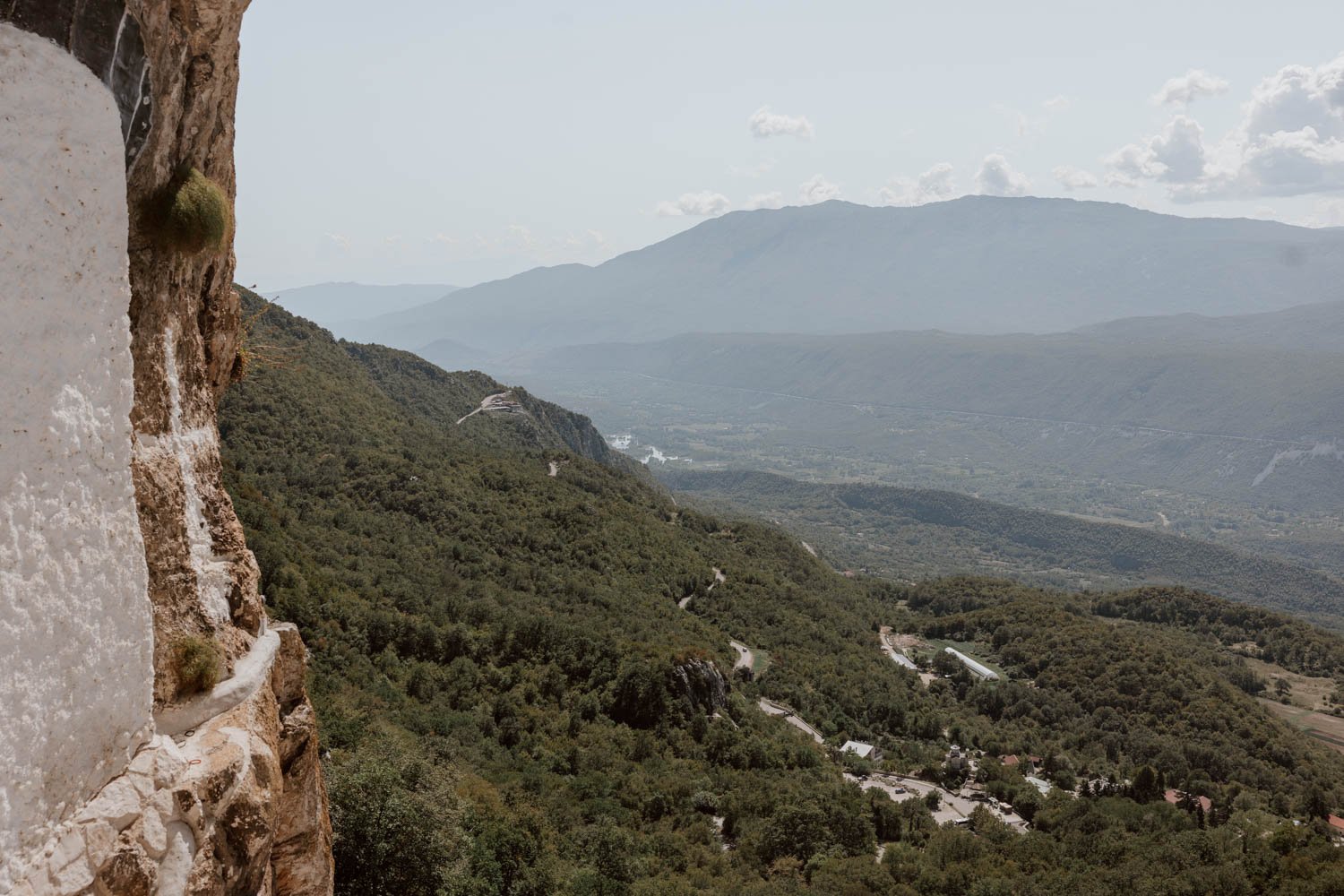
Positioned high above the Bjelopavlići plain in central Montenegro, Ostrog lies roughly 50 kilometres from the capital Podgorica and around 15 from Nikšić.
It’s easiest to reach by car and is a common day trip from places like Budva, Kotor, and Lake Skadar (75 minutes, 110 minutes, 45 minutes driving time respectively).
However, we do have to warn you that the drive between the Upper and Lower Monastery sections is not for the faint of heart. Whilst paved and entirely doable in a standard vehicle, it’s incredibly narrow in sections, with sharp bends, limited visibility, and tiny tunnels that only one vehicle can pass through.
Further, in peak summer months, coaches and minibuses share the route, which means you will occasionally meet something much larger than you halfway around a bend. There are pull-in areas, and local drivers are accustomed to negotiating them (or not using them whilst you shit your pants), but this is not a road to rush. Nervous drivers will almost certainly have a few bum-clenching moments on the drive up!
If you are really uncomfortable with tight mountain roads, consider parking at the Lower Monastery (here on Google Maps) and taking a taxi for the final stretch or joining a guided trip from Podgorica or the coast.
Parking exists at multiple levels, including near the Upper Monastery, but spaces at the very top are limited and fill quickly in summer; after around 10am you’re unlikely to nab one.
Instead, you’ll be directed lower down the slope to a much larger car park (here on Google Maps). It’s free of charge but requires a 10-minute walk along the final section of the Pilgrim’s trail to reach the Upper Monastery. It’s steep but perfectly manageable for those with a decent level of fitness, and is thankfully shaded for most of the way.
Know // We visited the monastery as part of our Montenegro road trip, stopping on the way from Durmitor National Park to Cetinje, so were a little short on time. For this reason, we were only able to visit the Upper Monastery; if you’re visiting as a day trip from Kotor or Lake Skadar, the general consensus is that it’s worth visiting both.
Public Transport
Whilst we wouldn’t recommend trying to reach Ostrog from many popular tourist hubs in Montenegro, it’s perfectly possible to make your way independently from Podgorica, either by train or bus.
· Train + Walk/Taxi | There’s a railway stop named Ostrog on the Podgorica-Nikšić line, and from the capital the journey takes under an hour. However it’s important to note that the station is located at the base of the hill, at least a 35-minute walk from the Lower Monastery (plus another 40 minutes up to the upper section). Perfectly possible to do if you start really early - or visit in the cooler months - and have a decent level of fitness, but not something that many will want to do or be able to manage. Instead, you should plan on hopping in a waiting taxi to the top!
· Buses | These run frequently between Podgorica and Nikšić (the small town around 15 kilometres away), but they leave you with the same uphill problem. Therefore, if relying on public transport, the train is generally the easier option.
Tour
If you don’t have your own vehicle and don’t fancy public transport, the good news is that there are quite a few tour options to visit the monastery, some purely to Ostrog and others that include various other attractions and sites.
The most popular option by far is this highly-rated combo tour which visits Tara Bridge, Durmitor National Park (Black Lake and Žabljak) and Ostrog Monastery, alongside a number of photo spots. There are options to depart from Budva, Tivat or Kotor. It’s a full-on day but allows those basing themselves on the coast to get a taste of the Montenegrin countryside and epic landscapes.
Alternatively, this shorter tour is the best choice if you only want to visit the Monastery. They also offer pick-up locations from various places along the coast (opt for this one instead if you’re based in Podgorica).
If visiting the monasteries of Montenegro is a real focus of your trip, there is also this specialist tour from Podgorica that visits Ostrog in addition to Dajbabe Monastery, the Cathedral of the Resurrection of Christ, the Ždrebaonik Monastery.
Visiting the Upper Monastery
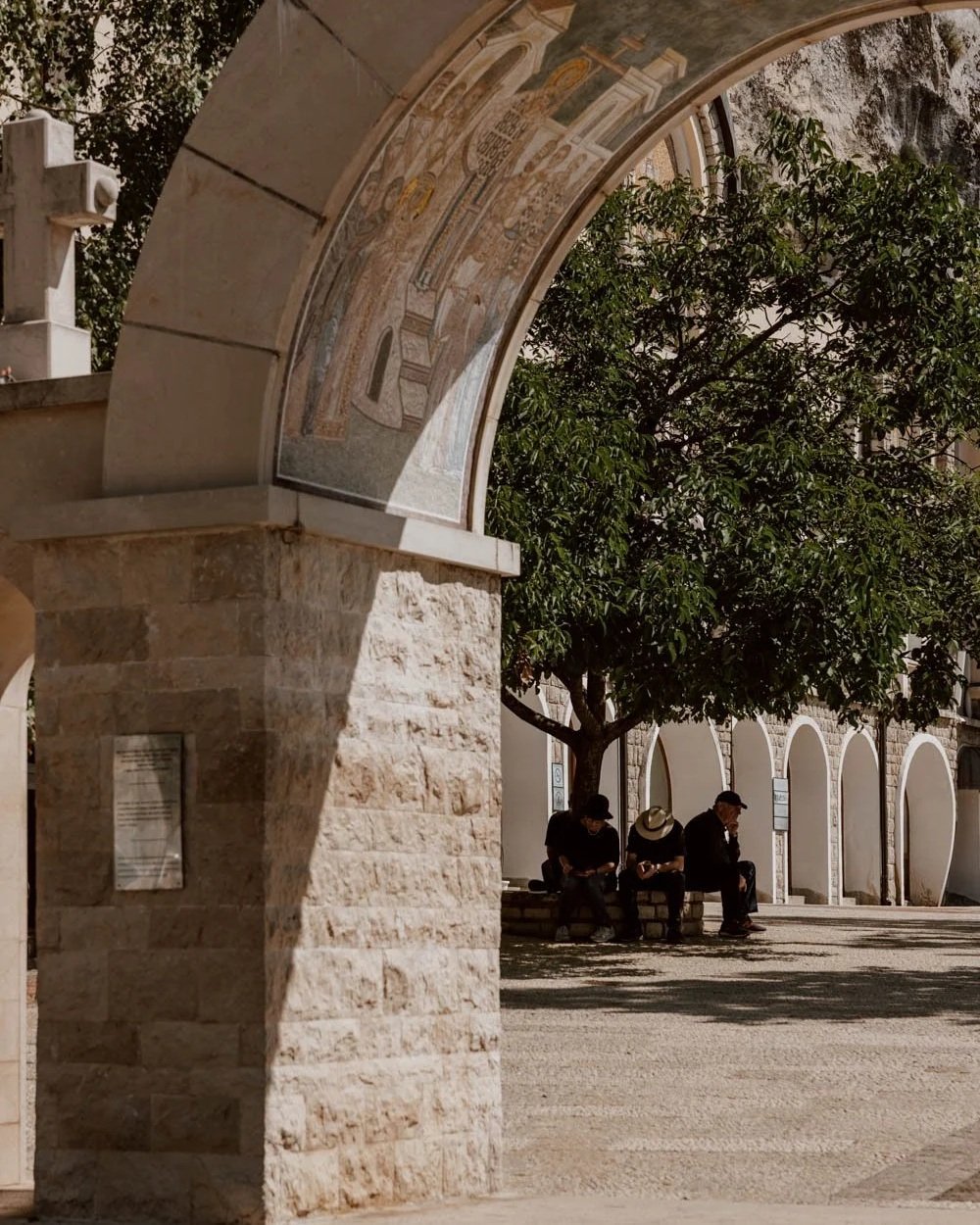
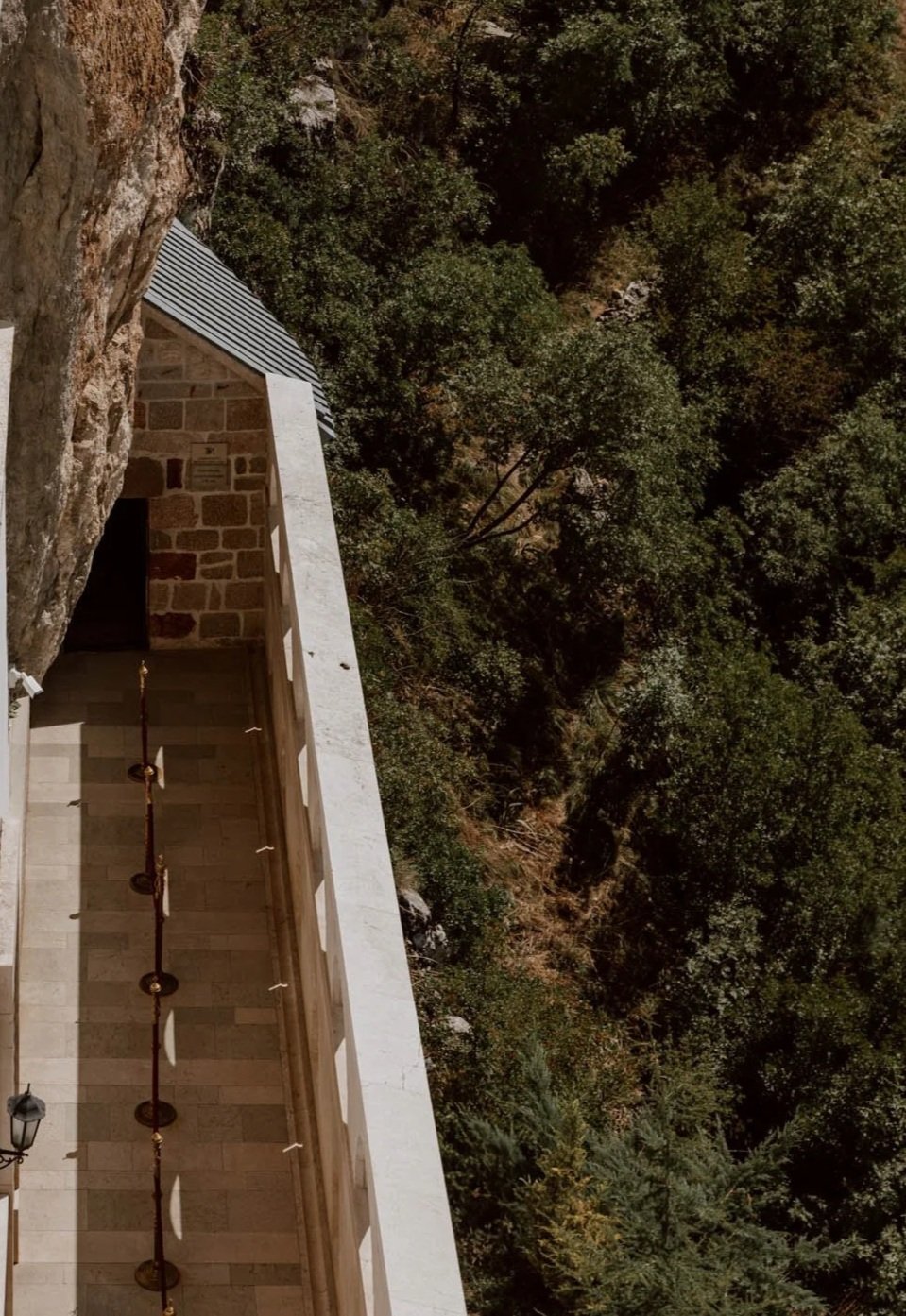
Entry to the Upper Monastery proper is through a stone archway that opens onto a narrow terrace carved into the cliff, with scattered seating and various trees providing much needed shade. Passing through a further small stone archway, you can join the queue for the cave church that houses the relics of Saint Basil.
Waiting times vary considerably depending on season and time of day but in summer and on weekends, the line can extend along the terrace; early mornings will always be quieter.
The cave church itself is compact, dimly lit by candlelight and decorated with richly-coloured frescoes, and the reliquary positioned within a confined chamber that allows only a brief pause before stepping aside for the next person. We can only speak from our own experience, but as outlined in the introduction, there was little formal direction; we all just shuffled forward after each blessing was completed (we also can’t confirm whether the priest is always there to deliver blessings).
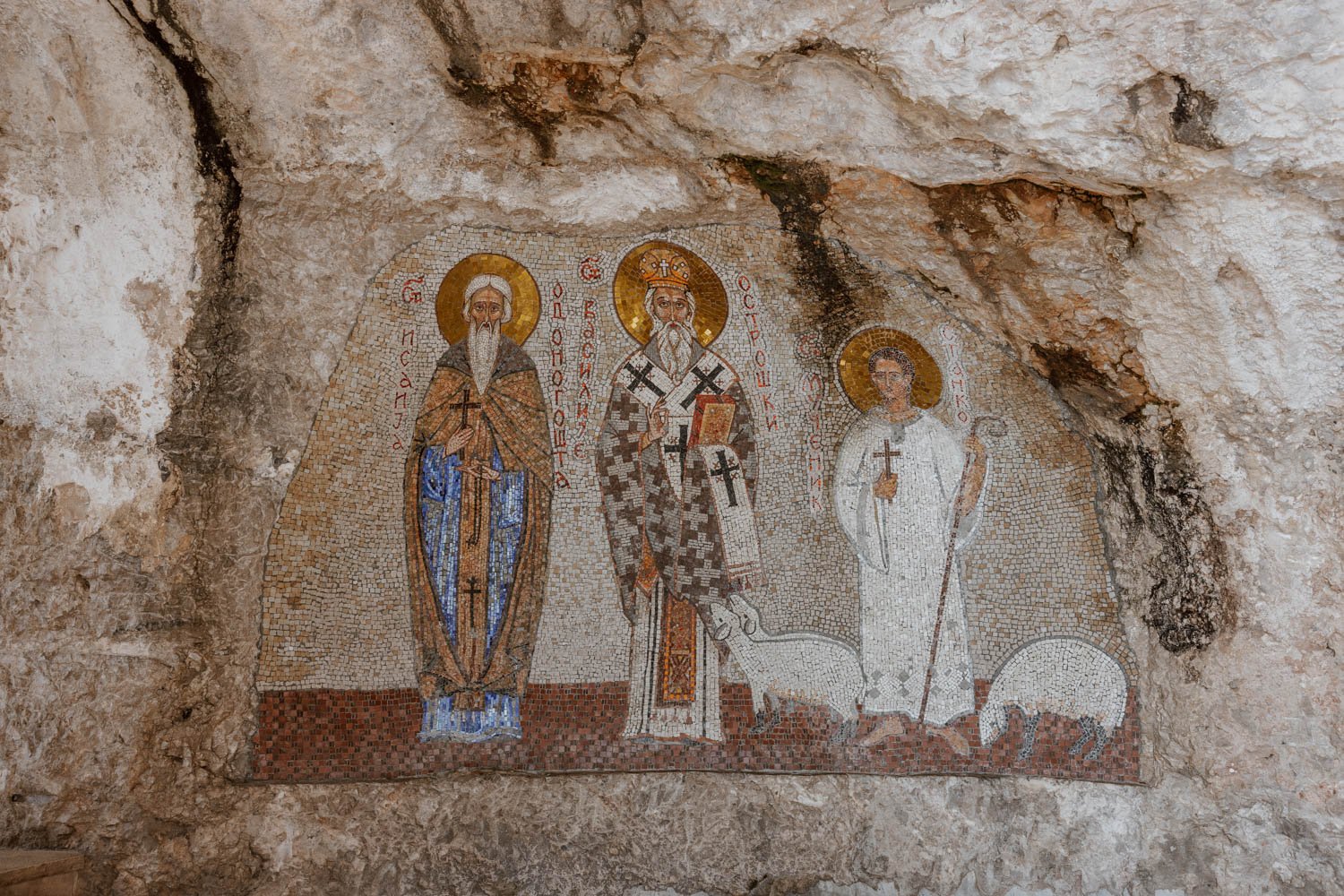
After exiting the chamber, you will return along the same stone terrace and can ascend a narrow set of steps to the next level above, where you will find a series of wonderful mosaics have been applied directly to the rock wall.
We noticed that this second terrace was often overlooked by visitors but we’d highly recommend seeking it out, if only for the spectacular views across the Bjelopavlići plain below.
Know // While much of the original monastery was tragically destroyed in a fire, the two small cave churches were untouched by the flames and still retain their original 17th century frescoes.
Staying Overnight
Whilst this isn’t an experience the vast majority of you will opt for, the monastery is well set up to accommodate overnight guests, and has been doing so since it was founded in the 17th century.
It’s open to anyone, but is something that is only really done by pilgrims and the devout.
Information is limited, but if you’d like to spend the night in Ostrog, you have three options:
· The first are the single-sex, Lower Monastery dormitories. These are pretty basic - closer to a pilgrim shelter than anything most travellers would think of as accommodation - and offer around 10 beds to each room. We believe the current price is €5 per person and you should contact the Monastery in advance to make a reservation.
· There is also a large bunk room at the Upper Monastery, which sleeps up to 100. Unfortunately we don’t have a lot of details on this option.
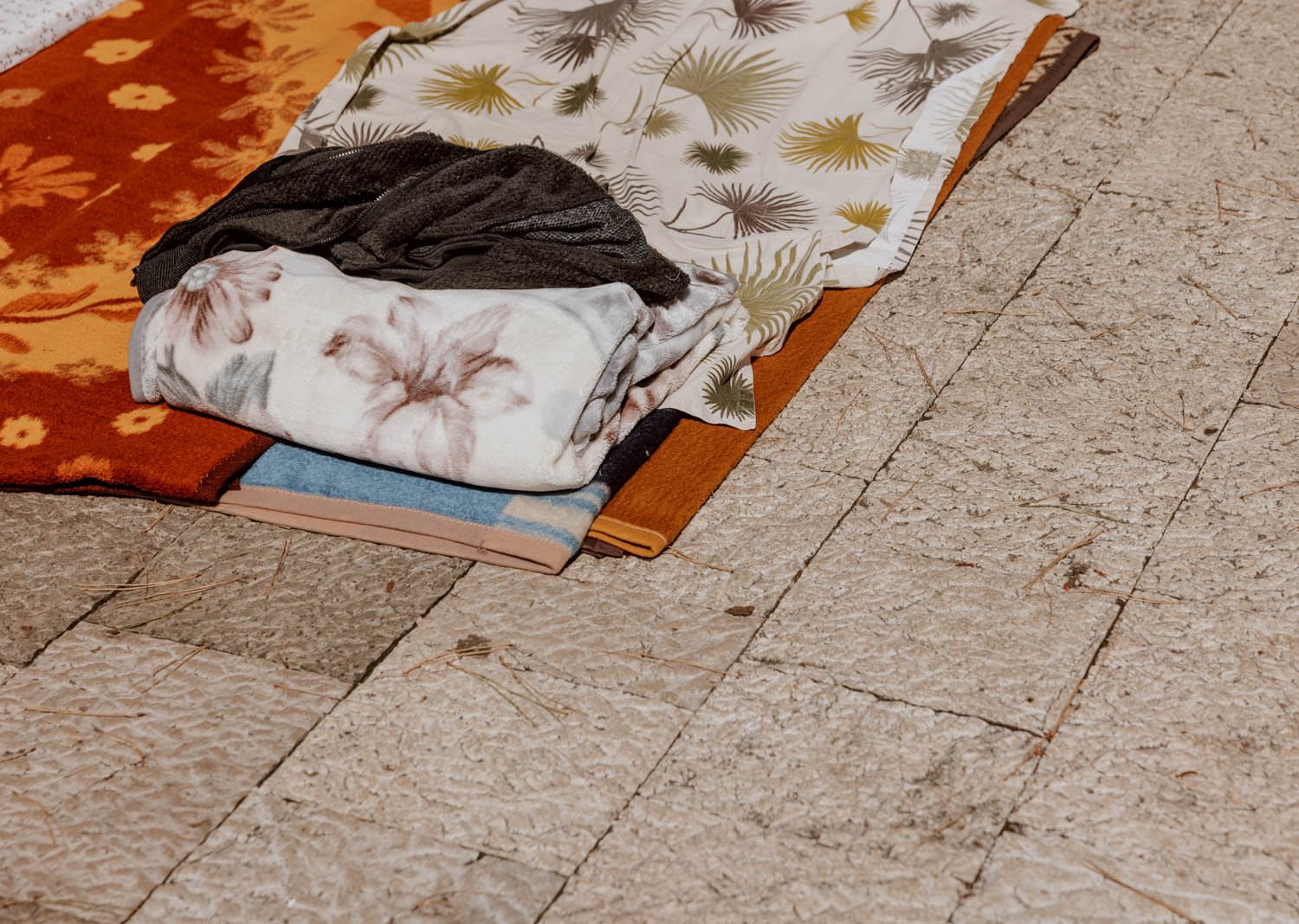
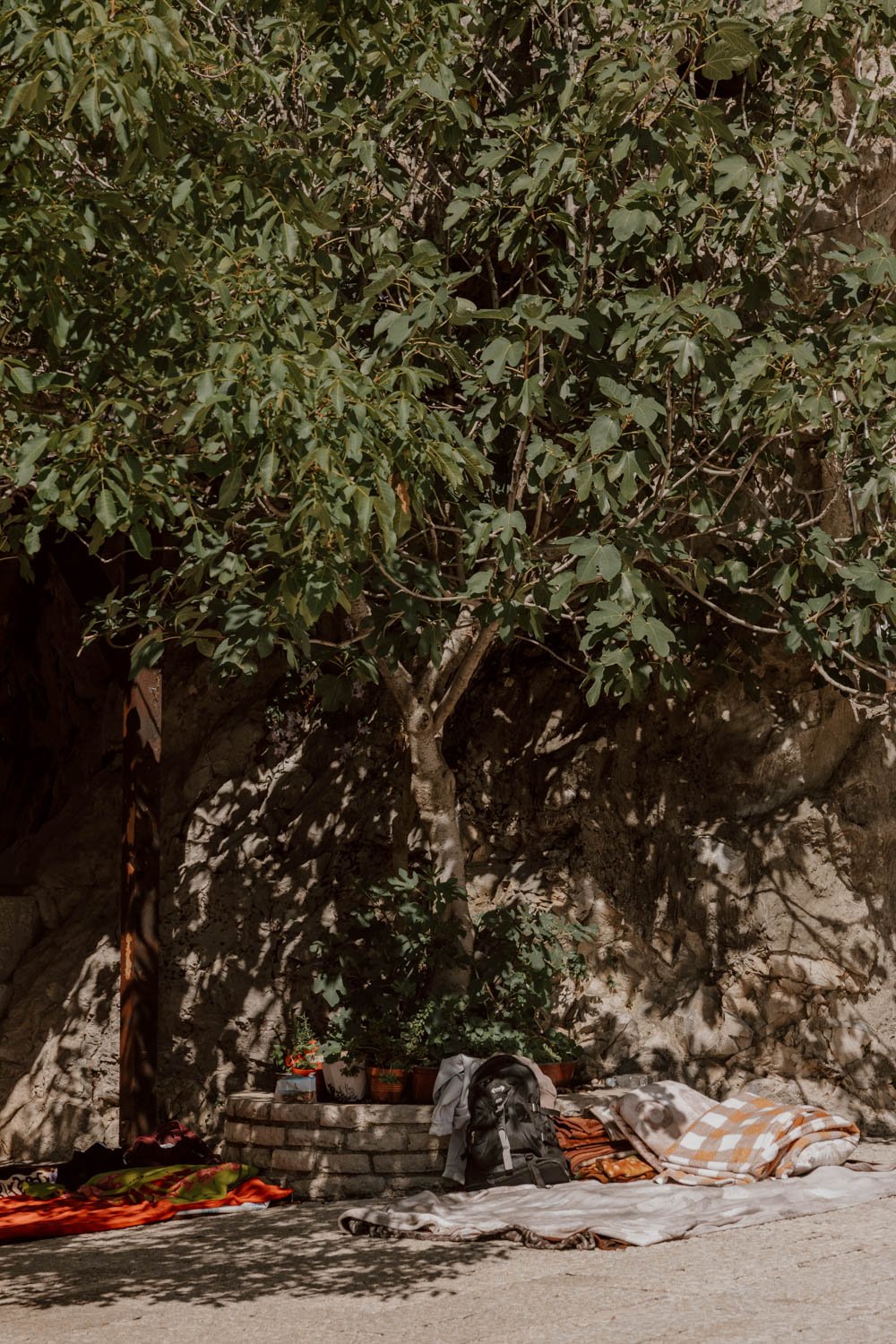
· The final option is to sleep outside on monastery grounds. When we visited, there were already various people settled beneath the trees on thin mattresses, and it appeared that these, along with blankets, were available for pilgrims to use free of charge.
Note that no matter where you sleep, the wake-up call is at 5.30am.
Dress Code & Practical Etiquette
Ostrog is an active Orthodox monastery, not a heritage site; how you dress and act should reflect this. Some very important advice to follow and take seriously as a guest is:
· Shoulders and knees should be covered for both men and women, and lightweight layers will be your go-to if visiting in the summer. I (Emily) wore a full-length jumpsuit and threw on a linen shirt to cover my shoulders and chest. There were a few women with head coverings within the complex itself, though it’s not expected.
· If you arrive in inappropriate dress you’ll find a couple of guys at the main gates handing out simple coverings free of charge, and these were given to people of both sexes.
· Inside the Upper Monastery, space is limited so be courteous to other visitors (and we’d suggest giving any pilgrim priority)
· Voices should be kept low at all times - or just stay silent.
· Photography is generally not permitted inside the cave churches (which is why you won’t find any in this guide) and is inappropriate during blessings. It’s also important to give privacy and space to anyone praying.
· There’s no entry fee but small cash donations for candles or icons are customary, and you’ll find a small stall on your left hand side as you enter the complex.



Discover the two-week Montenegro itinerary, offering a great split between the mountains, the national parks, and the coast.